
Postpartum lower back pain can be related to recovery from pregnancy and birth, repeated lifting, and long periods spent feeding or settling your baby. Gentle movement, more comfortable daily tasks, and a gradual return to exercise can help, while severe, unusual, or worsening symptoms need medical assessment.
Why your lower back may hurt after childbirth
Your body has been through pregnancy and delivery, and caring for a newborn adds new physical demands. Repeated bending, carrying, and time spent in one position may make an aching back more noticeable.
There is not one explanation for every person. Pain around the lower back can also overlap with pelvic girdle symptoms, so its location and the activities that provoke it are useful clues for an assessment.
- Notice whether discomfort began during pregnancy or after delivery.
- Identify tasks that repeatedly bring it on.
- Tell your clinician about pain travelling into a leg or symptoms around the pelvis.
The NHS advice on physical recovery after pregnancy recognizes both birth-related problems and the demands of caring for children. You can ask for help whenever symptoms bother you; you do not have to wait for a routine check.
Recognize symptoms that need prompt care
Do not assume that every new pain is an ordinary part of recovery. Tell the healthcare professional that you have recently given birth, including when your baby was born and any complications you experienced.
Seek immediate medical care for severe or unusual back pain, especially with other concerning symptoms. The CDC’s urgent maternal warning signs include:
- Chest pain, trouble breathing, fainting, or a severe persistent headache with vision changes.
- Fever of 38°C or higher, heavy bleeding, or discharge that smells bad.
- Severe abdominal pain or a painful, swollen, red leg.
Back pain with new difficulty passing urine, loss of bladder or bowel control, numbness around the genitals or anus, or symptoms in both legs requires emergency assessment. These changes are different from a small leak with coughing, which still deserves pelvic health advice but does not by itself establish a spinal emergency.
If your symptoms feel severe or you feel seriously unwell, stop exercising and seek care rather than trying to stretch through them. When contacting the service, have these details ready if possible:
- When you gave birth and whether you had surgery or complications.
- When the current symptoms started and how they have changed.
- Any medicines you are taking.
Match your first steps to your birth recovery
After an uncomplicated vaginal birth, gentle activity may be possible when you feel ready. After a cesarean, extensive vaginal repair, or a complicated delivery, ask your maternity clinician when and how to begin an exercise program.
Mayo Clinic’s guidance on exercise after pregnancy makes this distinction and recommends starting slowly. Your discharge instructions and individual restrictions take priority over a general routine.
- Check the advice you received about lifting and wound recovery.
- Choose movements that do not pull painfully on healing tissues.
- Ask for an alternative if getting to the floor is difficult.
Before you start, put your baby in an appropriate safe place or have another adult care for them. That lets you focus on the movement without balancing a child at the same time.
Make feeding and baby care more comfortable
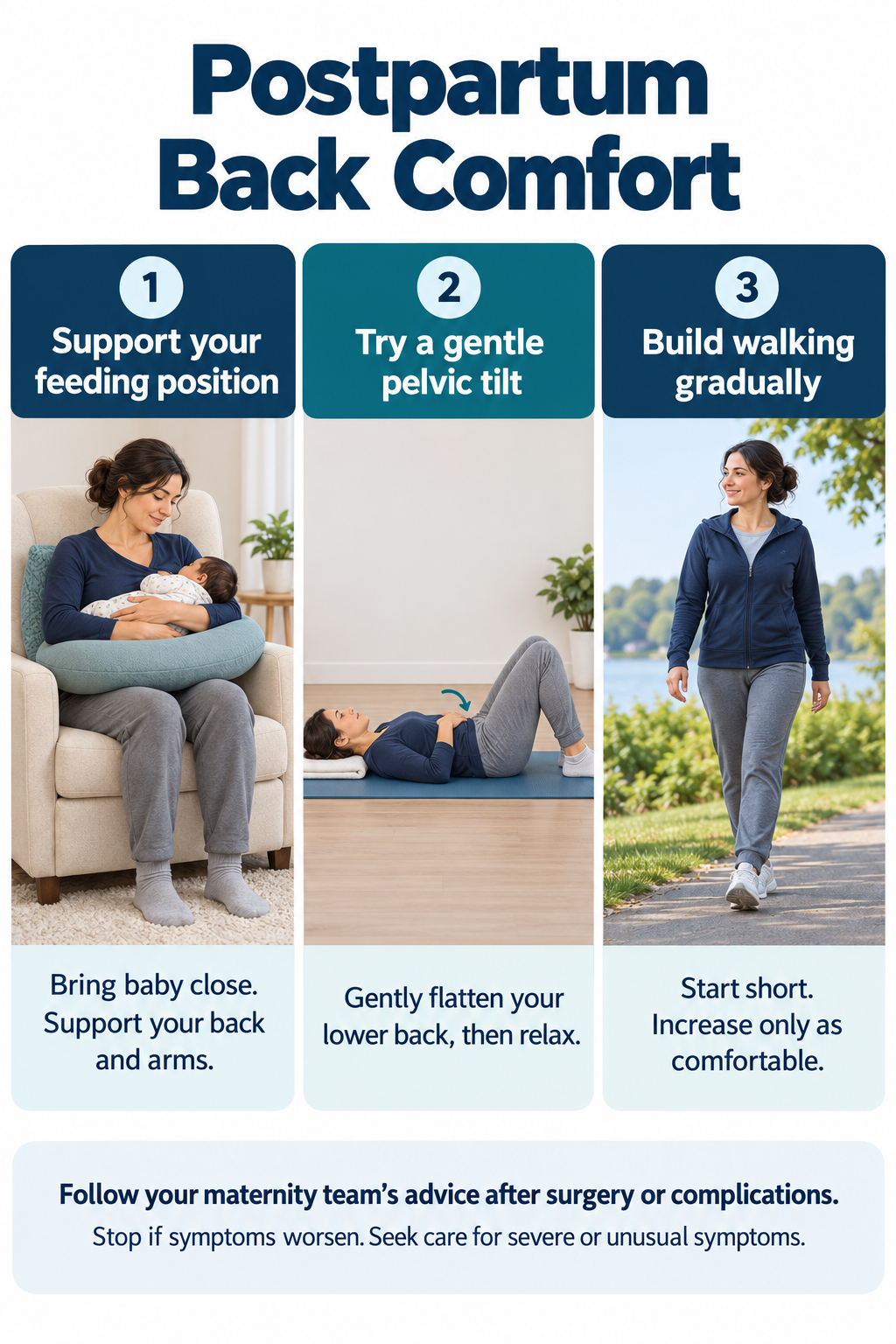
Set up your seat before a feed: support your back, rest your feet, and use cushions to support your forearms as needed. Bring your baby toward you rather than spending the whole feed leaning down.
For example, if discomfort builds during a long feed, try adjusting the arm support or changing your own position between feeds. The goal is a workable setup, not holding a rigid posture.
- Place water and frequently used items within easy reach.
- Adjust cushions if your shoulders or back begin to strain.
- Ask your midwife or feeding specialist to review positions if feeding is painful or difficult.
During changing and dressing, arrange the task so you do not have to reach awkwardly for supplies. Keep your baby attended and secure at all times, especially on a raised changing surface.
Reduce unnecessary lifting and make transfers easier
Accept practical help with shopping, laundry, vacuuming, and carrying equipment while you recover. A baby in a car seat is a different load from your baby alone, so check your lifting restrictions rather than assuming both are equivalent.
When lifting is permitted, bring yourself close to the load and use a position that feels steady. Avoid combining an awkward reach with a hurried turn.
- Ask someone else to move bulky items when possible.
- Keep necessary loads close instead of reaching at arm’s length.
- Split household jobs into smaller tasks.
If sitting straight up from bed is uncomfortable, try rolling onto your side, moving your legs over the edge, and pushing up through your arms. A physiotherapist can adapt the transfer if pelvic or incision pain makes that approach difficult.
UCLH’s advice following childbirth covers bed transfers, supported feeding, pacing, and early exercises.
Try gentle pelvic tilts and abdominal activation
Once suitable for your recovery, lie comfortably with your knees bent and feet supported. Gently tighten the lower abdominal muscles to flatten the small of your back slightly, then relax; this is a small pelvic movement, not a hip lift.
Keep breathing and use only a comfortable range. Begin with a few easy attempts as a cautious trial, or follow the dose your physiotherapist has prescribed.
- Use light effort rather than squeezing as hard as possible.
- Release between attempts.
- Stop if the movement causes pain, incision discomfort, or worsening symptoms.
A separate option is gentle lower-abdominal activation in side lying with the knees slightly bent: breathe out and lightly draw in the lower tummy, then release. You do not need to hold your abdomen tight throughout the day.
If exercise produces a pronounced ridge or “doming” through the middle of your abdomen, reduce or stop that exercise and ask for guidance. A visible abdominal gap or bulge does not, by itself, explain the cause of your back pain.
Include pelvic floor recovery without straining
Pelvic floor exercises may be part of your recovery plan, particularly when addressing leakage. In a comfortable position, gently squeeze and lift as though preventing wind and urine from escaping, then let the muscles relax fully.
Do not practise by repeatedly stopping urine flow. If the exercise is painful, you cannot feel the release, or you are unsure of the technique, seek pelvic health physiotherapy advice rather than increasing the effort.
- Keep breathing normally.
- Allow a clear rest between squeezes.
- Discuss leakage, vaginal heaviness, or pelvic pain instead of pushing through them.
Pelvic floor exercises are not a stand-alone treatment for every type of postpartum lower back pain. The plan should address the symptoms and tasks that matter to you.
Build walking and daily activity gradually
When walking is appropriate, start with a short, easy outing or a manageable walk around your home. Choose a route that lets you stop or turn back without difficulty.
Increase only one part of the activity at a time, such as duration or pace. A full day of childcare counts toward your workload, so consider it when deciding how much additional exercise to attempt.
- Alternate activity with comfortable rest.
- Reduce the next session if the previous one clearly worsened symptoms.
- Stop and seek advice for increased bleeding, pelvic pressure, pain, or new symptoms.
Returning to running, jumping, or heavier resistance work requires more than reaching a particular date. Discuss healing, pelvic symptoms, and readiness with your maternity clinician or physiotherapist before progressing.
Choose the next step for your symptoms
This table can help you organize a conversation about postpartum lower back pain. It does not diagnose the cause or replace urgent assessment when warning signs are present.
| What you notice | Practical next step | What to report |
|---|---|---|
| Ache builds during feeding | Adjust back, foot, and arm support | How quickly pain starts and whether changing position helps |
| Pain with bed transfers or walking | Ask for movement and pelvic assessment | The location and tasks that are difficult |
| Leakage, vaginal heaviness, or abdominal doming | Request pelvic health physiotherapy advice | The activity that brings on the symptom |
| Symptoms worsen after exercise | Stop the provoking movement and review the plan | The exercise, amount, and duration of the increase |
| Severe pain or urgent warning signs | Seek immediate medical care | Recent birth, complications, and all associated symptoms |
Prepare a short record before an appointment. Specific examples are more useful than trying to identify the diagnosis yourself.
- Note when the pain began and where you feel it.
- Describe what limits feeding, walking, sleep, or baby care.
- List any treatments tried and how you responded.
Ask for a review if pain is not improving, keeps returning, or interferes with daily life. You can seek help before the routine postnatal appointment.
Conclusion
Recovery from postpartum lower back pain starts with understanding your symptoms, making everyday care more comfortable, and rebuilding activity in manageable steps. Gentle exercises can help when appropriate, while persistent pain, pelvic symptoms, or warning signs deserve professional attention.
Frequently asked questions
Is lower back pain after childbirth something I must accept?
No. You can ask for help whenever it is affecting you. Assessment can guide activity changes, exercise, and referral rather than leaving you to manage persistent pain alone.
What commonly aggravates postpartum back pain?
Repeated lifting, reaching, and long periods in one position can aggravate symptoms. The pattern varies, so identify the tasks that affect you rather than assuming one posture caused the problem.
When can I begin gentle exercise?
Timing depends on delivery and recovery. Gentle activity may begin when you feel ready after an uncomplicated vaginal birth; ask your clinician for individual advice after surgery, extensive repair, or complications.
How do I do a gentle pelvic tilt?
With knees bent and feet supported, gently flatten the small of your back, then relax. Keep breathing, use a small comfortable movement, and stop if symptoms increase.
Should I tighten my tummy all day?
No. A light contraction during an exercise is different from constant bracing. Relax between efforts and ask for help if movement consistently makes you strain or hold your breath.
Can feeding positions affect my comfort?
Yes. Supporting your back, feet, and forearms may make a long feed easier. Adjust your setup and seek feeding support if positioning remains difficult.
What if I feel pain around the pelvis as well as the back?
Tell your clinician about both areas and which movements are difficult. A pelvic health physiotherapist can assess the pattern and adapt the plan.
Do I need to wait for the postnatal check to ask for help?
No. Contact your maternity team or primary care clinician earlier if symptoms concern you, worsen, or limit ordinary tasks. Urgent symptoms should never wait for a routine appointment.
What if exercise causes heaviness, leakage, or abdominal doming?
Modify or stop the provoking exercise and request advice. These symptoms help guide exercise selection; pushing harder is not a substitute for assessment.
Which symptoms require immediate medical care?
Severe or unusual pain, fever, heavy bleeding, chest pain, breathlessness, or a painful swollen leg need immediate care. Back pain with new bladder or bowel dysfunction, saddle numbness, or symptoms in both legs requires emergency assessment.