Back pain can start suddenly after lifting, exercising, bending, or even during an ordinary daily activity. One common question is whether the pain is caused by a muscle strain or a herniated disc.
Although these conditions can cause similar back or neck pain, their symptoms can be different. Understanding the pattern of your symptoms—especially whether you have pain traveling into an arm or leg, numbness, tingling, or weakness—can help you understand when a professional assessment may be appropriate.
What Is a Muscle Strain?
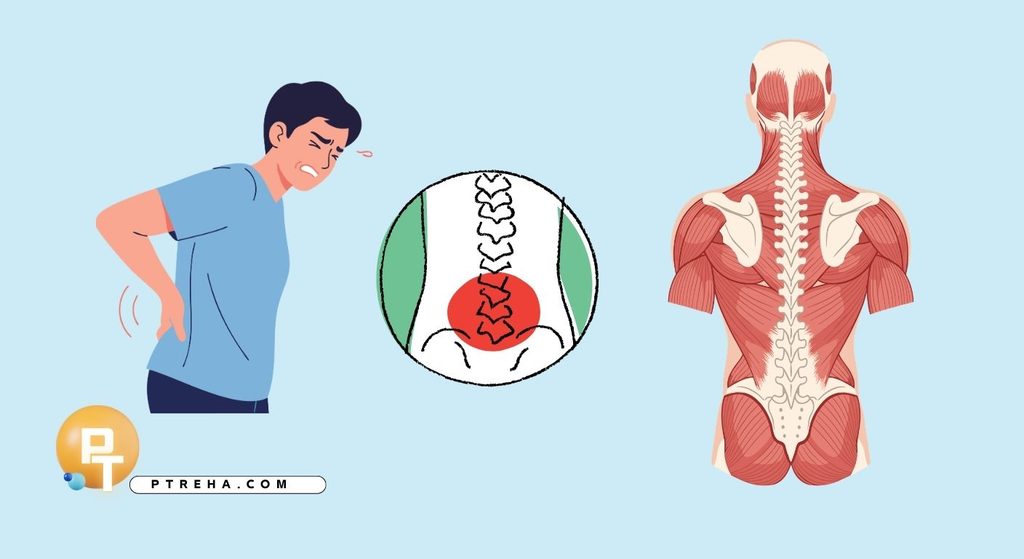
A muscle strain occurs when muscle tissue or its associated tendon is overloaded or injured. It can happen after lifting something heavy, making a sudden movement, exercising beyond your usual level, or repeatedly using a muscle.
Muscle strain symptoms commonly include localized pain, tenderness, stiffness, and discomfort when the affected muscle is contracted or stretched. Depending on the injury, swelling or bruising may also occur.
A simple muscle strain generally causes symptoms around the affected muscle rather than producing a neurological pattern into the arm or leg.
What Is a Herniated Disc?
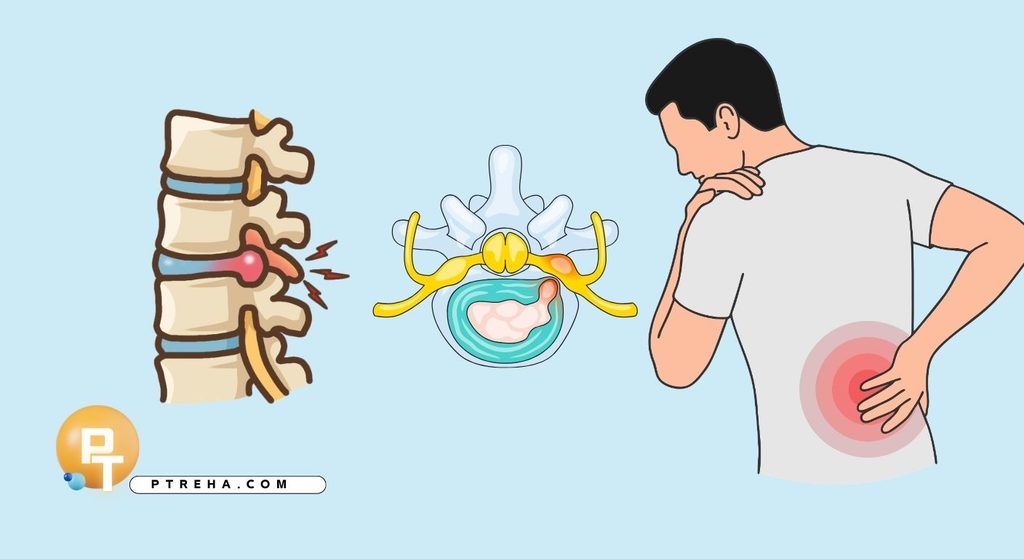
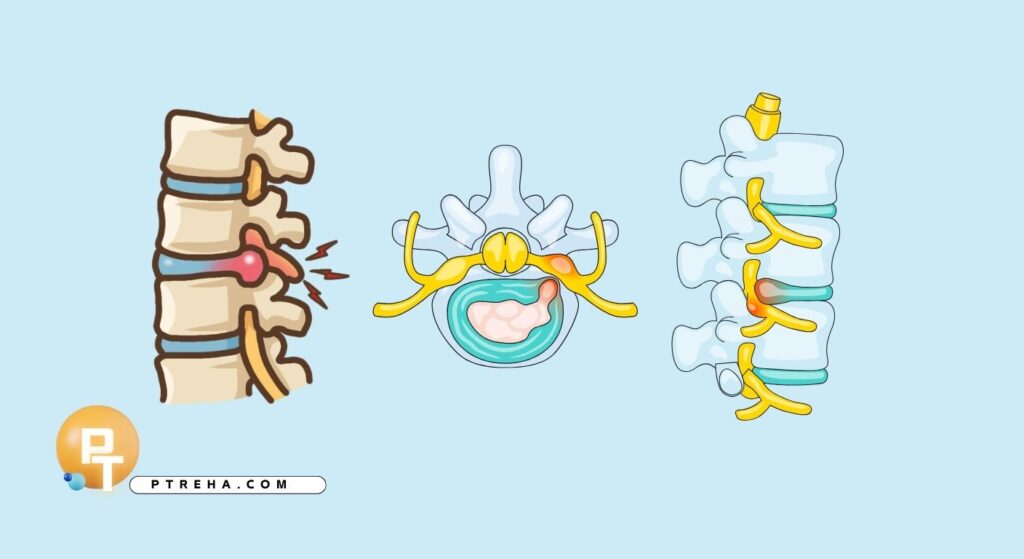
A herniated disc occurs when material from an intervertebral disc extends beyond its usual boundaries. Spinal discs are located between many of the vertebrae and help with load distribution and movement.
A herniated disc does not necessarily cause symptoms. Some people have disc herniations or other disc changes on imaging without experiencing pain.
Symptoms can occur when a disc problem affects nearby neural structures. Depending on where the disc problem is located, symptoms may affect the lower back and leg or the neck, shoulder, arm, and hand.
Herniated Disc Symptoms vs. Muscle Strain Symptoms
The most useful distinction is usually the overall pattern of symptoms, rather than the intensity of pain.
A muscle strain tends to cause pain that remains relatively close to the injured muscle. Activities that contract or stretch the muscle may reproduce the symptoms.
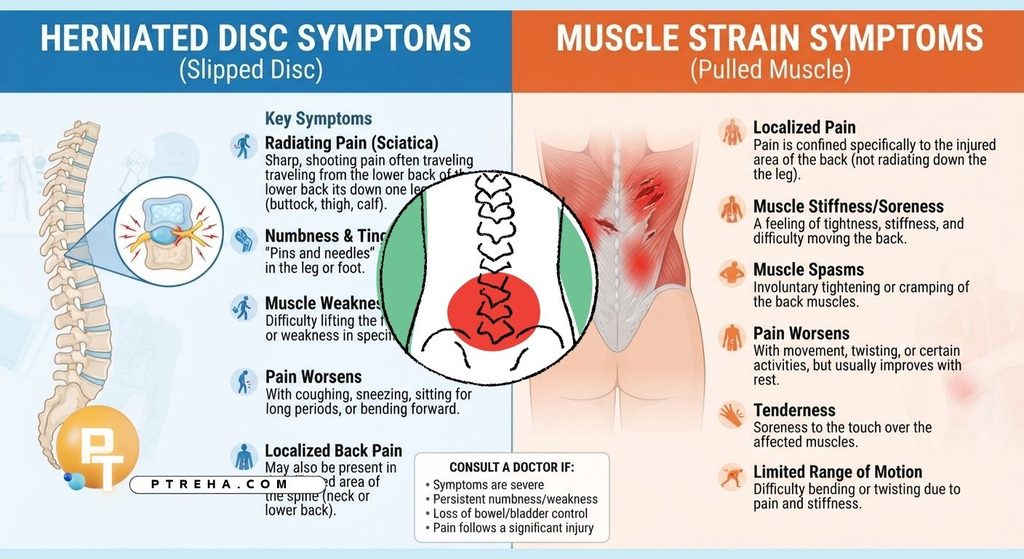
A symptomatic herniated disc affecting a nerve root may cause pain that travels away from the spine into an arm or leg. Numbness, tingling, or neurological weakness can also occur.
However, these features are not enough to diagnose a herniated disc on their own. Several other spinal and neurological conditions can produce similar symptoms.
Pain That Radiates Into the Arm or Leg
Radiating pain is one feature that may help distinguish nerve-related symptoms from a simple muscle strain.
For example, a problem in the lower back can sometimes produce symptoms extending into the buttock and leg. A problem in the neck can sometimes cause symptoms extending into the shoulder, arm, or hand.
When a nerve root is involved, symptoms may follow a pattern associated with the affected nerve. A healthcare professional may assess sensation, muscle strength, reflexes, and movement during an examination.
Importantly, pain traveling into the leg does not automatically mean you have a herniated disc. Other conditions can produce similar symptoms.
Numbness and Tingling
Numbness and tingling are less typical of an uncomplicated muscle strain.
When a nerve is irritated or affected, a person may describe pins and needles, burning, altered sensation, or numbness. The symptoms may occur in part of the arm, hand, leg, or foot depending on the structures involved.
These symptoms should not be used to self-diagnose a herniated disc. A neurological examination can help determine whether there is evidence of nerve involvement.
Weakness: Muscle Pain or Nerve-Related Weakness?
Weakness can be confusing because pain itself can make it difficult to use a muscle normally.
For example, someone with a painful muscle strain may avoid using the affected muscle because movement hurts. This is different from neurological weakness, where reduced muscle activation may occur because a nerve is affected.
A physical therapist or physician can assess strength and compare relevant movements to help determine whether weakness appears to be pain-related or neurological.
New or progressive weakness should be medically assessed.
Does a Muscle Strain Cause Back Pain?
Yes. Muscle strains are a possible cause of acute back pain, particularly after an unusual increase in physical activity, lifting, repetitive movement, or sudden loading.
The pain is often influenced by movement or loading of the affected tissues. There may also be localized tenderness and stiffness.
However, not every episode of back pain after lifting is a muscle strain. Spinal and other musculoskeletal structures can also become painful after similar activities.
Can a Herniated Disc Start After Lifting?
Yes, symptoms related to a disc problem can begin after lifting, bending, or twisting. However, there does not always have to be a specific injury or movement that caused the symptoms.
The timing of symptoms after lifting does not establish the diagnosis. The symptom pattern and clinical examination are more informative than the triggering event alone.
How Is a Herniated Disc Diagnosed?
A suspected herniated disc is evaluated using a combination of medical history and physical examination.
A healthcare professional may ask about:
- Where the pain started
- Whether the pain travels into an arm or leg
- Numbness or tingling
- Changes in muscle strength
- Factors that aggravate or relieve symptoms
- Changes in walking or other activities
- How the symptoms developed
- Any relevant previous medical history
A neurological examination may include assessment of strength, sensation, reflexes, and relevant movements.
The goal is not simply to find an abnormality but to determine whether the clinical findings are consistent with the person’s symptoms.
Does an MRI Confirm That a Herniated Disc Is Causing Pain?
Not necessarily.
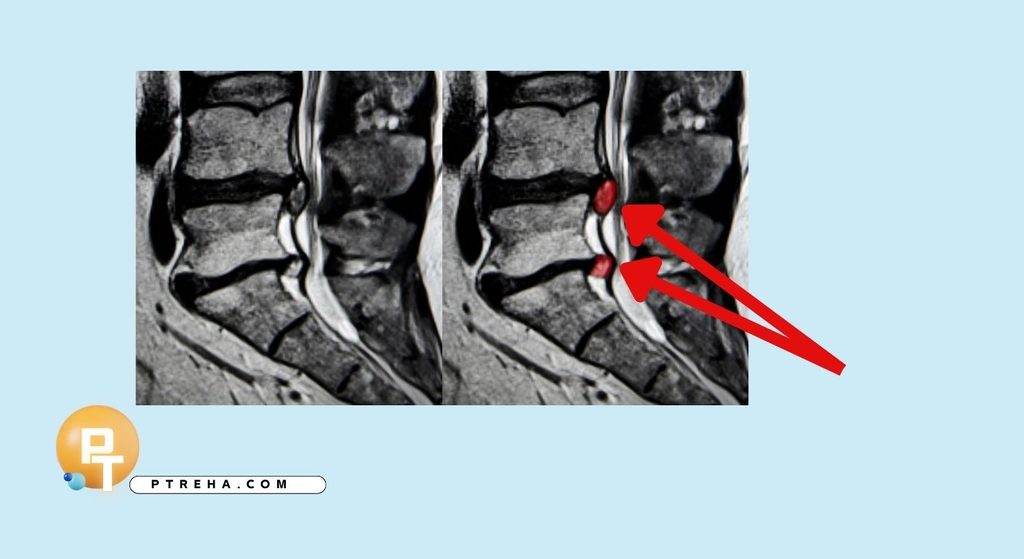
An MRI can show disc herniations, disc bulges, and degenerative changes. However, these findings can also occur in people who have little or no pain.
For this reason, an MRI finding should be interpreted together with the person’s symptoms and clinical examination.
Imaging may be useful in selected situations, but an MRI is not automatically required for every episode of back or neck pain.
Herniated Disc vs. Muscle Strain: Comparison
| Symptom or finding | Muscle strain | Herniated disc with possible nerve involvement |
|---|---|---|
| Localized pain | Common | Can occur |
| Muscle tenderness | Common | May occur but is not diagnostic |
| Pain with muscle contraction | Common | May occur |
| Pain with muscle stretching | Common | May occur |
| Pain traveling into an arm or leg | Less typical | Can occur |
| Numbness | Uncommon | Can occur |
| Tingling or pins and needles | Uncommon | Can occur |
| Neurological weakness | Not typical | Can occur |
| Symptoms after lifting | Common | Can also occur |
| MRI required in every case | No | No |
| Neurological examination | Usually not central | Important when neurological symptoms are present |
What Can You Do for Back Pain?
If your symptoms are mild and there are no concerning features, complete bed rest is generally not necessary.
Try to maintain comfortable levels of everyday movement while temporarily reducing activities that clearly aggravate your symptoms. Gentle activity can often be easier to tolerate than prolonged inactivity.
Avoid repeatedly testing painful movements or aggressively stretching the painful area simply to determine whether it is a muscle problem or disc problem.
If symptoms persist, interfere substantially with daily activities, or include neurological symptoms, a professional assessment can help guide your recovery.
Should You Exercise With a Suspected Herniated Disc?
Exercise can be an important part of rehabilitation for many people with back pain and disc-related symptoms.
However, there is no single exercise program that is appropriate for everyone. The type, intensity, and progression of exercise should take into account your symptoms, functional limitations, examination findings, and goals.
If exercise consistently causes worsening symptoms—particularly increasing numbness, tingling, or weakness—seek professional advice rather than simply pushing through the symptoms.
When Should You See a Doctor or Physical Therapist?
You should consider professional assessment when back or neck pain is:
- Persistent or progressively worsening
- Significantly limiting normal activities
- Associated with recurring or increasing leg or arm symptoms
- Accompanied by numbness or tingling
- Associated with weakness
- Difficult to manage with normal daily activity
A physical therapist can assess movement, strength, function, and relevant neurological findings and can help determine whether physiotherapy is appropriate or whether further medical assessment is needed.
Red Flags: When Back Pain Needs Urgent Assessment
Most episodes of back pain are not emergencies, but certain symptoms require urgent medical attention.
Seek urgent medical assessment if you develop new loss of bladder or bowel control, numbness around the genital or anal region, or significant or rapidly worsening weakness in an arm or leg.
Other symptoms such as severe pain following significant trauma or systemic illness may also require prompt medical evaluation.
Do not rely on an online symptom comparison to decide whether these symptoms are serious.
Can a Herniated Disc and Muscle Strain Occur Together?
Yes.
A person can have symptoms involving both the spine and surrounding muscles. For example, muscles around a painful spinal region may become tense, sensitive, or painful while a person is experiencing a disc-related problem.
This is why back pain should not always be divided into a simple choice between “muscle pain” and “disc pain.”
A thorough assessment considers the entire clinical presentation rather than focusing on one structure shown on an imaging scan.
Key Takeaways
The symptoms of a herniated disc and muscle strain can overlap, so pain alone cannot reliably identify the cause.
A muscle strain more commonly produces localized pain and tenderness that changes with muscle loading or stretching. A symptomatic disc problem involving neural structures may produce pain that travels into an arm or leg and may be accompanied by numbness, tingling, or neurological weakness.
However, these symptoms are not diagnostic by themselves. Other conditions can produce similar patterns, and imaging findings do not necessarily explain a person’s pain.
If your symptoms are persistent, worsening, or associated with neurological changes, a healthcare professional can perform an appropriate assessment and determine the next step.
Frequently Asked Questions
What are the main herniated disc symptoms?
Common symptoms can include back or neck pain and, when neural structures are affected, pain that travels into an arm or leg, altered sensation, numbness, tingling, or weakness.
What are the symptoms of a muscle strain?
Muscle strain symptoms commonly include localized pain, tenderness, stiffness, and pain with contraction or stretching of the affected muscle. More significant injuries may also involve swelling or bruising.
How can I tell if my back pain is a herniated disc or muscle strain?
You cannot reliably determine the cause from symptoms alone. Localized pain related to muscle loading may fit a muscle strain, while radiating pain with neurological symptoms may suggest neural involvement, but professional assessment is needed when the diagnosis is uncertain.
Does a herniated disc always cause leg or arm pain?
No. A herniated disc may cause no symptoms at all, or it may cause primarily local spinal pain. Arm or leg symptoms are more relevant when nearby neural structures are affected.
Can a muscle strain cause pain down the leg?
Musculoskeletal pain can sometimes extend beyond the immediate area. However, pain traveling into the leg, especially when accompanied by numbness, tingling, or weakness, should be clinically assessed.
Does numbness mean I have a slipped or herniated disc?
No. Numbness has many possible causes. A clinical examination is needed to determine whether a nerve is involved and what may be contributing to the symptoms.
Can a herniated disc heal without surgery?
Many people with symptomatic disc problems improve with non-surgical management. The appropriate treatment depends on the person’s symptoms, examination findings, neurological status, and clinical course.
Do I need an MRI for a herniated disc?
Not necessarily. MRI is not routinely required for every episode of back pain. Imaging is considered when the clinical situation indicates that it is likely to provide useful information or influence management.
Can I exercise with a herniated disc?
Many people can remain active and gradually exercise while recovering from disc-related symptoms. Exercise should be appropriately selected and progressed according to symptoms and clinical findings.
When is back pain an emergency?
Seek urgent medical assessment for new bladder or bowel dysfunction, numbness around the genital or anal region, or significant or rapidly worsening weakness. These symptoms can indicate serious neurological involvement and should not be managed solely through online advice.
Recommended references
- NICE — Low back pain and sciatica in over 16s: assessment and management (NG59)
Useful for the sections on assessment, imaging, management, red flags, and the fact that specific structural causes of low-back pain cannot always be identified confidently from symptoms or imaging alone.
NICE NG59 guideline - North American Spine Society — Clinical Guidelines for Diagnosis and Treatment of Lumbar Disc Herniation with Radiculopathy
Particularly relevant to the discussion of lumbar disc herniation, radicular symptoms, neurological findings, evaluation, and treatment.
NASS Lumbar Disc Herniation Guideline - North American Spine Society — Clinical Practice Guidelines
Useful as a broader authoritative source for spine-related clinical guidelines, including low back pain, lumbar disc herniation, and cervical radiculopathy.
NASS Clinical Guidelines - NASS — Patient information on pinched nerves
Useful for the patient-facing explanation that nerve compression can produce symptoms such as pain, numbness, or weakness and that imaging findings should be interpreted in the context of symptoms rather than treated as the diagnosis by themselves.
NASS patient information: Pinched Nerve