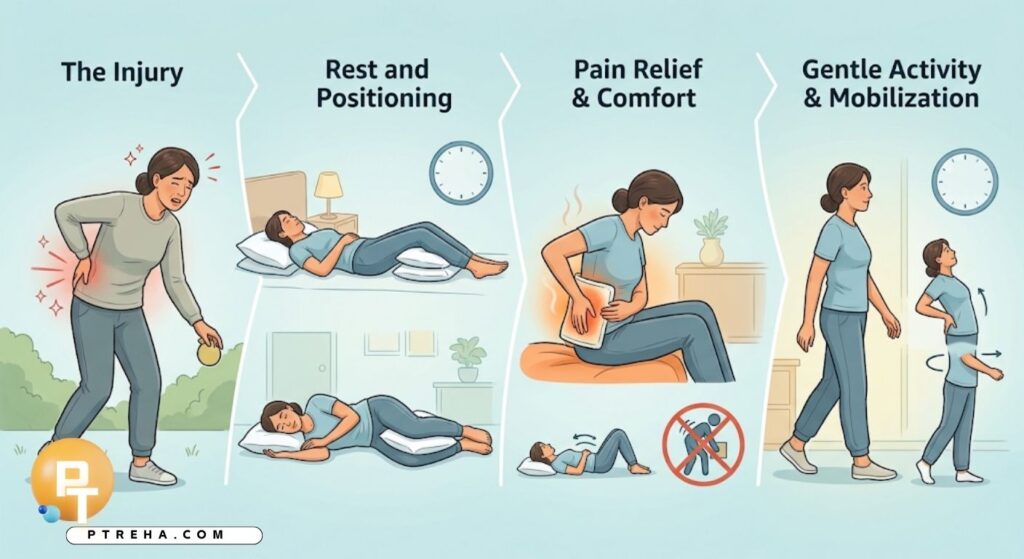
An acute lower back spasm can make even simple movements such as standing, turning in bed, or getting into a chair feel difficult.
The first 48 hours should focus on identifying warning signs, reducing unnecessary irritation, maintaining safe movement, and gradually returning to normal activity rather than prolonged bed rest or aggressive stretching.
What an acute lower back spasm usually feels like
A lower back spasm is often described as a sudden tightening, cramping, or protective contraction around the lumbar region.
It may appear after lifting, bending, twisting, prolonged sitting, an unfamiliar physical task, or sometimes without an obvious trigger.
The sensation can be intense, but pain intensity alone does not determine how serious the underlying problem is.
Most acute low back pain is nonspecific, meaning a single injured structure cannot reliably be identified as the cause.
Common features include:
- Sudden lumbar pain or tightness.
- Difficulty standing fully upright.
- Pain when changing position.
- Increased discomfort with bending or twisting.
- A feeling that the back is “locked.”
- Protective muscle guarding.
- Reduced walking speed.
- Difficulty getting in or out of bed.
- Pain after prolonged sitting.
- Symptoms that fluctuate with movement and position.
A spasm can occur with or without a clinically important muscle injury.
Therefore, it is better to describe the symptoms and functional limitations than to assume that the muscles are definitely damaged.
For general information about low back pain, the World Health Organization’s low back pain guidance explains the distinction between nonspecific and specific low back pain and emphasizes rehabilitation, activity, and self-management.
First priority: check for warning signs
Before treating an acute lower back spasm as an uncomplicated musculoskeletal problem, consider whether the symptoms could indicate a more serious condition.
Seek urgent medical assessment if low back pain is accompanied by:
- New difficulty controlling urination or bowel movements.
- New numbness around the genitals, anus, or inner thighs.
- Significant or progressive weakness in one or both legs.
- Severe neurological symptoms affecting walking.
- Major trauma or a significant fall.
- Severe pain following relatively minor trauma when fracture risk is increased.
- Fever or systemic illness with severe back pain.
- Unexplained weight loss together with persistent or concerning symptoms.
- A history of cancer with new unexplained back pain.
- Severe pain accompanied by other symptoms suggesting a serious medical condition.
The combination of new bladder or bowel dysfunction, saddle-area sensory changes, and significant neurological deficits requires particular attention because it may indicate cauda equina syndrome.
These warning signs do not mean that a serious condition is definitely present.
They indicate that self-management alone is not appropriate until the symptoms have been medically assessed.
Routine imaging is generally not recommended for uncomplicated low back pain when there are no indications that the result would change management.
The NICE guideline on low back pain and sciatica recommends considering imaging in specialist settings when it is likely to influence management rather than using imaging routinely.
The first few hours: reduce irritation without complete rest
When a spasm begins suddenly, the immediate goal is not to force the back to relax.
The goal is to find tolerable positions and movements while allowing the nervous system and surrounding tissues to settle.
If standing is painful, use a stable surface for support and move slowly.
Avoid repeatedly testing the painful movement simply to see whether it still hurts.
Useful early strategies include:
- Take short, comfortable walks rather than remaining in bed.
- Change position regularly.
- Use a comfortable supported sitting position.
- Avoid heavy lifting.
- Avoid sudden twisting.
- Keep necessary movements slow and controlled.
- Use hand support when transitioning from sitting to standing.
- Break household activities into smaller tasks.
- Stop an activity if symptoms become substantially worse.
- Resume easier activities when symptoms settle.
The objective is relative rest, not immobilization.
Prolonged bed rest can increase stiffness and make the return to normal activity more difficult.
Guidance for low back pain generally favors continuing normal activities as tolerated rather than routinely prescribing bed rest.
Finding a comfortable position
There is no single “correct” sleeping or resting position for everyone with an acute lower back spasm.
The most useful position is generally the one that reduces symptoms without creating additional pressure or discomfort.
For example, a person who finds lying on the back comfortable may place a pillow under the knees.
Another person may prefer side-lying with a pillow between the knees.
Try one position for several minutes rather than repeatedly changing position every few seconds.
During the first 48 hours, consider:
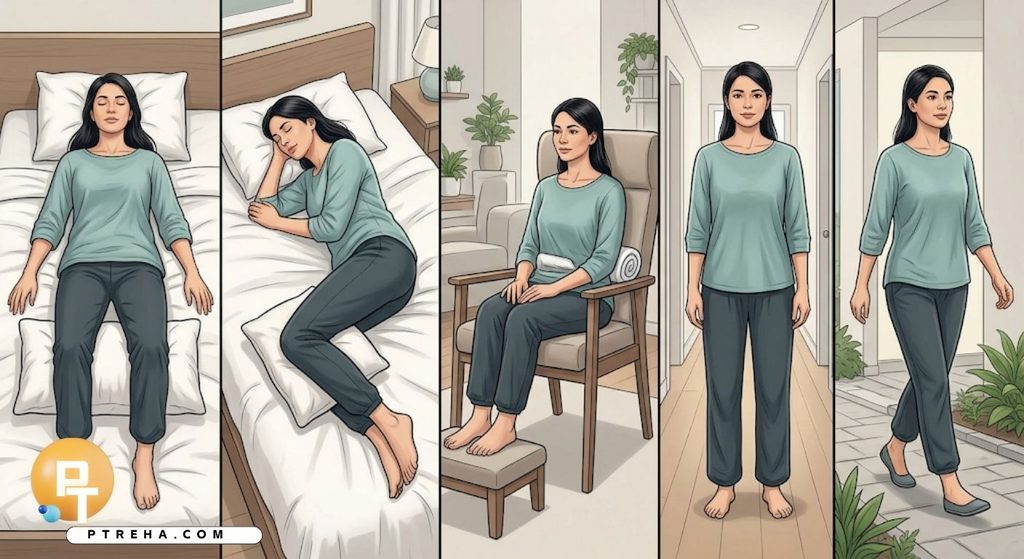
- Back-lying with the knees comfortably supported.
- Side-lying with the hips and knees slightly flexed.
- A supported sitting position for short periods.
- Standing with the feet comfortably separated.
- A short, easy walk if walking feels better than sitting.
- Avoiding prolonged positions that clearly increase symptoms.
Getting out of bed can also be easier if you roll onto your side first, move the legs toward the edge, and use the arms to help push the trunk upward rather than performing a sudden sit-up.
Heat, cold, and symptom relief
Heat can be useful for some people with acute low back pain, particularly when the dominant sensation is stiffness or muscular tightness.
A warm shower or comfortably warm pack may make movement easier.
Heat should feel soothing rather than excessively hot.
Protect the skin and avoid falling asleep with a heating device applied.
Cold therapy is sometimes preferred during an acute painful episode, although there is no requirement to use ice simply because the pain started suddenly.
The response to temperature is individual.
A practical approach is:
- Try gentle heat if it makes movement easier.
- Use a protected cold pack if cold provides better symptom relief.
- Avoid extreme temperatures.
- Do not apply heat or cold directly to the skin for prolonged periods.
- Stop if the skin becomes painful, excessively red, numb, or irritated.
- Use temperature-based treatments as symptom-relief tools, not as a substitute for appropriate movement.
The purpose of heat or cold during this stage is mainly to improve comfort enough to allow normal movement.
Movement during the first 48 hours
Movement should be gentle, controlled, and guided by symptoms.
A common mistake is to interpret pain during movement as proof that the back is being damaged.
Pain can occur because the area is sensitive and movement is temporarily threatening or unfamiliar; however, severe or progressively worsening symptoms require reassessment.
Start with simple activities such as walking around the home.
For example, instead of remaining seated for several hours, stand up periodically and walk for a few minutes at a comfortable pace.
The duration can be adjusted according to symptoms.
During movement:
- Keep steps short if long strides are uncomfortable.
- Avoid sudden acceleration.
- Turn the whole body rather than rapidly twisting the trunk.
- Keep loads close to the body.
- Use support when needed.
- Breathe normally rather than holding your breath.
- Increase activity gradually.
- Monitor how symptoms respond afterward.
A small temporary increase in discomfort does not automatically mean that the activity was harmful.
A substantial or persistent flare suggests that the activity was too demanding and should be modified.
Should you stretch a back spasm?
Aggressive stretching is usually not the priority during the first hours of a severe spasm.
When the back feels highly irritable, forcing lumbar flexion, extension, rotation, or hamstring stretching can make symptoms worse.
The appropriate movement depends on the individual’s presentation rather than on a universal exercise.
Gentle movement may include:
- Comfortable pelvic movements.
- Small-range lumbar movements.
- Easy walking.
- Gentle hip movement.
- Controlled position changes.
- Relaxed breathing during movement.
Do not force a movement simply because it is commonly described as a “back stretch.”
A useful rule is that early exercise should make movement feel more manageable, not create a strong stretching sensation or reproduce severe pain.
If the person cannot move comfortably, has significant leg symptoms, develops weakness or numbness, or cannot determine which movements are appropriate, assessment by a physiotherapist or other qualified healthcare professional is preferable.
Medication considerations
Medication can sometimes help reduce acute low back pain enough to allow movement, but medication choice depends on the person’s age, medical history, other medicines, allergies, pregnancy status, kidney and gastrointestinal health, and cardiovascular risk.
Non-steroidal anti-inflammatory drugs may be appropriate for some adults, but they are not suitable for everyone.
They should be used according to appropriate medical or pharmacy advice and the product’s safety instructions.
Important precautions include:
- Do not combine multiple NSAIDs unless specifically instructed.
- Check for interactions with existing medicines.
- Consider kidney and gastrointestinal risks.
- Consider cardiovascular risks.
- Ask a pharmacist or clinician if you have significant medical conditions.
- Follow the recommended dose.
- Do not assume that a stronger dose will produce better recovery.
- Do not use medication to push through severe symptoms.
- Avoid relying on opioid medication for routine acute back-pain self-management unless specifically prescribed for an appropriate clinical indication.
Medication is intended to support function and symptom control, not to replace assessment when warning signs are present.
What to avoid during the first 48 hours
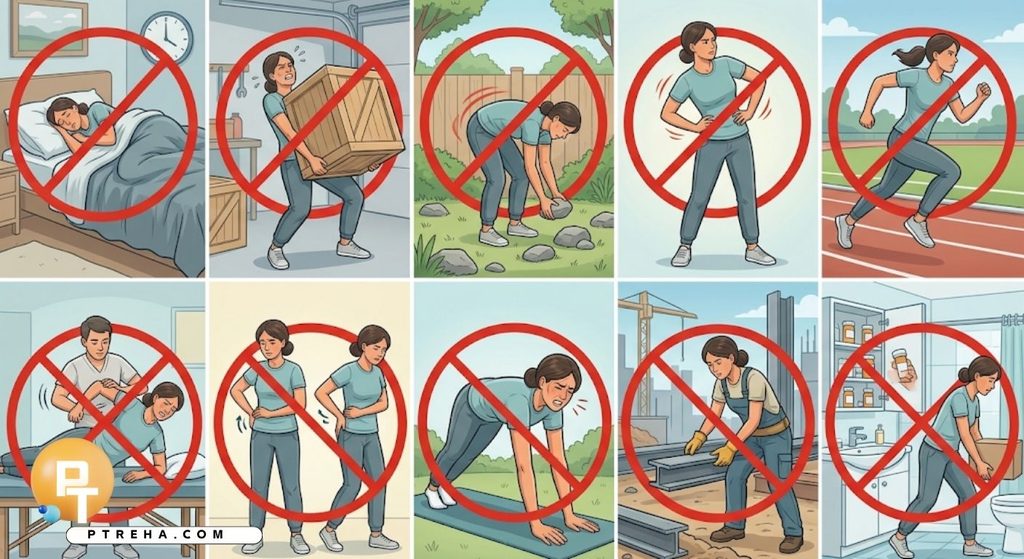
The early phase can be complicated by trying to do too much or too little.
Complete immobilization is generally unnecessary, while heavy physical activity can aggravate symptoms.
Avoid:
- Prolonged bed rest.
- Heavy lifting.
- Repeated deep bending.
- Forceful twisting.
- High-impact exercise.
- Aggressive spinal manipulation during a highly irritable episode without appropriate assessment.
- Repeatedly testing painful movements.
- Stretching aggressively into severe pain.
- Returning immediately to heavy manual work.
- Using medication to mask symptoms while performing demanding physical tasks.
The goal is controlled activity, not complete avoidance of movement.
A practical first-48-hour plan
The following framework can help someone organize the first two days without treating it as a rigid exercise prescription.
| Time period | Main goal | Practical approach |
|---|---|---|
| First few hours | Settle symptoms | Find a comfortable position, use gentle heat or cold if helpful, and avoid provoking movements |
| Early day | Maintain mobility | Take short walks and change position regularly |
| Later day | Protect function | Continue essential daily activities at a reduced intensity |
| Evening | Reduce irritation | Use a comfortable resting position and avoid strenuous activity |
| Overnight | Sleep comfortably | Use the sleeping position that produces the least discomfort |
| Following morning | Reassess | Compare mobility, pain, neurological symptoms, and ability to perform basic activities |
| Second day | Gradual activity | Increase walking and normal activities according to tolerance |
A person who feels significantly better the next morning can gradually increase ordinary activity.
Someone who is substantially worse, develops new neurological symptoms, or cannot perform basic movements should seek appropriate clinical assessment.
When physiotherapy assessment is useful
A physiotherapy assessment can be particularly useful when the episode is severe, recurrent, associated with functional limitations, or not improving as expected.
Assessment can help distinguish uncomplicated mechanical low back pain from presentations requiring medical referral and can identify movement, strength, activity, occupational, and psychosocial factors that may influence recovery.
A physiotherapist may assess:
- Lumbar and hip movement.
- Functional mobility.
- Neurological status when indicated.
- Lower-limb symptoms.
- Strength and motor control.
- Walking tolerance.
- Functional limitations.
- Relevant occupational demands.
- Previous episodes.
- Factors that may contribute to recurrence.
Treatment should be individualized rather than based solely on the label “muscle spasm.”
For uncomplicated low back pain, rehabilitation commonly emphasizes education, maintaining activity, progressive exercise, and restoring normal function.
The WHO low back pain guidance also emphasizes physical activity, rehabilitation, self-management, and appropriate clinical assessment.
Conclusion
The first 48 hours of an acute lower back spasm should focus on safety, symptom control, comfortable movement, and gradual return to normal activity.
Avoiding unnecessary bed rest and aggressive exercise is generally more useful than trying to completely immobilize or forcefully stretch the back.
Most uncomplicated acute low back pain improves with time and appropriate activity, but symptoms that include significant neurological changes, bladder or bowel problems, saddle-area numbness, major trauma, systemic illness, or other warning signs require medical assessment rather than self-management alone.
FAQ
How long does an acute lower back spasm usually last?
The duration varies considerably.
A severe episode may settle substantially over several days, while residual stiffness or movement sensitivity can persist longer.
The important issue is the overall trend.
Gradual improvement in movement and function is generally more reassuring than focusing on whether every symptom has disappeared immediately.
Should I stay in bed if my lower back is in spasm?
Usually, prolonged bed rest is not recommended for uncomplicated acute low back pain.
Short periods of rest may be reasonable when symptoms are intense, but changing position and performing tolerable movement are generally preferable to remaining in bed for most of the day.
Is heat good for an acute lower back spasm?
Heat can provide short-term symptom relief for some people and may make movement feel easier.
Use a comfortably warm temperature rather than excessive heat, protect the skin, and discontinue it if irritation or excessive numbness develops.
Should I use ice instead of heat?
There is no universal requirement to choose one over the other.
If cold makes your symptoms feel better, it can be used safely with appropriate skin protection.
If warmth is more comfortable, gentle heat may be preferable.
Can I walk with an acute lower back spasm?
Yes, if walking is tolerable and there are no warning signs that require medical assessment.
Start with short, comfortable walks and increase the duration gradually.
Walking should not be treated as a test of toughness; the goal is to maintain manageable movement.
Should I stretch my lower back during a spasm?
Not necessarily.
Aggressive stretching can aggravate a highly irritable back.
Gentle, comfortable movement is usually a better starting point.
The appropriate exercises should depend on the person’s symptoms, movement limitations, and clinical findings.
Is a lower back spasm always caused by a muscle injury?
No.
The term “spasm” describes a sensation or observable muscle activity, but it does not establish a specific tissue injury.
Acute low back pain can involve multiple biological, mechanical, and nervous-system factors, and a specific pain-generating structure often cannot be identified from symptoms alone.
When should I see a physiotherapist?
Consider physiotherapy assessment when pain significantly limits normal activities, the episode keeps recurring, movement remains restricted, or you are unsure how to return safely to work, exercise, or daily activities.
Immediate medical assessment is more appropriate when serious warning signs or significant neurological symptoms are present.
When should acute back pain be treated as an emergency?
Emergency assessment is appropriate when severe back pain is accompanied by symptoms such as new bladder or bowel dysfunction, saddle-area numbness, significant or progressive leg weakness, or other major neurological changes.
Major trauma or severe systemic illness associated with back pain can also require urgent medical evaluation.
How should I return to exercise after a back spasm?
Return progressively rather than immediately resuming the previous training load.
Start with activities that are comfortable, such as walking and gentle movement, then gradually reintroduce strengthening, lifting, running, sport, or other demanding activities according to symptoms and functional capacity.