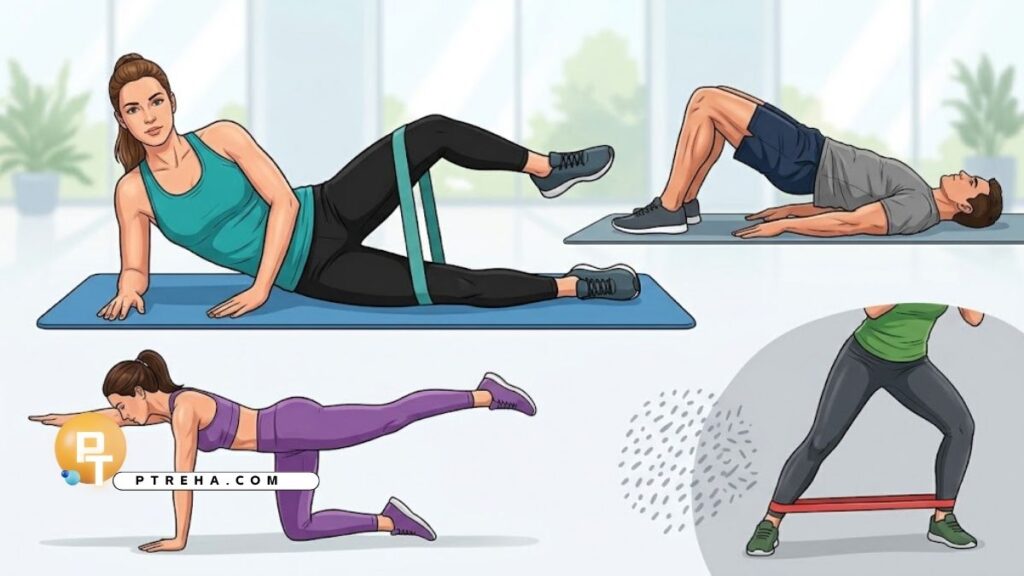
The glute activation routine to wake up sleepy hips is designed to improve awareness, coordination, and strength in the muscles that help control the pelvis and hip.
Rather than trying to “switch on” inactive muscles with a single magic exercise, the goal is to progressively teach the glutes to contribute effectively during sitting, standing, walking, squatting, and single-leg movements.
What “Sleepy Hips” Really Means
“Sleepy hips” is an informal phrase, not a medical diagnosis.
It commonly describes a feeling that the buttock muscles are difficult to engage, slow to respond, or less active than expected during movement.
The gluteal muscles include the gluteus maximus, gluteus medius, and gluteus minimus.
Together with other muscles around the hip and trunk, they help extend, abduct, and stabilize the hip and control pelvic movement.
A person may notice:
- Difficulty feeling the buttocks during exercises.
- The thighs doing most of the work during squats.
- The pelvis shifting during single-leg movements.
- The knees drifting inward during a squat.
- Poor confidence when climbing stairs.
- Reduced hip control after prolonged sitting.
- Fatigue around the hips during walking.
- Difficulty maintaining pelvic alignment.
- A tendency to compensate with the lower back.
- Uneven loading between the two legs.
Importantly, not feeling a strong glute contraction does not automatically mean the glutes are weak or inactive.
Muscle performance depends on strength, coordination, joint position, fatigue, pain, previous activity, and the demands of the task.
Why Glute Activation Matters
The gluteus maximus is a major hip extensor and contributes to powerful movements such as rising from a chair, climbing stairs, running, and jumping.
The gluteus medius and minimus contribute to hip abduction and help control the pelvis and femur during activities performed on one leg.
Good glute function is therefore less about producing a dramatic squeezing sensation and more about producing appropriate force at the right time.
A practical rehabilitation approach usually progresses from simple controlled contractions toward functional strengthening.
Guidance from Cambridge University Hospitals and the Royal National Orthopaedic Hospital similarly emphasizes improving hip and pelvic muscle control, recruitment, and capacity rather than relying on rest alone.
(Cambridge University Hospitals)
The 8-Minute Glute Activation Routine
This routine can be used before a workout, walking session, recreational activity, or lower-body strengthening session.
Perform the movements slowly.
The objective is to improve control rather than create maximum fatigue.
1. Supine Glute Squeeze
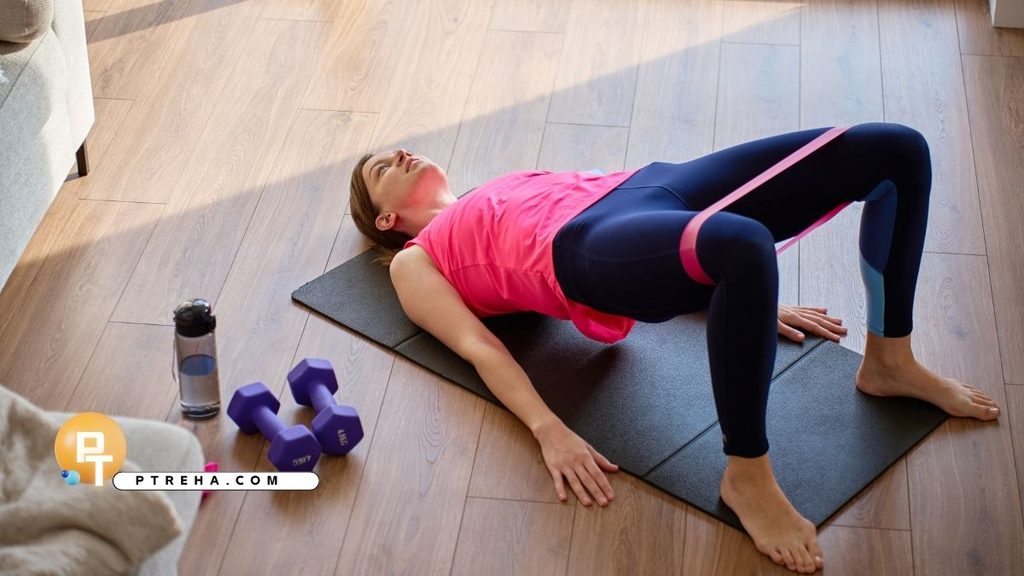
Lie on your back with your knees comfortably bent and your feet supported.
Gently contract both buttocks without pushing your lower back forcefully into the floor.
- Hold for 3–5 seconds.
- Relax completely.
- Perform 8–10 repetitions.
- Breathe normally.
- Avoid squeezing the thighs excessively.
- Keep the pelvis relaxed and controlled.
This is a useful starting exercise when someone has difficulty identifying the gluteal muscles.
2. Glute Bridge
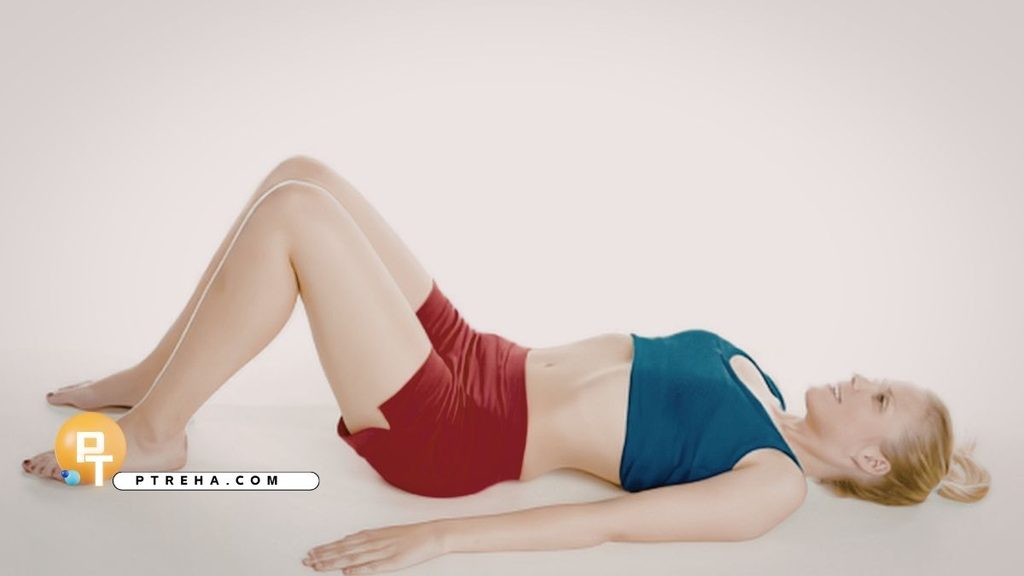
Remain on your back with your knees bent and feet approximately hip-width apart.
Brace the trunk gently, press through the feet, and raise the pelvis until the hips are extended without arching excessively through the lower back.
- Perform 8–12 repetitions.
- Pause briefly at the top.
- Lower slowly.
- Keep both feet evenly loaded.
- Avoid pushing the knees together.
- Stop before the movement becomes uncomfortable.
If the lower back dominates the exercise, reduce the lifting height and concentrate on controlled hip extension.
3. Bridge With Abduction
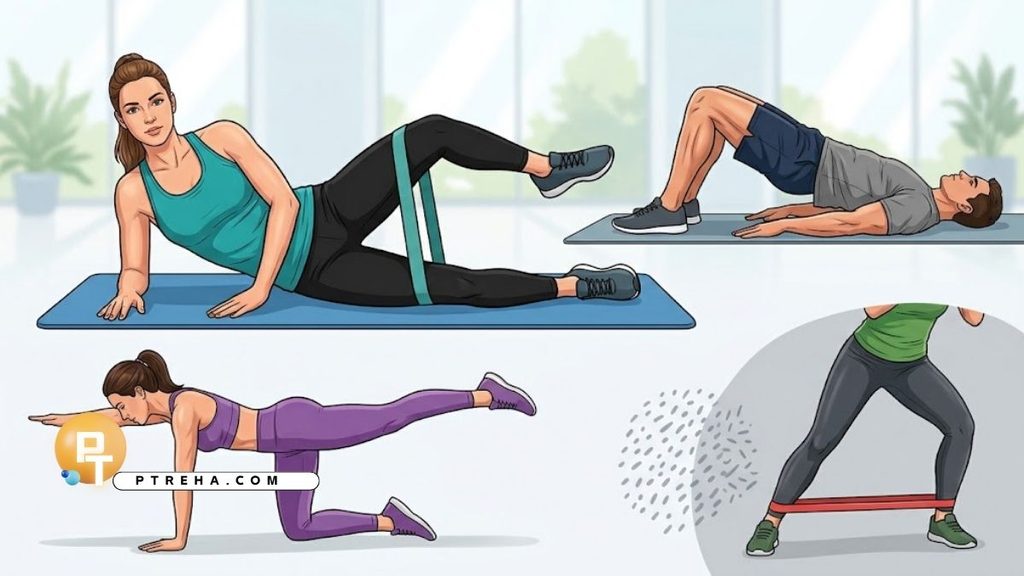
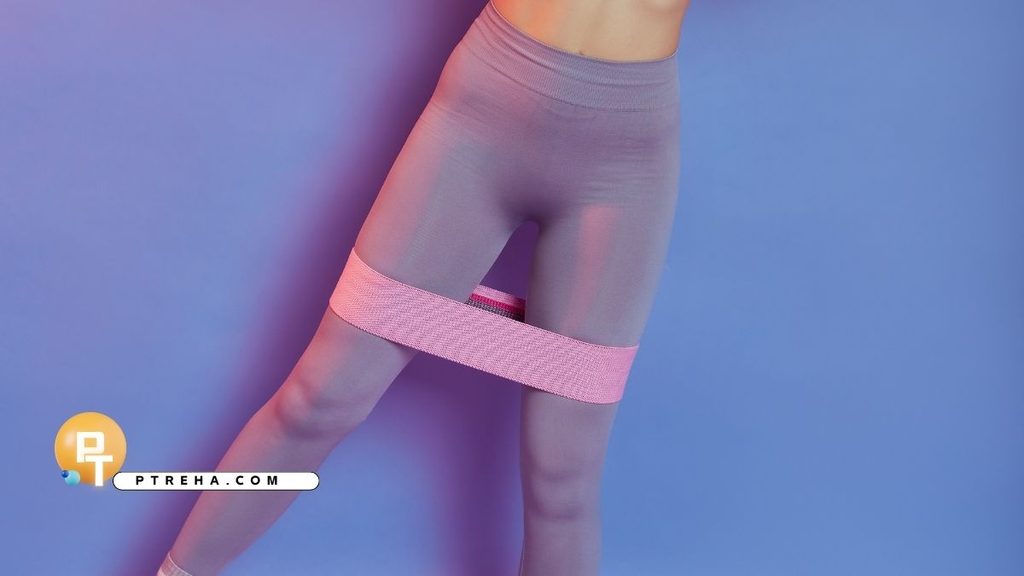
Once the basic bridge feels controlled, place a resistance band around the thighs above the knees.
As you lift the pelvis, gently press the thighs outward against the band while keeping the feet stable.
- Use light-to-moderate resistance.
- Perform 8–12 repetitions.
- Keep the pelvis level.
- Do not force the knees excessively outward.
- Maintain smooth breathing.
- Stop if the movement becomes jerky.
Resistance should make the exercise more challenging without changing the quality of movement.
4. Side-Lying Hip Abduction
Lie on your side with the lower leg bent if that makes the position more comfortable.
Straighten the upper leg and slowly lift it while keeping the pelvis stacked rather than rolling backward.
- Perform 8–12 repetitions per side.
- Move through a comfortable range.
- Keep the toes generally facing forward.
- Avoid swinging the leg.
- Keep the waist relaxed.
- Lower the leg slowly.
This exercise targets the lateral hip muscles, although several muscles contribute to the movement.
5. Sit-to-Stand

Sit toward the front of a stable chair with the feet positioned approximately hip-width apart.
Lean the trunk slightly forward, push through the feet, and stand while maintaining control of the knees and pelvis.
- Perform 8–12 repetitions.
- Use the arms if necessary.
- Lower yourself slowly.
- Keep the feet firmly supported.
- Avoid collapsing inward at the knees.
- Progress by using a lower chair.
This exercise begins to connect glute activation with a real-life task.
How to Perform the Routine Correctly
The quality of the movement matters more than chasing a strong burning sensation.
A useful checklist is:
- Keep your breathing natural.
- Move slowly enough to maintain control.
- Avoid unnecessary lower-back movement.
- Keep the pelvis relatively level.
- Use a comfortable range of motion.
- Start with manageable resistance.
- Compare left and right sides.
- Stop when technique deteriorates.
- Increase resistance gradually.
- Allow adequate recovery between strengthening sessions.
A person with no significant pain may perform the activation sequence as a short warm-up.
Someone recovering from hip pain may need a more individualized programme.
Glute Activation Routine: Exercise Guide
| Exercise | Main purpose | Suggested starting dose | Key technique |
|---|---|---|---|
| Supine glute squeeze | Muscle awareness | 8–10 reps | Contract without arching the back |
| Glute bridge | Hip extension | 8–12 reps | Lift through the hips, not the lower back |
| Banded bridge | Hip extension and lateral control | 8–12 reps | Maintain gentle outward pressure |
| Side-lying abduction | Lateral hip strength | 8–12/side | Keep pelvis stacked |
| Sit-to-stand | Functional hip strength | 8–12 reps | Control both standing and sitting |
| Single-leg balance | Pelvic control | 20–30 sec/side | Keep pelvis level |
These exercises should not all be performed maximally.
A beginner can start with three or four movements and gradually add complexity as control improves.
Progress From Activation to Strength
Activation exercises are only the beginning.
If the goal is improved physical performance, the glutes eventually need to tolerate progressively greater loads.
This can include stronger resistance bands, weights, unilateral exercises, greater range of motion, or more demanding movement speeds.
A useful progression is:
- Glute squeeze.
- Bridge.
- Banded bridge.
- Sit-to-stand.
- Squat.
- Step-up.
- Split squat.
- Single-leg bridge.
- Single-leg squat variation.
- Running, jumping, or sport-specific drills.
The exact progression depends on the person’s strength, symptoms, training history, and movement goals.
For general strengthening, gradually making exercises more difficult is more meaningful than repeatedly performing very easy activation drills.
Clinical guidance for gluteal conditions also supports graded strengthening to rebuild muscle and tendon capacity.
(Cambridge University Hospitals)
Common Glute Activation Mistakes
Many people interpret “activate your glutes” as “squeeze as hard as possible.” That approach can create unnecessary tension and does not automatically improve movement quality.
Watch for these common mistakes:
- Excessive lower-back arching during bridges.
- Pushing the ribs upward while lifting the pelvis.
- Rotating the pelvis during side-lying exercises.
- Using momentum instead of muscular control.
- Moving the leg too far during abduction.
- Choosing a resistance band that is too strong.
- Holding the breath.
- Training through significant pain.
- Performing only isolated exercises for weeks.
- Ignoring functional strengthening.
Another common mistake is assuming that a stronger burning sensation means a better exercise.
Muscle fatigue can occur without producing better movement mechanics.
Using the Routine Before Walking or Training
A short activation sequence can be useful before activities that require hip extension or single-leg control.
For example, before a brisk walk, try:
- 8 glute squeezes.
- 10 controlled bridges.
- 8 side-lying abductions per side.
- 8 sit-to-stands.
- 20 seconds of single-leg balance per side.
Before a strength workout, activation can be followed by progressive warm-up sets of the exercise you plan to perform.
Before running or sport, however, activation should not replace a complete warm-up.
Walking, gradual movement, dynamic preparation, and activity-specific drills may also be appropriate.
When Hip Pain Changes the Plan
Not every “sleepy hip” needs more activation work.
Pain on the outside of the hip, particularly pain with lying on that side, climbing stairs, walking uphill, or standing on one leg, can occur with gluteal tendinopathy.
In that situation, repeatedly performing aggressive lateral-hip exercises may aggravate symptoms rather than solve the problem.
If the hip is painful, consider:
- Reducing activities that clearly aggravate symptoms.
- Avoiding sudden increases in walking or exercise volume.
- Using tolerable strengthening rather than complete rest.
- Monitoring symptoms during and after exercise.
- Avoiding prolonged provocative positions.
- Seeking assessment if symptoms persist or worsen.
- Getting professional guidance after a significant injury.
- Discussing persistent night pain with a clinician.
For diagnosed gluteal tendinopathy, exercise selection should be individualized.
Some commonly used activation exercises, such as side-lying abduction or clamshell variations, may need modification during irritable stages because of compression around the lateral hip.
(Cambridge University Hospitals)
How Often Should You Do Glute Activation?
There is no single frequency that suits everyone.
A short, low-fatigue activation sequence can be used frequently when it does not provoke symptoms.
More demanding strengthening exercises require enough recovery to allow adaptation.
For a general healthy adult, a practical starting approach is:
- Activation: 5–10 minutes before selected activities.
- Strengthening: 2–3 sessions per week.
- Start with 1–3 sets.
- Use approximately 8–12 controlled repetitions for many strengthening exercises.
- Increase resistance when the current workload becomes easy.
- Keep at least one or two repetitions in reserve rather than training every set to failure.
- Reduce volume if technique deteriorates.
- Progress toward functional exercises.
People recovering from injury should follow the loading schedule recommended by their physical therapist rather than applying a generic routine.
Signs That Your Hips Are Getting Stronger
Improvement is not necessarily measured by how strongly you can squeeze your buttocks.
More useful signs include:
- Easier sit-to-stand movement.
- Better control during stairs.
- More stable single-leg balance.
- Less pelvic movement during walking.
- Improved squat control.
- Greater resistance tolerance.
- Ability to perform more repetitions with good technique.
- Ability to use heavier resistance.
- Better confidence during daily activities.
- Improved performance in running or sport-specific movements.
Strength should ultimately transfer into useful movement.
A person who can perform 30 easy bridges but struggles with a controlled step-down may need more functional strengthening rather than additional repetitions of basic bridges.
When to See a Physical Therapist
Consider professional assessment when hip symptoms are persistent, recurrent, difficult to understand, or interfering with normal activity.
Assessment becomes particularly important after trauma, when there is substantial weakness, or when symptoms are accompanied by significant night pain or difficulty walking.
A physical therapist can examine hip range of motion, strength, pelvic control, gait, functional movement, and the relationship between symptoms and loading.
For persistent lateral hip symptoms, professional guidance can help distinguish gluteal tendon problems from other sources of hip or referred pain.
A clinician should also assess symptoms such as:
- Inability to bear weight normally.
- Severe pain after a fall or direct injury.
- Marked swelling or redness.
- A hot or acutely inflamed joint.
- Progressive unexplained weakness.
- Significant neurological symptoms.
- Pain that is progressively worsening.
- Persistent symptoms despite appropriate self-management.
Conclusion
A good glute activation routine to wake up sleepy hips should be viewed as a movement-preparation strategy, not a cure-all for hip weakness or pain.
Start with simple controlled exercises, focus on pelvic and hip control, and progressively move toward loaded functional movements such as squats, step-ups, and single-leg exercises.
The most important goal is not to feel the glutes working as intensely as possible.
It is to develop the strength, coordination, and capacity needed to use the hips efficiently during the activities that matter to you.
FAQ
What does “sleepy glutes” mean?
“Sleepy glutes” is an informal description for gluteal muscles that feel difficult to engage or seem less active during movement.
It is not a formal medical diagnosis.
The sensation can be related to movement coordination, strength, fatigue, pain, prolonged inactivity, or simply difficulty identifying the muscle contraction.
How long does glute activation take?
A basic activation routine can take approximately five to ten minutes.
The important factor is not the duration but the quality of the movement.
A few controlled exercises performed with good technique can be more useful than a long routine performed with fatigue and poor mechanics.
Should I squeeze my glutes all day?
No.
Normal movement does not require continuous maximal glute contraction.
The glutes should contribute appropriately to the task.
Constantly squeezing them can create unnecessary muscle tension and does not substitute for progressive strengthening.
Why do I feel my thighs more than my glutes?
Different exercises distribute load between the hip, knee, and trunk muscles.
Technique, joint position, resistance, fatigue, and individual anatomy can all influence which muscles feel most active.
Instead of trying to eliminate thigh involvement, focus on controlled movement and gradually improve hip strength.
Can glute activation reduce hip pain?
It can be part of a rehabilitation programme when weakness or poor hip control contributes to the problem, but activation exercises are not appropriate for every cause of hip pain.
Persistent or significant pain should be assessed so that exercise selection and loading can match the underlying problem.
Should I do glute activation before squats?
It can be useful as a brief preparation, particularly if it helps you focus on controlled hip and pelvic movement.
However, activation should not replace progressive squat warm-up sets.
The squat itself is also an important strengthening exercise when performed appropriately.
Are bridges enough to strengthen the glutes?
Bridges can effectively train hip extension, but they are not a complete glute-strengthening programme.
As strength improves, adding exercises such as squats, step-ups, split squats, resisted hip extension, and single-leg movements can provide more demanding and functional loading.
Can I do glute activation every day?
Low-intensity activation work can often be performed frequently when it is comfortable and does not cause symptoms.
More demanding strengthening requires recovery.
If soreness, pain, or fatigue continues to increase, reduce the workload and consider professional assessment.
Should I use a resistance band for glute activation?
A band can increase resistance during exercises such as bridges or standing hip movements.
It is not essential, however.
Begin with a resistance level that allows smooth movement and good pelvic control rather than choosing the strongest band available.
When should I stop a glute exercise?
Stop or modify an exercise when it causes significant or escalating pain, produces unusual symptoms, or causes your movement quality to deteriorate.
If hip pain persists, interferes with sleep or daily activities, follows a significant injury, or progressively worsens, seek assessment from a qualified healthcare professional rather than continuing to increase exercise volume.