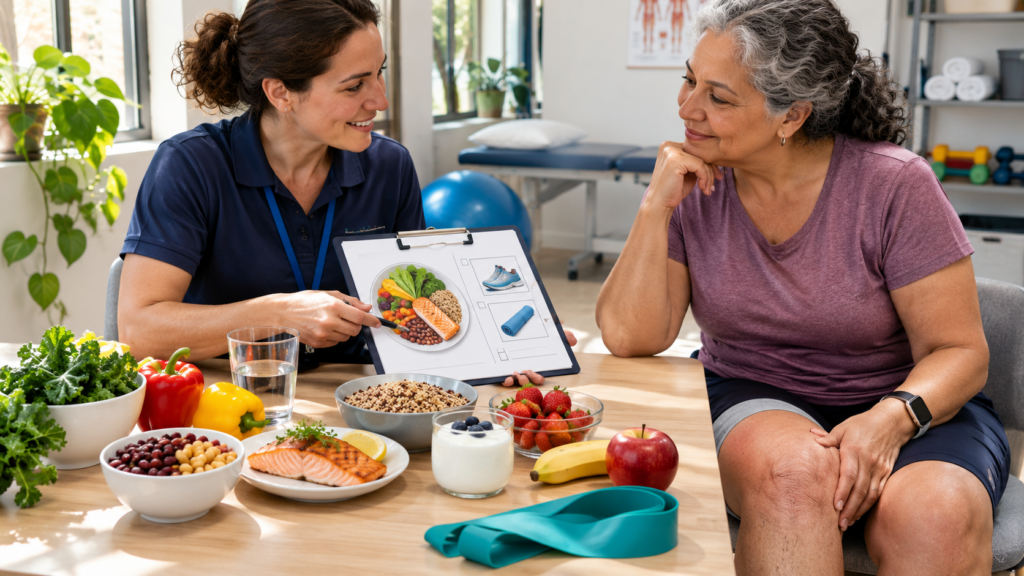
Nutrition can help knee osteoarthritis management by supporting muscle, activity, and gradual weight change when appropriate. It cannot regrow cartilage, so the food plan should work alongside strengthening, aerobic exercise, and symptom-guided pacing.
Set realistic nutrition goals
The useful targets are steady energy, adequate protein, varied plant foods, and a pattern you can sustain. Avoid plans that promise to “reverse” arthritis through one food or supplement.
- Use regular balanced meals.
- Support exercise with enough energy.
- Preserve muscle with protein.
- Consider weight management only when relevant.
The NICE osteoarthritis guideline identifies therapeutic exercise and weight management, when appropriate, as core treatments.
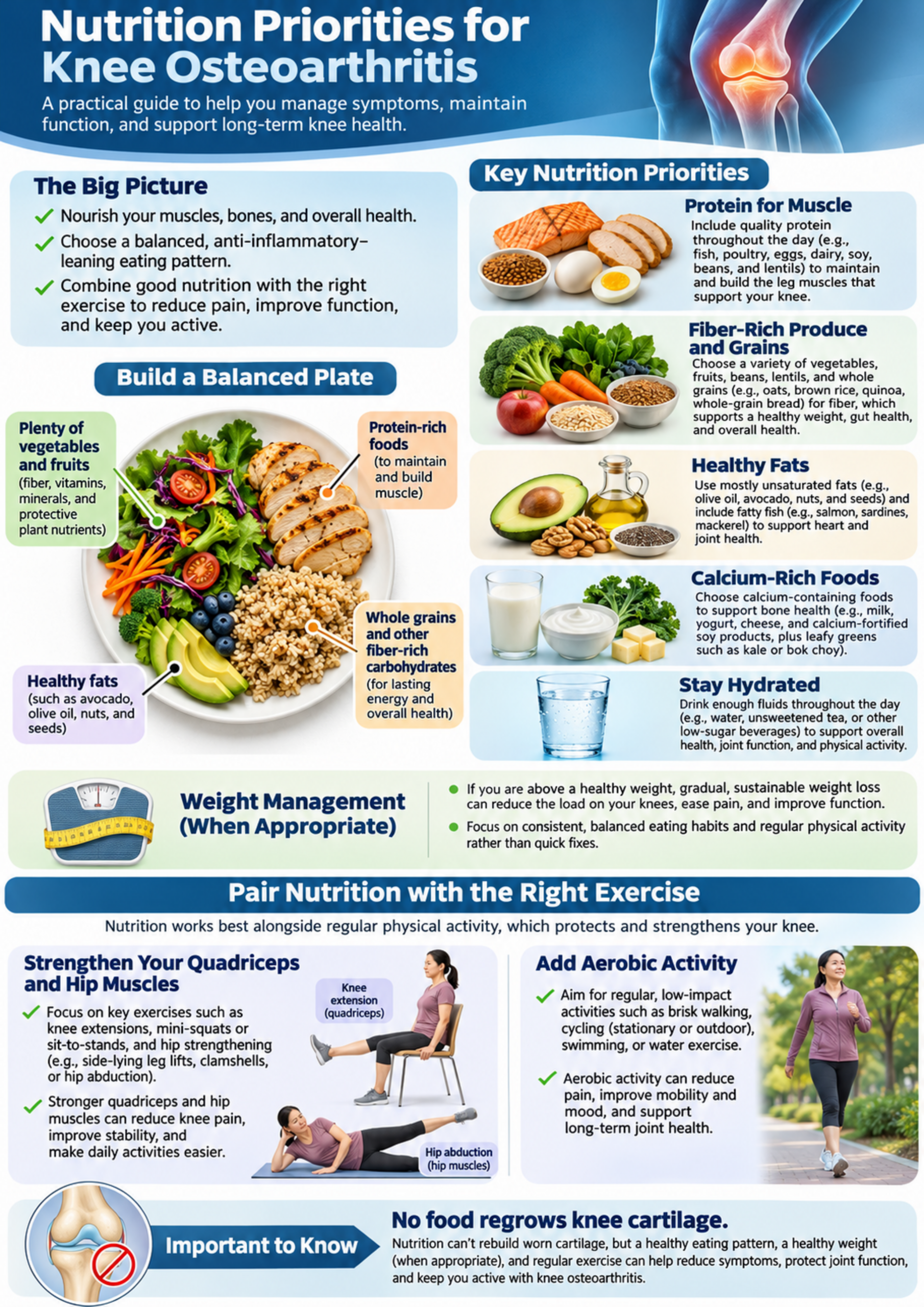
Build a balanced plate
A practical plate combines produce, protein, a whole-grain or starchy food, and healthy fat. Portions can change with appetite and goals without banning entire food groups.
- Fill a generous part with vegetables or fruit.
- Add fish, eggs, beans, tofu, poultry, or lean meat.
- Include oats, grains, potatoes, pasta, or bread.
- Use olive oil, nuts, seeds, or avocado.
Use protein to support the knee
Protein does not repair cartilage directly, but it supports quadriceps, hip, and calf muscles that help control knee load. Spread protein across the day rather than saving most of it for dinner.
- Add eggs or yogurt to breakfast.
- Use beans, tuna, chicken, tofu, or cottage cheese at lunch.
- Include a protein source at dinner.
- Use a protein-containing snack after exercise when needed.
Choose fiber-rich carbohydrates
Carbohydrates provide energy for walking, cycling, strengthening, work, and daily tasks. Whole grains, beans, fruit, and starchy vegetables also contribute fiber.
- Choose oats and whole-grain bread.
- Use beans, lentils, and chickpeas.
- Include potatoes, rice, or pasta in suitable portions.
- Pair carbohydrate with protein and produce.
Include healthy fats and varied produce
Fish, nuts, seeds, and olive oil fit a cardiometabolic healthy pattern. Colorful vegetables and fruit add variety and micronutrients without needing “anti-inflammatory” marketing claims.
- Eat oily fish when suitable.
- Use olive oil for cooking or dressings.
- Add berries, citrus, leafy greens, and peppers.
- Use frozen produce on low-energy days.
Approach weight management carefully
For people with overweight or obesity, gradual weight loss can improve knee pain, function, and quality of life. The process should be supported and should preserve protein and exercise capacity.
- Choose a realistic goal with a clinician.
- Reduce portions gradually.
- Keep protein and vegetables prominent.
- Track walking, stairs, sleep, and energy as well as weight.
The CDC osteoarthritis guidance recommends physical activity, healthy weight, joint protection, and collaborative care.
Pair meals with knee exercise
Therapeutic exercise is central to knee osteoarthritis care. Food supports the ability to complete sit-to-stand work, squats within tolerance, hip strengthening, walking, cycling, and other prescribed activity.
- Eat a light snack before exercise if needed.
- Use a normal protein-containing meal afterward.
- Drink regularly unless restricted.
- Increase exercise gradually with symptom monitoring.
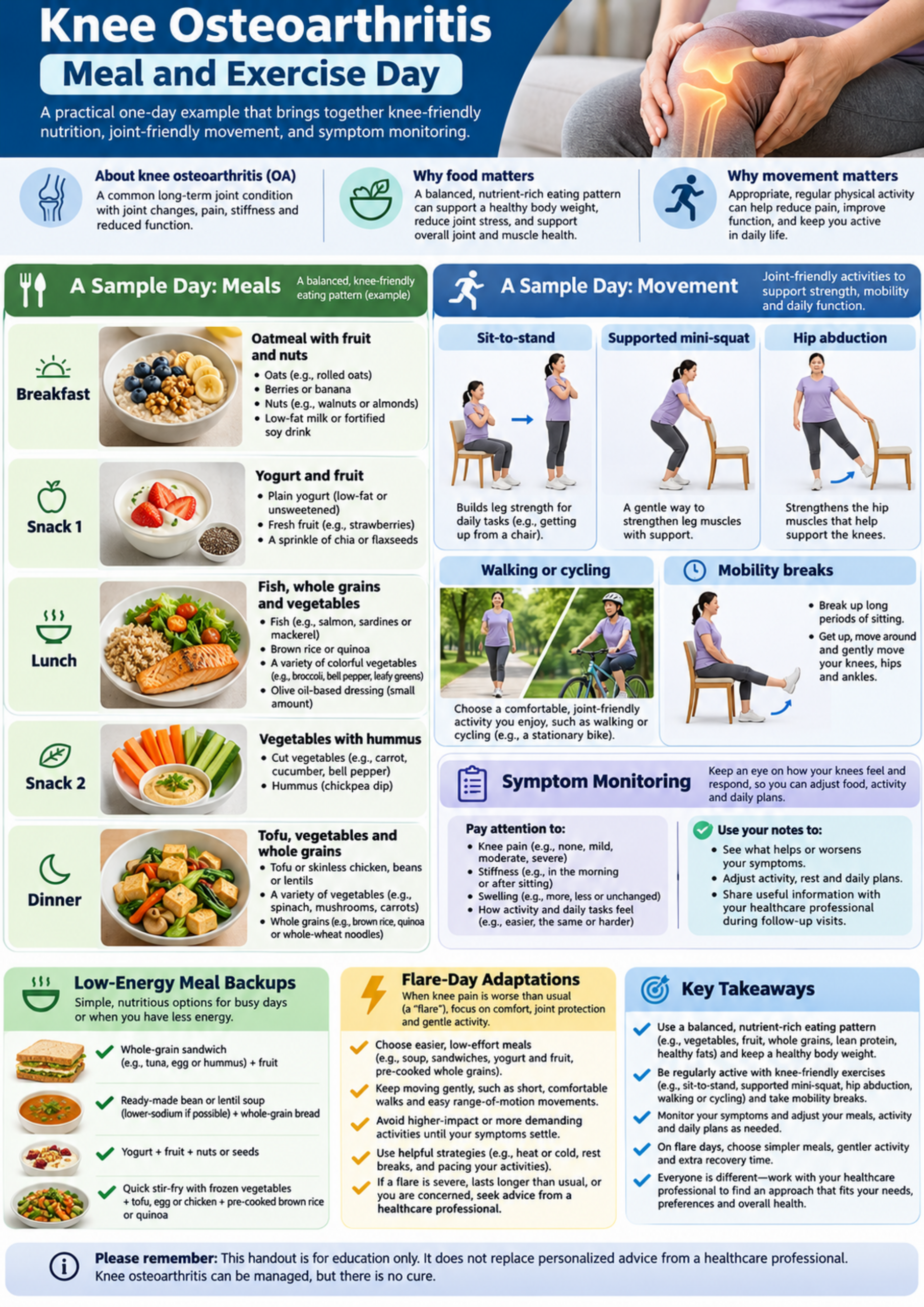
Plan for flares and difficult days
A painful day may reduce shopping, standing, and cooking tolerance. Keep fast options that still provide protein, produce, and energy.
- Store frozen vegetables and fruit.
- Keep eggs, yogurt, tofu, beans, or canned fish.
- Use ready-cooked grains or soup.
- Prepare food seated when standing is difficult.
Use supplements cautiously
Glucosamine, chondroitin, turmeric, collagen, and other products are heavily marketed. Evidence and product quality vary, and interactions with anticoagulants, diabetes medicines, and other treatments matter.
- Review products with a pharmacist or clinician.
- Check for duplicate ingredients.
- Avoid cartilage-regrowth claims.
- Stop and report adverse effects.
| Approach | Possible value | Main caution |
|---|---|---|
| Balanced food pattern | Supports muscle, energy, and general health | Must fit individual medical needs |
| Gradual weight management | May improve knee pain and function | Avoid severe restriction and stigma |
| Protein distribution | Supports strength and exercise recovery | Individualize with kidney disease |
| Supplements | May address a defined gap | Variable evidence and interactions |
Conclusion
Nutrition for knee osteoarthritis should support the work that matters most: staying active, preserving muscle, and managing weight when appropriate. Build balanced meals and keep exercise at the center of care.
- No food regrows knee cartilage.
- Protein supports working muscles.
- Gradual habits beat restrictive plans.
- Exercise remains a core treatment.
Frequently asked questions
1. Can diet cure knee osteoarthritis?
No. Diet supports health and symptom management but does not reverse structural osteoarthritis.
2. Does weight loss help knee pain?
For people with overweight or obesity, gradual weight loss can improve pain and function.
3. What protein foods are useful?
Fish, eggs, dairy or fortified alternatives, beans, lentils, tofu, poultry, and lean meat can all fit.
4. Should I avoid carbohydrates?
No. Fiber-rich carbohydrates provide useful energy for exercise and daily activity.
5. Is fish oil required?
No. Fish can fit a healthy diet, but supplements are optional and should be checked for interactions.
6. Are tomatoes bad for knee arthritis?
There is no general need to avoid tomatoes unless an individual has a clear reproducible problem.
7. Should I take collagen?
It is not required, and evidence for meaningful osteoarthritis benefit is uncertain.
8. What should I eat before physiotherapy?
A light snack with carbohydrate and protein can help if there has been a long gap since eating.
9. What if pain makes cooking difficult?
Use frozen produce, ready-cooked grains, easy protein foods, and seated preparation.
10. Can nutrition replace strengthening?
No. Nutrition supports capacity, while strengthening directly targets knee function.