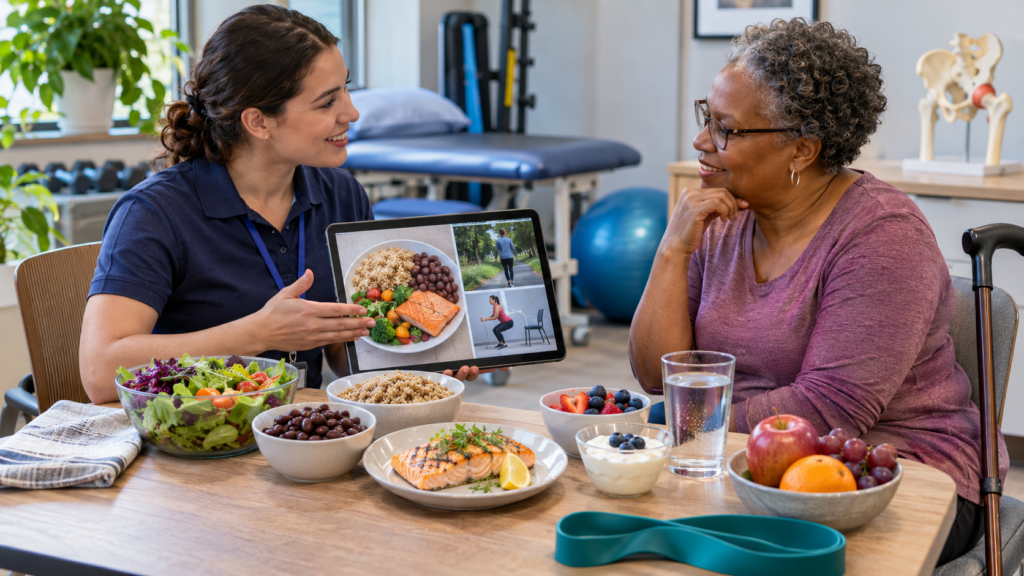
If hip osteoarthritis makes walking, stairs, or exercise harder, food is best used to support the work your hip still needs to do. Nutrition cannot regrow worn cartilage, but it can help preserve muscle, support bone, manage body weight when relevant, and make rehabilitation easier to sustain.
Set Practical Nutrition Goals
The most useful plan is one you can repeat on ordinary days. Start with a few reliable meals, then adjust portions and timing to your appetite, activity, health conditions, and medications.
- Include a protein source at each main meal.
- Build most meals around minimally processed foods.
- Drink regularly rather than waiting for strong thirst.
- Avoid rigid rules that make eating or social life harder.
Build a Balanced Plate
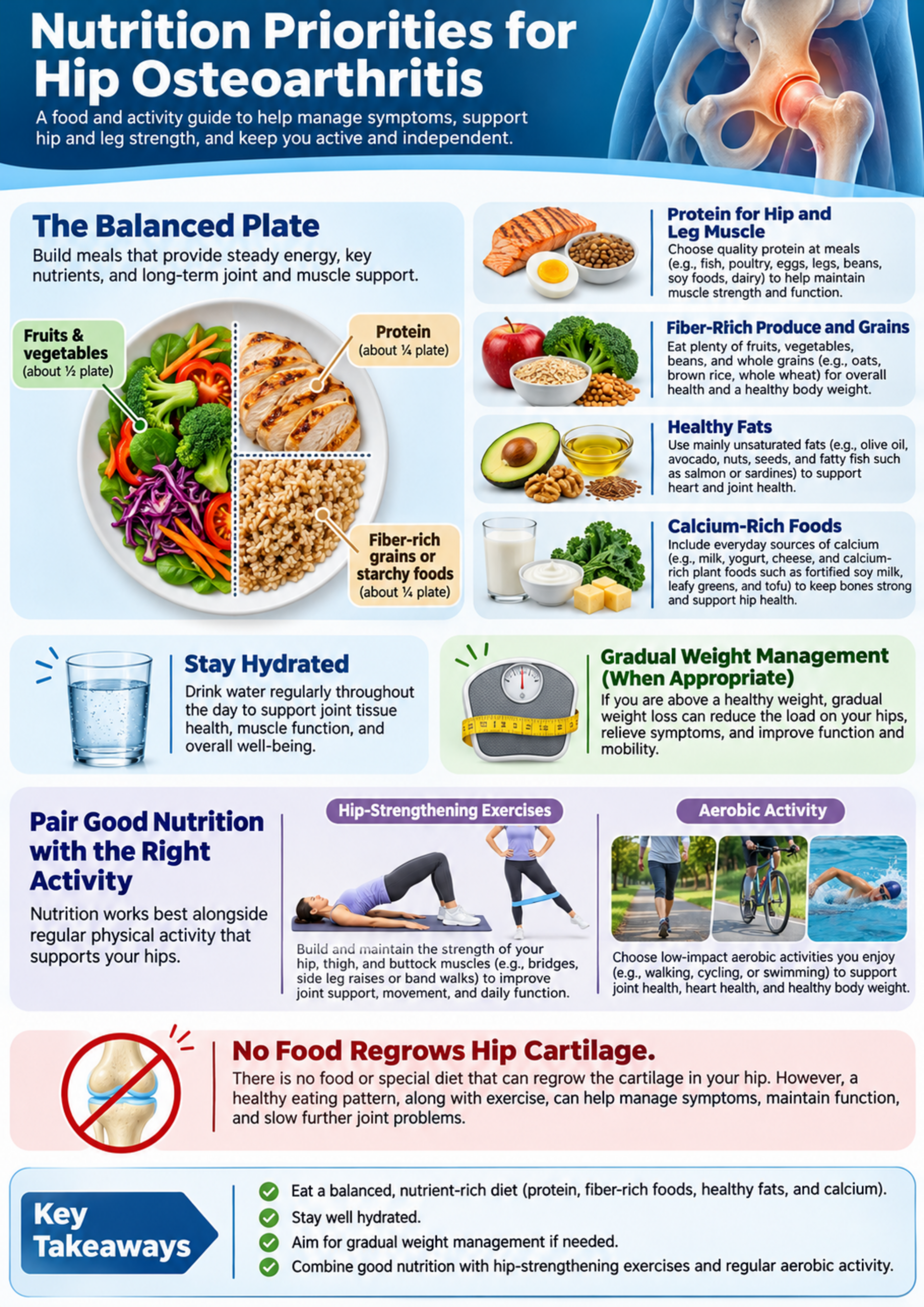
A simple plate pattern prevents one food or supplement from taking over the whole plan. It also makes portion changes easier without requiring calorie counting.
- Fill about half the plate with vegetables or fruit.
- Use roughly one quarter for protein.
- Use roughly one quarter for whole grains, potatoes, or another fiber-rich carbohydrate.
- Add a modest amount of unsaturated fat.
| Priority | Practical choices | Why it matters |
|---|---|---|
| Protein | Fish, eggs, yogurt, beans, lentils, poultry, tofu | Supports muscle maintenance and strengthening |
| Fiber | Vegetables, fruit, oats, beans, whole grains | Supports fullness, bowel health, and cardiometabolic health |
| Bone nutrients | Fortified milk or alternatives, yogurt, calcium-rich foods | Supports the bone surrounding the hip joint |
| Unsaturated fat | Olive oil, nuts, seeds, avocado, oily fish | Improves overall diet quality and replaces saturated fat |
Use Protein to Support Hip Strength
Stronger hip and thigh muscles can improve how you tolerate daily loading. Spread protein across the day so breakfast and lunch contribute, rather than leaving nearly all of it for dinner.
- Add Greek yogurt, eggs, tofu, or milk to breakfast.
- Use tuna, chicken, beans, or lentils at lunch.
- Pair a protein food with a snack after strengthening exercise.
- Ask a clinician before increasing protein if you have kidney disease.
Choose Fiber-Rich Carbohydrates
Carbohydrate is useful fuel for walking, cycling, and rehabilitation. The practical distinction is not “carbs versus no carbs,” but how often your choices also provide fiber and micronutrients.
- Choose oats, brown rice, whole-grain bread, or potatoes with skin.
- Add beans or lentils to soups, salads, and stews.
- Keep fruit available for a convenient snack.
- Increase fiber gradually and drink enough fluid.
Favor Unsaturated Fats and Colorful Produce
No single “anti-inflammatory” food treats hip osteoarthritis. A pattern rich in vegetables, fruit, nuts, seeds, olive oil, and fish is more credible and useful than chasing one ingredient.
- Cook with olive or rapeseed oil most often.
- Use nuts or seeds in sensible portions.
- Include oily fish if it suits your diet.
- Rotate produce colors across the week.
Approach Weight Management Without Crash Dieting
If higher body weight is adding to symptoms or limiting activity, gradual loss may reduce the load your hip handles during walking. The NICE osteoarthritis guideline recommends weight management alongside therapeutic exercise when appropriate, not as a substitute for movement.
- Reduce portions modestly rather than skipping meals.
- Keep protein and vegetables prominent.
- Limit liquid calories and frequent high-calorie snacks first.
- Track function, energy, and strength as well as scale weight.
Cover Calcium and Vitamin D
Osteoarthritis affects the joint, while calcium and vitamin D support bone health more broadly. Use food first where possible, and review the NIH vitamin D guidance before assuming a high-dose supplement is needed.
- Choose dairy or fortified plant alternatives.
- Include canned fish with edible bones if appropriate.
- Check labels because fortification varies.
- Discuss testing or supplements with a clinician if you are at risk of deficiency.
Pair Meals With Movement
Food supports capacity; it does not replace progressive loading. The CDC arthritis self-care guidance emphasizes physical activity, healthy weight, and working with healthcare professionals as complementary parts of care.
- Eat a light meal one to three hours before exercise if needed.
- Use water for most routine sessions.
- Practice hip strengthening two or three days per week as prescribed.
- Build aerobic activity in tolerable bouts rather than waiting for a pain-free day.
Plan for Flare and Low-Energy Days
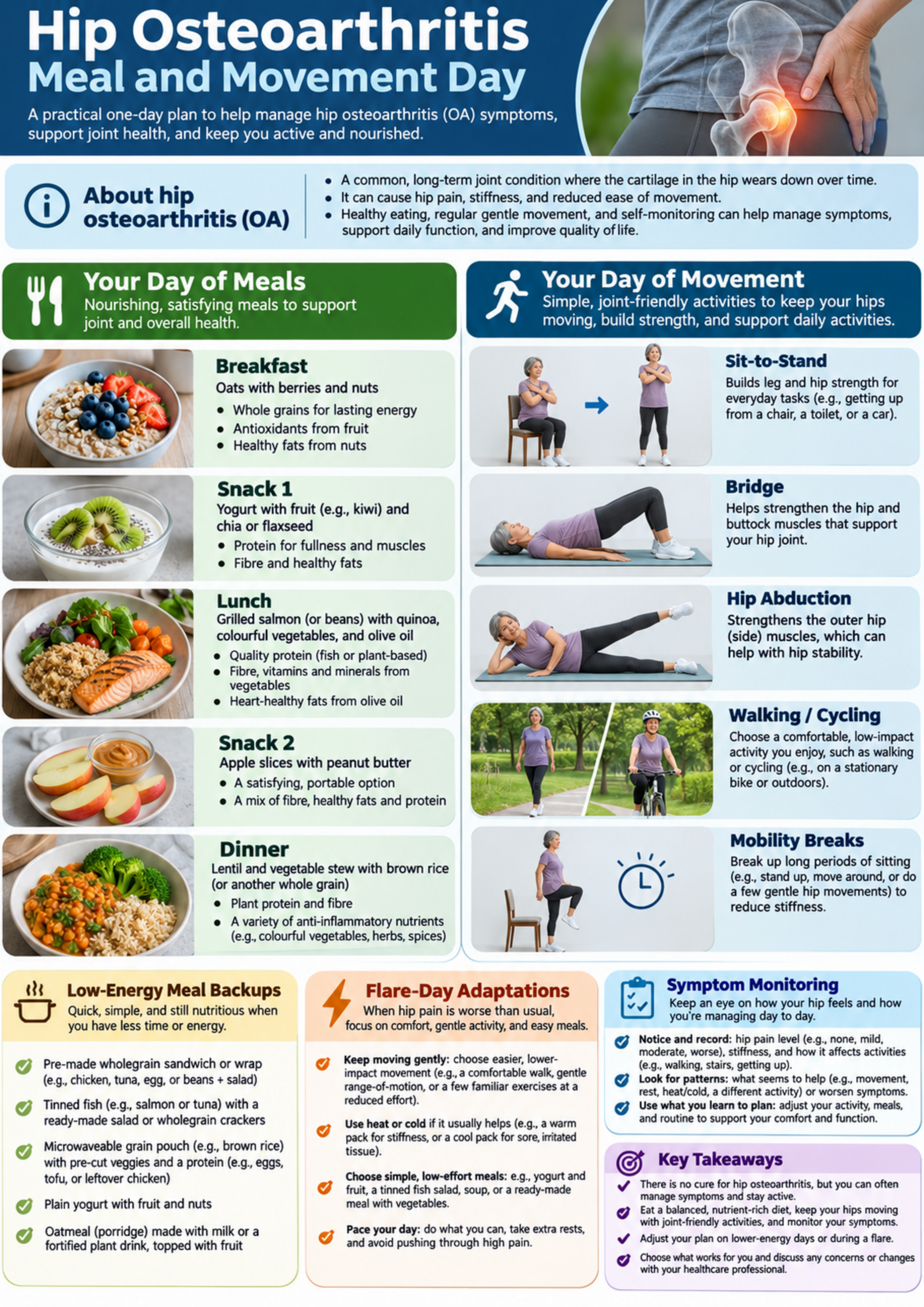
On difficult days, convenience is part of good planning. Keep a few balanced options that need little chopping, standing, or cleanup.
- Use frozen vegetables and microwaveable whole grains.
- Keep canned beans, fish, or soup available.
- Try yogurt, fruit, and nuts for a no-cook meal.
- Sit for food preparation and split tasks into short blocks.
Be Careful With Supplements
Glucosamine, collagen, turmeric, and other products are often marketed more strongly than the evidence supports. Supplements can also interact with anticoagulants, diabetes medicines, or other treatments.
- Do not replace meals or prescribed care with a supplement.
- Check the exact product and dose with a pharmacist.
- Stop products that cause side effects.
- Judge value by meaningful function, not testimonials.
Conclusion
A sound hip osteoarthritis diet is not a special cure. It is a repeatable eating pattern that helps you maintain muscle, nourish bone, manage weight when relevant, and arrive at exercise with enough energy to progress.
Frequently Asked Questions
Can food reverse hip osteoarthritis?
No food has been shown to regrow hip cartilage. Nutrition supports muscle, bone, weight management, and general health while exercise and clinical care address function.
Is there one best diet for hip osteoarthritis?
No single named diet is required. A balanced pattern rich in vegetables, fruit, whole grains, protein foods, and unsaturated fats is a practical starting point.
Should I avoid nightshade vegetables?
Routine avoidance is not supported by good evidence. Remove a food only when you have a reproducible reaction or a clinician-guided reason.
Will losing weight always improve hip pain?
Not always, because pain has several drivers. When weight loss is appropriate, gradual change may reduce joint load and improve movement tolerance.
How much protein do I need?
Needs vary with body size, age, activity, and health conditions. A useful first step is a protein source at each meal, with individualized advice when kidney disease or undernutrition is present.
Are omega-3 supplements necessary?
They are not required for hip osteoarthritis. Oily fish can contribute omega-3 fats, while supplements should be checked for dose, bleeding risk, and interactions.
Should I take vitamin D?
Supplementation depends on intake, sun exposure, risk factors, and sometimes blood testing. Use local guidance and discuss higher doses with a clinician.
What should I eat before physiotherapy?
If you need fuel, choose a light familiar meal with carbohydrate and some protein one to three hours beforehand. Avoid experimenting with a heavy meal just before exercise.
What if cooking makes my hip hurt?
Use frozen or pre-cut foods, sit for preparation, and alternate tasks. Convenience foods can still form a balanced meal when protein, produce, and a fiber-rich carbohydrate are included.
When should I see a dietitian?
Seek individualized help for unintended weight loss, diabetes, kidney disease, complex food restrictions, eating concerns, or a plan that is not meeting your needs.