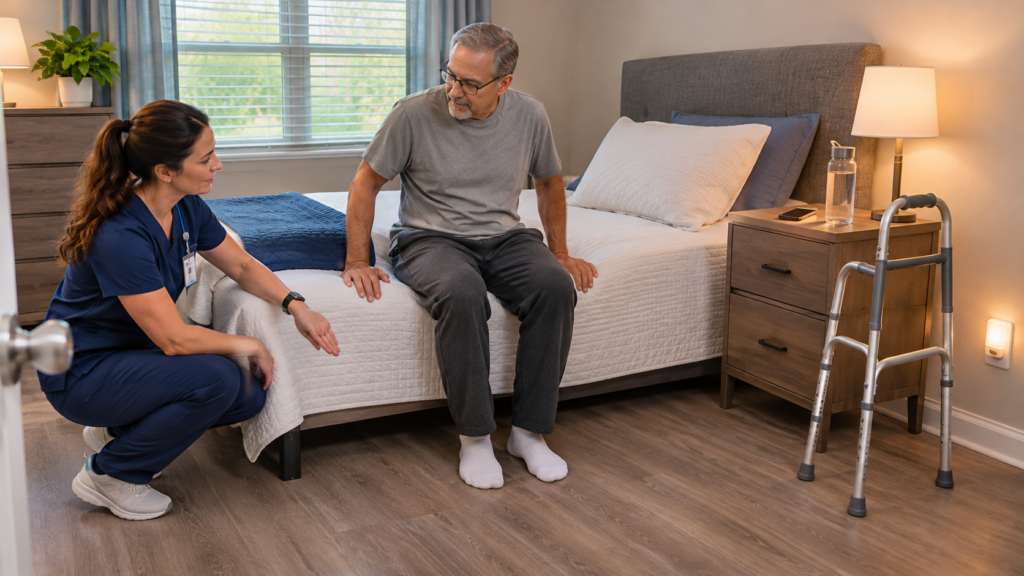
After hip surgery, the bedroom should let you reach the bed, sit, transfer, and get to the bathroom without rushing, twisting, or stepping around clutter. The safest setup is the one matched to the transfer method and precautions your surgical and therapy team actually taught you.
Start With Your Discharge Instructions
Hip precautions differ by procedure, surgical approach, surgeon, and patient. Use written instructions from your team rather than copying a universal list from someone else’s operation.
- Confirm which movements or positions are restricted.
- Ask which side of the bed is safest for your practiced transfer.
- Clarify sleeping-position advice and pillow use.
- Keep the therapy contact number available.
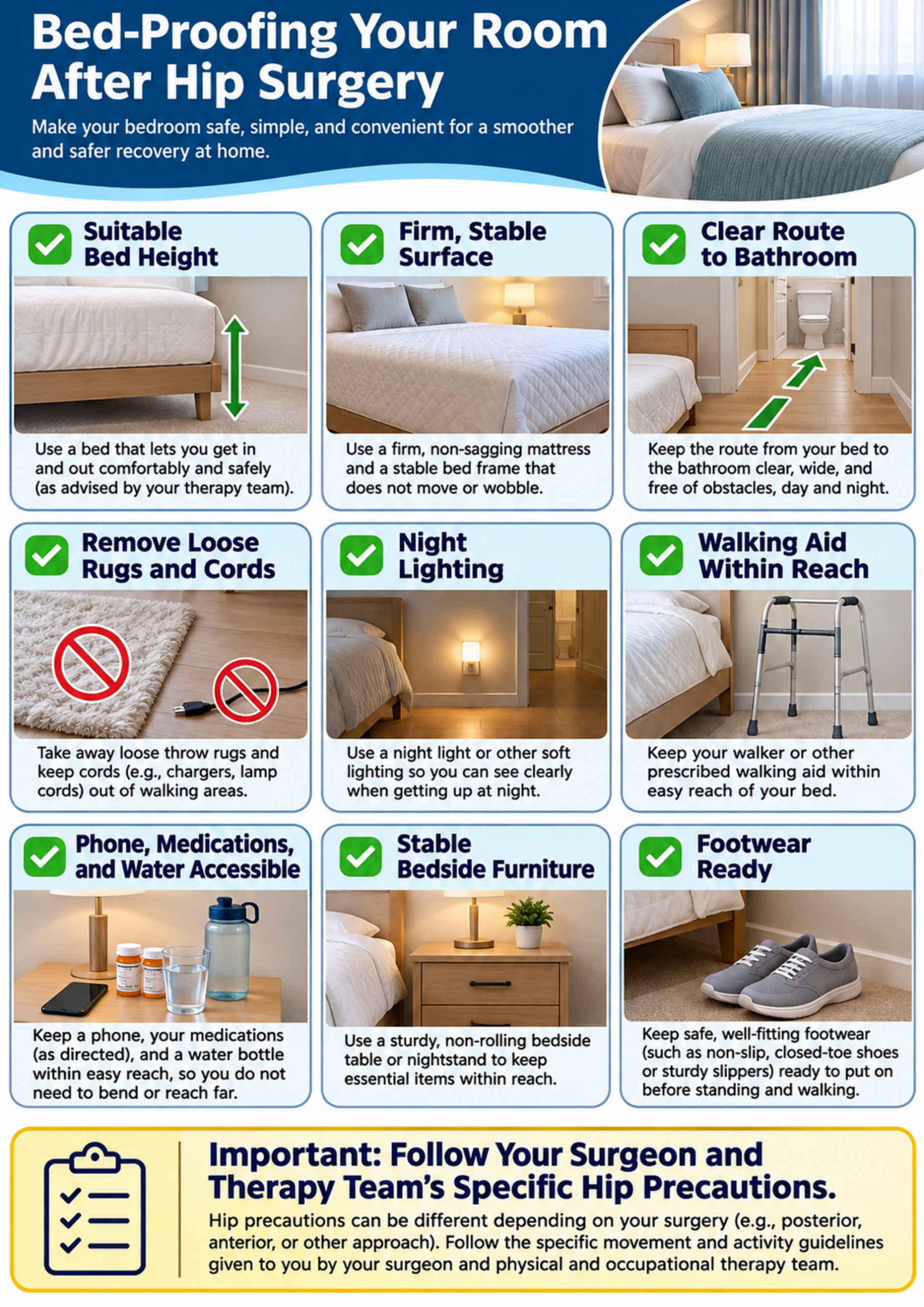
Choose a Suitable Bed Height
The bed should be high enough to sit and stand without a deep hip bend, yet low enough for the feet to contact the floor. The Royal National Orthopaedic Hospital joint-replacement guide notes that ideal bed height depends on the person’s height and transfer comfort.
- Sit on the edge and check whether both feet reach the floor.
- Avoid a mattress that collapses deeply under your weight.
- Confirm any bed raiser is stable and professionally recommended.
- Do not stack loose mattresses or blocks that can shift.
Clear the Route to the Bed
A walking aid needs more turning space than normal walking. Arrange a direct path from the doorway to the bed and from the bed to the bathroom.
- Remove loose rugs, cords, boxes, and low furniture.
- Move laundry baskets out of the walking route.
- Leave enough width for the prescribed walker or crutches.
- Keep pets from crossing the path during early recovery.
Create a Bedside Reach Zone
Place essential items where they can be reached without bending to the floor or twisting behind you. A stable bedside surface is safer than balancing items on the mattress.
- Keep the phone and charger within easy reach.
- Use a lidded water bottle to reduce spills.
- Store prescribed medicines according to instructions.
- Place glasses, tissues, and the call device in the same location.
Park the Walking Aid Correctly
The walker or crutches should be close enough to reach after sitting, but not positioned where they block the feet or create a trip hazard. Do not pull on a walking aid to stand unless your therapist has taught that method.
- Use a consistent parking position beside the bed.
- Check that rubber tips and walker feet are secure.
- Keep the aid upright rather than leaning loosely.
- Reach for the stable bed or prescribed support when instructed.
Improve Night Lighting
Pain medicine, fatigue, and getting up quickly can affect balance. Use lighting that turns on before you begin walking, not after you are already across the room.
- Place a lamp switch within reach of the bed.
- Use a low-level night light along the bathroom route.
- Avoid glare that hides floor edges.
- Keep backup lighting available during power interruptions.
Simplify Bedding and Clothing
Heavy blankets and loose sheets can catch the feet or require awkward bending. The RNOH hip-precautions guide suggests that a duvet may be easier to manage than multiple blankets.
- Use lightweight bedding that does not trail on the floor.
- Roll covers aside before transferring if taught to do so.
- Keep nonslip footwear beside the bed.
- Use loose sleepwear that does not wrap around the legs.
Practice the Exact Bed Transfer
Practice with a physical or occupational therapist before discharge whenever possible. General steps include approaching with the prescribed aid, sitting with control, moving back on the mattress, and bringing the legs onto the bed without twisting, but the lead leg and transfer side can vary.
- Back up until you can feel the bed before sitting.
- Reach for a stable surface rather than dropping backward.
- Position the operated leg as your team demonstrated.
- Use a prescribed leg lifter only after instruction.
Compare Common Bedroom Changes
Prioritize modifications that reduce a specific risk. Equipment should solve a measured problem, not simply add more objects to the room.
| Change | Problem addressed | Safety check |
|---|---|---|
| Bed-height adjustment | Deep or difficult transfer | Feet contact floor; platform is stable |
| Clear walking route | Trips and restricted walker turning | No rugs, cords, or narrow gaps |
| Reachable bedside table | Bending and twisting for essentials | Table does not move when touched |
| Night lighting | Poor visibility during bathroom trips | Switch is reachable before standing |
| Prescribed transfer aid | Difficulty moving the operated leg | Correct device and technique confirmed |
- Fix the highest-risk obstacle first.
- Trial changes before the day of surgery when possible.
- Ask an occupational therapist to check uncertain equipment.
- Remove devices that make the space more crowded.

Plan the First Nights
The NHS hip-replacement recovery guidance emphasizes following the advice given by the hospital team and using prescribed walking aids initially. Plan for fatigue and assistance rather than assuming every transfer will feel the same as daytime practice.
- Sit briefly before standing if you feel light-headed.
- Keep regular bathroom routes clear at all times.
- Arrange help for pets, heavy bedding, and dropped items.
- Know whom to contact for wound, pain, or mobility concerns.
Conclusion
Bed-proofing after hip surgery is mainly about bed height, a clear route, reachable essentials, lighting, and a practiced transfer. Match every modification to your own precautions and use equipment only when it improves safety without adding clutter.
Frequently Asked Questions
How high should the bed be after hip surgery?
The correct height depends on your leg length, transfer ability, and precautions. Both feet should reach the floor while the hip position remains within the limits your team provided.
Which side of the bed should I use?
Use the side and sequence practiced with your therapist. Recommendations can differ by surgical approach and home layout.
Do I need to sleep on my back?
Not everyone receives the same restriction. Follow the sleeping-position instructions from your surgeon or therapy team.
Can I use a second mattress to raise the bed?
Only if the arrangement is stable and approved for your situation. Loose stacking can create an unsafe surface or excessive height.
Should the walker stay beside the bed?
Yes, keep it within safe reach but outside the foot path. Use the parking position taught during transfer practice.
Is a leg lifter necessary?
Some people find one helpful, while others do not need it. Use it only after instruction so the hip is not twisted or pulled awkwardly.
What should I remove from the bedroom?
Remove loose rugs, cords, low clutter, unstable tables, and anything that narrows the route for your walking aid.
How can I manage dropped items?
Ask for help or use a prescribed long-handled reacher. Do not bend or twist beyond the precautions given to you.
When should I seek help after surgery?
Contact the surgical team for increasing wound redness or drainage, fever, uncontrolled pain, new calf swelling, or a sudden decline in mobility; use emergency services for severe breathing or chest symptoms.
Who can assess my bedroom setup?
An occupational therapist is especially helpful for equipment and home layout, while a physical therapist can confirm transfers and walking-aid use.