Recovering from total knee replacement surgery involves several rehabilitation milestones, from walking safely and restoring knee movement to rebuilding strength and returning to everyday activities.
This total knee replacement rehabilitation milestone guide explains what to expect at each stage, which exercises support recovery, how physical therapists assess progress, and when symptoms require attention.
Recovery timelines are approximate, and individual progress depends on your condition, rehabilitation response, and surgical team’s instructions.
Understanding Total Knee Replacement Rehabilitation Milestones
Total knee replacement rehabilitation focuses on restoring comfortable movement, improving muscle strength, and helping patients regain independence after surgery.
Recovery is gradual because the surrounding muscles and soft tissues need time to recover while the patient relearns everyday movements.
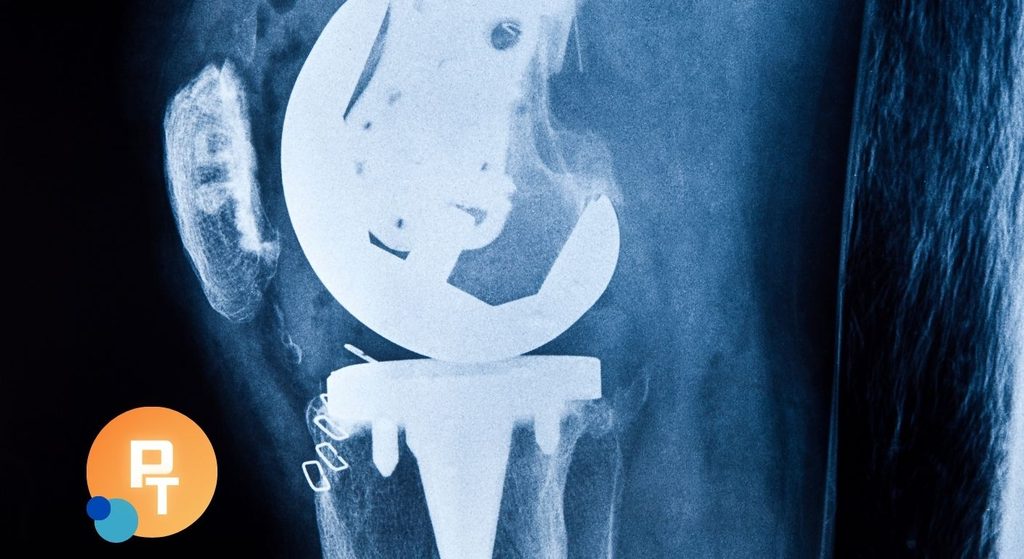
A rehabilitation milestone is a functional achievement that helps a physical therapist determine whether treatment should progress or be adjusted.
Milestones are more useful when they reflect actual abilities rather than simply the number of weeks since surgery.
Common rehabilitation milestones include:
- Walking safely with an appropriate assistive device.
- Straightening the operated knee more effectively.
- Gradually improving knee bending.
- Activating the quadriceps muscles.
- Getting in and out of bed independently.
- Standing up from a chair with less assistance.
- Climbing and descending stairs safely.
- Improving walking distance and endurance.
- Returning to daily activities with better confidence.
- Managing swelling and exercise-related discomfort.
Not every patient reaches these milestones at the same time.
Preoperative mobility, muscle weakness, other health conditions, postoperative symptoms, and individual rehabilitation needs can influence recovery.
Physical therapists use clinical assessment and functional testing to monitor progress, select exercises, and establish realistic goals.
The American Physical Therapy Association’s clinical practice guideline for total knee arthroplasty provides evidence-based recommendations for physical therapist management.
Total Knee Replacement Rehabilitation Timeline
Most patients begin rehabilitation shortly after surgery, followed by progressive exercises and functional training over subsequent weeks and months.
The rehabilitation plan should follow the operating surgeon’s instructions, including any individual weight-bearing or activity precautions.
The table below summarizes typical rehabilitation priorities.
These timeframes are approximate clinical planning stages, not mandatory deadlines or universal criteria for progression.
| Recovery stage | Main rehabilitation priorities | Functional milestones |
|---|---|---|
| First 24–72 hours | Early mobility, muscle activation, circulation exercises, safe transfers | Standing, short-distance assisted walking, basic exercises |
| Weeks 1–2 | Swelling management, knee movement, walking practice | Safer household mobility, improved knee extension and flexion |
| Weeks 3–4 | Strengthening, gait training, movement control | Improved walking quality, easier transfers, greater independence |
| Weeks 5–6 | Progressive resistance, endurance, balance | Longer walking distances, better stair control, improved daily function |
| Weeks 7–12 | Functional strengthening, balance, activity tolerance | More independent community activities and improved endurance |
| Months 3–6 | Advanced functional recovery and activity progression | Greater strength, confidence, and participation in suitable activities |
| Beyond 6 months | Continued strengthening and long-term activity | Further gains in function, endurance, and activity tolerance |
The table should not be interpreted as a fixed recovery schedule.
Some patients require additional rehabilitation time, while others progress more quickly.
When assessing milestones, physical therapists consider:
- Knee extension and flexion range of motion.
- Quadriceps strength and control.
- Walking mechanics and assistive-device needs.
- Ability to perform everyday activities.
- Pain and swelling responses.
- Balance and confidence during movement.
A patient who walks farther but develops considerable swelling afterward may need a different exercise progression than someone tolerating the same distance comfortably.
Phase 1: Immediate Rehabilitation During the First Days
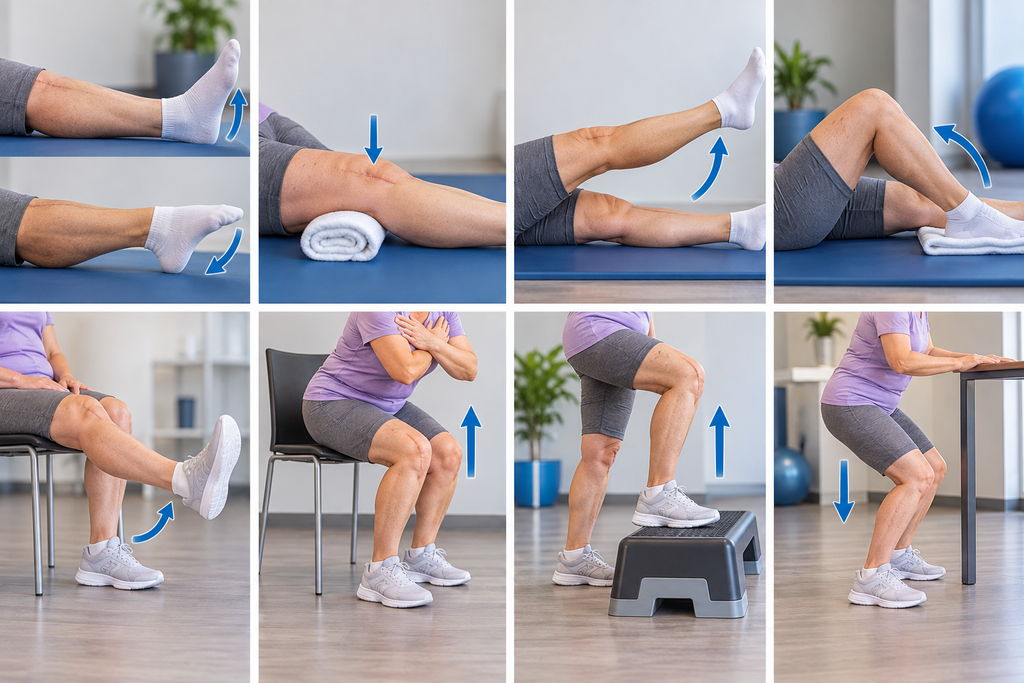
Early rehabilitation generally begins in the hospital once the patient is medically stable and cleared to mobilize.
Physical therapy commonly starts within the first 24 hours following surgery, as supported by contemporary clinical practice guidance.
The initial priority is safe movement rather than intensive strengthening.
Patients learn how to move their operated leg, transfer between positions, and begin walking with appropriate support.
Early Mobility and Walking
A physical therapist may help the patient stand beside the bed, transfer to a chair, and walk a short distance using a walker or crutches.
Early rehabilitation activities commonly include:
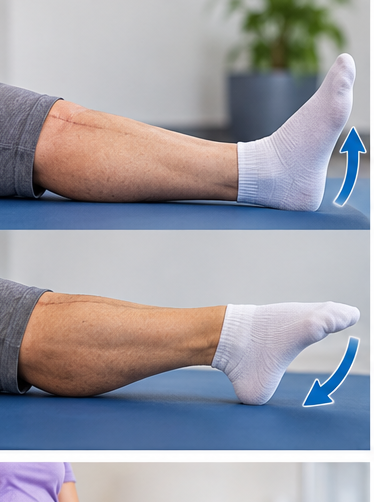
- Ankle pumps to encourage lower-limb movement.
- Quadriceps contractions with the leg supported.
- Gentle knee bending within tolerance.
- Assisted knee straightening exercises.
- Bed mobility and positioning practice.
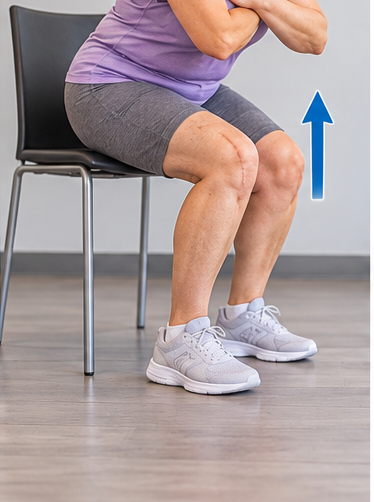
- Sit-to-stand transfers.
- Short-distance walking with an assistive device.
- Stair training when needed for safe discharge.
The patient should follow the prescribed weight-bearing instructions.
Many people receiving a routine total knee replacement are permitted to bear weight as tolerated, but individual restrictions may differ.
Quadriceps Activation
The quadriceps muscles often become difficult to activate following knee replacement because of postoperative pain, swelling, and changes in neuromuscular activation.
A commonly prescribed exercise is the quadriceps set:
- Lie or sit with the operated leg supported.
- Gently tighten the muscles at the front of the thigh.
- Attempt to straighten the knee without forcing the movement.
- Hold briefly while breathing normally.
- Relax and repeat as prescribed.
The physical therapist observes whether the quadriceps contract effectively and whether the patient can control the knee during movement.
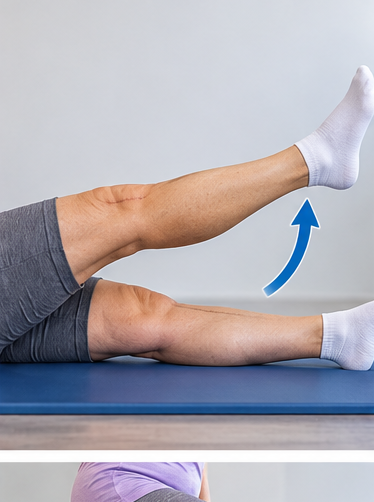
A straight-leg raise may be introduced when appropriate, provided the patient can perform it safely without excessive extension lag.
Patients should receive an individualized home program rather than attempting every available postoperative exercise.
The American Academy of Orthopaedic Surgeons’ knee replacement exercise guide provides examples of commonly used early exercises.
Phase 2: Rehabilitation Milestones During Weeks 1–2
During the first two weeks, rehabilitation typically emphasizes knee movement, safe household walking, muscle activation, and symptom management.
Pain, swelling, sleep disruption, and difficulty bending the knee are common during this period.
Symptoms may fluctuate with activity and should be considered when planning exercises.
Restoring Knee Extension and Flexion
Knee extension refers to straightening the knee, while flexion refers to bending it.
Both movements are important for comfortable walking and daily activities.
Knee extension is especially relevant to walking mechanics and standing stability.
Knee flexion contributes to transfers, sitting, stair negotiation, and other functional tasks.
Common mobility exercises include:
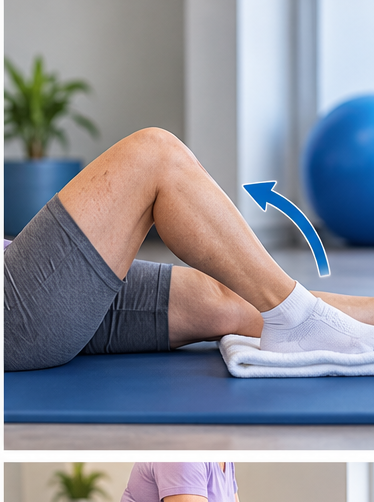
- Heel slides: Slide the heel toward the body to bend the knee, then return slowly.
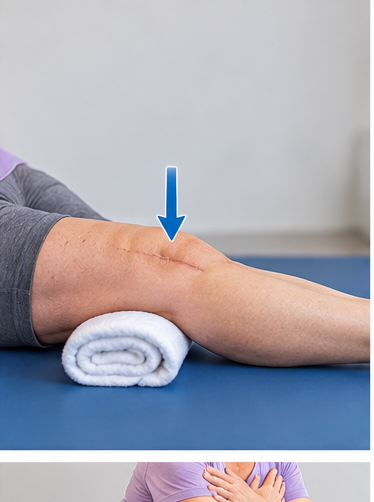
- Supported knee extension: Position the leg as instructed to encourage comfortable straightening.
- Seated knee bends: Move the foot backward beneath the chair within tolerance.
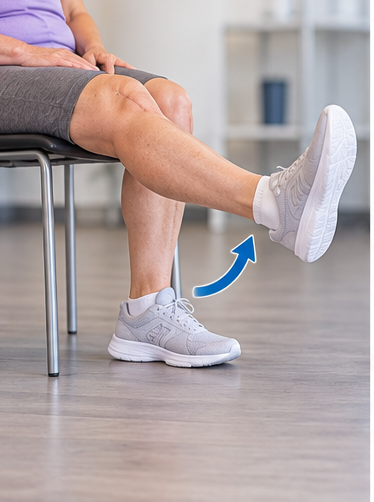
- Active knee extension: Straighten the lower leg while seated, as permitted.
- Gentle assisted movement: Use appropriate assistance when recommended by the therapist.
Exercises should produce a manageable response rather than severe or escalating pain.
Some rehabilitation protocols specify numerical range-of-motion targets for particular stages.
However, those targets depend on the clinical pathway and should not be treated as universal pass-or-fail thresholds.
Managing Swelling and Exercise Tolerance
Postoperative swelling can limit muscle activation, restrict movement, and affect walking comfort.
Useful strategies include:
- Elevating the leg as instructed.
- Using cold therapy with a protective barrier when appropriate.
- Alternating activity with recovery periods.
- Performing gentle ankle movements.
- Following prescribed compression instructions.
- Avoiding unnecessarily prolonged standing.
- Monitoring swelling after exercises and walking.
A small temporary increase in discomfort after activity can occur.
However, a marked or persistent increase in pain, warmth, or swelling should prompt reassessment rather than automatically increasing exercise intensity.
Avoid prolonged resting with a pillow directly under the knee in a flexed position unless specifically instructed, because maintaining extension is an important rehabilitation goal.
Phase 3: Strength and Walking Milestones During Weeks 3–6
As the patient becomes more comfortable with basic mobility, rehabilitation shifts toward improving muscle strength, walking mechanics, and functional independence.
The physical therapist may introduce more challenging exercises depending on movement quality, symptoms, and the patient’s ability to tolerate resistance.
Progressive Strengthening
Strengthening after total knee replacement is not limited to the quadriceps.
Hip and lower-limb strength also contribute to balance, walking, and functional movement.
Common strengthening activities include:
- Seated knee extension exercises.
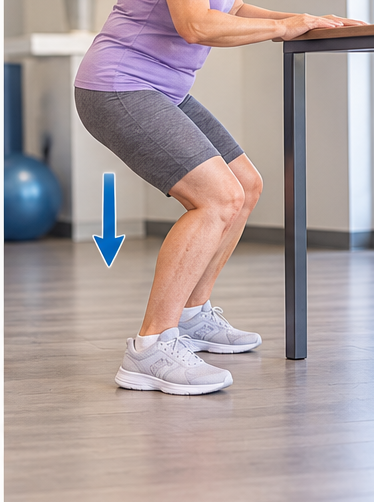
- Supported mini-squats.
- Sit-to-stand repetitions.
- Standing hip abduction.
- Standing heel raises.
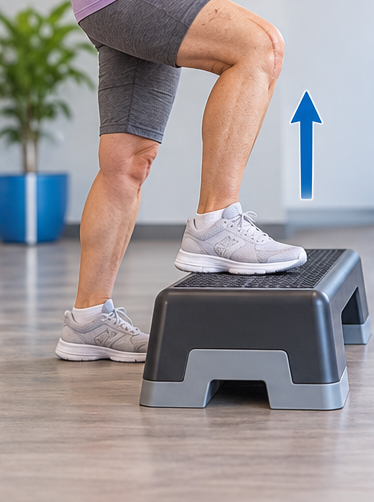
- Step-up exercises.
- Progressive resistance exercises.
- Stationary cycling when sufficient movement is available.
Resistance and exercise difficulty should increase gradually according to the rehabilitation plan.
For example, a patient who performs sit-to-stand transfers comfortably from a raised chair may later progress to a lower seat or reduce arm support.
The aim is controlled, repeatable movement rather than completing the maximum number of repetitions.
Walking Without an Assistive Device
Many patients gradually progress from a walker or crutches to a cane and eventually to independent walking.
However, discontinuing an assistive device should depend on physical function and safety, not simply the elapsed time after surgery.
Before reducing walking support, a physical therapist considers:
- Whether the knee remains stable during weight acceptance.
- Whether the patient can walk without substantial limping.
- Quadriceps control during standing and stepping.
- Balance and fall risk.
- Pain and fatigue during walking.
- Ability to manage the home environment safely.
A cane is generally held in the hand opposite the operated knee when that arrangement is appropriate for the patient.
Walking quality matters more than reaching an arbitrary distance.
Continuing to use an assistive device while improving movement control may be preferable to walking independently with a pronounced limp.
Phase 4: Functional Rehabilitation During Weeks 6–12
During this stage, rehabilitation commonly places greater emphasis on functional strengthening, endurance, balance, and participation in daily activities.
Some patients return to many routine activities earlier, while others need continued support.
Progress depends on strength, movement capacity, symptoms, and the demands of each activity.
Stair Climbing and Functional Movement
Stair negotiation requires quadriceps strength, adequate knee movement, balance, and controlled weight transfer.
Early stair training generally uses a step-to pattern:
- Going upstairs, lead with the non-operated leg.
- Going downstairs, lead with the operated leg.
- Use the handrail or appropriate walking aid.
- Move slowly and maintain balance.
- Progress to alternating steps when strength and control permit.
Descending stairs can remain challenging because the quadriceps must control knee bending while lowering the body.
Physical therapists may use step-down exercises to improve this control, provided the patient is ready for the task.
Balance and Endurance Training
Balance exercises support safe walking and improve the patient’s ability to respond to everyday environmental demands.
Depending on the patient’s abilities, training may include:
- Supported weight shifting.
- Narrow-stance balance practice.
- Tandem standing with appropriate support.
- Single-leg standing when safe.
- Controlled changes of walking direction.
- Step-over tasks.
- Progressive walking distances.
- Stationary cycling for conditioning.
Exercises should become progressively more challenging without unnecessarily increasing fall risk.
For example, a patient may begin by shifting weight between both legs while holding a stable surface, then advance to tasks requiring less hand support.
Clinical guidelines support motor-function training, including balance and gait retraining, as part of rehabilitation after total knee arthroplasty.
Phase 5: Rehabilitation Milestones After Three Months
Recovery does not automatically end after three months.
Although many patients have regained considerable independence, strength, endurance, and movement confidence may continue improving for several additional months.
Rehabilitation at this stage becomes increasingly specific to the patient’s functional goals.
A patient who wants to return to gardening may require different exercises from someone whose primary goal is walking longer distances or managing stairs at work.
Returning to Everyday Activities
Advanced rehabilitation may include:
- Longer community walks.
- Repeated stair climbing.
- Carrying light objects safely.
- Functional squatting within tolerance.
- Progressive resistance training.
- Low-impact aerobic conditioning.
- Balance practice on varied surfaces.
- Task-specific activities for work and hobbies.
Activities should be selected according to physical capacity and any restrictions provided by the surgical team.
Returning to recreational exercise usually involves gradually increasing duration, resistance, or complexity while monitoring the knee’s response.
Choosing Suitable Long-Term Activities
Low-impact exercise is commonly encouraged after total knee replacement because it supports strength, mobility, and cardiovascular fitness without the repetitive impact associated with activities such as running and jumping.
Depending on clinical clearance and individual circumstances, suitable activities may include:
- Walking.
- Stationary or outdoor cycling.
- Swimming once the wound has healed and clearance is provided.
- Low-impact fitness exercises.
- Progressive strength training.
- Selected recreational activities with controlled movement demands.
High-impact sports, activities with substantial collision risk, and activities involving repeated forceful twisting warrant individual discussion with the surgical team.
The AAOS guidance on activities after knee replacement explains return-to-activity considerations and precautions.
How Physical Therapists Measure Rehabilitation Progress
Clinical progress should be evaluated through more than pain scores or the appearance of the knee.
A patient may report reduced pain while still demonstrating quadriceps weakness, poor walking mechanics, or difficulty descending stairs.
Physical therapists combine objective measurements with patient-reported functional limitations.
Common rehabilitation assessments include:
- Range-of-motion measurement: A goniometer measures knee flexion and extension.
- Muscle strength testing: Clinical or instrumented assessment examines muscle performance.
- Gait assessment: Walking speed, step symmetry, and movement quality are observed.
- Timed Up and Go test: Assesses the time required to stand, walk a short standardized distance, turn, and sit.
- 30-Second Chair Stand Test: Records repeated chair rises under a standardized protocol.
- Stair performance assessment: Evaluates the ability to negotiate steps safely.
- Patient-reported outcome measures: Document perceived pain, function, and activity limitations.
Not every assessment is appropriate at every stage.
The therapist selects measures based on safety, patient ability, and the information needed for treatment planning.
Results should be interpreted in context.
A single test score does not establish that recovery is complete or that all functional activities are safe.
Signs of Positive Rehabilitation Progress
Practical indicators of improvement include:
- Greater confidence during walking.
- Improved knee extension and flexion.
- Less assistance during transfers.
- Better quadriceps activation.
- Increased tolerance for daily activities.
- More controlled stair negotiation.
- Reduced dependence on walking aids.
- Improved balance and endurance.
Progress is rarely perfectly linear.
Temporary symptom fluctuations can occur as activity demands increase.
The rehabilitation plan should be adjusted when changes in symptoms, strength, or functional performance indicate that the current workload is inappropriate.
Common Recovery Problems and When to Seek Help
Some discomfort, swelling, stiffness, and muscle weakness are expected after knee replacement.
However, postoperative symptoms should not automatically be attributed to normal rehabilitation.
Physical therapists must recognize symptoms that require assessment by the surgical or medical team.
Persistent Knee Stiffness
Knee stiffness may result from swelling, pain-related guarding, limited movement, or other postoperative factors.
Physical therapy may include appropriately dosed movement exercises, functional training, and selected manual techniques when indicated.
Patients should avoid forceful self-stretching that produces severe pain.
Persistent or worsening motion restrictions warrant timely assessment by the rehabilitation and surgical teams.
Difficulty Activating the Quadriceps
Quadriceps inhibition can make it difficult to straighten the knee actively, raise the leg, or control walking.
Treatment may involve:
- Quadriceps setting exercises.
- Active knee extension.
- Progressive resistance training.
- Functional weight-bearing exercises.
- Neuromuscular electrical stimulation when clinically appropriate.
The therapist monitors muscle performance and adjusts exercise difficulty based on movement quality.
Warning Signs Requiring Medical Assessment
Contact the surgical or medical team promptly for concerning symptoms such as:
- Increasing redness around the surgical wound.
- New wound drainage or concerning changes in wound appearance.
- Fever or chills.
- Markedly worsening knee pain.
- New or increasing calf swelling or tenderness.
- Sudden substantial deterioration in walking ability.
- Persistent symptoms that worsen rather than improve.
New calf symptoms may indicate a blood clot and require prompt medical evaluation.
Sudden shortness of breath, chest pain, fainting, or coughing up blood requires emergency medical care.
Patients should also follow any additional warning-sign instructions provided at hospital discharge.
For further patient guidance, the NHS knee replacement recovery information describes recovery precautions and common postoperative concerns.
Practical Tips for Reaching Rehabilitation Milestones Safely
Successful rehabilitation requires consistency, appropriate exercise progression, and communication with the treating physical therapist.
Increasing exercise intensity too quickly does not necessarily improve recovery.
Excessive activity may aggravate pain and swelling, while insufficient movement can limit functional progress.
A practical home rehabilitation routine should address mobility, strength, walking, and recovery.
Useful habits include:
- Perform prescribed exercises consistently.
- Prioritize quality of movement over repetition count.
- Take short, regular walks within tolerance.
- Monitor pain and swelling after activity.
- Use appropriate walking support until mobility is safe.
- Gradually increase exercise resistance.
- Follow wound-care and postoperative instructions.
- Attend physical therapy and follow-up appointments.
- Report unexpected changes in symptoms.
- Discuss functional goals with your physical therapist.
Consider a patient who experiences substantial knee swelling after a long walk.
Rather than abandoning activity entirely, the therapist may recommend shorter walking periods, additional recovery time, and a more gradual progression.
Similarly, a patient with adequate knee bending but poor stair control may need greater emphasis on quadriceps strengthening and eccentric control rather than additional flexion exercises alone.
The most effective rehabilitation approach addresses the patient’s current limitations and adjusts as function improves.
Conclusion
Total knee replacement rehabilitation progresses from early assisted mobility to strengthening, walking independence, balance, and more demanding daily activities.
Recovery milestones provide useful guidance, but they should not be treated as strict deadlines.
Restoring knee extension, improving quadriceps control, managing swelling, and developing safe movement patterns are central rehabilitation priorities.
An individualized physical therapy program helps patients progress toward meaningful functional goals while respecting symptoms, precautions, and recovery capacity.
Frequently Asked Questions
1. How long does rehabilitation take after total knee replacement?
Many patients regain substantial independence during the first several weeks, while strength, endurance, and overall function may continue improving for months.
Recovery time varies according to preoperative function, postoperative symptoms, health conditions, and rehabilitation progress.
2. When should physical therapy begin after knee replacement?
Physical therapy commonly begins within the first 24 hours after surgery when the patient is medically stable and cleared to participate.
Early rehabilitation focuses on safe mobility, muscle activation, transfers, and short-distance walking.
3. How much should my knee bend after replacement surgery?
There is no single knee-flexion target that applies to every patient at every stage.
Your physical therapist will monitor movement relative to your rehabilitation protocol, initial limitations, and functional needs, including sitting, walking, and negotiating stairs.
4. When can I walk without a walker or cane?
The transition to independent walking depends on balance, muscle control, walking quality, and safety.
Some patients discontinue assistive devices within several weeks, while others require them longer.
A physical therapist can help determine when reducing support is appropriate.
5. Is swelling normal several weeks after knee replacement?
Some postoperative swelling can persist for weeks or months and may increase temporarily after activity.
However, new, worsening, or unusual swelling—particularly when accompanied by calf pain, redness, or other concerning symptoms—requires prompt medical assessment.
6. Can I use a stationary bicycle after knee replacement?
Stationary cycling is commonly introduced when knee movement, comfort, and clinical clearance allow.
Patients may initially use low resistance and gradually increase duration and workload as tolerated under rehabilitation guidance.
7. Why is my operated knee still difficult to straighten?
Difficulty straightening the knee may be associated with swelling, pain, muscle inhibition, or restrictions in knee extension.
A physical therapist can evaluate the contributing limitations and prescribe appropriate mobility and strengthening exercises.
Persistent or worsening restriction should be discussed with the treating team.
8. When can I climb stairs normally after surgery?
Many patients practice stairs early using a handrail and a step-to pattern.
Alternating steps requires adequate knee movement, strength, and balance, particularly when descending.
The appropriate time to progress varies between individuals.
9. When can I return to driving after knee replacement?
Driving depends on which knee was operated on, braking control, reaction time, medication effects, and surgical advice.
Patients should not drive while impaired by sedating medication and should obtain clearance consistent with their clinical circumstances and applicable rules.
10. Do I need to continue exercises after formal physical therapy ends?
Yes.
Continuing an appropriate exercise routine supports long-term strength, mobility, balance, and general physical fitness.
The physical therapist can help develop a maintenance program that matches the patient’s recovery status, health, and preferred activities.