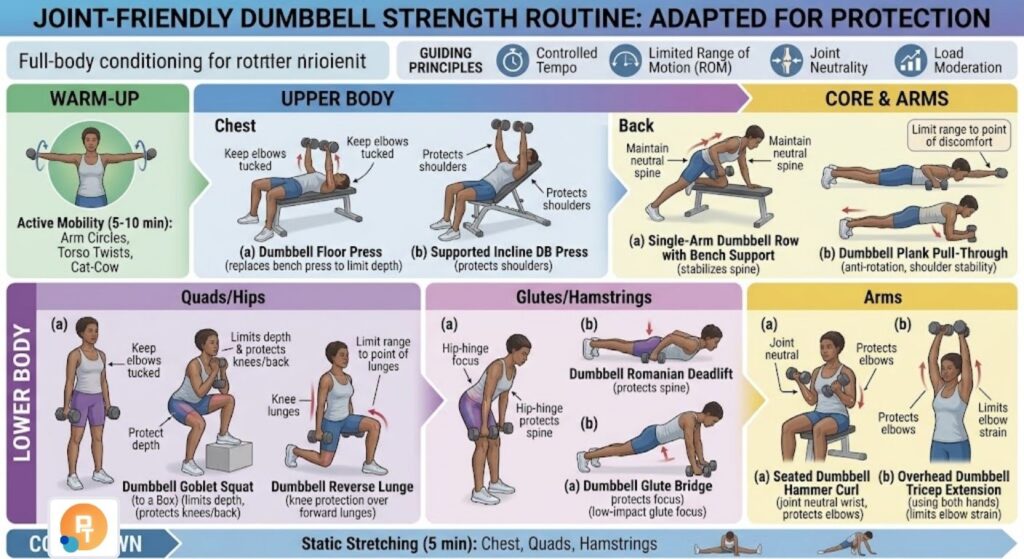
A dumbbell strength routine adapted for joint protection can help build muscle, improve everyday movement, and increase strength without unnecessarily aggravating sensitive joints.
The key is to select manageable weights, control each repetition, adjust the range of motion, and progress according to how your body responds.
Why Joint-Friendly Dumbbell Strength Training Works
Strength training places controlled resistance on muscles and the joints involved in movement.
When appropriately prescribed, it can improve muscular capacity, functional performance, and confidence during everyday activities.
Joint protection does not mean avoiding all joint loading.
It means choosing an appropriate amount of resistance and movement for your current abilities.
A joint-friendly routine can help with:
- Muscle strength: Improving the capacity to lift, carry, push, and pull.
- Functional mobility: Making activities such as standing from a chair and climbing stairs more manageable.
- Movement control: Improving coordination during loaded movements.
- Joint-related symptoms: Supporting function and pain management in some people with osteoarthritis.
- Physical independence: Maintaining the strength needed for daily activities.
The American College of Rheumatology’s osteoarthritis guideline strongly recommends exercise for people with knee, hip, or hand osteoarthritis.
However, no single strengthening program is appropriate for everyone.
Dumbbells are particularly practical because the resistance, grip, movement direction, and exercise position can be adjusted.
How to Prepare Your Joints Before Lifting
A short warm-up helps you become comfortable with movement before introducing resistance.
Five to ten minutes is a reasonable starting point, although the duration can be adjusted.
Begin with gentle activity:
- Walk at a comfortable pace or march in place.
- Perform small shoulder circles.
- Bend and straighten your elbows without weights.
- Practice comfortable hip hinges.
- Perform several controlled chair sit-to-stands.
- Gently move your ankles through a comfortable range.
Next, rehearse the first strength exercise without weights or with very light dumbbells.
Choosing your starting weight
There is no universal starting dumbbell weight for joint protection.
Your appropriate load depends on your strength, symptoms, movement control, and experience.
Choose a weight that allows you to:
- Complete the planned repetitions without excessive straining.
- Maintain control while lifting and lowering.
- Avoid sharp or progressively worsening joint pain.
- Keep breathing without holding your breath.
- Finish with the feeling that you could perform a few more controlled repetitions.
If holding a dumbbell irritates your fingers or wrists, try a lighter weight, a different handle, or an exercise that does not require sustained gripping.
Joint-Friendly Dumbbell Strength Routine: 7 Exercises
This full-body routine emphasizes major muscle groups and practical movement patterns.
It uses a chair, a stable support, and one or two dumbbells.
For beginners, start with one set of each exercise.
The suggested repetitions are starting options rather than medically established limits, and they should be adjusted to individual tolerance.
1. Dumbbell Chair Squat
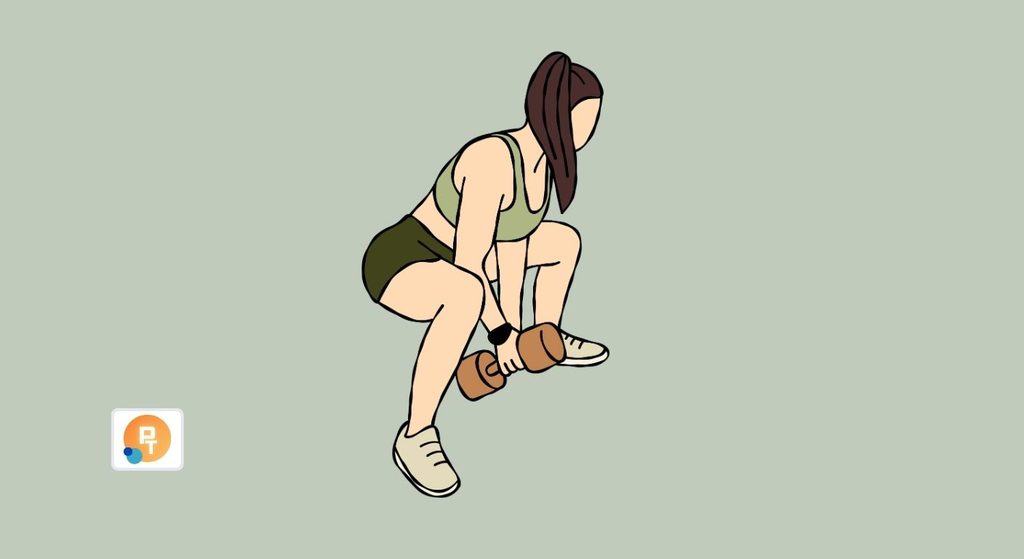
Targets: Quadriceps, gluteal muscles, and lower-limb strength.
The chair squat builds strength for standing up, sitting down, and other daily activities.
How to perform it:
- Place a stable chair behind you.
- Stand with your feet approximately hip-width apart.
- Hold a light dumbbell close to your chest, or begin without weight.
- Bend at the hips and knees as you lower toward the chair.
- Touch the chair lightly or sit down with control.
- Push through your feet to return to standing.
Suggested starting dose: 6–10 repetitions.
Joint-protection adjustments:
- Use a higher chair to reduce the required knee and hip bending.
- Begin with body weight if adding resistance increases symptoms.
- Use stable support for balance if necessary.
- Keep the movement within a comfortable depth.
Allowing the knees to move forward is not automatically harmful.
The goal is a controlled, comfortable movement rather than enforcing one rigid knee position.
2. Supported Dumbbell Bent-Over Row
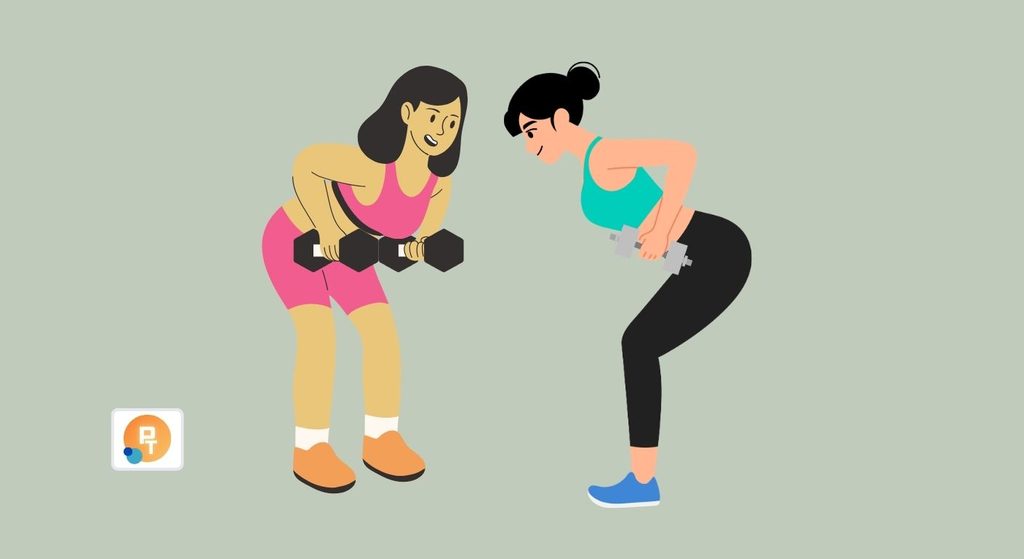
Targets: Upper back, latissimus dorsi, and elbow flexors.
The supported row strengthens the pulling muscles while allowing the opposite arm to provide stability.
How to perform it:
- Stand beside a sturdy bench, counter, or other stable support.
- Place one hand on the support.
- Hinge forward at the hips while keeping your trunk controlled.
- Hold a dumbbell in the free hand.
- Pull your elbow toward your side.
- Lower the weight slowly without rotating your trunk excessively.
Suggested starting dose: 8–12 repetitions per arm.
Joint-protection adjustments:
- Keep your elbow relatively close to your body if that is more comfortable.
- Reduce the dumbbell weight if gripping causes discomfort.
- Avoid pulling beyond your comfortable shoulder range.
- Use a more upright position if prolonged bending aggravates your back.
3. Neutral-Grip Dumbbell Floor Press
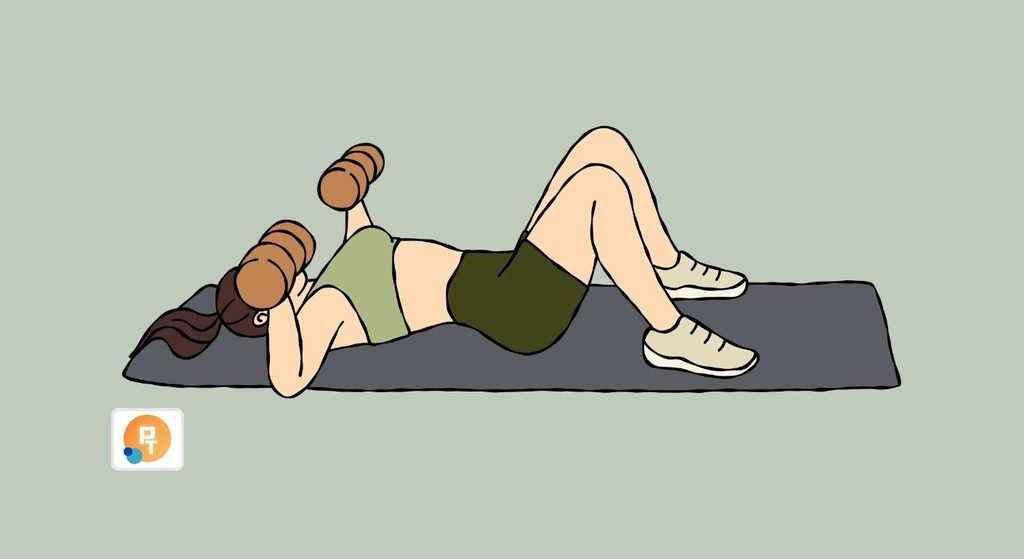
Targets: Chest, triceps, and anterior shoulder muscles.
The floor press offers a pressing variation in which the floor limits how far the upper arms can travel behind the trunk.
How to perform it:
- Lie on your back with your knees bent.
- Hold light dumbbells with your palms facing each other.
- Position your upper arms at a comfortable angle to your torso.
- Press the weights upward in a controlled motion.
- Lower until your upper arms gently contact the floor.
- Repeat without bouncing your elbows against the surface.
Suggested starting dose: 8–12 repetitions.
Joint-protection adjustments:
- Keep the elbows at a comfortable angle rather than forcing them outward.
- Reduce the weight or use one arm at a time if appropriate.
- Stop short of any painful shoulder position.
- Choose a seated wall push-up alternative if getting onto or off the floor is difficult.
The neutral grip may feel more comfortable for some shoulders, but it is not universally better for every shoulder condition.
4. Dumbbell Romanian Deadlift
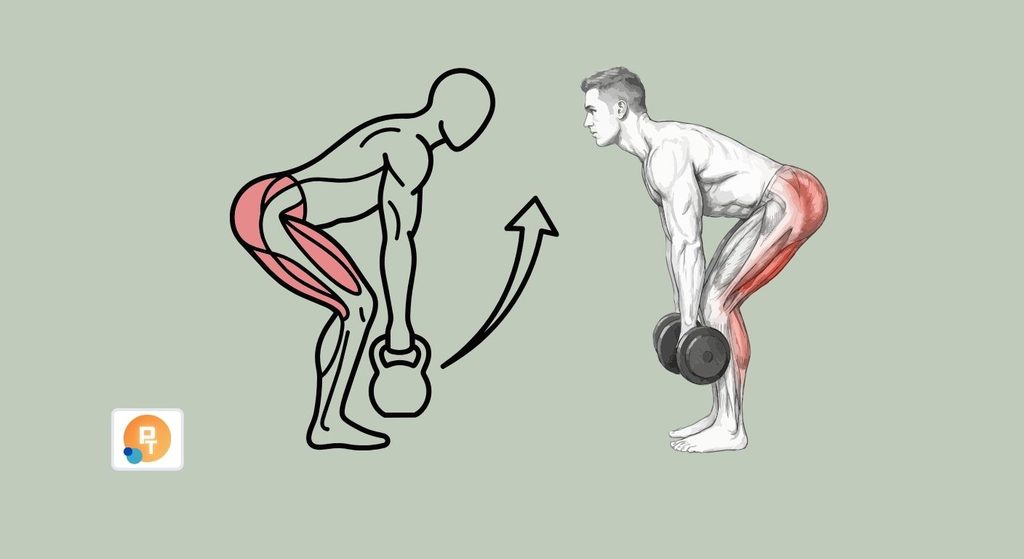
Targets: Gluteal muscles, hamstrings, and hip-extension strength.
The Romanian deadlift trains the hip-hinge movement used when bending to pick up objects.
How to perform it:
- Stand with your feet approximately hip-width apart.
- Hold light dumbbells near the front of your thighs.
- Keep your knees slightly bent.
- Move your hips backward while allowing your trunk to lean forward.
- Lower the dumbbells only as far as you can comfortably control.
- Return to standing by extending your hips.
Suggested starting dose: 8–10 repetitions.
Joint-protection adjustments:
- Keep the dumbbells close to your legs.
- Begin with a small hip hinge.
- Avoid forcing a deep range of motion.
- Use one dumbbell or no weight when learning the pattern.
A neutral or comfortable spinal alignment is usually a useful starting cue.
Excessive stiffness or bracing is not necessary for light resistance.
5. Seated Neutral-Grip Dumbbell Shoulder Press
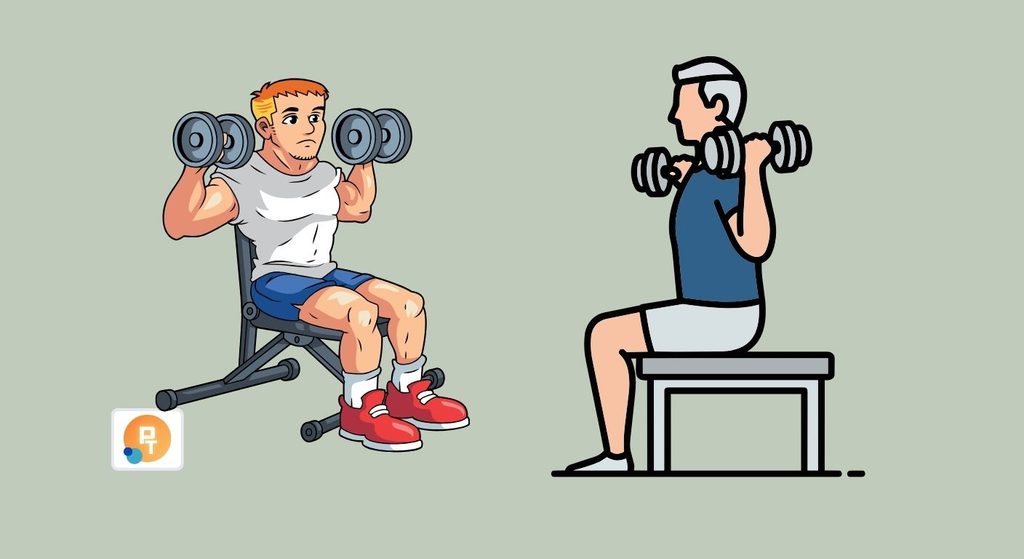
Targets: Deltoids, triceps, and overhead pressing strength.
This exercise develops shoulder strength, but overhead resistance is not appropriate for every painful shoulder.
How to perform it:
- Sit on a stable chair with your feet supported.
- Hold light dumbbells near shoulder height.
- Position your palms facing inward or slightly forward.
- Press upward through a comfortable range.
- Lower the weights gradually.
- Avoid leaning backward to complete repetitions.
Suggested starting dose: 6–10 repetitions.
Joint-protection adjustments:
- Work through a shorter, symptom-tolerated range.
- Press one arm at a time if it improves control.
- Use lighter resistance to avoid compensatory trunk movement.
- Replace the exercise with a low-range front raise or another comfortable shoulder exercise if overhead movement is painful.
Do not force overhead pressing in the presence of persistent shoulder pain, marked weakness, or restricted motion that has not been evaluated.
6. Hammer Curl
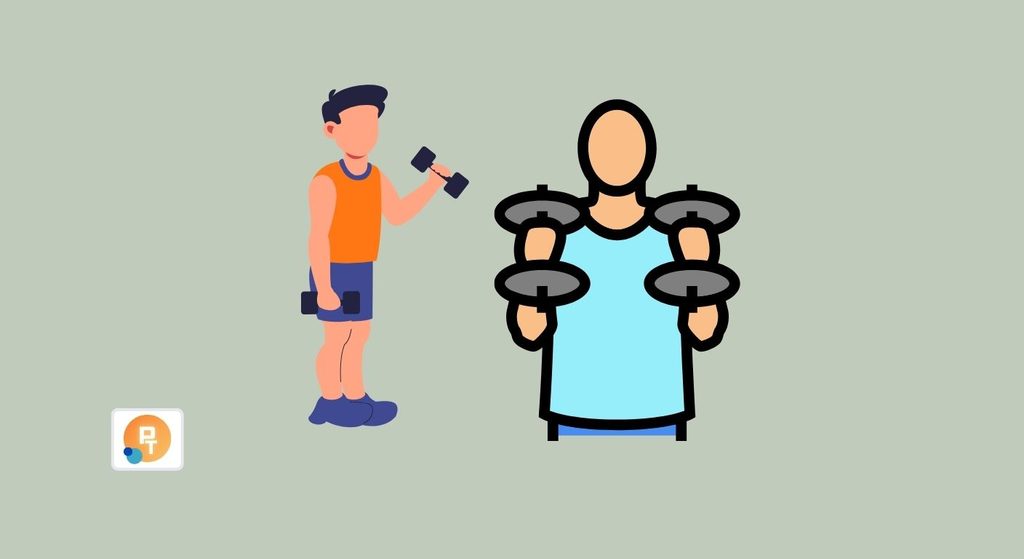
Targets: Biceps brachii, brachialis, and brachioradialis.
The hammer curl strengthens elbow flexion using a palms-in grip that some people find more comfortable for the forearm and wrist.
How to perform it:
- Stand or sit with a dumbbell in each hand.
- Keep your palms facing your body.
- Position your elbows near your sides.
- Bend your elbows to raise the dumbbells.
- Lower slowly while keeping your wrists controlled.
Suggested starting dose: 8–12 repetitions.
Joint-protection adjustments:
- Keep the wrists in a comfortable position.
- Use lighter weights if the hands become painful.
- Limit the elbow range if necessary.
- Perform alternating repetitions if holding both weights is tiring.
7. Supported Standing Calf Raise
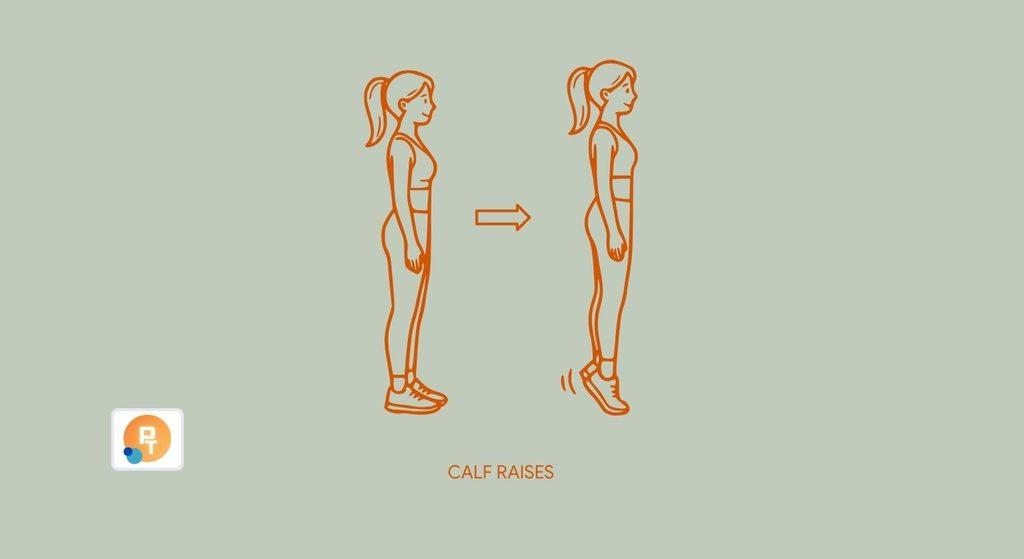
Targets: Gastrocnemius, soleus, and ankle plantarflexor strength.
Calf strengthening supports walking, balance-related tasks, and controlled movement at the ankle.
How to perform it:
- Stand beside a stable countertop.
- Hold the support with one hand.
- Begin without a dumbbell.
- Raise your heels slowly.
- Pause briefly at the top.
- Lower your heels with control.
Suggested starting dose: 10–15 repetitions.
Joint-protection adjustments:
- Begin with both legs.
- Use a smaller heel raise if your ankle or forefoot is uncomfortable.
- Keep the movement slow enough to avoid bouncing.
- Add one light dumbbell only when body-weight repetitions are well tolerated.
Full-Body Dumbbell Workout Schedule
This example combines the seven exercises into a practical session.
It is a general starting template, not a condition-specific rehabilitation prescription.
| Exercise | Starting sets | Repetitions | Main joint-friendly adjustment |
|---|---|---|---|
| Chair squat | 1–2 | 6–10 | Higher chair or body weight |
| Supported row | 1–2 | 8–12/arm | Stable support and lighter grip load |
| Floor press | 1–2 | 8–12 | Neutral grip and controlled range |
| Romanian deadlift | 1–2 | 8–10 | Shorter hip hinge |
| Seated shoulder press | 1 | 6–10 | Reduced overhead range |
| Hammer curl | 1–2 | 8–12 | Light weight and comfortable wrist position |
| Standing calf raise | 1–2 | 10–15 | Support and body-weight start |
Start with two nonconsecutive sessions each week if recovery and symptoms allow.
A practical schedule could be:
- Monday: Full-body dumbbell session.
- Tuesday: Comfortable walking or another tolerated aerobic activity.
- Wednesday: Rest or gentle mobility exercises.
- Thursday: Full-body dumbbell session.
- Friday: Light aerobic activity.
- Saturday: Optional walking, balance practice, or mobility.
- Sunday: Recovery or comfortable recreational movement.
Allow sufficient recovery between sessions that heavily train the same muscles.
People with significant fatigue, recent injury, or inflammatory symptoms may require further individualization.
The CDC’s physical activity guidance for adults with chronic conditions recommends muscle-strengthening activity involving major muscle groups on at least two days per week when individuals are able.
How to Modify Dumbbell Exercises for Specific Joint Problems
A movement can be appropriate for one person but uncomfortable for another.
Modifications should respond to the affected joint, the condition involved, and the person’s symptom response.
Knee sensitivity
For painful knees, adjust the depth and load of lower-body exercises before eliminating strengthening entirely.
Useful options include:
- Choose a higher chair for squats.
- Begin with body-weight repetitions.
- Use a stable hand support.
- Reduce squat depth if symptoms increase.
- Progress the resistance only after the current movement is tolerated.
Knee discomfort does not automatically mean that loaded knee bending is harmful.
The response to repeated sessions and the underlying condition matter.
Shoulder sensitivity
Shoulder pain may be influenced by arm position, range of motion, resistance, and the specific disorder.
Try these modifications:
- Start with lighter dumbbells.
- Use a neutral grip when comfortable.
- Reduce the overhead pressing range.
- Keep row and pressing movements controlled.
- Substitute another exercise when a movement remains persistently painful.
Wrist and hand sensitivity
Hand osteoarthritis, reduced grip strength, and other hand conditions may make standard dumbbell handles uncomfortable.
Consider:
- Using lighter dumbbells with comfortable handles.
- Avoiding unnecessarily forceful gripping.
- Keeping wrists in a comfortable position.
- Reducing the duration of sustained holds.
- Replacing an exercise with a resistance-band or machine variation when gripping is the main limitation.
Hip and lower-back sensitivity
Hip hinges and squats can often be modified by changing the movement depth, stance, and resistance.
Useful adjustments include:
- Practice the hip hinge without weights.
- Reduce the forward lean when appropriate.
- Keep the resistance close to the body.
- Use a higher chair for squats.
- Divide training into shorter sessions if fatigue affects control.
Persistent symptoms, significant movement restrictions, or neurological findings deserve an individualized physical therapy assessment.
How Much Joint Discomfort Is Acceptable During Exercise?
Not every sensation during strengthening indicates tissue damage.
Muscular effort, fatigue, and mild transient soreness can occur when starting a new routine.
However, no single pain-score cutoff can determine exercise safety for every diagnosis.
Signs that the exercise may be reasonably tolerated include:
- Mild discomfort that remains manageable.
- Symptoms that do not progressively worsen during repeated movements.
- Normal movement control without substantial compensation.
- No meaningful increase in joint swelling.
- Symptoms returning toward their usual baseline after exercise.
Signs that the routine needs modification include:
- Sharp, catching, or escalating joint pain.
- Noticeably worsening swelling.
- Progressive loss of movement.
- Pain that significantly changes your walking or other activities.
- A symptom flare that remains worse than usual into subsequent days.
When discomfort increases, first consider reducing the load, depth, repetitions, or total sets.
Stop the activity and seek prompt medical assessment for a new major injury, obvious deformity, inability to bear weight, a hot swollen joint with fever, or new significant neurological symptoms.
Chest pain, fainting, or severe unexplained shortness of breath during exercise also requires urgent assessment.
The CDC’s guidance on arthritis and physical activity emphasizes starting gradually and contacting a healthcare professional when pain or other symptoms are severe or do not improve.
How to Progress Without Overloading Sensitive Joints
Progressive resistance training means increasing the challenge as physical capacity improves.
It does not require adding more weight at every session.
First, establish a movement that feels controlled and produces an acceptable symptom response.
Then consider the following progression:
- Improve movement quality: Practice the exercise with a manageable load.
- Increase repetitions: Work gradually toward the upper end of your selected repetition range.
- Increase sets: Add another set when recovery is adequate.
- Adjust resistance: Make a small weight increase when the current load feels consistently manageable.
- Reassess symptoms: Monitor joint comfort and daily function after each change.
Other ways to progress include:
- Improving balance and stability during an exercise.
- Increasing comfortable movement range.
- Performing repetitions with better control.
- Reducing reliance on external support when safe.
- Improving consistency across weekly sessions.
Change one main training variable at a time where possible.
If increasing the load causes discomfort, returning to the previous resistance is a reasonable adjustment rather than a training failure.
The NHS guidance on improving strength and flexibility describes gradually increasing strengthening work and using sets of repetitions to develop strength.
Common Dumbbell Training Mistakes That Increase Joint Irritation
Small training decisions can determine whether a routine feels manageable or unnecessarily demanding.
Watch for these common errors:
- Starting too heavy: Using resistance that prevents controlled repetitions.
- Rushing the lowering phase: Letting gravity control the dumbbell.
- Forcing a painful range: Attempting full movement depth despite worsening symptoms.
- Holding the breath excessively: Particularly during difficult repetitions.
- Ignoring recovery: Repeating demanding sessions before symptoms settle.
- Progressing several variables at once: Adding weight, sets, and repetitions simultaneously.
- Using a single technique rule for everyone: Forcing joint positions that are uncomfortable or unsuitable for an individual’s anatomy.
- Training through escalating symptoms: Continuing when the response indicates the exercise needs modification.
A slower repetition can help with control, but it does not need to follow an exact tempo.
Choose a speed that allows smooth movement without unnecessary strain.
When to Seek Physical Therapy Guidance
Some people can begin a light dumbbell routine independently.
Others benefit from assessment before starting or progressing loaded movements.
Physical therapy guidance is particularly useful when you have:
- Persistent or recurrent joint pain.
- Difficulty determining which exercises are appropriate.
- Repeated symptom flares after strengthening.
- Significant weakness or restricted movement.
- Balance difficulties or frequent falls.
- A recent injury with ongoing functional limitations.
- Previous joint surgery requiring a specific rehabilitation protocol.
- Difficulty progressing despite regular training.
A physical therapist can evaluate movement, strength, functional limitations, and symptom response to help adapt exercises.
For example, a person with knee osteoarthritis may benefit from a chair squat with carefully selected resistance, while someone recovering from knee surgery may require a different loading progression based on the procedure and rehabilitation restrictions.
Exercise choice should follow the individual’s assessment rather than the diagnosis name alone.
Conclusion
A joint-friendly dumbbell strength routine should challenge muscles while keeping resistance, movement range, and symptom response manageable.
Chair squats, supported rows, floor presses, hip hinges, curls, shoulder exercises, and calf raises can provide a flexible full-body starting point.
Begin with comfortable resistance, use controlled repetitions, and progress gradually.
Persistent pain or difficulty tolerating exercise is a reason to modify the program and seek individualized guidance, not necessarily to abandon strengthening.
Frequently Asked Questions
1. Are dumbbells safe for people with joint pain?
Dumbbells can be appropriate for many people with joint pain when the resistance, exercise selection, and range of motion are adapted to their condition.
Safety depends on the underlying cause of pain, symptom severity, and individual capacity rather than the equipment alone.
2. What dumbbell weight should beginners use to protect their joints?
There is no single recommended weight for everyone.
Start with a resistance that allows controlled repetitions without excessive effort or worsening joint symptoms.
Some people should begin with no external weight and introduce dumbbells after mastering the movement.
3. Can I lift dumbbells if I have knee osteoarthritis?
Many people with knee osteoarthritis can benefit from strengthening exercises, including appropriately selected resistance training.
Chair squats, hip hinges, and other lower-body exercises may be suitable when adapted to symptoms and function.
A physical therapist can help identify tolerable loading options.
4. How many days per week should I do joint-friendly dumbbell exercises?
Two nonconsecutive full-body sessions per week can be a practical starting point.
Frequency should be adjusted to your recovery, training experience, health status, and the demands of other activities.
Additional sessions are not necessary if the current routine already causes excessive fatigue or persistent joint irritation.
5. Should I stop dumbbell exercises whenever I feel pain?
Not necessarily.
Mild and temporary discomfort may be compatible with exercise for some chronic musculoskeletal conditions.
However, sharp, escalating, or persistent pain requires reassessment, and significant new symptoms should not be ignored.
The appropriate response depends on the diagnosis and symptom pattern.
6. Are light dumbbells better than heavy dumbbells for joint protection?
Lighter dumbbells can make it easier to learn movements and manage symptoms initially, but heavier resistance is not automatically harmful.
A suitable load is one that provides an appropriate muscular challenge while remaining consistent with the person’s capacity and clinical circumstances.
7. Can dumbbell training help strengthen the muscles around painful joints?
Yes.
Appropriate resistance training can strengthen muscles that contribute to movement and functional support around joints.
Improved strength may also support daily activities, although it does not guarantee pain relief or prevent every joint injury.
8. What if shoulder pressing causes pain?
Reduce the resistance and movement range, or replace the shoulder press with a more comfortable exercise.
Persistent pain during overhead activity may require a physical therapy assessment to identify suitable alternatives.
Do not repeatedly force a painful position to complete the planned repetitions.
9. How long does it take to notice improvements from dumbbell training?
The timeline varies with training consistency, starting strength, age, health conditions, and exercise intensity.
Some people notice improved movement confidence before substantial strength changes become apparent.
Track progress using exercise tolerance, repetitions, daily activities, and symptom response rather than expecting a fixed deadline.
10. Can older adults follow this dumbbell strength routine?
Many older adults can perform adapted resistance training and benefit from improving or maintaining muscle strength.
Starting exercises may require lighter weights, seated options, stable support, or individualized balance precautions.
People with significant frailty, frequent falls, or complex health conditions may need professional guidance before beginning.