
The “best foods” for osteoarthritis are not a short list of miracle ingredients. The useful approach is a balanced eating pattern that supports muscle, physical activity, cardiovascular health, and gradual weight management when appropriate.
Think in food groups, not cures
Osteoarthritis is not caused by one food, and no meal can rebuild worn cartilage. Food choices matter because they influence energy, muscle, body weight, and other health conditions that affect how comfortably you move.
- Build meals from several food groups.
- Choose foods you can afford and repeat.
- Avoid rigid elimination diets without a clinical reason.
- Pair nutrition with tailored exercise.
The NICE osteoarthritis guideline identifies therapeutic exercise and weight management, when appropriate, as core treatments rather than specific “joint foods.”
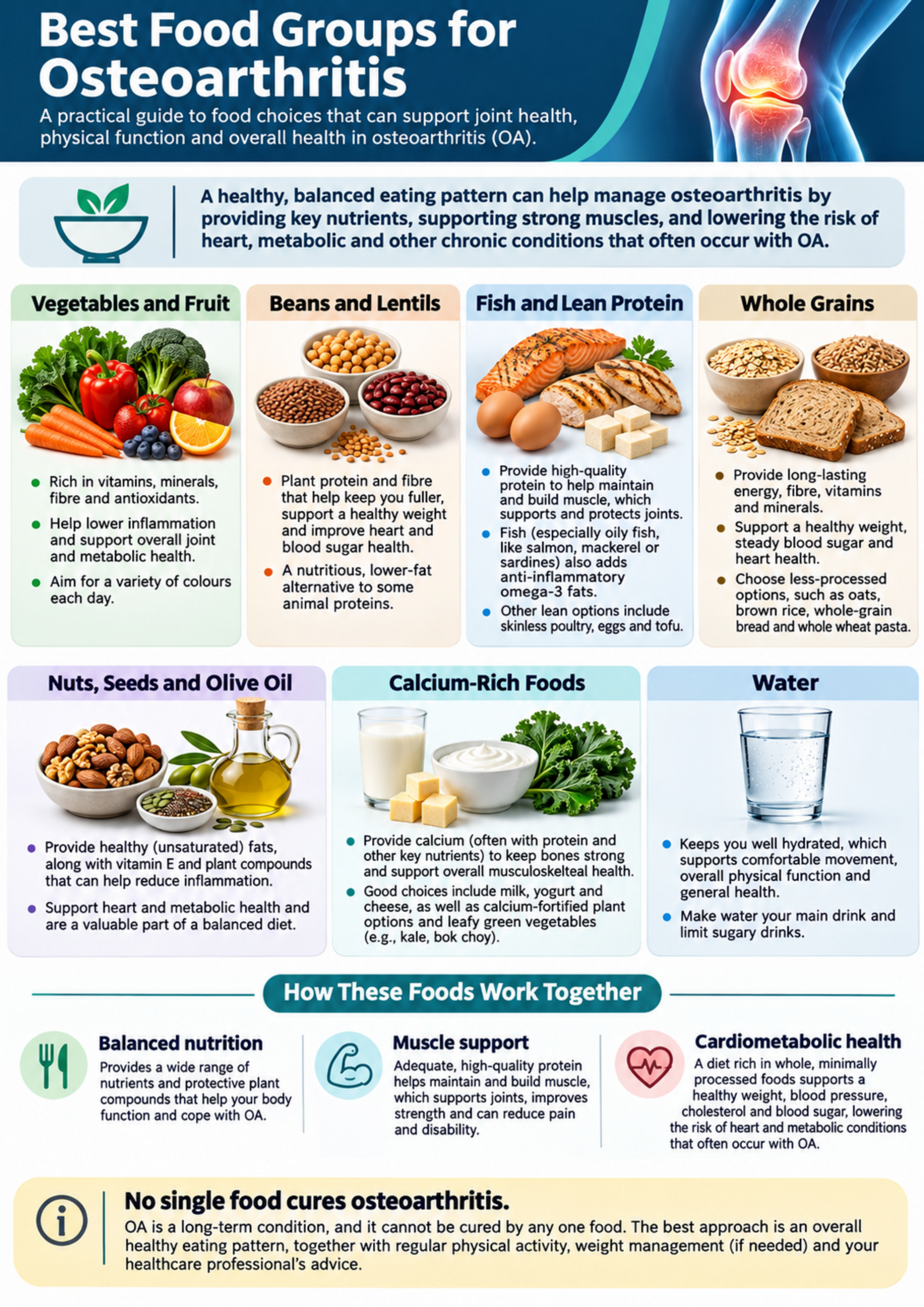
Vegetables and fruit
Vegetables and fruit provide fiber, vitamins, minerals, and varied plant compounds. Choose a range of colors and use fresh, frozen, or low-sodium canned options according to access and convenience.
- Add berries or fruit to breakfast.
- Use frozen vegetables in quick meals.
- Include leafy greens, peppers, tomatoes, and cruciferous vegetables.
- Keep pre-cut produce ready on painful days.
Beans, lentils, and other plant proteins
Beans and lentils combine protein, carbohydrate, and fiber. They are practical for soups, salads, stews, and grain bowls and can help support a heart-healthy eating pattern.
- Add lentils to soup.
- Use chickpeas in salads or hummus.
- Combine beans with rice or whole-grain bread.
- Choose lower-sodium canned options or rinse them.
Fish, eggs, dairy, and lean protein
Protein supports the muscles that stabilize and move painful joints. Fish also provides unsaturated fats, while dairy foods or fortified alternatives can contribute calcium and protein.
- Use fish regularly if culturally and financially suitable.
- Choose eggs for quick meals.
- Add yogurt or cottage cheese to snacks.
- Use tofu, poultry, or lean meat according to preference.
Whole grains and starchy foods
Carbohydrates provide energy for strengthening, walking, cycling, work, and daily activity. Choose fiber-rich sources often rather than removing the entire food group.
- Use oats, brown rice, whole-grain bread, or pasta.
- Include potatoes, sweet potatoes, or corn.
- Pair carbohydrate with protein and produce.
- Adjust portions to appetite and activity.
Nuts, seeds, and olive oil
Nuts, seeds, avocado, and olive oil provide unsaturated fats and make meals satisfying. They are energy dense, so portions should fit the person’s goals rather than being treated as unlimited “anti-inflammatory” foods.
- Sprinkle seeds over yogurt or oats.
- Use a small handful of nuts as a snack.
- Cook or dress salads with olive oil.
- Choose nut or seed butter when chewing allows.
Calcium-rich foods and vitamin D context
Osteoarthritis and osteoporosis are different, but they may coexist. Bone-health nutrition remains relevant, especially for older adults or anyone with low intake, fragility risk, or limited sun exposure.
- Use milk, yogurt, cheese, or fortified alternatives.
- Choose calcium-set tofu or fish with edible bones.
- Check plant-drink labels for calcium and protein.
- Discuss vitamin D testing or supplements when clinically indicated.
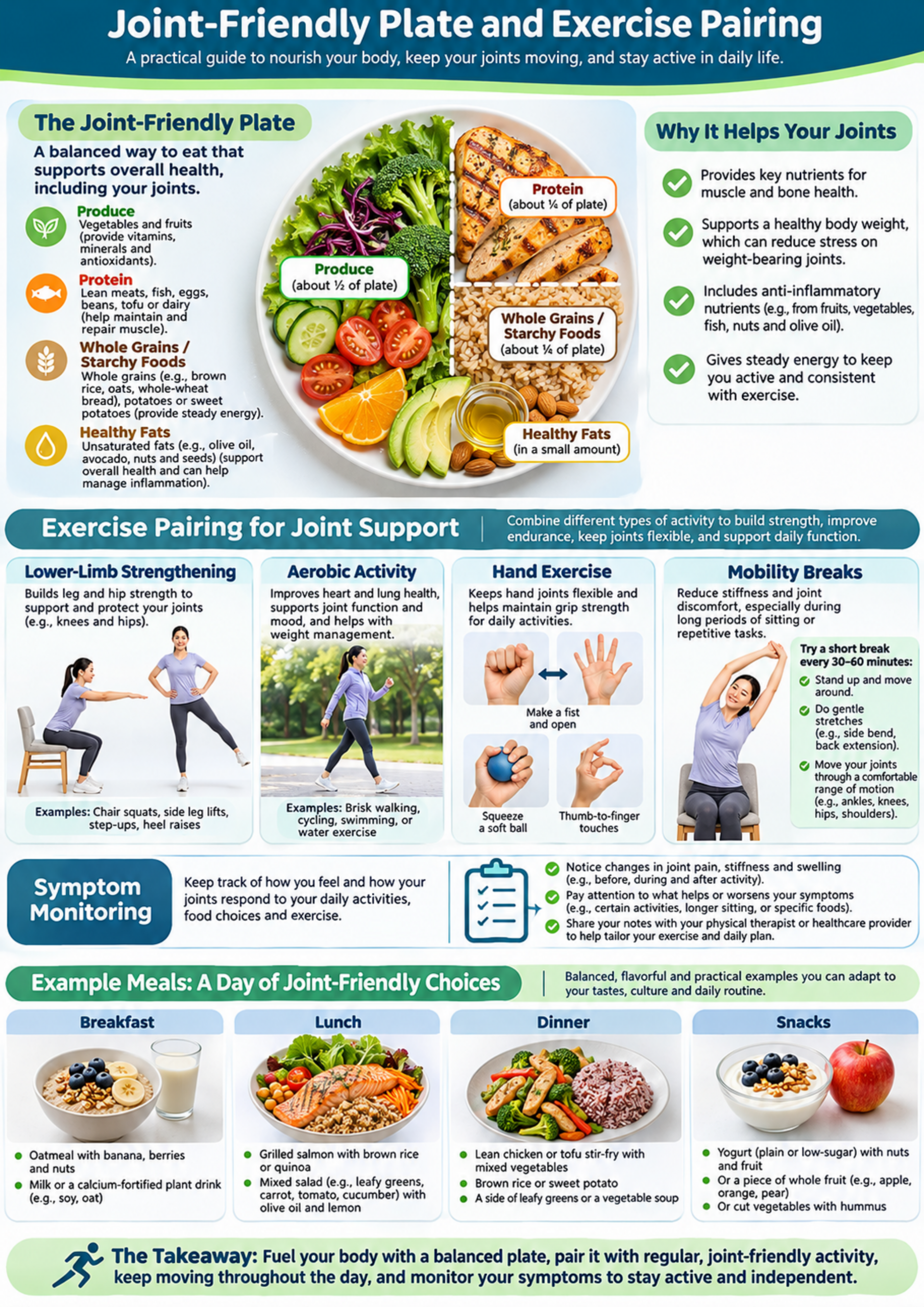
Build a joint-friendly plate
A practical plate combines produce, protein, a whole-grain or starchy food, and a modest amount of healthy fat. It can be scaled up or down without banning entire food groups.
- Breakfast: oats, yogurt, berries, and seeds.
- Lunch: bean and grain bowl with vegetables and olive oil.
- Dinner: fish or tofu, potatoes, and mixed vegetables.
- Snack: fruit with nuts, yogurt, or hummus.
| Food group | Examples | Practical role |
|---|---|---|
| Produce | Vegetables, berries, citrus, fruit | Fiber, vitamins, and variety |
| Protein | Fish, beans, eggs, tofu, poultry, yogurt | Supports muscle and exercise recovery |
| Carbohydrate | Oats, grains, potatoes, bread | Provides energy for activity |
| Healthy fats | Olive oil, nuts, seeds, avocado | Supports a cardiometabolic healthy pattern |
Match food with movement and weight goals
The CDC osteoarthritis guidance recommends physical activity, healthy weight, joint protection, and collaborative care. When weight loss is relevant, use gradual, supported changes rather than crash dieting.
- Keep protein while adjusting portions.
- Plan food around strengthening and aerobic activity.
- Start movement in manageable doses.
- Monitor function, energy, and symptoms.
Conclusion
The best foods for osteoarthritis are the foods that make a balanced, sustainable pattern: varied produce, protein, fiber-rich carbohydrates, healthy fats, calcium-rich choices, and water. Their value is greatest when they support consistent therapeutic exercise.
- No single food cures osteoarthritis.
- Food quality matters more than marketing claims.
- Protein supports the muscles around joints.
- Exercise remains a core treatment.
Frequently asked questions
1. What is the best food for osteoarthritis?
There is no single best food. A varied, balanced pattern is more useful than one ingredient.
2. Is fish helpful?
Fish fits a heart-healthy diet and provides protein; oily fish also provides omega-3 fats, but it is not a cure.
3. Should I stop eating tomatoes?
Not routinely. Avoid a food only for a clear allergy, intolerance, or reproducible individual reason.
4. Are dairy foods inflammatory?
Dairy is not universally inflammatory and can provide protein and calcium. Use fortified alternatives if needed.
5. Should I avoid bread and pasta?
No. Whole-grain versions can provide useful energy and fiber.
6. Is olive oil good for joints?
Olive oil is a useful unsaturated fat in a balanced pattern, but it does not directly repair cartilage.
7. Do I need supplements?
Use supplements for a defined need and review interactions with a clinician or pharmacist.
8. Can weight loss reduce symptoms?
For people with overweight or obesity, gradual weight loss can improve pain and function.
9. What should I eat before exercise?
A light carbohydrate-and-protein snack can help when exercise follows a long gap between meals.
10. Can diet replace physical therapy?
No. Nutrition supports health and activity, while therapeutic exercise directly targets strength and function.