
Whiplash often improves over several weeks, and many people recover within two to three months, although some symptoms last longer. Once a clinician has checked that movement is appropriate, gentle neck exercises and a gradual return to everyday activities can support recovery.
Start with assessment and a check for warning signs
Whiplash describes a neck injury following a sudden movement of the head, often after a collision, fall, or sports incident. Neck pain and stiffness can develop straight away or appear later, so feeling well immediately after an accident does not rule out injury.
Have neck pain after trauma assessed before assuming it is an uncomplicated sprain. Healthdirect’s whiplash guidance explains why the examination matters and when imaging may be needed to investigate suspected serious injury.
- Describe the accident and when symptoms began.
- Mention headaches, dizziness, arm symptoms, and any other injuries.
- Follow specific restrictions given after your assessment.
Seek urgent medical assessment for new weakness, tingling, difficulty walking or sitting upright, an electric-shock sensation into the back or limbs, or severe pain despite appropriate pain relief. Sudden or worsening severe headaches, loss of bladder or bowel control, or changes in swallowing or vision after injury also need urgent care.
After a serious accident, or if symptoms suggest a serious injury, use emergency services. Do not drive yourself when movement, alertness, or neurological symptoms make it unsafe.
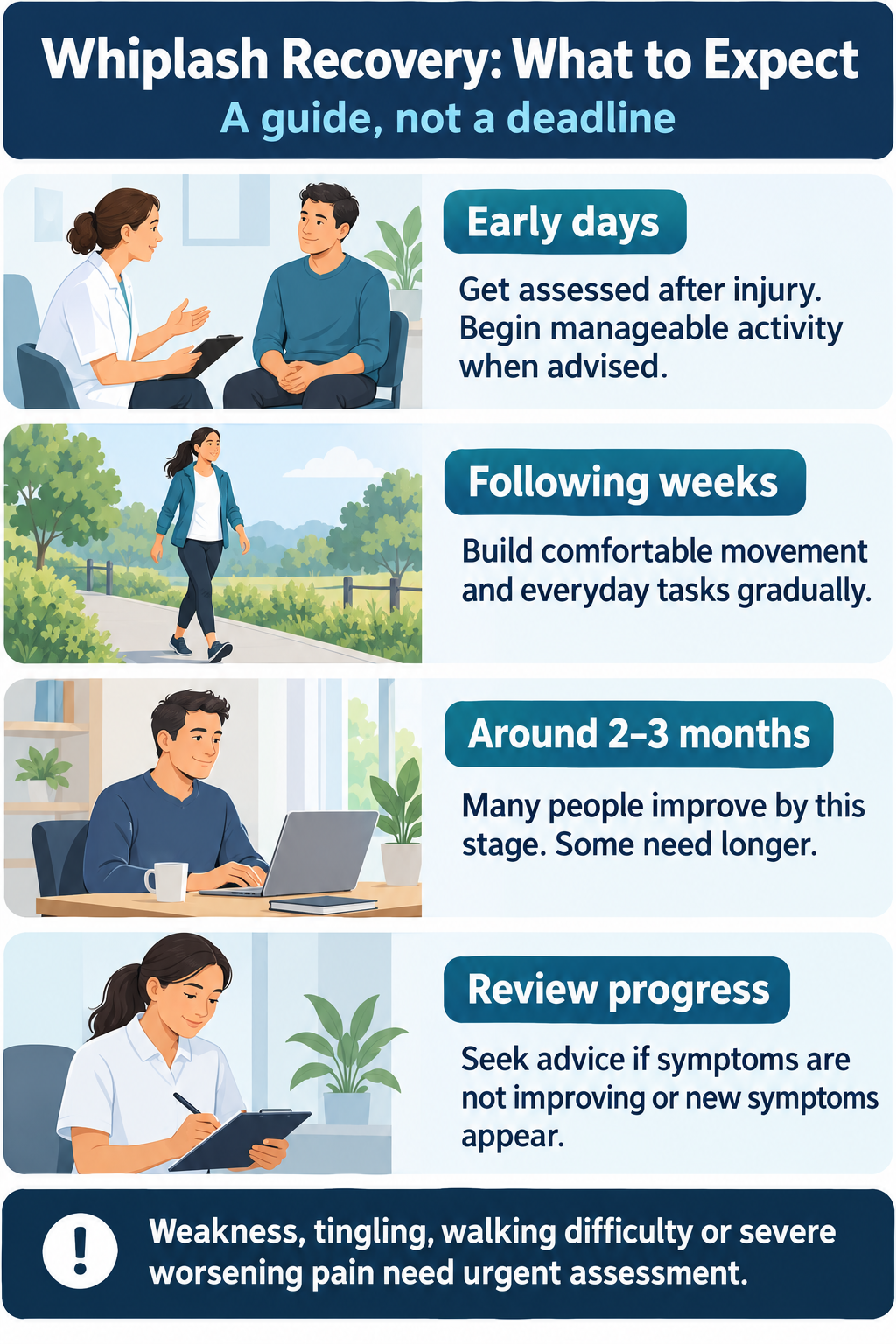
A realistic whiplash recovery timeline
The NHS overview of whiplash recovery gives two to three months as a usual recovery range, while noting that symptoms can last longer. This is a general guide, not a deadline for returning to every task or sport.
| Stage | Practical focus | When to review |
|---|---|---|
| Early days after injury | Assessment, symptom management, and manageable everyday movement | Promptly for warning signs or worsening symptoms |
| Following weeks | Gradually increase comfortable neck movement and daily tasks | If improvement is absent or activity remains substantially limited |
| Around two to three months | Many people are much improved; continue building relevant strength and activity | If symptoms remain troublesome or progress has stalled |
| Persistent symptoms | Reassess the plan and address ongoing physical and recovery barriers | Arrange individual follow-up rather than repeating an ineffective routine |
Look for practical gains: turning toward a conversation, sleeping more comfortably, or managing a longer work task. A difficult day does not erase those gains, but a consistent deterioration deserves review.
Keep active while adapting the workload
After an uncomplicated whiplash assessment, continuing tolerable everyday activities is generally encouraged. Resting the neck for long periods or avoiding every movement can make returning to normal life more difficult.
The SIRA whiplash management guidance recommends maintaining activity and modifying tasks to make them manageable. Activity should fit your symptoms and the advice you received.
- Use short walks or light household tasks as starting points.
- Break a demanding job into smaller parts.
- Change position regularly instead of remaining still for long stretches.
For example, try a shorter period at the computer with a movement pause before attempting a full session. Keeping active does not mean ignoring substantial pain or new symptoms.
Movement 1: a small chin glide
Sit comfortably with your eyes looking ahead and shoulders relaxed. Gently slide your chin backward a small distance, as though making a slight double chin, then release to a comfortable position.
This is a small movement rather than a forceful push or a deep downward bend. You can practise a few easy attempts first, or follow the amount prescribed by your physiotherapist.
- Keep your eyes approximately level.
- Let your jaw remain relaxed.
- Do not use your hands to force the head backward.
Leeds Teaching Hospitals’ neck-sprain exercises illustrate neck retraction, rotation, and side bending. They also advise stopping and seeking advice if exercise causes dizziness or considerably aggravates symptoms.
Movement 2: comfortable head turns
From a comfortable seated position, slowly turn your head toward one side. Return to the middle and turn the other way, staying within a range you can manage without forcing.
You do not need to reach your shoulder or reproduce the movement shown in a photograph. Your starting range may be small.
- Keep your shoulders relaxed and your trunk facing forward.
- Move slowly rather than swinging from side to side.
- Stop for dizziness, new tingling, weakness, or marked worsening.
If you can turn only a little, record that as your starting point rather than repeatedly checking the furthest possible range. Ask for an adapted exercise if even a small movement feels unmanageable.
Movement 3: a gentle side tilt
Look ahead and gently tilt your head toward one shoulder, keeping that shoulder down. Return to the middle and repeat toward the other side.
Use a modest movement without pulling on your head. Berkshire Healthcare’s whiplash exercise advice includes gentle mobility movements and emphasizes gradual return to activity.
- Keep the movement smooth and comfortable.
- Avoid combining a deep tilt with a forceful turn.
- Skip the exercise and seek advice if it brings on concerning symptoms.
These movements are options, not a compulsory sequence. If you have been given a different individual program, use that plan and ask how to progress it.
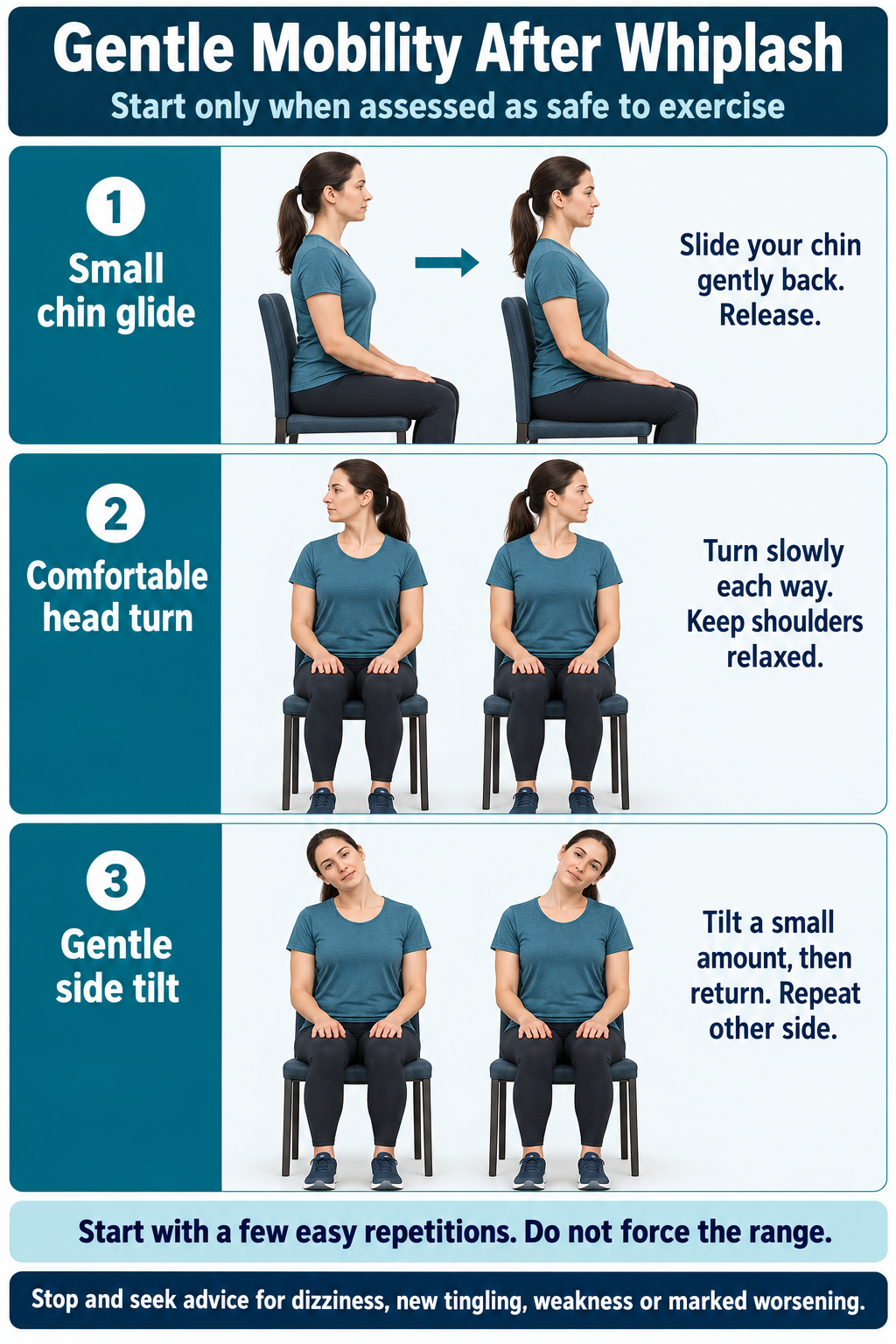
Choose an exercise amount you can recover from
There is no single repetition target that fits every neck injury. A cautious starting approach is a few easy repetitions with time to relax between attempts, then review how you feel afterward.
That approach is general guidance rather than a personalized prescription. Your clinician may recommend a different amount based on the examination and your response.
- Reduce the range or number of repetitions if the session is too demanding.
- Notice whether any increase settles or continues into later activities.
- Progress gradually when the current amount is manageable.
Mild discomfort can occur with movement, but marked worsening or neurological symptoms should not be treated as a target to push through. Stop and obtain advice when the response is concerning.
Return to work, driving, and exercise by ability
Discuss temporary changes such as shorter work periods, lighter tasks, or more opportunities to change position. Choose specific activities to rebuild instead of waiting for a completely symptom-free day before doing anything.
Driving requires enough comfortable head movement, concentration, and control to observe traffic and respond safely. Pain, dizziness, weakness, or sedating medication can interfere with that ability; do not use the calendar alone to decide when to drive.
- Ask about modified duties if your job involves lifting or long periods in one position.
- Check medication warnings about driving or machinery.
- Get advice before returning to contact sport or activities with a risk of another neck injury.
As mobility improves, rehabilitation may include strength and endurance work. The next exercise should serve a goal, such as tolerating a workday or returning to a particular sport.
Use symptom relief to support movement
A pharmacist or clinician can advise about suitable pain relief, taking account of other medicines and health conditions. Follow the recommended dose and ask for review if treatment is not helping or you need it for longer than advised.
For an uncomplicated whiplash sprain, a soft collar is generally not recommended unless a clinician has given a specific reason to use one. A collar prescribed for a suspected fracture or another serious injury is a different situation: follow that treating team’s instructions.
- Use comfortable support when resting, without forcing your neck into position.
- Change position during longer seated tasks.
- Discuss any treatment that is not improving comfort or function.
Hands-on treatment may sometimes accompany exercise, but progress should be assessed through what you can do. Repeated treatment without a useful change in function is a reason to review the plan.
What to do when progress is slow
Arrange follow-up if symptoms are not improving, pain relief is ineffective, or you are worried. The NHS advises seeking review when whiplash symptoms have not improved after a week; new warning signs need attention sooner.
Bring examples that help the clinician understand the problem. A brief record is usually more useful than repeatedly testing painful movements.
- Note how long you can sit, walk, or work before symptoms limit you.
- Describe sleep disruption and headaches.
- Record exercises tried and what happened afterward.
Tell the clinician about distress, fear of travelling, poor concentration, or difficulty returning to normal life after the incident. These concerns deserve support alongside the neck symptoms.
- Ask what changes should prompt earlier reassessment.
- Agree on the next practical activity goal.
- Clarify when to review the exercise and treatment plan.
Persistent symptoms do not mean you should simply repeat the same routine indefinitely. A reassessment can help decide whether the diagnosis, exercise dose, or support needs to change.
Conclusion
A whiplash recovery timeline is a guide to gradual improvement, with assessment and symptom changes shaping each step. Use manageable activity and gentle mobility, build toward normal tasks, and seek review when progress stalls or concerning symptoms develop.
Frequently asked questions
How long does whiplash usually take to improve?
Many people improve over weeks and recover within two to three months. Some need longer, so assess progress through function as well as the time since injury.
Can symptoms start after a delay?
Yes. Pain and stiffness can appear hours or days after the incident. Have neck pain after trauma assessed even if you initially felt well.
Should I wait until all pain is gone before moving?
After assessment for an uncomplicated injury, manageable movement is usually encouraged. Follow any individual restrictions and seek advice if symptoms markedly worsen.
What is a simple mobility movement to start with?
A slow, comfortable head turn is one option once exercise is appropriate. Turn a small amount each way with relaxed shoulders, without forcing the range.
How many repetitions should I do?
Follow your individual program when available. Otherwise, a few easy attempts can help establish tolerance before you add more; there is no universal dose for every injury.
What if exercises make me dizzy?
Stop and seek medical advice. Do not keep repeating the movement to see whether the dizziness goes away.
Do I need a neck collar?
Soft collars are generally not recommended for uncomplicated whiplash. If a clinician prescribed a collar for a suspected serious injury, follow those specific instructions.
When can I drive again?
When you can observe traffic, move your head sufficiently, and control the vehicle safely without interfering symptoms or medication effects. Ask your clinician if uncertain.
Does everyone need an X-ray or MRI?
No. A clinician decides whether imaging is needed based on the injury and examination, including concern for fracture or another serious problem.
Which symptoms need urgent reassessment?
Weakness, tingling, walking difficulty, electric-shock sensations, severe worsening pain, or a sudden severe headache after injury need urgent assessment. Use emergency services for suspected serious injury.