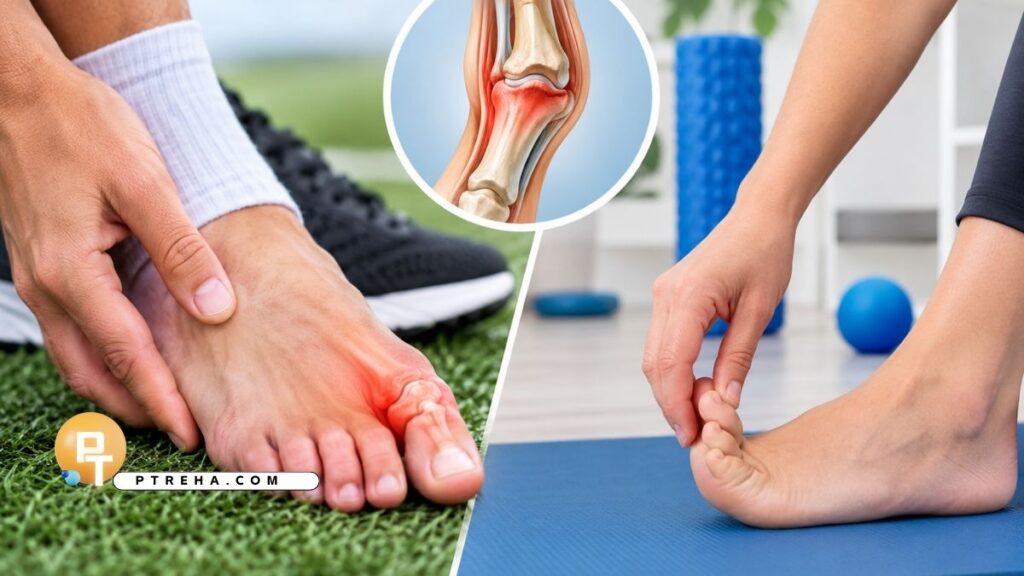
Turf toe is an injury to the first metatarsophalangeal (MTP) joint at the base of the big toe.
It commonly affects athletes who sprint, jump, cut, or push off repeatedly.
The injury often occurs when the heel is lifted, the forefoot is planted, and the big toe is forced into excessive dorsiflexion.
Football, soccer, basketball, tennis, dancing, and other activities involving rapid acceleration can place substantial stress on this joint.
The plantar plate and surrounding capsuloligamentous tissues help stabilize the first MTP joint.
A turf toe injury can range from a mild stretch to a partial or complete disruption of these structures.
Common symptoms include:
- Pain underneath or around the big toe joint
- Swelling around the first MTP joint
- Bruising in more significant injuries
- Pain during push-off
- Reduced big toe mobility
- Pain when the toe bends upward
- Difficulty walking normally
- Reduced ability to run or sprint
- Weakness during toe flexion
- Tenderness beneath the first MTP joint
The severity matters because rehabilitation for a mild sprain is very different from rehabilitation after a major plantar plate injury or associated fracture.
Turf Toe Injury Grades
Clinicians commonly describe turf toe using three grades based on the amount of tissue damage and joint instability.
| Grade | Typical findings | General rehabilitation approach |
|---|---|---|
| Grade I | Mild plantar structure sprain, localized swelling and tenderness | Relative rest, protection, early controlled movement, progressive strengthening |
| Grade II | Partial tear, greater swelling and restricted motion | More protection and reduced loading followed by progressive mobility and strengthening |
| Grade III | Complete disruption, marked swelling, weakness or instability | Medical assessment, prolonged protection, and sometimes surgical management |
Grade I injuries are generally the least disruptive, while Grade III injuries may involve significant instability, sesamoid injury, or other structural damage.
Do not assume that every painful big toe is a simple turf toe.
Persistent pain, substantial bruising, deformity, inability to bear weight, or suspected fracture warrants clinical assessment.
Early Protection and Pain Control
The first rehabilitation priority is to protect the injured tissues rather than aggressively stretch the big toe.
During the painful stage, reduce activities that repeatedly force the first MTP joint into dorsiflexion.
Walking, running, jumping, lunging, and barefoot activity may need temporary modification depending on injury severity.
Useful early strategies include:
- Relative rest from aggravating activities
- Elevating the foot when swelling is present
- Using a stiff-soled shoe when recommended
- Avoiding barefoot walking if it increases symptoms
- Reducing sprinting and jumping
- Using crutches when prescribed
- Using a walking boot for appropriate injuries
- Taping the big toe when clinically appropriate
- Monitoring swelling after activity
- Gradually increasing weight-bearing tolerance
A stiff sole or appropriate insert can reduce excessive movement through the first MTP joint while the tissues recover.
A Morton-type extension or rigid insert may be used in selected cases to limit painful dorsiflexion.
The exact level of protection should be based on injury severity.
A significant Grade II or Grade III injury should not be treated like a mild sprain.
Restoring Big Toe Mobility
Big toe mobility is important because the first MTP joint contributes to normal walking and athletic push-off.
However, mobility work should be introduced according to tissue healing and symptoms.
Early movement should be comfortable rather than forceful.
A simple mobility routine may include:
- Gentle active big toe flexion
- Gentle active big toe extension within a comfortable range
- Toe spreading
- Controlled toe relaxation
- Short-range first MTP movements
- Gentle ankle pumps
- Pain-free foot arch movements
- Light weight-shifting when appropriate
- Controlled heel raises later in rehabilitation
- Gradual barefoot tolerance when symptoms allow
For example, sit with the foot supported and slowly move the big toe upward only through a comfortable range.
Do not push aggressively into the painful end position simply because the joint feels stiff.
A useful rule is that mobility work should not produce a meaningful increase in pain or swelling later the same day or the following morning.
Big Toe Mobility Exercises
Once acute pain and swelling have settled, mobility exercises can become more specific.
Active Big Toe Flexion and Extension
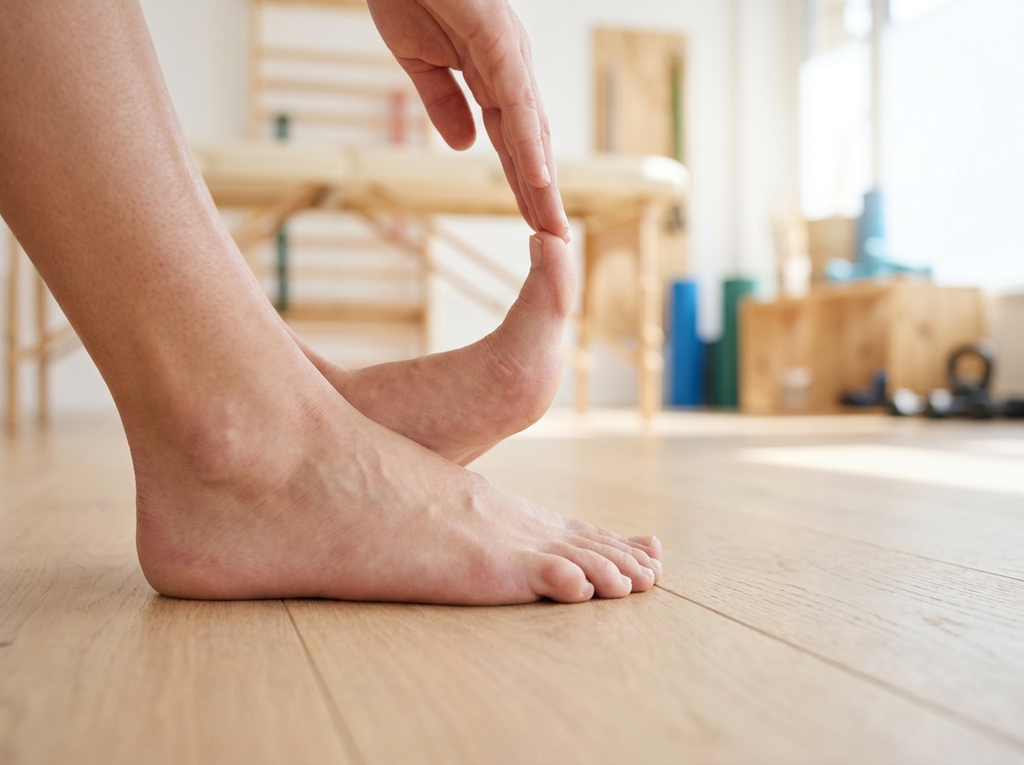
- Sit with the foot relaxed and slowly lift the big toe away from the floor, then return it to a neutral position.
- Perform the movement slowly rather than forcing maximum range.
- This helps the patient regain active control of the first MTP joint.
Toe Flexion Control
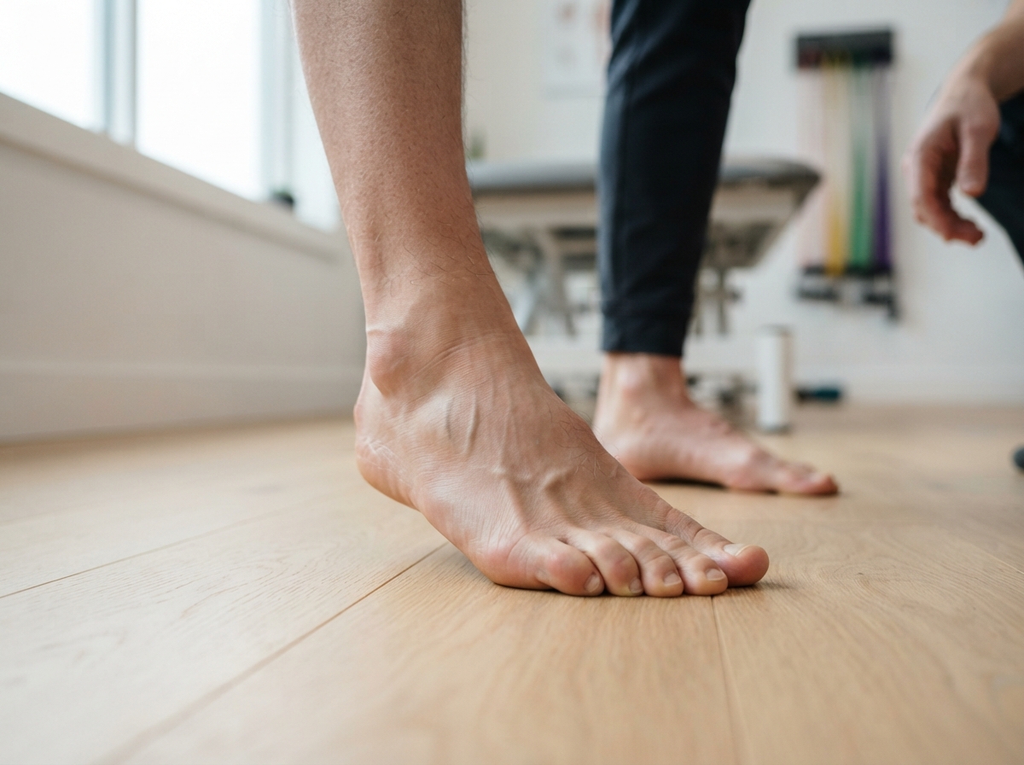
- Place the foot flat on the floor and gently press the big toe downward without curling the other toes aggressively.
- Hold for a few seconds, relax, and repeat.
- The goal is controlled activation rather than maximal force.
Big Toe Abduction
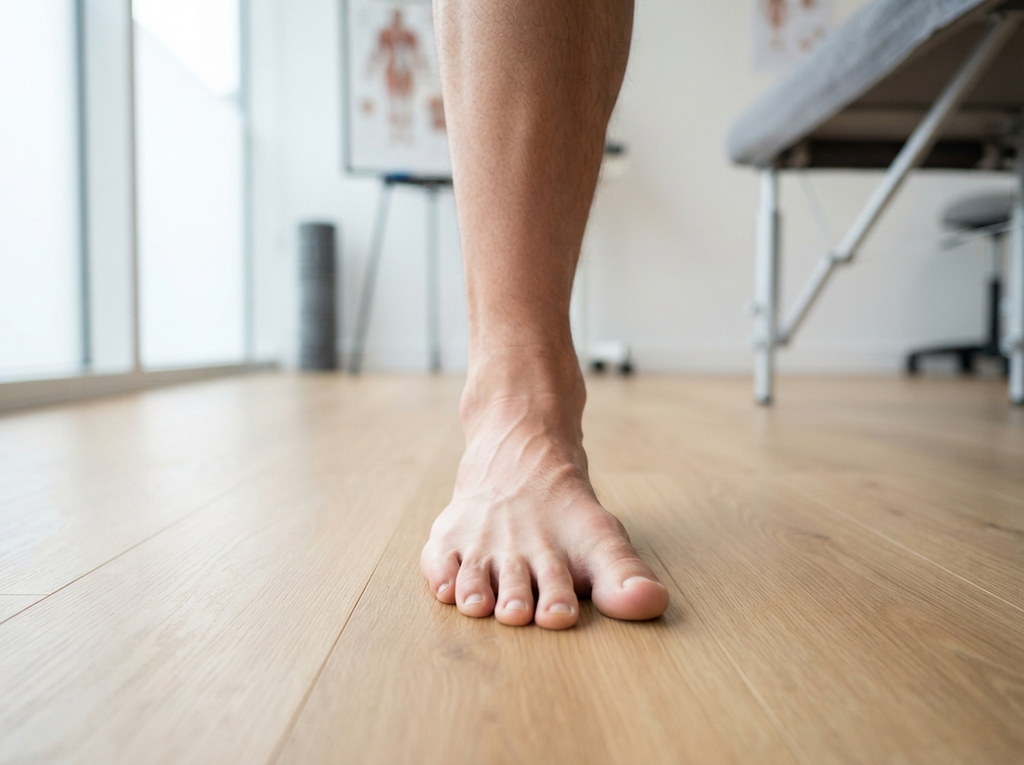
- Try to move the big toe slightly away from the second toe while keeping the foot relaxed.
- This exercise can help restore awareness and independent control of the hallux.
- If the movement is difficult, begin with very small contractions.
Gentle First MTP Mobilization
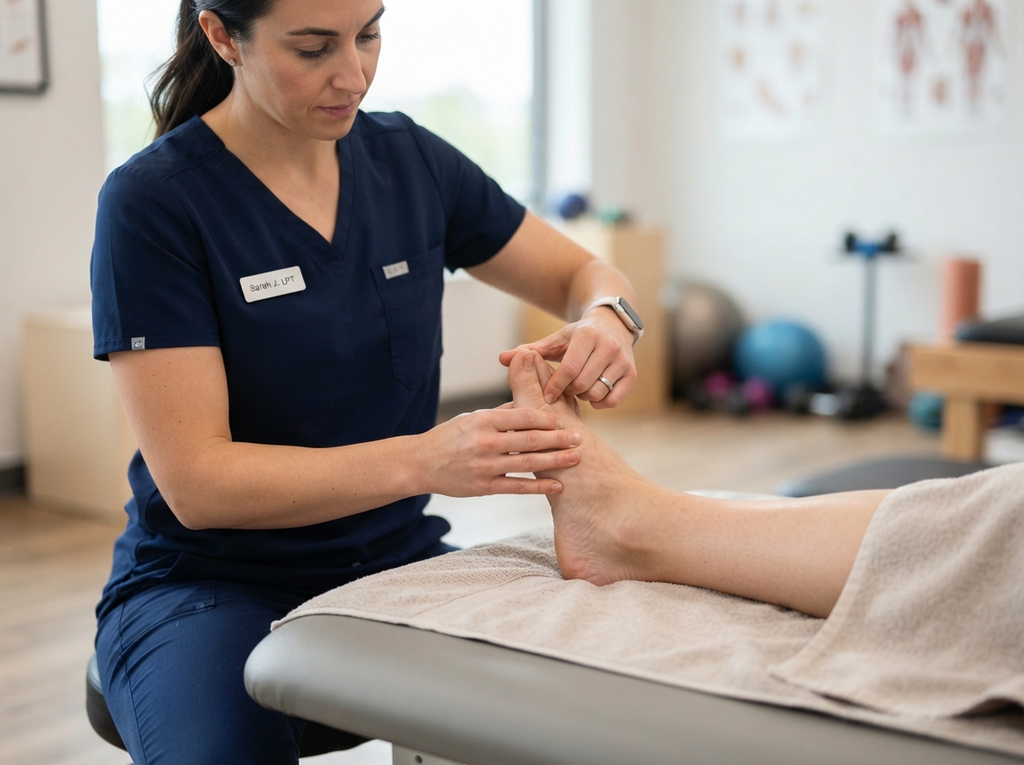
- A physical therapist may use manual joint techniques when stiffness remains after the acute stage.
- Self-mobilization should not be performed aggressively after a suspected significant plantar plate injury, fracture, or unstable joint.
- Manual therapy should complement, not replace, progressive strengthening and functional rehabilitation.
Strengthening the Big Toe and Foot
Mobility alone is not enough.
The big toe must eventually tolerate the forces generated during walking, running, jumping, and cutting.
Strengthening should progress from low-load exercises to functional weight-bearing tasks.
Useful exercises include:
- Isometric big toe flexion
- Controlled toe presses
- Short-foot exercises
- Towel-free toe gripping drills
- Resisted big toe flexion
- Heel raises
- Single-leg heel raises
- Controlled step-ups
- Single-leg balance
- Squat variations
- Calf strengthening
Short-foot exercises can be performed by gently drawing the ball of the foot toward the heel while maintaining contact with the floor.
Avoid excessive curling of the toes.
Later, heel raises become particularly useful because they reproduce the progressive loading associated with forefoot push-off.
For example, begin with double-leg heel raises, progress to controlled single-leg heel raises, and eventually introduce faster or more sport-specific movements if symptoms remain controlled.
Progressing Weight-Bearing and Push-Off
A common rehabilitation mistake is progressing directly from walking to running without rebuilding the ability to tolerate push-off.
A more controlled progression is:
- Comfortable walking
- Longer pain-free walks
- Controlled heel raises
- Step-ups
- Single-leg balance
- Low-impact cardiovascular exercise
- Brisk walking
- Straight-line jogging
- Running
- Acceleration and cutting drills
The progression should be based on symptoms and function rather than a fixed timetable.
A person who can walk comfortably but develops significant pain after jogging is not ready for repeated high-impact loading.
Return to running should be earned through functional tolerance.
Balance, Proprioception, and Functional Training
The first MTP joint contributes to the foot’s ability to interact with the ground during movement.
Rehabilitation therefore needs to progress beyond isolated toe exercises.
Balance training can begin with stable double-leg positions and progress toward single-leg tasks.
Examples include:
- Single-leg standing
- Single-leg balance with gentle reaching
- Step-downs
- Single-leg squats
- Controlled lunges
- Lateral step-ups
- Balance while reaching in different directions
- Low-level hopping when appropriate
- Landing drills later in rehabilitation
- Sport-specific change-of-direction drills
A soccer player, for example, may need to progress from walking to jogging, then straight-line running, acceleration, deceleration, lateral movement, and finally cutting with a ball.
A basketball player may need repeated jumping, landing, defensive shuffling, and rapid changes of direction before full participation.
Returning to Running and Sport
Return to sport should be based on function rather than simply waiting for a certain number of days.
Before progressing toward unrestricted sport, the athlete should generally be able to demonstrate:
- Comfortable normal walking
- No significant limp
- Controlled single-leg stance
- Good big toe strength
- Functional first MTP mobility
- Comfortable heel raises
- Pain-controlled jogging
- Progressive running tolerance
- Sport-specific movement tolerance
- No meaningful increase in swelling after training
- Confidence during push-off
For lower-grade injuries, return can occur relatively quickly when symptoms are minimal and normal function has returned.
More substantial injuries require longer protection and rehabilitation.
Published rehabilitation reviews describe non-operative protocols progressing through phases of symptom control, mobility, strengthening, conditioning, and sport-specific loading.
Do not use a published average return-to-sport time as a personal deadline.
Research shows considerable variation depending on injury severity, treatment, sport, and the individual athlete.
Taping, Footwear, and Activity Modification
External support can be useful when the first MTP joint remains sensitive during activity.
A toe-spica-style taping technique may help limit excessive dorsiflexion by supporting the big toe in a protected position.
Taping should not be so tight that it causes numbness, color changes, or circulation problems.
Footwear also matters.
Helpful considerations include:
- Choose a shoe with a relatively stiff sole when recommended
- Avoid very flexible footwear during painful stages
- Consider an appropriate rigid insert
- Avoid shoes that force the big toe into painful positions
- Replace worn-out athletic footwear
- Use sport-specific support during return to activity
- Monitor symptoms after changing footwear
For athletes returning from turf toe, a rigid insert or stiff-soled shoe may reduce painful first MTP motion during loading.
When to Seek Professional Assessment
Not every big toe injury should be managed with a home exercise program.
Seek assessment from a physical therapist, sports medicine clinician, podiatrist, or orthopedic professional when symptoms are severe, persistent, or associated with suspected structural injury.
Important warning signs include:
- Inability to bear weight normally
- Significant bruising
- Major swelling
- Visible deformity
- Joint instability
- Persistent weakness
- Numbness or altered sensation
- Severe pain under the big toe
- Suspected sesamoid injury
- Pain that is not improving
- Repeated swelling after exercise
- Inability to regain functional push-off
Imaging may be appropriate when a fracture, joint injury, sesamoid problem, or more severe plantar plate injury is suspected.
Accurate grading is important because management depends substantially on the structures involved and the degree of instability.
A complete plantar complex disruption, significant instability, fracture, loose body, or other major structural problem may require specialist management and, in selected cases, surgery.
Common Rehabilitation Mistakes
Turf toe rehabilitation often fails when the athlete progresses faster than the injured tissues can tolerate.
Common mistakes include:
- Stretching the big toe aggressively too early
- Returning to sprinting because walking feels comfortable
- Ignoring swelling after training
- Continuing through sharp pain
- Wearing highly flexible shoes during a painful stage
- Neglecting big toe flexor strength
- Focusing only on mobility
- Skipping balance training
- Returning to cutting before straight-line running is comfortable
- Testing the injury repeatedly
- Stopping rehabilitation as soon as daily walking improves
- Comparing recovery time with another athlete
A better approach is gradual exposure.
Each stage should prepare the first MTP joint for the demands of the next stage.
For example, an athlete should not move from pain-free walking directly to maximal sprinting.
Heel raises, jogging, acceleration, and controlled directional changes provide intermediate loading steps.
Conclusion
Turf toe injury and big toe mobility rehabilitation should balance protection with progressive movement.
The early goal is to control pain and protect the first MTP joint, followed by restoration of comfortable mobility, toe and calf strength, balance, push-off capacity, running tolerance, and sport-specific movement.
Recovery is highly individual.
Mild sprains may progress relatively quickly, while partial or complete plantar structure injuries can require substantially more protection and rehabilitation.
When pain, swelling, weakness, or instability persists, professional assessment is important rather than repeatedly testing the joint through painful movements.
FAQ
What is turf toe?
Turf toe is a sprain involving the first metatarsophalangeal joint at the base of the big toe.
It commonly occurs when the big toe is forcefully bent upward while the foot is planted.
How long does turf toe take to heal?
Recovery time depends on the severity of the injury.
Mild injuries may settle relatively quickly, whereas partial and complete injuries can require several weeks or considerably longer rehabilitation.
Return to sport should depend on functional recovery rather than a fixed timetable.
Should I stretch my big toe after turf toe?
Gentle, pain-controlled mobility can be useful once the acute stage has settled.
Aggressive stretching into painful dorsiflexion is not appropriate when the plantar structures are still irritated or significantly injured.
Why is my big toe stiff after turf toe?
Pain, swelling, protective muscle activity, and reduced movement can all contribute to stiffness after a first MTP injury.
Prolonged protection can also leave the joint restricted, which is why appropriately timed mobility is an important part of rehabilitation.
Can I walk with turf toe?
Some mild injuries allow walking with relatively little limitation, while more significant injuries may require protected weight-bearing, crutches, or a walking boot.
The appropriate level of weight-bearing depends on the injury grade and clinical assessment.
Can turf toe become a long-term problem?
It can.
Inadequately treated or more severe injuries may result in persistent pain, stiffness, reduced push-off strength, degenerative joint changes, or reduced athletic function.
When can I start running after turf toe?
Running should begin after normal walking is comfortable and the athlete can tolerate progressive loading without significant pain or swelling.
A graded progression from walking to jogging, running, acceleration, and sport-specific movement is safer than immediately returning to maximal speed.
Do I need to tape turf toe?
Taping may provide additional support during activity, particularly when returning to sport.
It should be combined with appropriate rehabilitation and footwear rather than used as a substitute for restoring strength and function.
Can I exercise with turf toe?
Yes, but the exercise needs to match the injury stage.
Activities that do not aggravate the first MTP joint may help maintain general conditioning, while running, jumping, sprinting, and cutting should be introduced progressively.
When should I see a physical therapist for turf toe?
A physical therapist can be particularly helpful when pain persists, mobility remains restricted, push-off is weak, or you are having difficulty progressing from walking to running and sport.
Significant swelling, deformity, instability, inability to bear weight, or suspected fracture requires appropriate medical assessment.
For further reading, the clinical review “Turf Toe Injuries in the Athlete” provides a detailed discussion of injury classification, rehabilitation phases, protection, and return-to-play considerations.
A systematic review on return to sport following turf toe injuries also highlights the importance of injury severity and treatment when considering recovery timelines.
Sources
- Turf Toe Injuries in the Athlete — clinical review covering classification, diagnosis, treatment, rehabilitation, and return to sport.
Read the clinical review - Return to Sport After Turf Toe Injuries: A Systematic Review — reviews available evidence concerning recovery and return to athletic activity.
Read the systematic review - Turf Toe: Anatomy, Diagnosis, and Treatment — clinical reference covering the anatomy and assessment of first MTP joint injuries.
If you want, I can also rewrite the full article with these 3 resources naturally embedded as anchor-text links within the relevant paragraphs, rather than placing them separately at the end.