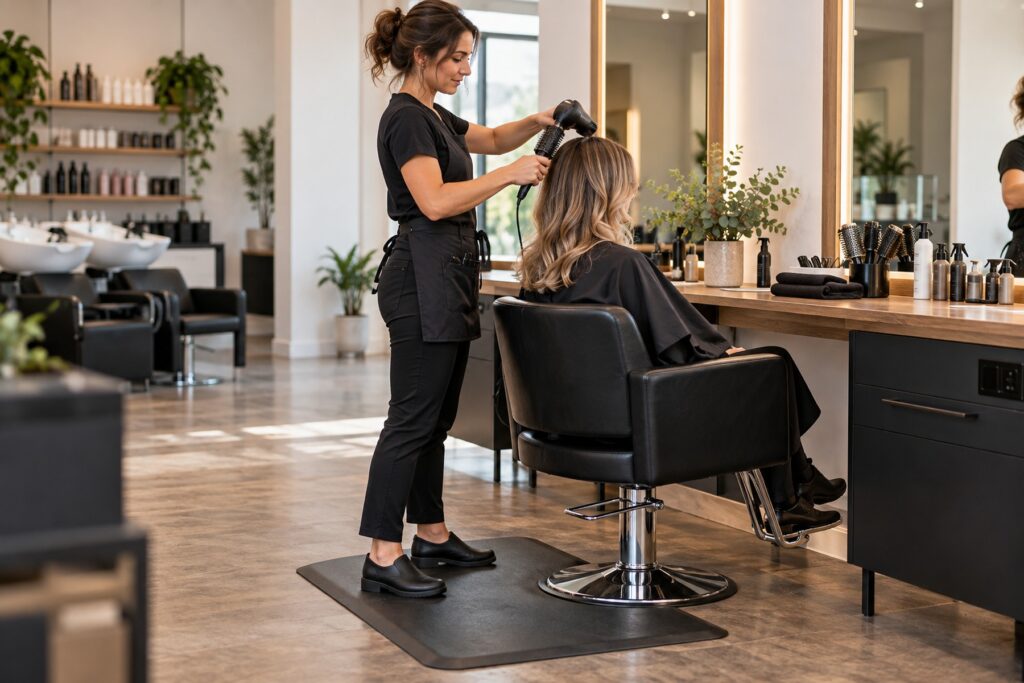
Yes, footwear matters for hairdressers and other standing occupations, but the best setup combines a well-fitted work shoe with movement, suitable flooring, task variation, and access to sitting or foot support. No shoe can remove all discomfort from a job that keeps someone in one position for long periods.
Why standing work needs more than a comfortable shoe
Hairdressing, retail, healthcare, hospitality, and production work can involve long periods on hard floors with limited changes in position. NIOSH’s review of prolonged standing at work identifies movement and position changes as central strategies, alongside mats, seating, footwear, and inserts.
- Static standing limits natural variation in muscle activity.
- Hard floors can increase perceived foot and leg discomfort.
- Poorly placed tools encourage reaching and uneven loading.
- Workplace hazards may require specific protective footwear.
Start with fit rather than marketing claims
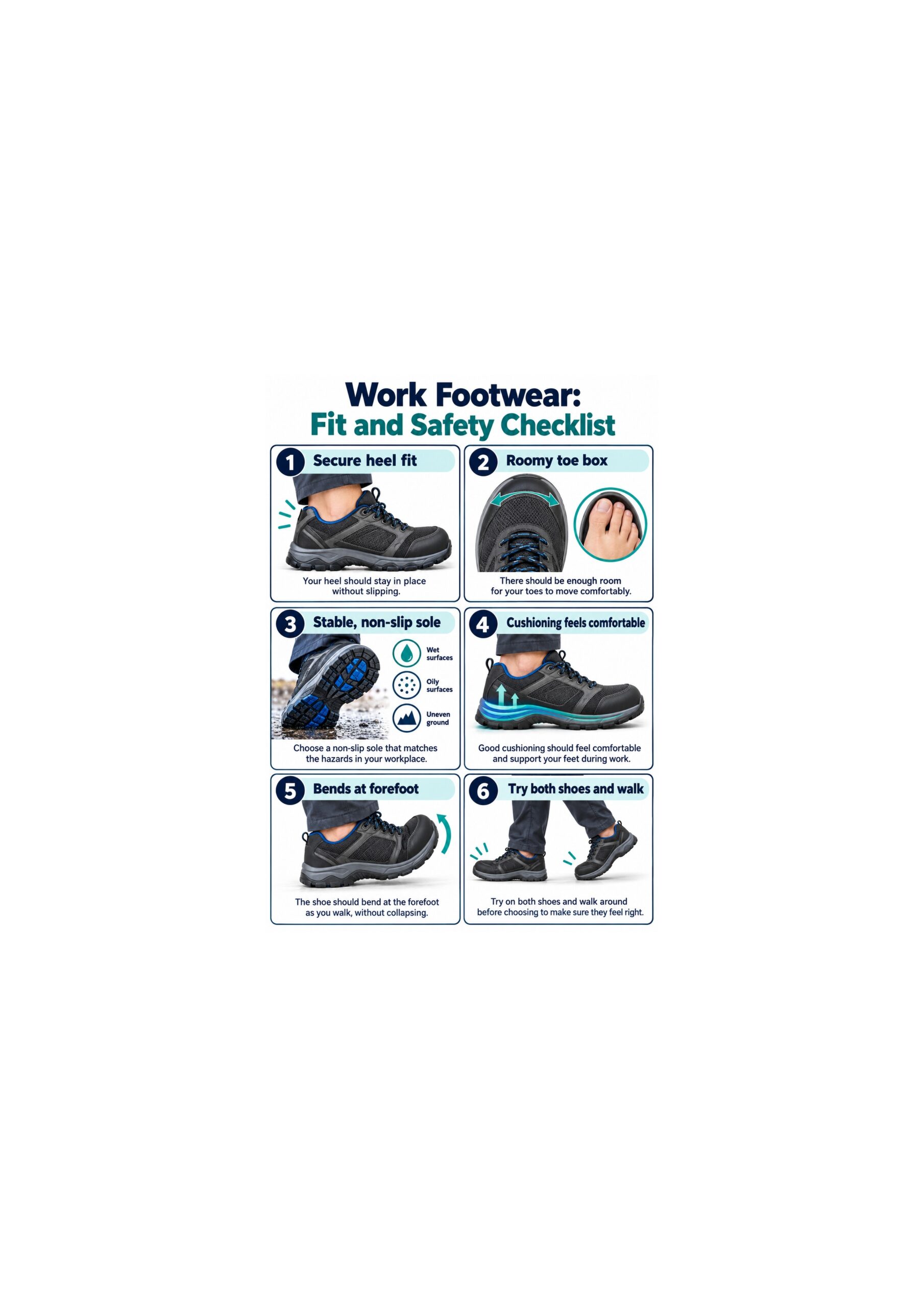
A work shoe should feel secure without squeezing the toes or creating pressure across the top of the foot. Try both shoes, because feet can differ in size and the working day may change how they feel.
- The heel stays in place without repeated slipping.
- The toe box allows the toes to move comfortably.
- The shoe does not pinch at the forefoot or instep.
- The fastening holds the foot without excessive pressure.
- You can walk, turn, and squat comfortably before buying.
Match the sole to the workplace
Traction requirements depend on the floor, contaminants, and job tasks. Hair products, water, loose hair, and electrical cords can change the slip and trip environment, so the workplace risk assessment comes before style preferences.
- Choose slip resistance appropriate to wet or oily surfaces.
- Check that the sole remains stable during turning.
- Avoid a worn tread that no longer grips predictably.
- Follow employer or regulatory requirements for safety footwear.
Look for stable support and comfortable cushioning
Cushioning should feel comfortable without making the foot unstable. CCOHS guidance for working in a standing position emphasizes secure heel fit, toe room, support, cushioning, and footwear selected for the workplace hazard.
- A broad, stable base supports predictable contact with the floor.
- The shoe bends at the forefoot during walking rather than folding through the middle.
- The upper holds the foot without excessive side-to-side movement.
- Cushioning feels comfortable during both standing and walking.
Heel height, shoe shape, and fastening
A very high heel narrows the contact area and changes the demands on the foot and calf. A lower, broader heel and an adjustable fastening are usually easier to fit for long standing tasks, but individual comfort and job hazards still matter.
- Prefer a broad, stable heel base.
- Use laces, straps, or another fastening that limits sliding inside the shoe.
- Avoid a pointed toe box that compresses the toes.
- Check that the shoe does not catch on mats, pedals, or stool bases.
When insoles may help
An insole can alter cushioning, volume, and pressure distribution, but it cannot correct a badly fitting shoe. Adding one may make a shoe tighter, so reassess heel hold and toe space after insertion.
- Start with a shoe that fits before adding an insert.
- Confirm the original insole can be removed if replacement is intended.
- Introduce a new insert gradually and monitor pressure areas.
- Seek individual advice when a foot condition or orthosis requires specific accommodation.
Use anti-fatigue mats safely
A resilient mat can improve comfort on a hard floor, but it is one part of the setup. The CCOHS anti-fatigue mat guidance recommends considering footwear, flooring, and opportunities to change position together.
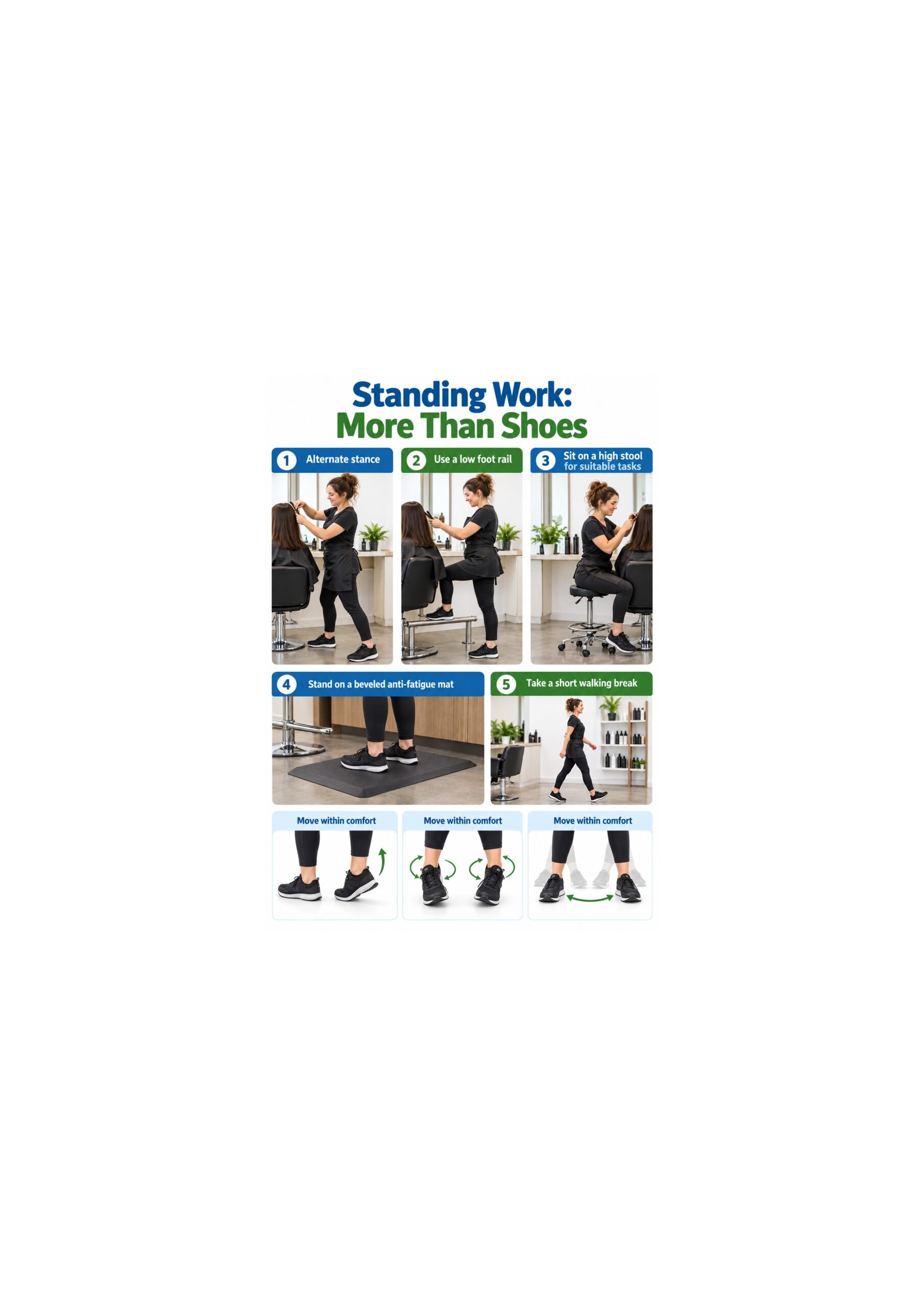
- Choose a mat with beveled edges to reduce trip risk.
- Keep it flat, clean, and resistant to sliding.
- Avoid a surface so soft that standing feels unstable.
- Place it where it supports the task without blocking carts or chairs.
Build movement into the workday
Dynamic movement is more useful than trying to hold one ideal standing posture. Small changes can be built into normal work without interrupting safe service.
- Alternate which foot is supported on a low rail.
- Shift between a parallel and a staggered stance.
- Walk during natural gaps between tasks.
- Use a high stool or sit-stand support for suitable tasks.
- Adjust the client, bed, counter, or work surface rather than bending toward it.
Simple movements for standing workers
Gentle movements can provide variation during a shift. They should remain comfortable and must not interfere with hygiene, balance, client care, or workplace safety.
- Weight shifts: move body weight gradually from one foot to the other.
- Calf raises: rise and lower with light support when balance is secure.
- Ankle circles: perform them seated or while one foot is safely supported.
- Short walk: use a natural break to take several relaxed steps.
Compare footwear choices by the job
| Work demand | Footwear priority | Also address |
|---|---|---|
| Wet salon or kitchen floor | Hazard-appropriate slip resistance | Prompt cleaning and clear walkways |
| Long periods on concrete | Comfortable cushioning and stable fit | Resilient mat and movement opportunities |
| Frequent turning | Secure heel and stable sole | Workstation layout and floor condition |
| Protective-toe requirement | Certified safety shoe with adequate toe room | Correct size and employer requirements |
| Use of an orthosis | Enough internal volume and removable insole | Individual fitting and gradual introduction |
- Choose for the actual work environment, not only the shop floor.
- Replace footwear when fit, cushioning, or tread has clearly deteriorated.
- Rotate between suitable pairs only if both meet the same safety needs.
- Record which tasks trigger discomfort to guide changes beyond footwear.
Common footwear mistakes
A shoe can look supportive yet fit poorly. Repeated rubbing, toe pressure, instability, or a need to grip with the toes are practical signs that the fit or design needs review.
- Buying a tight shoe and expecting it to stretch enough
- Choosing cushioning that feels unstable during turns
- Ignoring worn tread or an unevenly compressed sole
- Adding a thick insole without checking internal space
- Using a mat with curled edges or poor grip
When to seek individual assessment
Persistent pain, numbness, swelling, skin breakdown, weakness, or symptoms that continue away from work need individual assessment. Sudden calf swelling, redness, warmth, chest pain, or breathlessness requires urgent medical attention.
- A foot shape or health condition makes standard footwear difficult to fit.
- Symptoms are worsening despite reasonable workplace changes.
- An orthosis or protective shoe causes new pressure areas.
- Balance or sensation changes affect workplace safety.
Conclusion
Ergonomic footwear for hairdressers and standing workers should fit securely, leave room for the toes, match workplace hazards, and feel stable during real tasks. Combine it with movement, a safer floor surface, task variation, and access to support or sitting.
Frequently asked questions
What shoes are best for hairdressers?
The best pair fits securely, allows toe movement, has workplace-appropriate slip resistance, and remains comfortable during standing, walking, and turning.
Are running shoes suitable for salon work?
Some may be comfortable, but the sole must match the slip hazards and the shoe must remain stable during turning and close work.
Do more expensive shoes prevent foot pain?
Price does not guarantee fit or safety. Comfort, size, construction, work demands, and floor conditions matter more.
Should work shoes have arch support?
The shoe should feel supportive and comfortable, but one arch shape does not fit everyone. Persistent symptoms may need individual fitting advice.
Are high heels appropriate for long standing shifts?
Very high heels reduce stability and alter loading. A lower, broader base is generally more practical for prolonged standing and turning.
Can an insole fix an uncomfortable shoe?
An insole cannot correct poor length, width, or heel fit and may make the shoe tighter. Recheck the whole fit after adding one.
Do anti-fatigue mats replace supportive footwear?
No. Mats, footwear, flooring, workstation design, and movement opportunities work together.
How do I know when to replace work shoes?
Review them when the tread is worn, the sole is unevenly compressed, the upper no longer holds the foot, or comfort has clearly changed.
Should I wear the same shoes every shift?
You may rotate suitable pairs if each one fits and meets the same workplace safety requirements.
What helps most when standing all day?
Regular movement and position changes, suitable footwear, resilient flooring or safe matting, task variation, and access to sitting or foot support work best together.