
Side sleeping with a pillow between your knees and back sleeping with a pillow beneath your knees are useful starting points for chronic lower back pain. The best choice is the one that helps you settle, turn, and wake more comfortably; this article explains how to test those positions, adjust your bedding, and recognize symptoms that need medical attention.
Which sleeping position should you try first?
Start with the position you already find easiest, then change one small detail. A pillow adjustment is easier to judge than forcing yourself into an unfamiliar posture for an entire night.
Compare supported side lying and supported back lying while you are awake. Give yourself a little time to settle, and move out of any position that clearly increases pain.
- Choose comfort rather than trying to hold a perfectly straight posture.
- Use ordinary pillows before buying specialist equipment.
- Keep enough space to turn and change position.
A position that feels comfortable is a way to manage symptoms, not a test that identifies the cause of your pain. If discomfort persists despite reasonable adjustments, arrange an assessment rather than repeatedly changing your bedding.
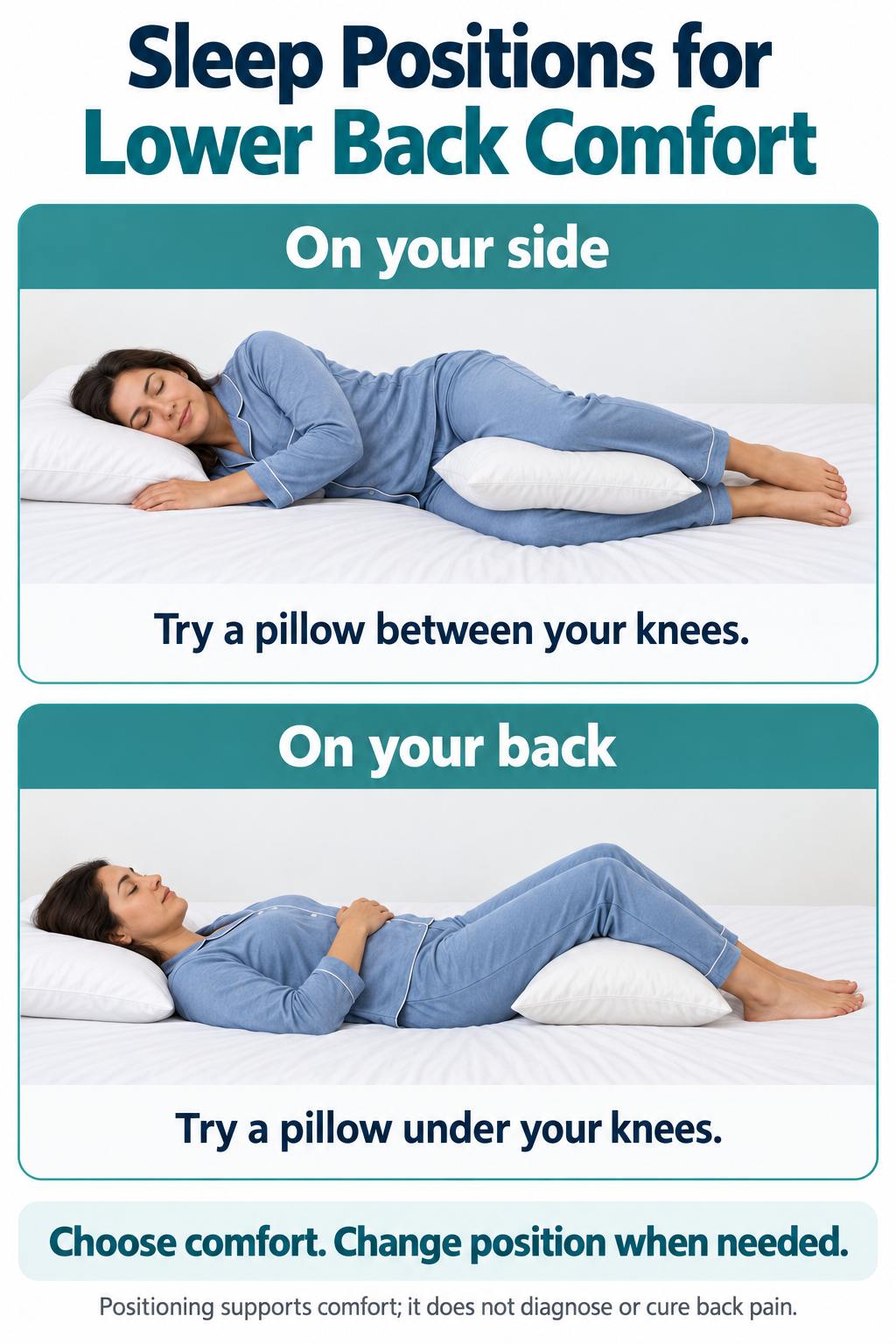
Side sleeping: support the space between your knees
Lie on the side that feels better and allow a gentle bend at your hips and knees. Place a pillow between your knees so the upper leg has somewhere to rest.
Mayo Clinic’s illustrated sleeping-position advice describes this setup as an option for supporting the relationship between the hips, pelvis, and spine. A body pillow is another option if it feels more comfortable.
- Let your legs bend slightly without pulling them tightly toward your chest.
- Adjust the pillow thickness until your upper leg rests easily.
- Use a head pillow that supports your neck without tipping it noticeably sideways.
For example, if your upper knee falls forward and you feel twisted, try bringing the pillow farther forward to support that leg. Keep the change only if it makes the position easier to tolerate.
Back sleeping: try a pillow beneath your knees
When lying on your back, place a pillow beneath both knees and keep your head comfortably supported. This is a simple alternative when side lying irritates a shoulder or hip.
A small towel beneath the waist is optional if the space there feels unsupported. Remove it if it creates pressure or makes your back feel more arched.
- Start with modest knee support rather than a large stack.
- Keep your head and neck in a relaxed position.
- Check that you can turn or get out of bed comfortably.
You do not need to stay on your back all night. If you wake uncomfortable, change position instead of treating movement as a failure.
Stomach sleeping: make comfort the deciding factor
Stomach sleeping can be uncomfortable for the back. If it repeatedly aggravates your symptoms, test a supported side or back position instead.
If you cannot settle another way, a thin pillow beneath the lower abdomen and hips is one modification to try. Adjust head support so the position does not add neck discomfort.
- Test the modification while awake first.
- Change position if symptoms increase.
- Avoid forcing an unfamiliar posture simply because it sounds ideal.
No sleeping position is a substitute for individual advice after surgery or when a clinician has given you specific positioning instructions. Follow those instructions before trying general suggestions.
A quick comparison of sleeping setups
Use this table to choose a starting point. The adjustments are options to test, rather than a ranking that predicts which position will work best for every person.
| Position | Starting setup | What to check |
|---|---|---|
| Side lying | Gentle knee bend; pillow between knees | Does the upper leg feel supported without pulling or twisting? |
| Back lying | Pillow under both knees; comfortable head support | Does the back feel more relaxed, and can you turn easily? |
| Stomach lying | If needed, try a thin pillow under hips and lower abdomen | Does it remain comfortable for both the back and neck? |
If none feels tolerable, that is useful information to bring to your clinician. It does not mean you need to keep searching for a more elaborate pillow arrangement.
Check your mattress and pillows before replacing them
Begin by checking the bed you already have: look for obvious sagging, uneven support, and pillows that collapse or bunch up. Judge a change by how you sleep and feel afterward, rather than by an “orthopedic” label.
A mattress that feels extremely hard is not automatically better for a painful back. Cleveland Clinic’s back-care guidance emphasizes a supportive surface and notes that changing from a soft surface to a hard one may feel worse for some people.
- Adjust pillow placement before committing to a new mattress.
- Check that the mattress base supports the mattress as intended.
- If buying a replacement, review its trial and return terms.
Consider practicality as well as comfort. A setup that requires rebuilding a pile of cushions every time you turn may be less useful than one pillow you can reposition easily.
Turn and get out of bed with less effort
If sitting straight up is painful, try rolling onto your side before getting up. Move your legs over the edge while pushing through your arms to bring your trunk upright, then pause before standing.
This is a movement option, not a rule you must follow forever. Use whichever approach feels steady and manageable.
- Bring yourself close enough to the edge before standing.
- Place your feet securely on the floor.
- Use an appropriate bed height and ask for help if transfers feel unsafe.
For turning in bed, experiment with bending your knees and moving your shoulders and pelvis together. If transfers remain difficult, a physical therapist can assess the task and suggest an approach suited to your strength, balance, and symptoms.
Make a simple bedtime plan
Sleep positioning is only one part of the evening. Keep the routine manageable so that checking your back does not become the focus of the whole night.
The National Heart, Lung, and Blood Institute’s healthy sleep advice recommends a consistent sleep schedule, a quiet wind-down period, and a bedroom that is dark, cool, and quiet.
- Keep bedtime and waking time reasonably consistent.
- Reduce bright screens and stimulating activities before bed.
- Consider whether late caffeine or alcohol is disrupting sleep.
Choose one pillow arrangement before getting into bed. If you wake uncomfortable, reposition calmly; you do not need to monitor spinal alignment throughout the night.
During the day, continue tolerable activities rather than spending prolonged periods in bed. The NIAMS overview of back-pain treatment explains how activity, rehabilitation, and other treatments can form part of a broader plan.
- Discuss an exercise plan if pain is limiting normal movement.
- Tell your clinician if sleep remains disrupted despite adjustments.
- Ask about persistent difficulty falling or staying asleep as a separate concern.
Track what helps and know when to seek care
A short record can make your next decision clearer. Try one change at a time and note the outcome without treating a single difficult night as a definitive result.
- Record your starting position and pillow placement.
- Note whether pain interrupted sleep and what helped you settle again.
- Describe morning comfort and any change in leg symptoms.
Seek medical advice if back pain continues to disrupt daily life, is not improving, or becomes worse at night or fails to ease with rest. Unexplained weight loss is another reason for assessment; sudden severe worsening or feeling feverish and unwell calls for urgent medical advice.
Seek emergency care for back pain with any of these symptoms, as described in the NHS guidance on back-pain warning signs:
- New trouble passing urine, loss of bladder or bowel control, or numbness around the genitals or anus.
- Pain, tingling, numbness, or weakness affecting both legs.
- Chest pain or back pain following a serious accident.
Do not keep testing pillows when these symptoms occur. Use your local emergency service for immediate assessment.
Conclusion
The best sleeping positions for chronic lower back pain are practical starting points, not a single posture everyone must maintain. Try supported side lying or back lying, retain the adjustments that improve comfort, and seek assessment when symptoms persist or change.
Frequently asked questions
Is side sleeping better than back sleeping for lower back pain?
Either may be comfortable. Start with your preferred position, add appropriate pillow support, and compare how easily you settle and how you feel when you wake.
Where should I put a pillow when sleeping on my side?
Place it between your knees with your legs gently bent. Adjust its position and thickness so your upper leg rests comfortably rather than pulling forward.
Where does the pillow go when sleeping on my back?
Try placing it beneath both knees while keeping your head supported. A small waist towel is optional; remove it if it creates pressure or increases discomfort.
Must I avoid stomach sleeping completely?
If it aggravates your back, try another position. If it is the only way you settle, test a thin pillow under the hips and lower abdomen and reassess comfort.
Should I buy an orthopedic pillow?
Begin with a pillow you already own. A useful pillow supports you comfortably and is easy to reposition; a product label does not establish that it will suit your symptoms.
Do I need the firmest mattress available?
No. Look for comfortable support rather than maximum hardness, and check for obvious sagging. If you buy a replacement, trial and return options can help you judge it in everyday use.
Is it harmful to change position during the night?
You do not need to remain in one posture. Change position when uncomfortable, and follow any specific restrictions you have been given after surgery or another medical procedure.
Can a sleeping position identify what is causing my pain?
No. Feeling better or worse in a position is useful information for an assessment, but it cannot diagnose the cause by itself.
Can better positioning replace physical therapy?
Positioning may help with comfort, but persistent limitations can require a broader plan. Physical therapy can address movement, activity, exercise, and practical tasks such as getting out of bed.
When should nighttime back pain be checked?
Arrange assessment when pain is persistently worse at night, does not ease with rest, or continues to disrupt life. New bladder or bowel changes, saddle numbness, or symptoms in both legs require emergency assessment.