Learning how to read a physical therapy research paper is an essential skill for students, clinicians, and researchers who want to connect scientific evidence with clinical decision-making. Instead of reading every paper from beginning to end in the same way, you can use a structured approach to identify the research question, study design, participants, methods, results, limitations, and clinical relevance before deciding how much confidence to place in the findings.
Why Physical Therapists Need to Read Research Papers
Physical therapy practice involves decisions about assessment, treatment, exercise prescription, prognosis, prevention, and patient education. Research papers can provide useful evidence for these decisions, but a published study should not automatically be treated as strong evidence simply because it appears in a scientific journal.
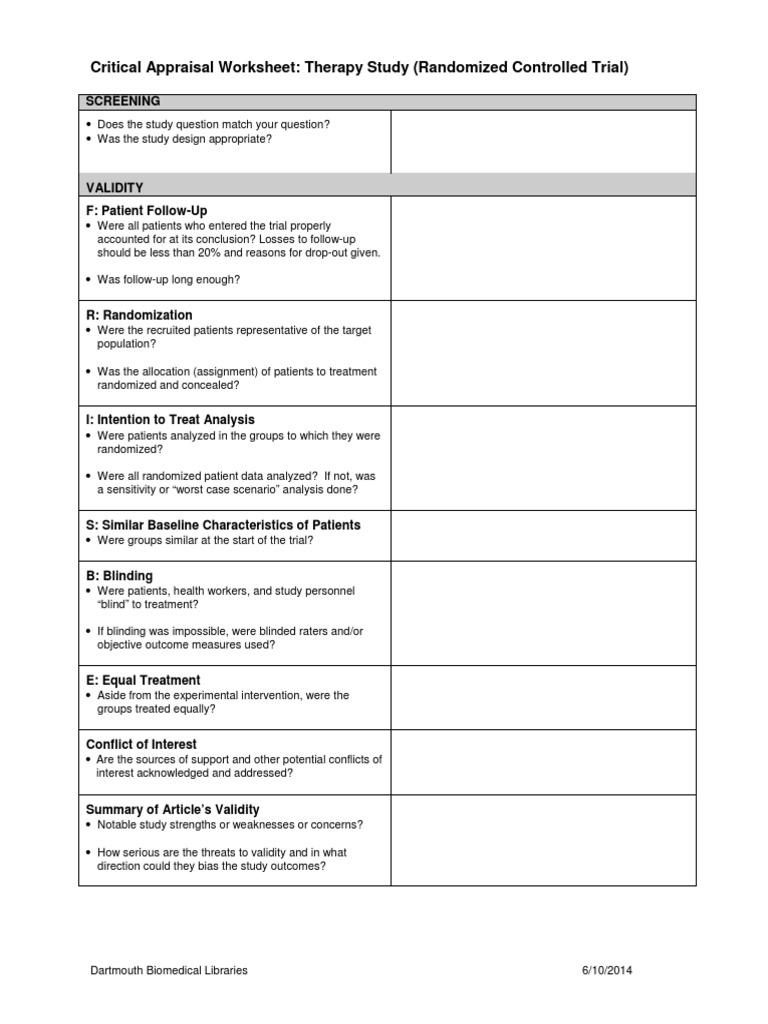
Reading research critically means asking whether the study actually investigated the question you have, whether the methods were appropriate, whether the results are trustworthy, and whether the findings apply to your patient.
For example, suppose you find a study reporting that a particular exercise program improved pain and function in people with knee osteoarthritis. Before applying the findings, consider:
- Who participated in the study?
- What exactly was the exercise program?
- What was the comparison group?
- How were pain and function measured?
- How large was the observed effect?
- Was the difference clinically meaningful?
- Were important participants excluded?
- How long were outcomes followed?
- Could bias have influenced the findings?
- Does the study population resemble your patient?
A useful research paper should therefore be viewed as evidence to interpret, not as an instruction that must automatically be followed.
Clinical principle: A research result becomes useful in practice only after you consider the study methods, the patient, the intervention, the outcome, and the clinical context together.
Start With the Research Question
Before examining the statistics, identify exactly what the researchers wanted to investigate. A clearly defined question makes it easier to determine whether the study design and methods actually address the problem.
For intervention research, you can often organize the question using elements such as population, intervention, comparison, and outcome.
For example, imagine a study asking whether progressive resistance exercise improves physical function in adults with knee osteoarthritis compared with usual care.
The important elements include:
- Population: adults with knee osteoarthritis
- Intervention: progressive resistance exercise
- Comparison: usual care
- Outcome: physical function
- Time frame: the period over which the outcome was assessed
The exact question matters because a study about pain may not answer a question about long-term function. Similarly, evidence from healthy adults may not directly answer a question about people recovering from surgery.
Before reading further, write the research question in one sentence. If you cannot explain what the researchers were trying to determine, slow down before interpreting the results.
Identify the Study Design
The study design provides important information about what conclusions can reasonably be drawn. Different designs answer different types of questions and have different sources of potential bias.
Common designs encountered in physical therapy research include:
- Randomized controlled trials
- Cohort studies
- Case-control studies
- Cross-sectional studies
- Diagnostic accuracy studies
- Reliability and measurement studies
- Systematic reviews
- Meta-analyses
- Qualitative studies
- Case reports and case series
A randomized controlled trial may be appropriate for studying the effects of an intervention, while a cross-sectional study may describe an association between variables at a particular point in time.
Do not automatically assume that one study design is “good” and another is “bad.” The more important question is whether the design is appropriate for the research question.
Reporting resources such as the EQUATOR Network organize guidance according to study type, including CONSORT for randomized trials, STROBE for observational research, STARD for diagnostic accuracy studies, and PRISMA for systematic reviews.
Suggested caption: Understanding the study design helps the reader determine what type of conclusion the research can support.
Read the Methods Before Trusting the Results
The methods section explains how the study was actually conducted. It is one of the most important sections to examine because a polished abstract can make a study appear convincing even when important methodological details require closer examination.
Start by looking at the participants.
Ask:
- How were participants recruited?
- What were the inclusion criteria?
- What were the exclusion criteria?
- How many participants were enrolled?
- How many completed the study?
- Were important groups underrepresented?
- Was the sample similar to the patients you treat?
- Were participants randomized when randomization was appropriate?
Then examine the intervention or exposure.
For a physical therapy intervention, determine exactly what participants received. Look for information about exercise selection, dosage, frequency, duration, progression, supervision, adherence, and co-interventions.
A statement such as “participants completed a strengthening program” is much less informative than a clear description of which exercises were performed, how often they were performed, how intensity was progressed, and how the program was delivered.
For rehabilitation research, intervention reporting is particularly important because an intervention cannot be meaningfully replicated if its essential components are poorly described. The EQUATOR Network also lists rehabilitation-specific reporting guidance such as TIDieR-Rehab.
Examine the Outcomes and Measurements
A research paper may measure several outcomes, but they are not necessarily equally important.
First determine what the primary outcome was, if one was prespecified. Then identify secondary outcomes and distinguish them from exploratory analyses.
Consider whether the outcome actually reflects something important to the patient.
For example, a study might report an improvement in a laboratory or performance measure while the change in pain, disability, participation, or quality of life is small or uncertain.
Useful questions include:
- What was measured?
- Who performed the measurement?
- Was the assessor aware of group allocation?
- Was the measurement method appropriate?
- Was the outcome patient-reported or performance-based?
- Was the measurement relevant to the clinical question?
- Were outcomes measured at appropriate time points?
- Were all important outcomes reported?
When reading measurement research, also pay attention to concepts such as reliability, measurement error, validity, responsiveness, and minimal important change. These concepts answer different questions and should not be treated as interchangeable.
For example, a measurement can be reliable without necessarily being valid for the specific clinical purpose for which you want to use it.
Understand Randomization, Blinding, and Bias
Bias is systematic error that can influence a study’s findings. It can arise at several stages, including participant selection, intervention delivery, outcome assessment, analysis, and reporting.
In a randomized trial, examine how participants were assigned to groups. Random allocation can reduce systematic differences between groups, but simply using the word “randomized” does not tell you whether the allocation process was adequately conducted.
Also consider concealment of allocation and blinding where applicable.
Blinding is not equally practical in every physical therapy study. Participants and therapists often know which intervention is being delivered, particularly when comparing exercise programs. However, blinding outcome assessors or using objective outcome measures may still be possible in some studies.
When evaluating randomized trials, Cochrane’s risk-of-bias framework considers specific domains rather than treating study quality as a single vague concept.
Potential warning signs include:
- Major differences between groups at baseline
- Substantial loss to follow-up
- Unclear allocation procedures
- Outcome assessors who may have been influenced by group assignment
- Important protocol deviations
- Selective reporting of outcomes
- Analyses that differ substantially from the planned approach
- Conclusions that appear stronger than the reported results
Do not label a study “biased” simply because it has one limitation. Identify the specific limitation and consider how it could influence the result.
Read the Statistics Without Getting Lost
You do not need to become a statistician to read physical therapy research effectively. However, you should understand what the main statistical results actually represent.
Start with the difference between statistical significance and clinical importance.
A statistically significant result indicates that the observed data are inconsistent with a specified null hypothesis under the statistical model and assumptions used. It does not automatically mean that the effect is large, important to patients, or sufficient to change clinical practice.
Similarly, a result that is not statistically significant does not necessarily prove that there is no effect.
Look for the effect estimate and its uncertainty rather than focusing only on a p-value.
Depending on the study, useful information may include:
- Mean difference
- Median difference
- Risk ratio
- Odds ratio
- Hazard ratio
- Confidence interval
- Standard deviation
- Standard error
- Absolute risk difference
- Effect size
For example, if an exercise intervention produces a small average improvement in pain, ask whether the confidence interval is narrow or wide and whether the magnitude of improvement is likely to matter to patients.
A useful reading habit is to ask three questions:
- What was the estimated effect?
- How uncertain is that estimate?
- Is the magnitude clinically meaningful?
This approach is generally more informative than looking only at whether a p-value crosses a conventional threshold.
Interpret the Results in Their Clinical Context
The results section tells you what the researchers found. The discussion explains how the authors interpret those findings.
Read the results before accepting the authors’ interpretation.
Look for consistency between the reported data and the conclusions.
For example, suppose a trial finds a statistically significant improvement in a functional outcome but the effect is small. If the authors describe the intervention as producing a major improvement in function, you should examine whether that interpretation is justified by the actual magnitude and uncertainty of the result.
Also check whether the authors distinguish association from causation.
An observational study may find that physical activity is associated with better functional status. That does not automatically demonstrate that increased physical activity caused the improvement.
The same principle applies to diagnostic research. A test associated with a particular condition does not automatically establish that the test can independently diagnose that condition.
Use a Structured Table to Appraise the Paper
A simple appraisal table can prevent you from becoming overly influenced by an interesting conclusion or a striking result.
| Research question | What to check | Example in physical therapy |
|---|---|---|
| Who was studied? | Population and eligibility | Adults with knee osteoarthritis |
| What was tested? | Intervention or exposure | Progressive resistance exercise |
| What was the comparison? | Control or comparator | Usual care |
| What was measured? | Primary and secondary outcomes | Pain and physical function |
| How was allocation handled? | Randomization and concealment | Appropriate group allocation |
| Could bias influence results? | Missing data, blinding, deviations | High loss to follow-up |
| What was the effect? | Effect estimate and uncertainty | Difference between groups |
| Is it clinically meaningful? | Magnitude and patient relevance | Functional improvement |
| Can it apply to my patient? | Similarity of population and setting | Age, condition, severity |
| What are the limitations? | Authors’ and reader’s appraisal | Small sample or short follow-up |
Save this table as a personal checklist when reading research papers.
Decide Whether the Evidence Applies to Your Patient
A well-conducted study may still have limited applicability to an individual patient.
External validity depends partly on whether the study population, intervention, outcomes, and clinical environment resemble your situation.
For example, a study involving adults with chronic low back pain may not directly answer a question about an adolescent athlete with acute back pain.
Consider:
- Patient age
- Diagnosis or clinical presentation
- Symptom duration
- Severity
- Comorbidities
- Functional status
- Previous treatment
- Intervention availability
- Therapist expertise
- Patient preferences
- Treatment adherence
- Clinical setting
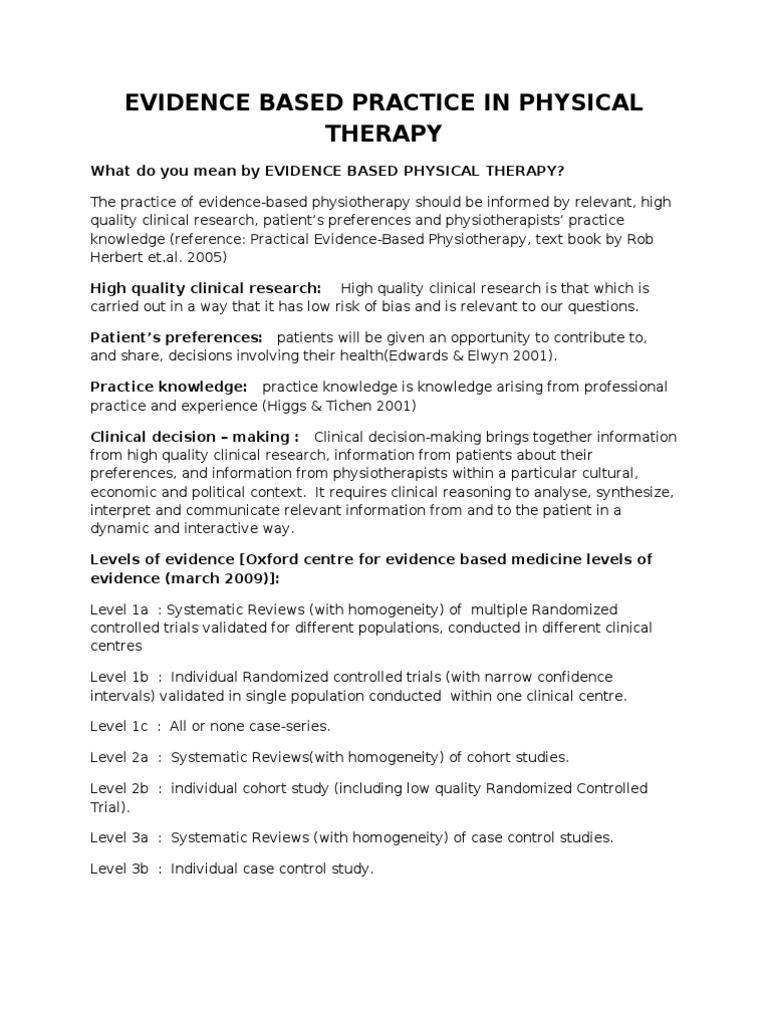
Evidence-based physical therapy is not simply the process of copying an intervention from a research paper. Clinical decisions require integration of research evidence with clinical expertise and the patient’s circumstances, goals, preferences, and risks.
PEDro is a useful resource for finding randomized trials, systematic reviews, and evidence-based clinical practice guidelines relevant to physical therapy. Its database also provides methodological ratings for indexed trials using the PEDro scale.
A Practical Reading Workflow
You can make research reading much faster by using the same sequence each time.
Start with the title and abstract to determine whether the paper is relevant. Do not use the abstract alone to make a final judgment.
Then move through the paper strategically:
- Read the research question.
- Identify the study design.
- Examine the participants.
- Check the intervention or exposure.
- Identify the comparison group.
- Find the primary outcome.
- Examine how outcomes were measured.
- Look for potential sources of bias.
- Read the main results.
- Examine effect estimates and uncertainty.
- Read the limitations.
- Compare the conclusions with the actual findings.
- Decide whether the evidence applies to your patient.
- Check related research when the clinical decision is important.
For systematic reviews, examine how studies were searched for and selected, how risk of bias was assessed, and whether the included studies were sufficiently similar for the conclusions being drawn.
For observational research, pay particular attention to participant selection, exposure and outcome measurement, confounding, and whether the authors are making causal claims that exceed the study design.
For qualitative research, examine how participants were selected, how data were collected and analyzed, and whether the interpretation is supported by the data.
Common Mistakes When Reading Research
Many students initially read research papers as if they were textbooks. They start at the introduction and attempt to understand every sentence before deciding whether the paper is useful.
A more efficient approach is to read with a clinical question in mind.
Avoid these common mistakes:
- Judging a study only by its abstract
- Assuming publication means the evidence is automatically strong
- Treating statistical significance as clinical importance
- Ignoring confidence intervals
- Ignoring missing participants
- Assuming randomization guarantees a bias-free study
- Confusing association with causation
- Applying results to a substantially different population
- Ignoring treatment adherence
- Focusing on one impressive outcome
- Accepting the authors’ conclusion without checking the results
- Treating a single paper as definitive evidence
A research paper is one piece of evidence. Strong clinical reasoning usually requires consideration of the broader evidence base rather than relying on one publication.
Build a Repeatable Research Reading Habit
You do not need to critically appraise every paper with the same level of detail.
If you are screening papers for relevance, the title, abstract, study design, population, intervention, and primary outcome may be enough to decide whether the full paper deserves attention.
For an important clinical decision, go deeper.
A useful personal system is to record:
- The clinical question
- The study design
- The population
- The intervention
- The comparator
- The primary outcome
- The main effect estimate
- The uncertainty around the estimate
- Major limitations
- Applicability to your patient
- Your overall interpretation
This creates a concise evidence note that can be revisited later.
Reporting checklists can also help you understand whether important information has been reported. The EQUATOR Network provides resources for multiple research designs, including randomized trials, observational studies, diagnostic research, systematic reviews, qualitative research, and other health research designs.
Conclusion
Learning how to read a physical therapy research paper is less about understanding every statistical detail and more about asking disciplined clinical questions. Identify what was studied, how it was studied, what was actually found, how uncertain the findings are, what limitations could affect interpretation, and whether the evidence is applicable to the patient in front of you.
With practice, you can move from simply reading research to critically interpreting it. That skill helps physical therapists use evidence more thoughtfully while avoiding conclusions that go beyond what the research can support.
Frequently Asked Questions
What is the best way to start reading a physical therapy research paper?
Start with the title and abstract to determine whether the paper addresses your clinical question. Then identify the research question, study design, participants, intervention or exposure, comparison, and main outcome before spending time on detailed results.
Should I read the entire research paper?
Not always. For initial screening, you can read strategically, but important clinical decisions require closer examination of the methods, results, limitations, and applicability rather than relying only on the abstract.
What section of a research paper is most important?
There is no single universally most important section. The methods and results are particularly important because they allow you to determine how the study was conducted and what the researchers actually found.
What does a randomized controlled trial tell a physical therapist?
A randomized controlled trial can be used to investigate the effects of an intervention when appropriately designed and conducted. Its findings still need to be interpreted in relation to risk of bias, the intervention, outcomes, participants, follow-up, and applicability.
Does statistical significance mean that a treatment works well?
No. Statistical significance and clinical importance are different concepts. A statistically significant result may represent a small effect that has limited practical importance, while an uncertain result does not necessarily prove that an intervention has no meaningful effect.
What should I look for in the methods section?
Look at participant selection, sample size, allocation, intervention details, comparison conditions, outcome measurements, follow-up, adherence, and the methods used for analysis. These details help you understand whether the study can adequately answer its research question.
What is the difference between association and causation?
An association means that two variables are related in the observed data. Causation is a stronger claim and generally requires an appropriate design and analysis that address alternative explanations such as confounding and bias.
How do I know whether research applies to my patient?
Compare your patient’s characteristics with the study population and consider the intervention, clinical setting, outcomes, follow-up, risks, resources, and patient preferences. Applicability should be considered separately from the internal validity of the study.
Can I rely on one research paper when making a treatment decision?
Usually, a single paper should not be considered the entire evidence base for an important clinical decision. Consider relevant systematic reviews, guidelines, other primary studies, clinical expertise, and the individual patient’s circumstances.
Where can physical therapists find research papers?
PEDro is a specialized resource for physical therapy research and provides access to randomized trials, systematic reviews, and evidence-based clinical practice guidelines. Other databases and reporting resources can also help clinicians locate and interpret research.
Resources
- PEDro – Physiotherapy Evidence Database: Search physical therapy trials, systematic reviews, and clinical practice guidelines.
PEDro - PEDro Advanced Search: Search by therapy, problem, body part, topic, study method, and other fields.
PEDro Advanced Search - EQUATOR Network: Research reporting guidelines and resources for critically understanding health research.
EQUATOR Network - Cochrane Handbook: Guidance on assessing risk of bias and interpreting evidence from randomized trials and systematic reviews.
Cochrane Handbook - STROBE: Reporting guidance for observational studies, including cohort, case-control, and cross-sectional research.
STROBE Statement