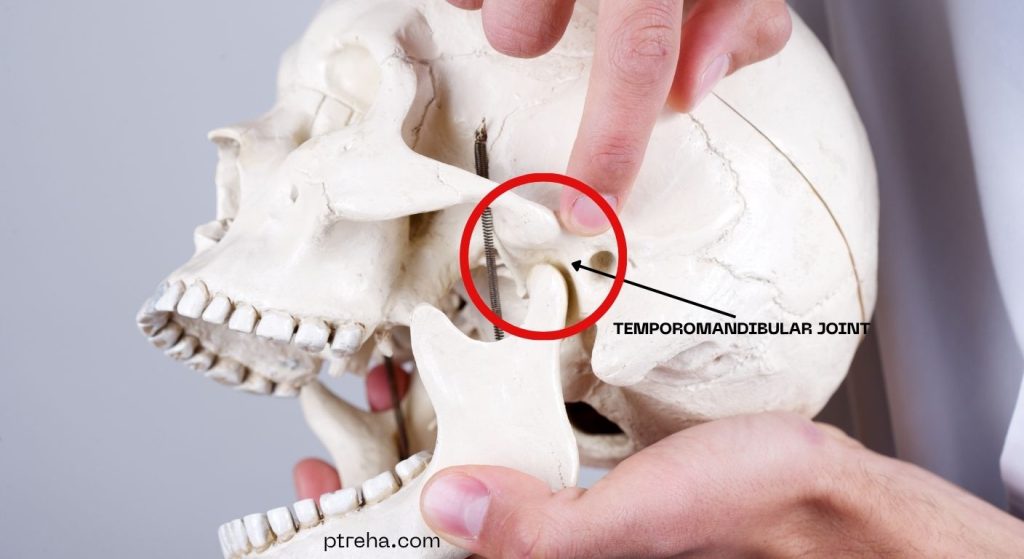
Temporomandibular joint (TMJ) disorders rarely travel alone.
Many people who arrive at a physiotherapy clinic with jaw clicking, locking, or facial pain also report neck stiffness, headaches, and shoulder tension.
The overlap is so common that assessing the TMJ without screening the cervical spine can lead to incomplete treatment and slow recovery.
This guide explains how to assess both regions together, what clinical patterns to look for, and how to build a practical treatment plan that addresses the jaw and neck as one connected system.
Why the Jaw and Neck Are Clinically Connected
The temporomandibular joint and the cervical spine share muscles, nerves, and movement patterns.
When one area is irritated, the other often compensates.
This connection is not just theoretical.
It shows up in daily clinical practice, and it shapes how a thorough assessment should be structured.
- The trigeminal nerve and upper cervical nerves converge in the brainstem, so jaw and neck signals can blend.
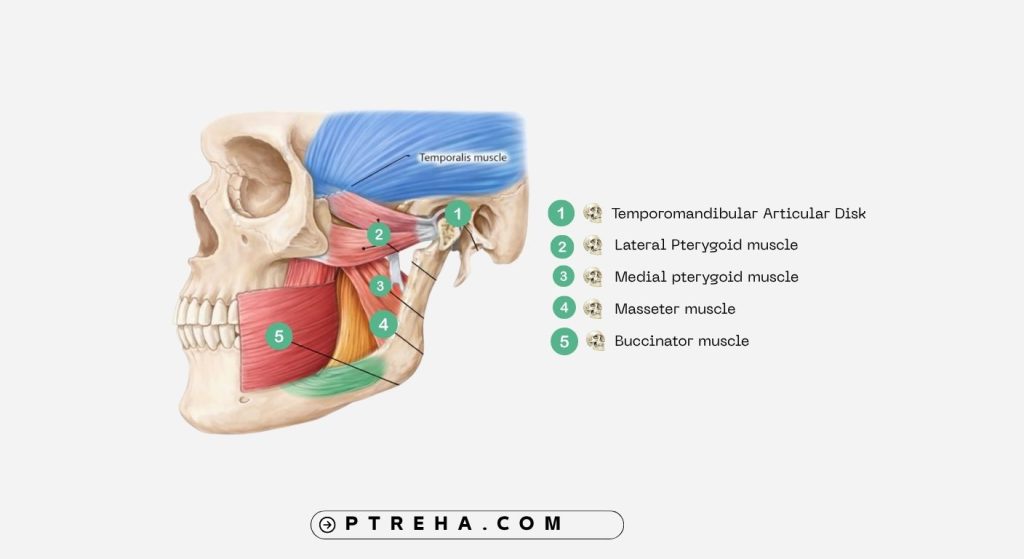
- Muscles such as the digastric, mylohyoid, and infrahyoid group link jaw movement to hyoid and cervical positioning.
- Forward head posture increases load on the jaw muscles that help stabilise the head.
- Bruxism and clenching often coexist with neck pain and tension-type headaches.
- Whiplash injuries frequently produce both cervical and TMJ symptoms.
Common Overlapping Conditions
Several conditions present with combined jaw and neck complaints.
Recognising them early helps direct the assessment.
- Myogenous temporomandibular disorder with cervical myofascial pain.
- Disc displacement with reduction alongside upper cervical joint dysfunction.
- Cervicogenic headache that also triggers jaw pain.
- Postural dysfunction affecting both the jaw and neck.
- Whiplash-associated disorder with secondary TMJ involvement.
Key Questions During the Subjective Assessment
The subjective history is where the jaw-neck link becomes clear.
Ask targeted questions rather than general ones.
Good questioning saves time and guides the physical examination.
- Where does the pain start, and does it spread to the jaw, ear, or temple?
- Does chewing, yawning, or talking change the neck symptoms?
- Does turning the head or looking up change the jaw symptoms?
- Is there clicking, popping, or locking in the jaw?
- Are there headaches, especially in the morning?
- Is there a history of dental work, orthodontics, or jaw trauma?
- Does stress or sleep quality affect symptoms?
When a patient says their jaw pain gets worse when they turn their head, that is a strong signal to assess the cervical spine before treating the TMJ in isolation.
Physical Examination: TMJ and Cervical Spine Together
A combined examination reveals patterns that a single-region assessment would miss.
Work through both areas in the same session.
Observation and Posture
- Note head position, shoulder height, and jaw resting posture.
- Look for mouth breathing, tongue posture, and lip seal.
- Check for asymmetry in facial muscle tone.
- Observe cervical lordosis and thoracic kyphosis.
Range of Motion Testing
- Measure jaw opening, lateral deviation, and protrusion.
- Record cervical flexion, extension, rotation, and side flexion.
- Note whether jaw movement changes with different head positions.
- Test combined movements, such as jaw opening with cervical rotation.
Palpation and Muscle Testing
- Palpate the masseter, temporalis, and pterygoid muscles.
- Palpate the upper trapezius, sternocleidomastoid, and suboccipital muscles.
- Assess for trigger points that refer into the jaw or head.
- Test jaw opening strength and cervical endurance.
Joint Mobility and Special Tests
- Assess upper cervical joint mobility with passive accessory movements.
- Perform TMJ provocation tests for disc displacement.
- Use cervical joint position error tests to check proprioception.
- Screen for red flags such as neurological deficits or unexplained weight loss.
TMJ vs Cervical Spine Findings
This table helps separate and link findings during the assessment.
| Feature | TMJ Disorder | Cervical Spine Involvement |
|---|---|---|
| Primary pain location | Pre-auricular, jaw, temple | Suboccipital, neck, shoulder |
| Aggravating factors | Chewing, yawning, clenching | Sustained posture, rotation, extension |
| Common referral pattern | Ear, temple, cheek | Head, jaw, upper back |
| Key muscles involved | Masseter, temporalis, pterygoids | Suboccipitals, trapezius, SCM |
| Typical associated symptom | Clicking, locking, limited opening | Headache, dizziness, stiffness |
Clinical Reasoning: Linking Findings to Treatment
Once you have data from both regions, look for relationships rather than isolated problems.
This step turns assessment into a targeted plan.
- Does correcting head posture reduce jaw pain during opening?
- Does releasing the masseter change cervical rotation range?
- Does upper cervical mobilisation reduce headache intensity?
- Does jaw rest position change neck muscle activity?
Treating the neck without addressing the jaw, or the jaw without the neck, often leaves the patient with partial relief and recurring symptoms.
Treatment Approaches for Combined TMJ and Neck Pain
Treatment should address both regions in the same plan.
Use a mix of manual therapy, exercise, and education.
Manual Therapy
- Soft tissue release of the masseter, temporalis, and suboccipitals.
- Intraoral techniques for the lateral pterygoid when indicated.
- Upper cervical mobilisation and gentle traction.
- Thoracic spine mobilisation to support posture.
Exercise and Movement Retraining
- Controlled jaw opening and closing with mirror feedback.
- Deep cervical flexor training for endurance.
- Scapular setting exercises for shoulder and neck support.
- Tongue posture and nasal breathing drills.
- Postural breaks during screen work.
Education and Self-Management
- Advise on soft food choices during flare-ups.
- Discuss sleep position and pillow support.
- Teach awareness of clenching during the day.
- Encourage stress management and relaxation strategies.
- Set realistic expectations for recovery time.
Practical Example: A Typical Case
A patient reports jaw pain when chewing and a dull headache at the back of the head.
On assessment, jaw opening is limited to 35 mm with deviation to the right, and cervical rotation is reduced on the same side.
Palpation reveals tenderness in the right masseter and suboccipital muscles.
Correcting head posture reduces jaw pain during opening.
Treatment includes soft tissue release, upper cervical mobilisation, jaw movement retraining, and home exercises.
After several sessions, jaw opening improves and headaches reduce in frequency.
Outcome Measures to Track Progress
Use consistent measures to show change over time.
- Maximum jaw opening in millimetres.
- Numeric pain rating scale for jaw and neck.
- Neck Disability Index or similar tool.
- Headache frequency and intensity diary.
- Patient-specific functional scale for chewing and talking.
When to Refer
Some findings require referral rather than continued physiotherapy.
- Suspected disc displacement without reduction that does not improve.
- Neurological signs such as numbness, weakness, or altered reflexes.
- Unexplained weight loss, night pain, or history of cancer.
- Significant locking or inability to open the mouth.
- Dental or orthodontic issues needing specialist input.
Conclusion
Assessing temporomandibular joint disorders alongside cervical spine pain gives a fuller picture of what is driving a patient’s symptoms.
The jaw and neck are mechanically and neurologically linked, so treating them together usually produces better and more lasting results.
A structured subjective history, combined physical examination, and targeted treatment plan help clinicians move beyond symptom chasing.
When progress stalls, reassessing both regions and referring when needed keeps care safe and effective.
Frequently Asked Questions
Can TMJ disorders cause neck pain?
Yes.
TMJ disorders can contribute to neck pain through shared muscle activity and nerve pathways.
Clenching and jaw tension often increase activity in the neck and shoulder muscles, which can lead to soreness and stiffness.
Can neck problems cause jaw pain?
Yes.
Upper cervical joint dysfunction and muscle tension can refer pain into the jaw, ear, and temple.
This is why assessing the cervical spine is important when jaw pain does not respond to local treatment.
Should a physiotherapist treat both areas at the same time?
In most cases, yes.
Treating both regions in one plan addresses the underlying pattern rather than just the most painful spot.
It also helps prevent symptoms from returning after temporary relief.
What tests help confirm a link between jaw and neck symptoms?
Combined movement tests, such as jaw opening with cervical rotation, are useful.
Changes in jaw pain when head position is corrected also suggest a mechanical link worth treating.
How long does recovery usually take?
Recovery varies.
Some people improve within a few weeks with consistent exercise and education, while others need longer.
Chronic cases with multiple contributing factors often take several months.
Is clicking in the jaw always a problem?
No.
Many people have painless clicking.
It becomes a concern when it is accompanied by pain, locking, or limited movement that affects daily function.
Can posture correction alone fix TMJ pain?
Posture is one factor among many.
Improving posture can help, but it usually works best alongside manual therapy, exercise, and education about jaw habits.
Are home exercises necessary between sessions?
Yes.
Home exercises reinforce what is done in the clinic and help build endurance and control.
Consistency matters more than intensity for most jaw and neck programmes.
When should I see a dentist or specialist?
If there is significant locking, dental occlusion problems, or symptoms that do not improve with physiotherapy, a dental or specialist review is appropriate.
Persistent neurological signs also need medical assessment.
Can stress make TMJ and neck symptoms worse?
Yes.
Stress increases muscle tension and clenching, which can aggravate both jaw and neck symptoms.
Addressing stress through breathing, relaxation, and sleep habits is a useful part of treatment.