
The best snacks for bone, joint, and muscle health combine protein with calcium and other bone-supporting nutrients, and they come from whole foods such as Greek yogurt, cheese, eggs, nuts, edamame, canned fish, and fruit.
This article explains what to look for in a snack, which options suit each goal, and how to put simple combinations together.
It also covers what to limit and when to check with a clinician before changing your eating habits.
What Makes a Snack Good for Bones, Joints, and Muscles
A useful snack does a small, specific job.
It fills a nutrient gap between meals, helps you recover from activity, or keeps you from reaching for something that offers little beyond sugar and salt.
In practice, the snacks that hold up best share a few traits:
- A protein source to support muscle repair and keep you full longer
- Calcium, from dairy, fortified plant milks, or canned fish eaten with the bones
- Vitamin C, magnesium, or healthy fats from fruit, nuts, and seeds
- Little added sugar, so the snack does not crowd out nutrient-dense foods
- Easy preparation, because a snack you will actually eat beats a perfect one you skip
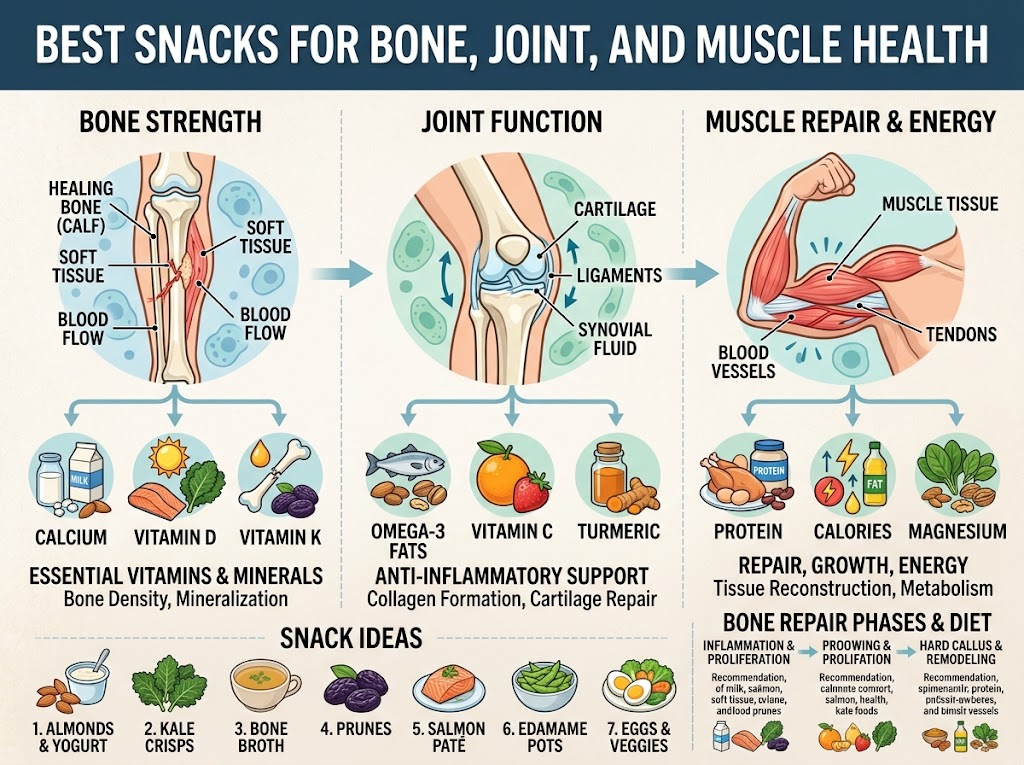
Best Snacks for Bone Health
Bone is living tissue that depends on a steady supply of calcium, vitamin D, protein, and several other nutrients.
Snacks will not replace a balanced diet, but they can close the gaps that many people leave open between meals.
Calcium-Rich Snack Options
Dairy foods are the most familiar calcium sources, and fortified plant milks can fill the same role for people who avoid dairy.
The NIH Office of Dietary Supplements calcium fact sheet lists calcium-fortified soy milk among the foods that provide meaningful amounts.
Absorption also varies by food, which is why the source matters.
- Plain Greek or regular yogurt with fruit
- Cottage cheese with sliced pear or pineapple
- Cheese cubes or string cheese with whole-grain crackers
- Canned sardines or salmon with the soft bones, on toast
- A smoothie made with fortified soy milk or another fortified plant milk
Spinach is often listed as a calcium food, but the calcium in it is poorly absorbed, so it should not be your main plan for this nutrient.
Vitamin D and Vitamin K Sources
Vitamin D helps the body absorb calcium.
According to the NIH vitamin D fact sheet for consumers, very few foods contain it naturally, so fortified foods and sunlight carry much of the load for many people.
Check labels on milk, plant milks, and yogurts to see whether they are fortified.
- Canned fatty fish such as salmon or sardines
- Hard-boiled eggs, with the yolk
- Fortified milk, fortified plant milk, or fortified yogurt
- Edamame and lightly cooked or roasted leafy greens for vitamin K
Vitamin D is fat-soluble, so pairing it with a little fat, as in fish or eggs, is a sensible habit.
Vitamin K is the one to coordinate with your prescriber if you take warfarin, since steady intake matters more than avoidance.
Best Snacks for Muscle Strength and Recovery
Muscle repairs and rebuilds best when protein is spread across the day rather than packed into one meal.
Snacks are an easy place to add some.
These options are portable and need little preparation:
- Hard-boiled eggs
- Greek yogurt or skyr
- Cottage cheese
- Edamame, steamed or roasted
- Roasted chickpeas
- Turkey or chicken slices rolled around vegetable sticks
- Unsweetened soy milk or dairy milk after a workout
A pattern I see often in the clinic is the patient who eats a light breakfast, skips lunch on busy days, and then wonders why recovery feels slow.
A mid-morning yogurt with nuts or an afternoon egg and fruit is rarely dramatic, yet it often makes the day’s protein intake far more even.
Best Snacks for Joint Comfort
No snack will repair a damaged joint.
Food can still support the tissues around it and help with the factors you can control, such as body weight and overall diet quality.
Vitamin C is needed for the body to make collagen, a key protein in tendons, ligaments, and cartilage.
Omega-3 fats are found in fatty fish, walnuts, and ground flaxseed, and they are a common part of eating patterns often recommended for joint health.
Good choices include:
- Strawberries, kiwi, oranges, or bell pepper strips for vitamin C
- A small handful of walnuts
- Canned salmon or sardines on whole-grain toast
- Berries stirred into yogurt
- Hummus with raw vegetables
For people with knee or hip osteoarthritis, snacks that are filling and lower in calories can also support weight management, which reduces the load on weight-bearing joints.
Snack Comparison at a Glance
This table gives a quick view of how common snacks line up.
It is a general guide, since exact nutrient amounts vary by brand and portion.
| Snack | Main nutrients | Best for | Practical note |
|---|---|---|---|
| Greek yogurt with berries | Protein, calcium, vitamin C | Bone, muscle, connective tissue | Choose plain to limit added sugar |
| Cheese and whole-grain crackers | Protein, calcium | Bone, muscle | Watch portion size and sodium |
| Hard-boiled eggs | Protein, some vitamin D | Muscle, bone | Easy to prepare in batches |
| Almonds or walnuts | Magnesium, healthy fats | Joint, bone | Calorie-dense, so keep portions small |
| Edamame | Protein, fiber, vitamin K | Muscle, bone | Good plant-based option |
| Canned sardines or salmon | Protein, omega-3, vitamin D, calcium (with bones) | Bone, joint, muscle | Choose lower-sodium versions if needed |
| Fortified soy milk smoothie | Protein, calcium, often vitamin D | Bone, muscle | Check the label for fortification |
| Kiwi, oranges, or strawberries | Vitamin C | Connective tissue | Pair with protein for a fuller snack |
Easy Snack Combinations to Try
Pairing a protein with a fruit, vegetable, or whole grain tends to work better than eating any one of them alone.
These combinations take only a few minutes:
- Greek yogurt, berries, and a sprinkle of chopped walnuts
- Cottage cheese with pineapple and ground flaxseed
- Whole-grain toast with canned salmon and sliced cucumber
- Apple slices with almond butter and a glass of milk or fortified soy milk
- Edamame with a few orange segments
- Hummus, bell pepper strips, and a hard-boiled egg
How to Fit Smart Snacking Into Your Day
Timing matters less than consistency.
Still, a few habits make it easier to follow through, especially if you are recovering from an injury or managing a busy rehab schedule.
- Plan one protein-based snack after a workout or therapy session
- Prepare eggs, cut fruit, or portioned nuts at the start of the week
- Keep shelf-stable options such as canned fish and roasted chickpeas at work
- Read labels for added sugar, sodium, and fortification
- Look up unfamiliar foods in the USDA FoodData Central database to compare nutrient content
Snacks to Limit
You do not need to avoid every treat.
The goal is to make nutrient-dense options the default so that occasional treats stay occasional.
- Sweetened drinks and candy, which add calories with little else
- Heavily processed chips and snack cakes
- Pastries and bars with long ingredient lists and high added sugar
- Very salty snacks, since high sodium can work against bone health goals when it is a regular pattern
- Large, mindless portions of calorie-dense foods such as nuts or trail mix
When to Check With a Clinician First
General snack advice fits most healthy adults, but some situations call for individual guidance from a doctor or registered dietitian.
This is especially true after surgery or a fracture, when your care team may have specific instructions.
- Kidney disease, where protein and mineral intake may need limits
- Warfarin or other blood thinners, where vitamin K intake should stay consistent
- Food allergies or intolerances, including lactose intolerance
- Diabetes, where carbohydrate content and timing matter
- Osteoporosis, poor appetite, or unplanned weight loss
- Swallowing difficulty, which can make nuts or raw vegetables unsafe
Can Supplements Replace Snacks?
Usually not.
Food provides protein, fiber, and many nutrients together, while a pill typically supplies one or two.
The NIH calcium fact sheet notes that calcium supplements can cause gas, bloating, and constipation in some people, and that it is not clear whether they help prevent fractures.
If you suspect a deficiency, ask your clinician to check before you start any supplement.
Useful questions to bring to that visit include:
- Do my blood tests show a vitamin D or calcium shortfall?
- Could my current medications affect nutrient absorption?
- Which foods can I realistically add before considering a supplement?
- Are there dietary limits I should follow because of my condition or surgery?
Conclusion
Good snacks for bones, joints, and muscles are simple: a protein, a calcium source where possible, and a fruit, vegetable, nut, or whole grain for the extras.
Greek yogurt with berries, eggs, canned fish, edamame, and nuts cover most of what you need and require almost no cooking.
If you have a medical condition, take certain medications, or are recovering from surgery, run your plan past your care team so it fits your situation.
Frequently Asked Questions
What is the single best snack for bone, joint, and muscle health?
No single food covers everything, but plain Greek yogurt with berries comes close.
It supplies protein and calcium from the yogurt and vitamin C from the fruit.
Adding a few walnuts brings in healthy fats and magnesium.
Are nuts good for bones and joints?
Yes, in moderate portions.
Nuts provide magnesium and healthy fats, and walnuts contain plant-based omega-3 fats.
They are calorie-dense, so a small handful is enough, particularly if weight management is part of your plan.
What are good high-protein snacks for muscle recovery?
Eggs, Greek yogurt, cottage cheese, edamame, roasted chickpeas, and milk or fortified soy milk are all practical choices.
Having one after exercise or a rehabilitation session is an easy way to spread protein through the day.
Can I get enough calcium from snacks if I avoid dairy?
It is possible with planning.
Fortified soy milk or other fortified plant milks, canned fish eaten with the bones, and calcium-fortified foods can contribute.
Check labels, because fortification differs between products.
Do I need vitamin D in my snacks?
Vitamin D helps your body absorb calcium, but few foods contain it naturally.
Fatty fish, eggs, and fortified products are the usual food sources, and sunlight contributes for many people.
A blood test through your clinician is the reliable way to know whether your level is adequate.
Which snacks help with joint pain?
Snacks do not treat joint pain directly.
Fruits rich in vitamin C, fatty fish, and walnuts fit well into the eating patterns often suggested for joint health, and filling lower-calorie options can support weight control, which eases stress on the knees and hips.
Is it better to snack before or after exercise?
Either can work, depending on how you feel.
A light carbohydrate-and-protein snack before activity can help if you train on an empty stomach, while a protein-containing snack afterward supports recovery.
Choose what your digestion tolerates.
Are protein bars a good snack for bones and muscles?
Some are reasonable in a pinch, but many contain high levels of added sugar and long ingredient lists.
Compare labels, and consider whole-food options such as yogurt, eggs, or nuts when you can.
What snacks are suitable after orthopaedic surgery or a fracture?
Protein-rich and calcium-containing foods such as yogurt, eggs, cottage cheese, and soft fruit are common choices.
Your surgeon or dietitian may have instructions based on your procedure, medications, and appetite, so follow their guidance over general advice.
How many snacks should I eat each day?
There is no universal number.
One or two planned snacks work for many adults, especially when meals are far apart or protein intake is low.
If you are managing your weight, factor snack portions into your overall daily intake.