
Yes—a gentle morning movement flow can reduce the feeling of stiffness and make the first activities of the day easier, provided the movements stay comfortable and match your health and joint condition. The goal is to restore motion gradually, add light muscle activity and finish with easy walking rather than force a deep stretch while the body is still settling after rest.
Why joints can feel stiff in the morning
Long periods without movement can make joints and surrounding tissues feel less ready to load, especially with osteoarthritis, inflammatory conditions, recent inactivity or poor sleep. Morning stiffness is a symptom, not a diagnosis, so the pattern, duration, swelling and associated symptoms matter.
- Stiffness that eases with gentle movement often responds well to a gradual warm-up.
- A hot, visibly swollen or acutely painful joint should not be pushed through.
- New weakness, numbness or loss of coordination needs assessment.
- Prolonged or worsening morning stiffness should be discussed with a clinician.
The NICE osteoarthritis recommendations identify tailored therapeutic exercise, including local strengthening and general aerobic activity, as core management rather than relying on passive stretching alone.
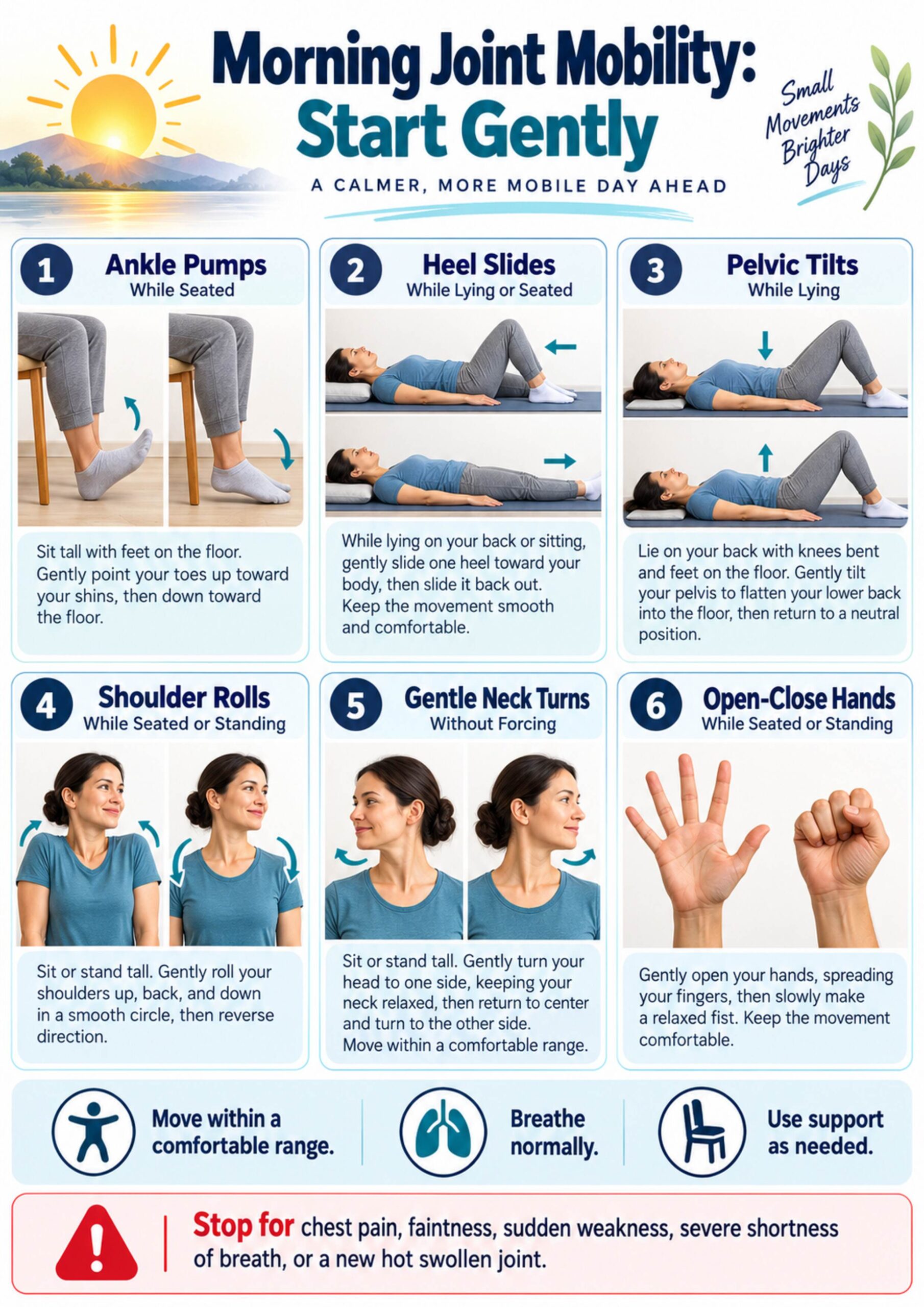
Start with a quick readiness check
Before getting on the floor or standing, notice how you feel while sitting at the bed edge or in a firm chair. Choose a seated version if balance is uncertain, blood pressure symptoms occur on standing, or the floor is difficult to reach safely.
- Check for dizziness, unusual breathlessness or chest discomfort.
- Look for a new hot, red or markedly swollen joint.
- Notice whether pain is local, spreading, sharp or associated with numbness.
- Keep a stable chair, wall or counter within reach.
- Wear supportive footwear if walking barefoot feels unsafe.
Use comfort and control as the dose. A morning routine should feel easier as it continues. Move through a comfortable range, breathe normally and stop short of pinching, sharp pain or protective muscle guarding.
- Begin with small movements and gradually increase the range.
- Use slow repetitions before holding any stretch.
- Keep pressure evenly distributed through hands and feet.
- Reduce the range if symptoms linger or worsen afterward.
- Use fewer movements on a flare day and emphasize easy walking.
Wake up the hands and wrists
Hand and wrist movement is useful before gripping a mug, phone, mobility aid or kitchen tool. Keep the fingers relaxed and avoid forcing swollen finger joints into a tight fist.
- Open and close: spread the fingers, then make a relaxed fist.
- Thumb opposition: touch the thumb lightly to each fingertip.
- Wrist circles: draw small circles in both directions.
- Prayer glide: bring palms together and lower them only within comfort.
Mobilize the neck and shoulders
Sit or stand tall and let the shoulder blades move rather than forcing the neck. Neck movements should remain smooth and should not reproduce arm tingling, dizziness or headache.
- Shoulder rolls: lift, move back and lower the shoulders.
- Scapular glide: gently draw shoulder blades toward the back pockets.
- Neck turn: look right and left without tipping the head.
- Side bend: bring one ear slightly toward the shoulder without lifting the shoulder.
- Reach forward: extend the arms and let the upper back widen.
Restore trunk and hip motion
The trunk and hips help transfer force when getting out of bed, dressing and walking. Use the bed, mat or chair version that lets you move without breath-holding or strain.
- Pelvic tilt: gently flatten and release the low back while lying with knees bent.
- Knee sway: let both bent knees move a small distance side to side.
- Seated rotation: turn the ribcage while keeping the pelvis facing forward.
- Heel slide: slide one heel away, then return without forcing the knee.
- Hip march: lift one foot slightly while seated and alternate sides.
Prepare the knees for standing
Knee stiffness often improves when motion is combined with light quadriceps activity. Keep the kneecap facing forward and use a smaller range when swelling or pain limits bending.
- Seated knee extension: straighten one knee, then lower with control.
- Heel slide: bend and straighten the knee with the foot supported.
- Quadriceps set: gently tighten the front thigh with the leg supported.
- Supported mini-squat: bend the hips and knees slightly while holding a counter.
Mobilize ankles and feet
Ankle motion helps the body move over the foot during walking and standing from a chair. Start seated if the feet feel numb, painful or unreliable when you first stand.
- Ankle pumps: alternate pointing the foot down and drawing it up.
- Ankle circles: make small controlled circles in each direction.
- Toe spread: widen the toes without clawing.
- Seated heel raise: lift and lower both heels while the forefeet stay planted.
- Supported calf raise: progress to standing only when balance is secure.
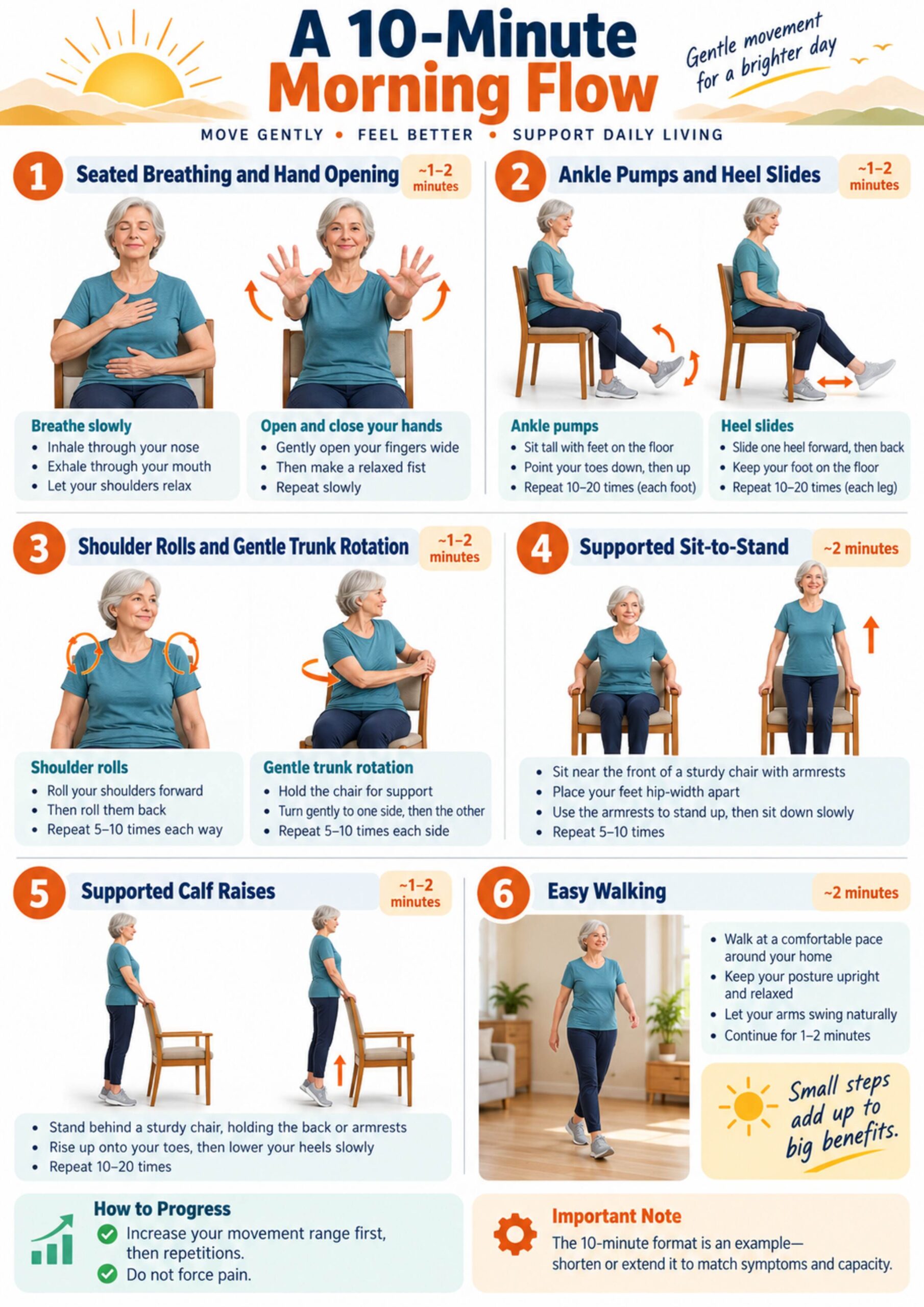
Add functional strength
Stretching alone does not prepare the body for repeated transfers, stairs and walking. A few controlled functional movements help convert improved mobility into useful capacity.
- Sit to stand: move toward the front of a sturdy chair, lean from the hips and stand.
- Supported calf raise: rise through the forefeet, pause and lower slowly.
- Counter push-up: keep the body aligned while bending and straightening the elbows.
- Side step: take short steps along a stable counter.
- Easy march: alternate feet without rushing or leaning.
Follow an example morning flow
This sequence is an example, not a universal prescription. Shorten it when symptoms or fatigue are higher, and extend it only while movement remains controlled.
| Phase | Example movements | Position | Main check |
|---|---|---|---|
| Settle | Breathing, hand opening | Seated | No dizziness or breath-holding |
| Mobilize | Ankle pumps, heel slides | Seated or lying | Comfortable range |
| Upper body | Shoulder rolls, neck turns | Seated | No spreading symptoms |
| Strength | Sit to stand, calf raise | Supported standing | Steady balance and control |
| Integrate | Easy walking | Clear level surface | Smooth steps |
- Move from supported positions toward standing.
- Practice mobility before adding load.
- Use the chair arms if needed for a safe transfer.
- Finish with walking so the joints use the new range.
Adapt the routine to common joint conditions
The same exercise can be useful or irritating depending on the diagnosis, irritability and stage of recovery. Tailor the range and support rather than copying a fixed routine.
- Osteoarthritis: emphasize consistent movement and strength within a tolerable range.
- Inflammatory arthritis: use smaller ranges during a flare and follow medical guidance.
- Joint replacement: respect movement and weight-bearing precautions.
- Hypermobility: prioritize control and strength rather than end-range stretching.
- Neurological conditions: use supervision when tone, sensation or balance affects safety.
The WHO physical-activity guidance supports regular movement, strength and balance across adulthood. A morning flow can contribute to that pattern, but it does not replace the rest of the day’s activity.
Progress without forcing flexibility
Progress one variable at a time and judge the response later that morning as well as during the session. More range is useful only when it improves function without increasing pain, swelling or instability.
- Increase movement range before adding speed.
- Add repetitions before adding resistance.
- Reduce hand support only when balance is reliable.
- Add light resistance only after the movement is comfortable.
- Return to an easier version after illness or a flare.
Know when to pause and seek help
Stop the routine for chest pressure, faintness, severe shortness of breath, sudden weakness, new confusion or loss of coordination. Arrange assessment for a new hot swollen joint, unexplained persistent stiffness, significant night pain, recent injury or progressive loss of function.
- Do not stretch through a suspected fracture or acute joint injury.
- Do not force a joint after surgery beyond the prescribed limits.
- Pause if numbness, tingling or radiating pain increases.
- Seek urgent care for sudden neurological or cardiopulmonary symptoms.
Conclusion
A useful morning energy flow begins with small comfortable movements, progresses to light functional strength and ends with easy walking. Keep the routine responsive to symptoms, use stable support, and treat persistent or unusual morning stiffness as information that may need clinical assessment.
Frequently asked questions
Should morning stretching hurt?
No. Mild tension can be acceptable, but sharp pain, pinching, spreading symptoms or protective muscle guarding means the range or exercise should change.
How long should a morning routine take?
There is no required duration. A brief routine that improves the first movements of the day is more useful than a longer routine that causes fatigue or a symptom flare.
Is stretching enough for stiff joints?
Usually not. Mobility may feel better temporarily, while strength and regular activity help the body use that motion during daily tasks.
Should I stretch a swollen joint?
Use caution. A new hot, red or markedly swollen joint should be assessed; during a known flare, use the range and activity plan provided by your clinician.
Can I do the routine in bed?
Yes. Ankle pumps, heel slides, pelvic tilts and gentle hand movements can be performed in bed before progressing to seated and standing exercise.
What if I feel dizzy when standing?
Sit back down, move the ankles, rise more slowly and use support. Recurrent or severe dizziness, faintness or a fall requires clinical assessment.
Are neck circles recommended?
Large neck circles are unnecessary. Controlled turns and small side bends are easier to monitor and less likely to provoke dizziness or pinching.
Can older adults use this routine?
Yes, with exercises, support and pace matched to balance, strength, joint health and medical conditions. Supervision is appropriate when fall risk is high.
What if stiffness returns later?
Brief movement breaks during the day may help more than relying on one morning session. Review prolonged sitting, activity volume, sleep and the underlying condition.
When should a physical therapist individualize the program?
Seek individual guidance after surgery or injury, with recurrent falls, neurological symptoms, severe pain, persistent swelling or uncertainty about safe exercise.