Rotator cuff tendinopathy and rotator cuff-related shoulder pain can make reaching overhead, dressing, lifting, sleeping, and exercise uncomfortable.
A well-designed rehabilitation program usually focuses on gradually restoring shoulder capacity through progressive resistance, movement control, and functional loading rather than trying to avoid every painful movement.
Current evidence supports exercise therapy as a central component of conservative management, while the exact exercises, load, and progression should be adapted to the person’s symptoms, strength, function, and goals.
What Is Rotator Cuff Tendinopathy?
Rotator cuff tendinopathy refers to a clinical presentation involving pain and reduced function associated with the rotator cuff tendons.
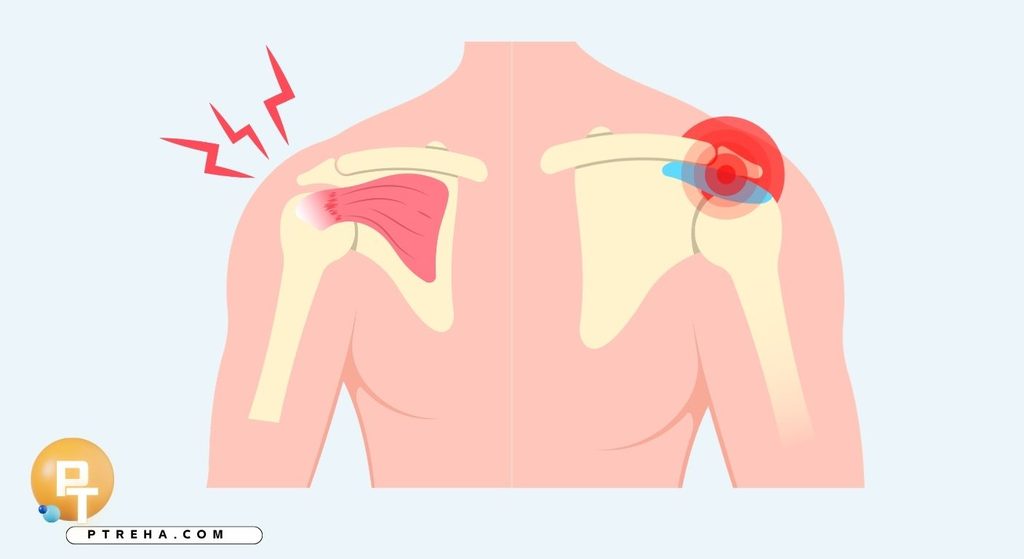
It can develop with changes in tendon capacity, loading, activity, age-related tissue changes, or a combination of factors.
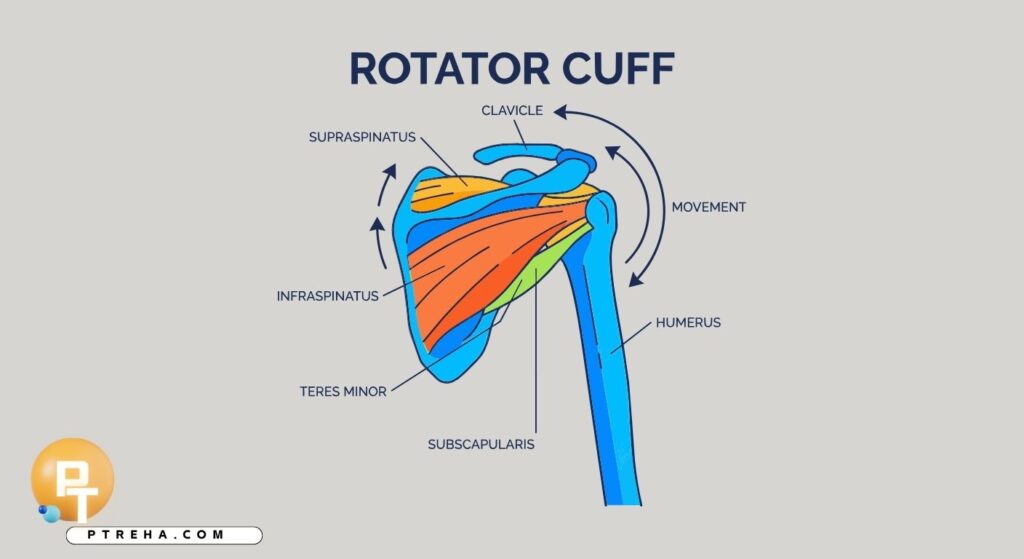
The rotator cuff consists of the supraspinatus, infraspinatus, teres minor, and subscapularis.
These muscles contribute to shoulder movement and help control the humeral head during functional activities.
Importantly, shoulder pain does not always correspond directly to the amount of tendon change seen on imaging.
Tendon abnormalities can also occur in people without significant symptoms, so clinical assessment should consider symptoms, function, strength, movement, and the person’s goals rather than imaging alone.
What Does “Shoulder Impingement” Mean?
The term shoulder impingement is commonly used when shoulder pain is reproduced during elevation or other loaded shoulder activities.
However, contemporary rehabilitation does not need to be based on the assumption that a specific structure is simply being trapped underneath the acromion.
A more useful clinical approach is often to consider the presentation as rotator cuff-related shoulder pain and examine how the shoulder responds to load, movement, activity modification, and progressive strengthening.
This matters because avoiding overhead movement indefinitely can reduce shoulder capacity.
The goal of rehabilitation is usually to progressively restore tolerance to the movements and loads that matter to the individual.
How Exercise Helps the Shoulder
Exercise can improve pain and function in people with rotator cuff-related shoulder pain.
Recent systematic evidence supports shoulder-focused exercise, although the evidence does not establish one universally superior exercise program for every patient.
Exercise may help by progressively exposing the shoulder to manageable loads while improving muscular capacity and confidence with movement.
A rehabilitation program may include:
- Rotator cuff strengthening
- Scapular muscle strengthening
- Isometric exercise
- Concentric and eccentric resistance
- Motor-control exercises
- Progressive overhead loading
- Functional strengthening
- Range-of-motion exercises when indicated
- Education about activity modification
- Gradual return to sport or occupational activities
The most important variable is not finding a “magic” exercise.
It is developing an appropriate progression that the person can perform consistently.
Pain During Exercise
Some patients can exercise with mild symptoms without worsening their overall condition.
Pain during an exercise should therefore be interpreted alongside the person’s response during the following hours and the next day.
A useful rehabilitation approach is to monitor:
- Pain during the exercise
- Pain after the session
- Symptoms later that day
- Symptoms the following morning
- Shoulder function
- Exercise tolerance
- Strength progression
- Ability to perform daily activities
A temporary increase in symptoms does not automatically mean tissue damage has occurred.
Conversely, consistently worsening pain, function, or night symptoms suggests that the current loading strategy should be reassessed.
Exercise 1: Isometric External Rotation
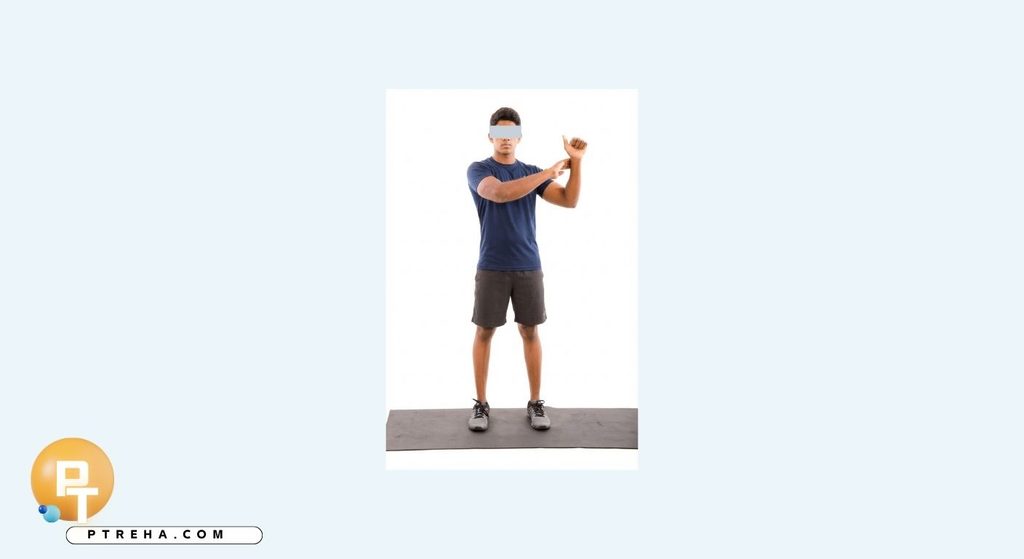
Isometric external rotation can be useful during an early strengthening phase when dynamic shoulder movement is uncomfortable.
Stand beside a wall or door frame with the elbow close to the body and bent approximately 90 degrees.
Press the back of the hand gently outward against the fixed surface without allowing the arm to move.
Focus on producing a controlled contraction rather than maximal force.
Possible starting parameters include:
- 3–5 repetitions
- 20–45 seconds per contraction
- Comfortable resistance
- 1–2 sessions per day when appropriate
- Gradual increase in resistance
The exact dosage should be adjusted according to irritability and exercise tolerance.
Exercise 2: Side-Lying External Rotation
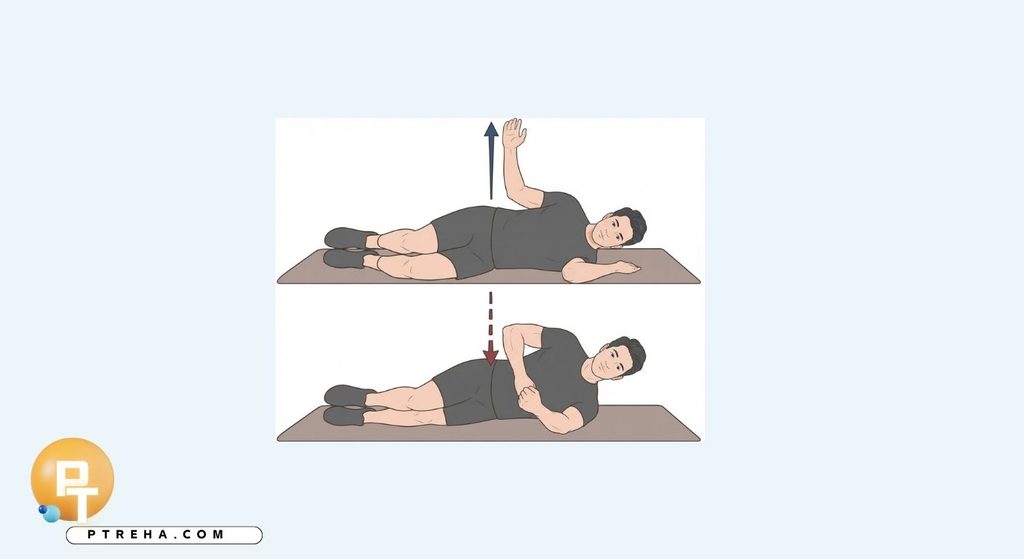
Side-lying external rotation provides a simple way to strengthen the external rotators with a dumbbell.
Lie on the opposite side with the painful shoulder uppermost.
Keep the elbow near the side of the body, bend it to approximately 90 degrees, and rotate the forearm upward while maintaining control.
Avoid using momentum or allowing the elbow to move away from the trunk.
Helpful coaching points include:
- Keep the shoulder relaxed
- Move slowly
- Use a manageable weight
- Avoid shrugging
- Control the lowering phase
- Increase resistance gradually
As strength improves, the exercise can be progressed by increasing resistance or repetitions.
Exercise 3: Resistance-Band External Rotation
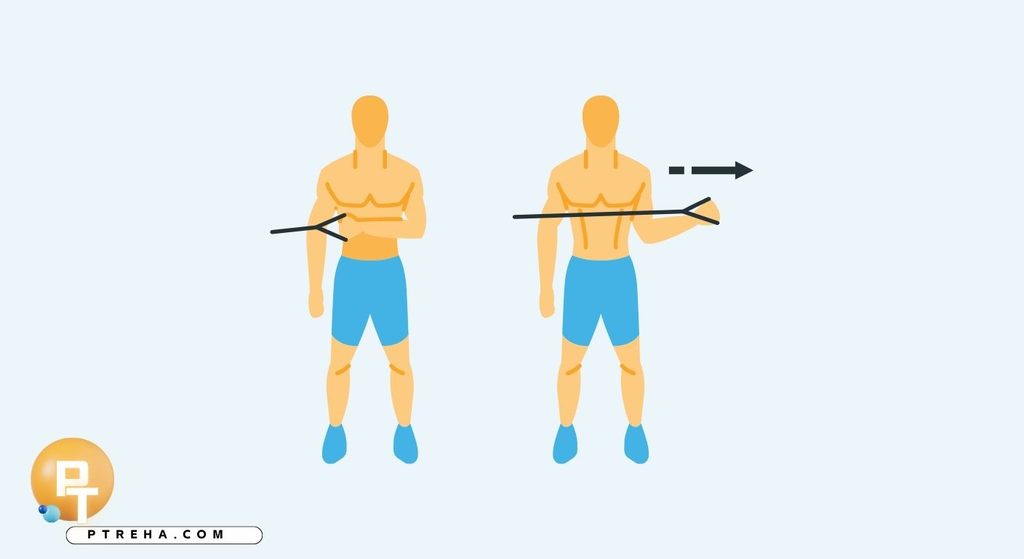
Attach a resistance band securely at approximately elbow height.
Hold the band with the exercising arm, keep the elbow close to the body, and rotate the forearm outward against resistance.
This exercise is particularly convenient for home rehabilitation because resistance can be progressively modified.
Watch for:
- Excessive trunk rotation
- Shoulder shrugging
- Elbow movement away from the body
- Sudden band acceleration
- Loss of control during return
The exercise should become progressively more challenging as capacity improves rather than remaining at the same resistance indefinitely.
Exercise 4: Resistance-Band Internal Rotation
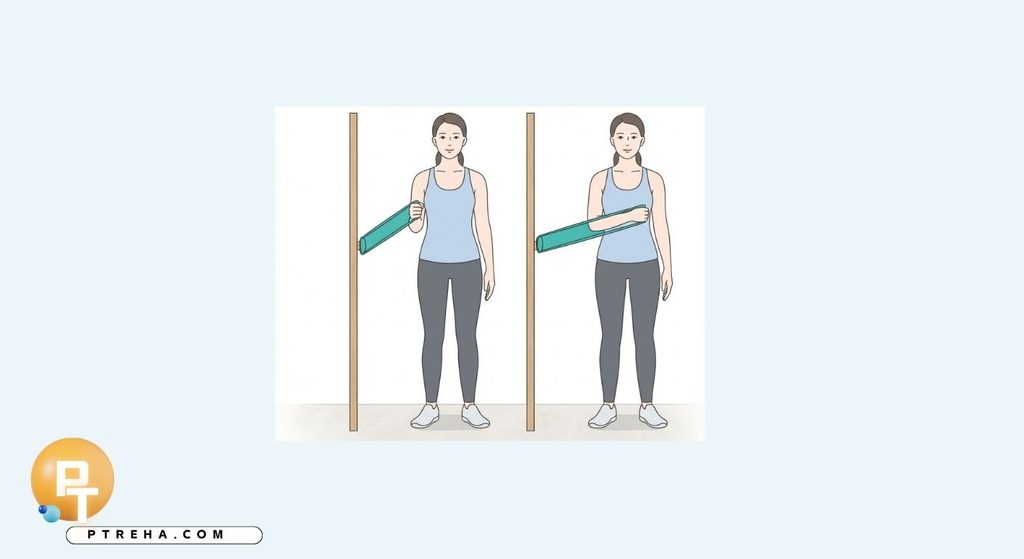
Internal rotation strengthening targets the internal rotator muscles, including the subscapularis.
Stand with the band attached beside you and the elbow positioned near the trunk.
Pull the forearm inward against resistance while keeping the movement controlled.
Useful progressions include:
- Increasing band resistance
- Increasing repetitions
- Increasing movement range
- Performing the exercise farther from the body
- Progressing toward functional positions
The appropriate progression depends on symptoms and the demands placed on the shoulder.
Exercise 5: Scaption
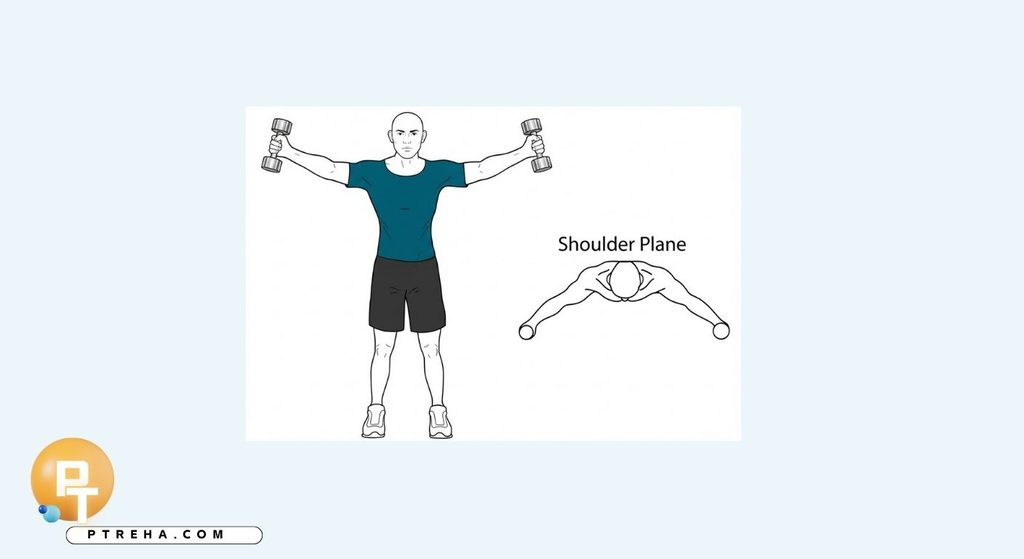
Scaption involves raising the arm in the plane between pure flexion and abduction.
It can be performed with no weight initially and later progressed using a dumbbell.
Raise the arm gradually through a comfortable range while avoiding unnecessary shrugging or rapid movement.
Scaption can help bridge the gap between isolated strengthening and functional elevation.
Consider:
- Start with a comfortable range
- Use slow movement
- Maintain trunk control
- Avoid forcing painful end-range positions
- Increase resistance gradually
- Progress the elevation range as tolerated
The objective is not to achieve a perfect movement pattern at all costs.
It is to progressively increase useful shoulder capacity.
Exercise 6: Wall Slide
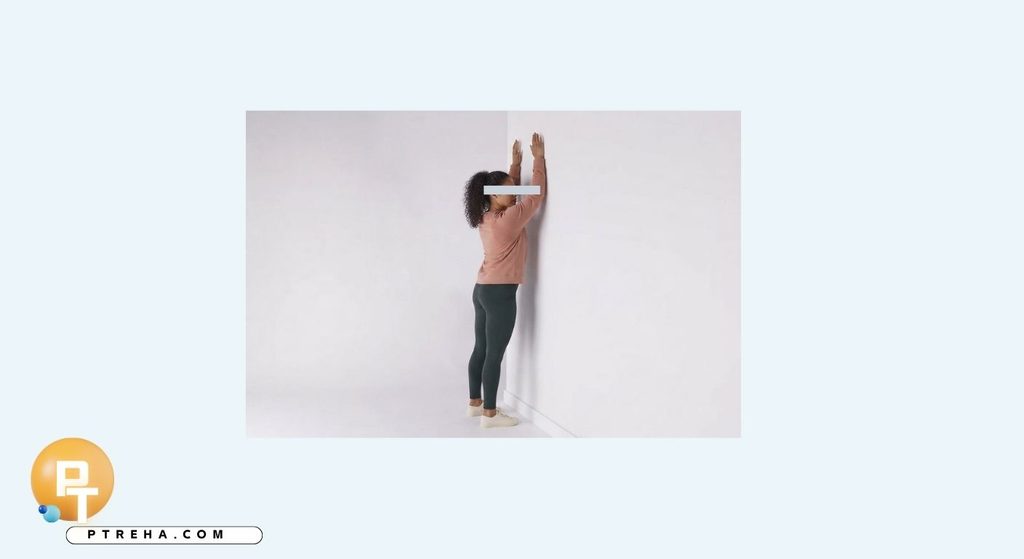
Wall slides combine shoulder elevation with controlled scapular movement.
Stand facing a wall with the hands or forearms supported against it.
Slide the arms upward as far as comfortable while maintaining controlled breathing and avoiding excessive trunk extension.
Wall slides can be modified by changing:
- Hand position
- Range of elevation
- Resistance
- Speed
- Number of repetitions
- Distance from the wall
For patients who experience pain with unsupported elevation, the wall can provide useful assistance while still allowing progressive movement.
Exercise 7: Serratus Anterior Strengthening

The serratus anterior contributes to scapular upward rotation and control during elevation.
A simple option is the wall push-up plus.
Perform a controlled wall push-up and, at the end, gently move the shoulder blades forward around the rib cage without shrugging.
Progressions may include:
- Higher wall load
- Lower support surface
- Resistance-band variations
- Incline push-up plus
- Floor push-up plus
- Increased repetitions
Scapular exercises can be useful components of rehabilitation, but current evidence does not establish that every patient needs a specialized scapular program.
Exercise selection should remain individualized.
Exercise 8: Row
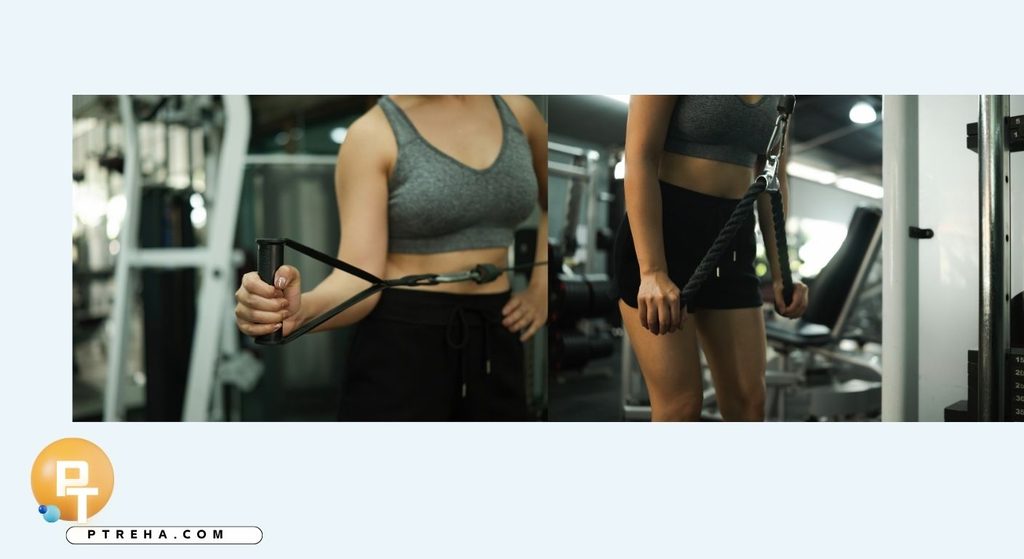
Rows strengthen several muscles involved in shoulder and scapular function.
Use a resistance band or cable and pull the hands toward the trunk while maintaining a controlled shoulder position.
Avoid turning the movement into a maximal shrug.
A practical progression can include:
- Light resistance initially
- Controlled repetitions
- Gradual resistance increases
- Longer lever positions when appropriate
- Integration into pulling tasks
- Sport- or work-specific loading
Rows are particularly useful when the patient needs to regain general upper-limb strength rather than focusing exclusively on one rotator cuff muscle.
Exercise 9: Progressive Overhead Press
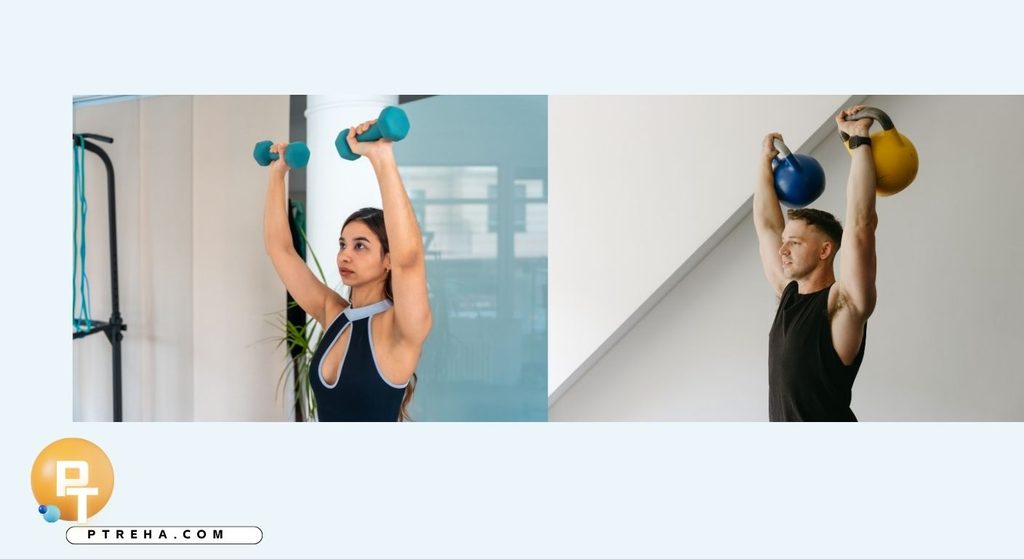
Overhead strengthening should not necessarily be avoided simply because overhead movement initially provokes symptoms.
Once basic shoulder strength and tolerance have improved, a patient may gradually reintroduce overhead loading.
This can begin with a light object and progress toward more demanding resistance.
Possible progressions include:
- Assisted elevation
- Active elevation
- Light scaption
- Light overhead resistance
- Increased range
- Increased load
- Functional overhead lifting
This progression should be based on response rather than a fixed timetable.
Exercise 10: Functional Lifting
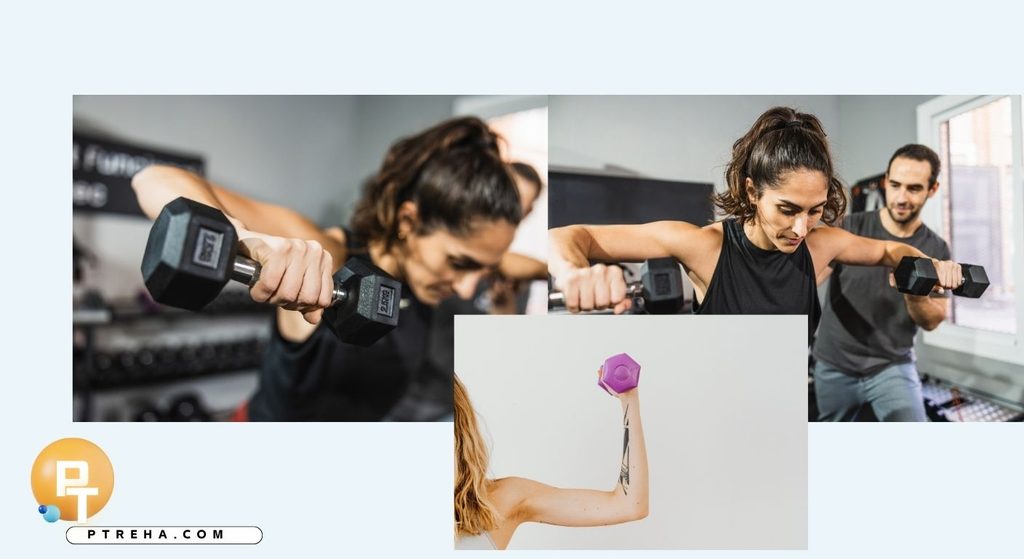
The final stage of rehabilitation should reflect the activity that the person wants or needs to perform.
For example, a warehouse worker may need repeated lifting, while a swimmer may need repetitive overhead loading and an office worker may primarily need sustained low-load shoulder activity.
Functional exercises may include:
- Lifting a box
- Placing an object on a shelf
- Carrying a weight
- Reaching overhead
- Repeated pulling
- Controlled pushing
- Sport-specific movements
- Occupational tasks
A successful program therefore progresses beyond isolated exercises toward meaningful activities.
How to Progress the Exercises
There is no single exercise dosage that is appropriate for everyone with rotator cuff-related shoulder pain.
Research demonstrates considerable variation in frequency, sets, repetitions, exercise type, and duration across rehabilitation trials.
Progression can be based on several criteria rather than pain alone.
| Progression factor | What to monitor | Possible progression |
|---|---|---|
| Resistance | Exercise becomes easier | Increase external load |
| Repetitions | Target repetitions become comfortable | Add repetitions |
| Range | Larger range is tolerated | Gradually increase range |
| Control | Movement becomes consistent | Increase task complexity |
| Symptoms | Symptoms remain manageable | Progress loading |
| Function | Daily activities improve | Add functional resistance |
| Endurance | Fatigue occurs later | Increase work duration |
| Confidence | Movement feels less threatening | Introduce challenging tasks |
A systematic review of resistance-exercise dosing across tendinopathies found evidence supporting the use of external resistance compared with body-mass-only exercise in some analyses, but the optimal dose for rotator cuff tendinopathy remains uncertain.
Therefore, rehabilitation should be treated as a progressive process rather than a rigid prescription.
Example of a Practical Weekly Program
A simple program might use three strengthening sessions each week, with lighter movement or mobility work on other days when appropriate.
For example:
- External rotation: 2–3 sets
- Internal rotation: 2–3 sets
- Scaption: 2–3 sets
- Row: 2–3 sets
- Wall slide: 2–3 sets
- Functional lifting: 2–3 sets
- Overhead progression: according to tolerance
The repetitions and resistance should be selected according to the person’s current capacity.
There is no evidence that every patient requires exactly the same frequency or number of repetitions.
Studies have used substantially different exercise prescriptions, supporting individualized programming rather than a universal protocol.
Common Exercise Mistakes
Even appropriate exercises can become unhelpful when they are progressed too aggressively or performed without considering the patient’s response.
Common mistakes include:
- Increasing resistance too quickly
- Treating pain as the only progression criterion
- Avoiding shoulder elevation for too long
- Using momentum instead of muscular control
- Performing every exercise to fatigue
- Changing exercises too frequently
- Focusing exclusively on the painful area
- Ignoring occupational demands
- Continuing a program despite progressively worsening symptoms
- Expecting rapid changes in tendon capacity
Another common mistake is assuming that a painful shoulder must always be kept below a particular elevation angle.
Some people initially tolerate limited ranges better, but rehabilitation should generally work toward restoring useful movement and loading capacity.
When to Modify or Stop an Exercise
Exercise selection should be reconsidered when symptoms consistently worsen rather than settle after training.
A clinician should also consider whether the original working diagnosis remains appropriate when the presentation changes or fails to respond as expected.
Seek appropriate medical assessment when shoulder pain is associated with features such as:
- Significant traumatic injury
- Sudden major loss of active shoulder movement
- Marked or progressive weakness
- Suspected fracture
- Fever or systemic illness
- Unexplained swelling or redness
- Neurological symptoms
- Chest pain or shortness of breath
- Severe, unexplained night pain
- Rapid deterioration in function
These features may require assessment for conditions other than uncomplicated rotator cuff-related shoulder pain.
Why “Impingement” Does Not Mean You Must Avoid Overhead Exercise
The traditional idea of shoulder impingement can lead some patients to believe that lifting the arm overhead is inherently damaging.
That is not a useful rehabilitation principle by itself.
Shoulder pain during elevation can occur for several reasons, and pain does not establish that a tendon is being mechanically trapped or injured by a particular movement.
Instead, rehabilitation can gradually expose the shoulder to elevation and resistance.
A person who initially tolerates only unloaded elevation might progress toward light resistance, then more demanding overhead tasks.
This approach allows shoulder capacity to develop while respecting current symptom tolerance.
Exercise therapy is recommended as a central conservative treatment approach for rotator cuff-related shoulder presentations, and evidence does not support a single exercise type as universally superior.
Building a Long-Term Shoulder Program
Once symptoms improve, completely stopping exercise may not be necessary.
People whose work, sport, or hobbies require substantial shoulder loading may benefit from maintaining an appropriate level of resistance training.
A long-term shoulder program can include:
- External rotation strengthening
- Internal rotation strengthening
- Scaption
- Pressing
- Pulling
- Carrying
- Overhead work
- Sport-specific loading
- General upper-limb strengthening
- Gradual changes in training volume
The goal is not to permanently protect the tendon from load.
The goal is to develop enough capacity to tolerate the loads that matter to the individual.
Conclusion
Rotator cuff tendinopathy and shoulder impingement exercises should be selected according to the patient’s presentation, current capacity, functional goals, and response to loading.
Strengthening the rotator cuff and surrounding shoulder musculature, improving movement control, and progressively restoring overhead and functional activities can form the foundation of rehabilitation.
There is no single exercise that is necessary for every patient.
Current evidence supports exercise therapy but shows substantial variation between effective programs, so progressive and individualized loading is more useful than following a rigid exercise list.
For patients, the practical message is simple: start at a tolerable level, monitor the response, progressively increase the challenge, and work toward the activities that matter in daily life, work, and sport.
Frequently Asked Questions
What are the best exercises for rotator cuff tendinopathy?
There is no single best exercise for every patient.
A useful program commonly includes progressive rotator cuff strengthening, scapular and general shoulder strengthening, and eventually functional or overhead loading tailored to the person’s symptoms and goals.
Can I exercise if my shoulder hurts?
Many people can continue exercising with appropriately modified symptoms, but the response should be monitored.
If pain progressively worsens during or after exercise, strength deteriorates, or function declines, the exercise dose or diagnosis should be reassessed.
Should I avoid overhead exercises with shoulder impingement?
Not necessarily.
Overhead activity may initially need to be modified, but long-term avoidance can limit the shoulder’s ability to tolerate overhead demands.
A gradual progression toward overhead loading is often more useful than permanent avoidance.
Are resistance bands useful for rotator cuff tendinopathy?
Yes.
Resistance bands can provide practical progressive resistance for external rotation, internal rotation, rows, and other shoulder exercises.
They are particularly convenient for home programs, although dumbbells, cables, machines, and other forms of resistance can also be appropriate.
Is eccentric exercise better than regular strengthening?
Eccentric exercise can be included in rehabilitation, but current evidence does not establish it as universally superior to other strengthening approaches.
Progressive exercise programs using different contraction types can improve pain and function, and the appropriate choice should depend on the individual’s presentation and goals.
How often should I perform rotator cuff exercises?
There is no universally established frequency.
Research has used a wide range of frequencies, and current evidence does not demonstrate that one frequency is appropriate for everyone.
How long does rotator cuff tendinopathy take to improve?
Recovery varies considerably according to symptom severity, duration, physical demands, loading history, general health, and adherence to rehabilitation.
Improvement should be assessed through changes in pain, function, strength, and activity tolerance rather than using an arbitrary recovery deadline.
Should I use ice or heat before exercises?
Ice or heat may provide temporary symptom relief for some individuals, but neither should replace progressive rehabilitation.
Their use should primarily be based on individual preference and whether they help the person participate comfortably in movement and exercise.
Do I need an MRI for rotator cuff tendinopathy?
Not necessarily.
Imaging findings do not always correspond directly to symptoms, and many shoulder presentations can initially be managed through clinical assessment and rehabilitation.
Imaging may become appropriate when there is significant trauma, substantial weakness, suspected structural pathology, atypical symptoms, or failure to progress when further investigation could change management.
Can rotator cuff tendinopathy return after treatment?
Symptoms can recur, particularly when shoulder loading increases faster than the person’s capacity.
Maintaining appropriate strength and gradually adapting training or occupational loads can help support long-term tolerance, although recurrence cannot always be prevented.
Resources
- Lafrance S, Charron M, Dubé MO, et al. The Efficacy of Exercise Therapy for Rotator Cuff-Related Shoulder Pain According to the FITT Principle: A Systematic Review With Meta-analyses. Journal of Orthopaedic & Sports Physical Therapy. PubMed resource
- Wu Y, et al. Specific modes of exercise to improve rotator cuff-related shoulder pain: systematic review and meta-analysis. PubMed resource
- Kucksdorf JJ, Bartley J, Rhon DR, Young JL. Reproducibility of Exercise Interventions in Randomized Controlled Trials for Rotator Cuff-Related Shoulder Pain. PubMed resource
- Pavlova AV, et al. Effect of resistance exercise dose components for tendinopathy management: a systematic review with meta-analysis. PubMed resource
- BMJ Best Practice. Rotator cuff injury: diagnosis and treatment. BMJ Best Practice
- Subacromial decompression surgery for adults with shoulder pain: a clinical practice guideline. The BMJ. BMJ guideline