Foam rolling is often promoted as a simple way to “release” tight muscles, break up adhesions, and relieve back pain. In reality, foam rolling may provide short-term changes in comfort, movement, or perceived muscle tension for some people, but it is not a cure for low back pain and should not replace an appropriate assessment or active rehabilitation. This article separates common foam rolling myths from what current evidence actually supports and explains how to use a roller more safely when back pain is present.
What Is Foam Rolling?
Foam rolling is a form of self-myofascial rolling in which a person uses a cylindrical roller to apply pressure to soft tissues while moving over the roller or maintaining a supported position.
It is commonly used around the thighs, hips, buttocks, upper back, and other muscle groups. Some people also use it around the lumbar region, but direct pressure over the lower back requires more caution than rolling larger peripheral muscle groups.
Foam rolling can be used as one component of a broader physical therapy or exercise program. It should generally be viewed as a symptom-management or movement-preparation strategy rather than a treatment that corrects a specific structural abnormality.
What foam rolling may do
Possible short-term effects include:
- A temporary change in how stiff or tight an area feels.
- Temporary changes in pain sensitivity.
- A short-term improvement in some measures of range of motion.
- Improved tolerance of movement in some individuals.
- A feeling of relaxation after the intervention.
- Greater confidence moving an uncomfortable body region.
- A convenient self-management option.
- A way to prepare for exercise or movement.
- A useful adjunct to an exercise program.
- An opportunity to explore comfortable movement rather than avoid activity.
Evidence on foam rolling does not establish that these effects result from physically “breaking up” adhesions or permanently lengthening fascia. Research has found acute changes in range of motion, while proposed mechanisms remain more complex than a simple mechanical “release” model.
Myth: Foam Rolling Breaks Up Knots and Adhesions

One of the most common claims is that a foam roller physically breaks up knots, scar tissue, or adhesions in the muscles and fascia.
This explanation is attractive because the roller creates a strong pressure sensation. However, the sensation of pressure or temporary relief does not demonstrate that tissue adhesions have been mechanically broken apart.
Foam rolling research does not provide sufficient evidence to describe the roller as a tool that physically remodels or breaks apart problematic tissue in the way this claim often suggests.
A more clinically appropriate interpretation is that rolling may temporarily influence pain sensitivity, perceived stiffness, movement tolerance, or other neuromuscular responses.
Practical takeaway

If someone says, “The roller broke up the scar tissue in my back,” that statement goes beyond what the evidence can establish.
A better description is:
- The person experienced temporary symptom relief.
- The person felt less stiff.
- Movement became more comfortable.
- The intervention may have altered pain sensitivity.
- The effect can be useful without requiring a structural “release” explanation.
Myth: More Pain Means a Better Release
Foam rolling can be uncomfortable, particularly when a sensitive muscle is compressed against the roller.
However, increasing pressure until the experience becomes extremely painful is not a requirement for an effective intervention.
Pain is not a reliable indicator that a roller is producing a better therapeutic effect. Excessive pressure can make the session unpleasant and may aggravate symptoms in some people.
A useful approach is to select a pressure level that is tolerable and allows you to remain relaxed rather than bracing aggressively against the roller.
Signs that the pressure may be excessive
Consider reducing the pressure or stopping when:
- Pain becomes sharp rather than tolerable pressure.
- Symptoms begin spreading into the leg.
- Numbness or tingling appears.
- You feel increasing weakness.
- Symptoms remain substantially worse afterward.
- You have to hold your breath to tolerate the pressure.
- You cannot maintain a controlled position.
- You feel dizzy or unwell.
- The technique causes increasing anxiety about movement.
- The exercise becomes a struggle rather than a manageable activity.
Myth: You Should Roll Directly Over the Lower Back
Directly rolling the lumbar spine is one of the areas where caution is particularly important.
The lower back is not simply a large muscle that can be treated like the quadriceps or calf. The lumbar region contains the spinal column and associated joints, neural structures, muscles, and other tissues.
A person with back pain therefore should not assume that placing a hard roller directly beneath the lumbar spine is automatically appropriate.
For some individuals, alternative areas may be more comfortable and practical, such as the thoracic region, gluteal muscles, or other muscles involved in their movement strategy. The appropriate choice depends on the person’s symptoms, examination findings, and tolerance.
A safer general principle
Instead of asking, “Where can I put the roller to destroy the tight spot?” ask:
- What movement am I trying to make easier?
- Does rolling change that movement?
- Does it reduce or increase symptoms?
- Can I perform the technique comfortably?
- Does the benefit last long enough to be useful?
- Is the technique helping me return to activity?
This shifts foam rolling from a tissue-destruction concept toward practical symptom management.
Foam Rolling Can Produce Short-Term Changes in Movement
Research supports the possibility that foam rolling can produce acute improvements in range of motion, particularly in healthy adults. Importantly, these changes do not necessarily mean that the tissue has been permanently lengthened or structurally altered.
For a person with back pain, this distinction matters.
Suppose someone feels uncomfortable bending forward because of perceived stiffness. Rolling another relevant muscle region may sometimes make the movement feel easier temporarily. That can be useful if the person then uses the improved movement tolerance for active exercise.
The roller therefore may serve as a preparation tool rather than the main intervention.
Example
A person reports mild low back discomfort after prolonged sitting and feels stiff when standing up.
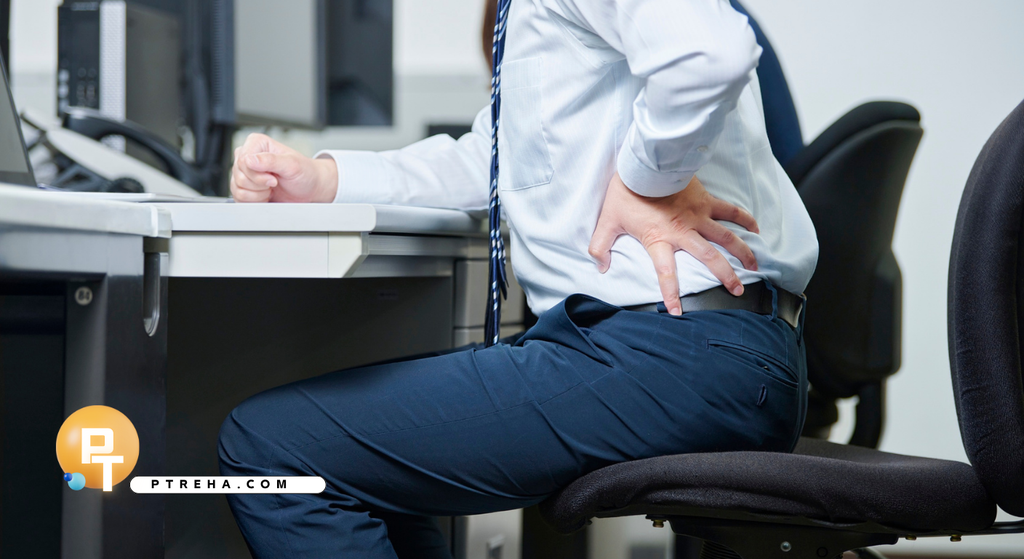
A physical therapist might use an individualized combination of:
- Comfortable movement.
- Hip and trunk exercises.
- Walking.
- Strengthening.
- Education about activity.
- Appropriate self-management techniques.
If foam rolling makes movement temporarily more comfortable, it can be incorporated around those activities rather than replacing them.
Myth: Foam Rolling Treats the Cause of Back Pain
Low back pain is not a single condition with a single mechanical cause.
Back pain can involve multiple interacting factors, including physical loading, movement behavior, sleep, stress, previous injury, general activity level, and other individual factors. In some cases, a specific medical condition requires additional assessment.
Therefore, foam rolling should not be presented as a treatment that “fixes the cause” of back pain.
A person may feel better after rolling without the underlying contributors to their symptoms being fully addressed.
What a broader rehabilitation approach may include
Depending on the individual, rehabilitation may involve:
- Education about the condition.
- Gradual return to normal activity.
- Walking or other aerobic activity.
- Trunk strengthening.
- Hip strengthening.
- Mobility exercises.
- Functional exercises.
- Load management.
- Workstation or activity modification when appropriate.
- Strategies for managing symptom flares.
- Sleep and recovery considerations.
- Referral for further assessment when clinically indicated.
Foam rolling can sometimes fit into this framework, but it should remain proportionate to its actual role.
Evidence for Myofascial Release Does Not Equal Evidence for Foam Rolling
This distinction is especially important when reading articles or advertisements.
Studies of clinician-delivered myofascial release may involve hands-on techniques, different pressures, different treatment areas, longer treatment sessions, and individualized clinical decisions. Those findings cannot automatically be transferred to self-directed foam rolling.
Some systematic reviews have reported improvements in pain or physical function following myofascial release for chronic low back pain, but the studies have limitations, including small samples and methodological concerns.
Other reviews have reported more limited or mixed findings for specific outcomes. One systematic review found that myofascial release significantly affected back disability but did not demonstrate a significant effect on pain intensity, quality of life, or lumbar range of motion in its pooled analysis.
The practical message is simple: evidence for one manual or myofascial technique should not be presented as proof that every form of foam rolling will relieve back pain.
Myth: Foam Rolling Must Be Done Every Day
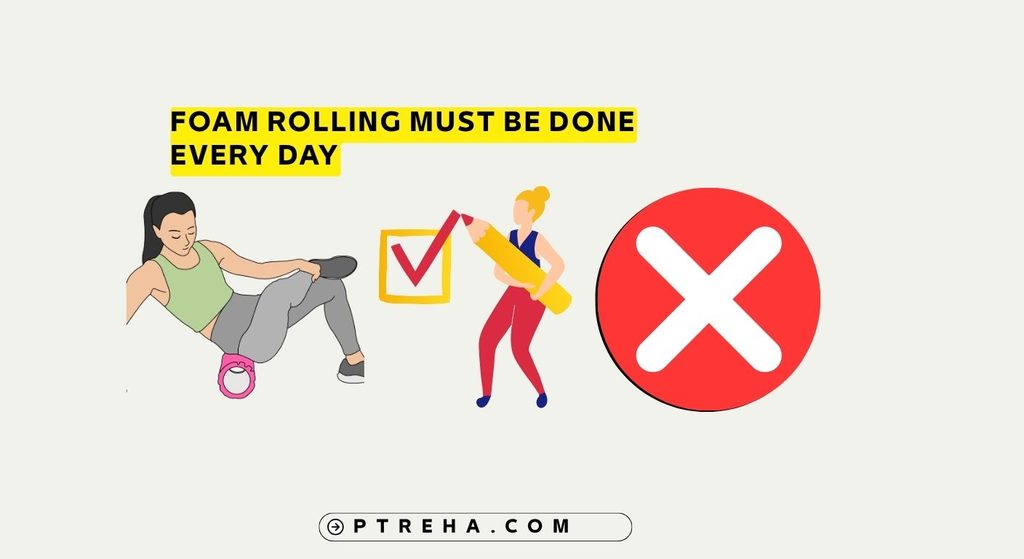
There is no universal requirement that a person with back pain should foam roll every day.
The appropriate frequency depends on the purpose, response, overall rehabilitation program, and individual tolerance.
If a short session helps someone move comfortably before exercise, it may be useful at that time. If rolling repeatedly irritates symptoms without providing meaningful benefit, doing it more frequently is unlikely to solve the problem.
Use a response-based approach
After a session, consider:
- Did movement become easier?
- Did symptoms remain stable?
- Did symptoms temporarily decrease?
- Was the effect useful during exercise?
- Did symptoms become worse later?
- Did the technique interfere with normal activity?
- Is the person becoming dependent on rolling before every movement?
- Is active rehabilitation progressing?
The goal is not to accumulate minutes on the roller. The goal is to use the intervention only when it contributes meaningfully to function or symptom management.
How to Use Foam Rolling More Sensibly With Back Pain
If a clinician has determined that foam rolling is appropriate, begin with a comfortable position and a manageable amount of pressure.
Avoid treating pain intensity as a target. The person should be able to breathe normally and control the movement.
Rather than repeatedly attacking the most painful point, consider rolling surrounding muscle groups that are relevant to the person’s movement and symptoms.
Practical principles
- Start with low to moderate pressure.
- Move slowly enough to remain controlled.
- Avoid sudden or aggressive loading.
- Do not deliberately chase severe pain.
- Stop if neurological symptoms develop.
- Avoid rolling directly over painful spinal structures.
- Reassess the movement that you wanted to influence.
- Combine rolling with active movement when appropriate.
- Do not use the roller to avoid necessary activity.
- Stop using it if it consistently worsens symptoms.
A simple example is using a comfortable gluteal or thoracic rolling technique before an exercise session, then immediately performing the relevant active movement. If movement feels unchanged or worse, there is little reason to continue the rolling intervention.
Myth: Foam Rolling Is Always Safe Because It Is “Natural”
A foam roller is a simple piece of equipment, but simple does not mean universally appropriate.
People with unexplained severe pain, significant neurological symptoms, recent trauma, suspected fracture, infection, cancer-related concerns, or other serious medical features should not rely on foam rolling as self-treatment.
A new or changing symptom pattern may require professional assessment rather than experimentation with increasingly forceful pressure.
Stop and seek appropriate medical assessment when there are concerning symptoms such as:
- New or progressive weakness.
- Significant or worsening numbness.
- New bowel or bladder dysfunction.
- Saddle-area sensory changes.
- Severe pain following significant trauma.
- Fever or systemic illness with back pain.
- Unexplained substantial weight loss.
- Severe unrelenting pain with concerning associated symptoms.
- Symptoms suggesting another serious medical condition.
These features do not automatically identify a particular diagnosis, but they can change the need for assessment and medical management.
Foam Rolling Myths and Facts: Quick Comparison
| Common claim | What the evidence supports | Practical interpretation |
|---|---|---|
| Foam rolling breaks up adhesions | This mechanical explanation is not established | Describe symptom or movement effects rather than claiming tissue destruction |
| More pain means better treatment | There is no need to maximize pain | Use tolerable pressure |
| Rolling the lumbar spine is always appropriate | The lumbar area requires caution | Consider safer alternatives and individual assessment |
| Foam rolling cures back pain | Evidence does not support it as a standalone cure | Use it as an optional adjunct |
| Foam rolling permanently lengthens muscles | Acute ROM changes do not prove permanent tissue lengthening | Think in terms of short-term movement effects |
| Daily rolling is necessary | No universal daily requirement exists | Use it according to response and purpose |
| Foam rolling replaces exercise | It does not replace active rehabilitation | Combine with appropriate movement and strengthening |
| Myofascial release evidence proves foam rolling works | The interventions are not identical | Interpret evidence according to the actual technique studied |
| Severe discomfort means the roller is working | Pain intensity is not a treatment target | Avoid aggressive pressure |
| Everyone with back pain should use a roller | Back pain has many presentations | Individualize the approach |
What Should Replace the “Fix Your Back” Mindset?
A more useful approach is to treat foam rolling as one possible tool within a larger strategy.
For many people with nonspecific low back pain, maintaining or gradually restoring normal activity is more important than finding one special tissue or “knot” to release.
If rolling temporarily makes movement easier, use that opportunity to move.
A practical sequence
- Identify the movement or activity that is limited.
- Select a comfortable self-management technique if appropriate.
- Use the roller briefly and tolerably.
- Reassess the movement.
- Perform the relevant exercise or activity.
- Monitor the response afterward.
- Progress activity gradually.
- Stop relying on the roller if it is no longer useful.
This approach avoids turning foam rolling into a ritual that must be performed before every normal movement.
Conclusion
Foam rolling myths often come from overly simple explanations of a complicated pain experience. A roller may provide short-term changes in perceived stiffness, pain sensitivity, or movement for some people, but current evidence does not justify describing it as a tool that physically breaks up adhesions, permanently repairs fascia, or cures low back pain.
For someone with back pain, the most useful question is not whether foam rolling is “good” or “bad,” but whether it produces a meaningful and tolerable change that supports normal movement and rehabilitation. When used appropriately, it can be an optional adjunct; it should not replace clinical assessment, exercise, gradual activity, or appropriate medical care.
FAQ
Can foam rolling relieve back pain?
It may provide short-term symptom relief for some people, but the evidence for foam rolling specifically in low back pain remains limited and heterogeneous. It should therefore be considered an adjunct rather than a guaranteed treatment.
Should I foam roll directly over my lower back?
Direct lumbar rolling is not automatically appropriate. Because the area contains the spinal column and other sensitive structures, people with back pain should avoid assuming that stronger direct pressure is better and should consider individualized guidance when symptoms are persistent or significant.
Does foam rolling release tight muscles?
It can change how tight or stiff a muscle feels temporarily, but the term “release” can be misleading if it implies that a permanently shortened or adhered tissue has been mechanically corrected. Changes in pain sensitivity, movement tolerance, and neuromuscular responses may contribute to the experience.
Can foam rolling cure chronic low back pain?
There is no good basis for presenting foam rolling as a cure for chronic low back pain. Research on myofascial interventions suggests that some approaches may improve pain or physical function, but the evidence has limitations and cannot automatically be applied to self-directed foam rolling.
How much pressure should I use?
Use enough pressure to create a tolerable sensation without provoking sharp pain, neurological symptoms, or significant symptom aggravation. There is no clinical reason to assume that the most painful technique is the most effective.
How long should I foam roll?
There is no universally established duration specifically for relieving low back pain. Research on myofascial rolling has used different durations and protocols, so the practical dose should be guided by the person’s response and the purpose of the intervention rather than an arbitrary universal rule.
Is foam rolling better than stretching?
Foam rolling and stretching can produce different responses, and evidence does not establish that foam rolling is universally superior. Research in healthy adults has found acute range-of-motion improvements with foam rolling, while pooled results did not show it to be superior to stretching.
Should I foam roll before exercise?
It can be used before exercise if it helps you feel more comfortable moving. The most useful test is whether the intervention improves your ability to perform the planned activity without causing symptom aggravation.
Why does foam rolling sometimes hurt but feel better afterward?
Pressure from the roller can be uncomfortable, and symptoms may temporarily change afterward. A reduction in discomfort does not prove that damaged tissue was repaired or that an adhesion was physically broken apart.
When should I stop foam rolling and seek professional advice?
Stop if rolling causes significant or persistent worsening, new weakness, numbness, radiating neurological symptoms, or other concerning changes. Serious symptoms, significant trauma, systemic illness, or changes involving bowel or bladder function require appropriate medical assessment rather than self-treatment with a foam roller.
Resources
- Chen Z, Wu J, Wang X, et al. The effects of myofascial release technique for patients with low back pain: A systematic review and meta-analysis. PubMed — Myofascial release and low back pain review
- Wu J, Wang Y, Ye Z, et al. Myofascial Release for Chronic Low Back Pain: A Systematic Review and Meta-Analysis. PubMed — Chronic low back pain review
- Glänzel MH, Rodrigues DR, Petter GN, et al. Foam Rolling Acute Effects on Myofascial Tissue Stiffness and Muscle Strength. PubMed — Foam rolling systematic review
- Habscheid C, Szikszay TM, Luedtke K. The effect of foam rolling on local and distant pain sensitivity. PubMed — Foam rolling and pain sensitivity review
- Effects of foam roller on pain intensity in individuals with chronic and acute musculoskeletal pain: a systematic review of randomized trials. PubMed — Foam roller and musculoskeletal pain review