Pregnancy pelvic girdle pain and lower back discomfort can often be eased with early assessment, changes to painful activities and appropriately chosen movement. You do not have to wait until after birth to ask for help. This article explains practical relief options, gentle exercises and the symptoms that need prompt maternity care.
Recognise pelvic girdle pain without assuming a diagnosis
Pelvic girdle pain, or PGP, describes pain around the front or back of the pelvis, sometimes extending into the hips, groin or thighs. The older term symphysis pubis dysfunction, or SPD, is still used, particularly for pain near the pubic joint.
- Walking, stairs or standing on one leg may become painful.
- Rolling in bed or getting out of a car may reproduce symptoms.
- Lower back pain may occur alongside pelvic pain.
Pain does not mean that your pelvis is falling apart or needs to be put back into place. Cambridge University Hospitals’ PGP advice explains that the pelvis remains strong and stable during pregnancy. An examination helps distinguish PGP from other causes of pain.
Know when pain needs urgent maternity advice
Do not automatically label new pregnancy pain as muscular. Contact your maternity team promptly for new or unusual backache in the second or third trimester, particularly if it is persistent or accompanied by other symptoms.
The NHS guidance on premature labour advises contacting maternity services before 37 weeks for unusual backache, regular tightenings, period-type pain or fluid leakage. At any stage, seek urgent advice for:
- Vaginal bleeding, a gush or trickle of fluid, or regular painful tightenings.
- Fever, feeling unwell, painful urination or pain in your side under the ribs.
- Reduced or changed baby movements once you are feeling an established pattern.
- Severe, sudden or rapidly worsening pain, or inability to walk.
Seek emergency assessment for back pain with new loss of feeling in the legs, buttocks or genital area. New difficulty emptying the bladder or loss of bladder or bowel control also needs emergency assessment; do not wait for a physiotherapy appointment.
Arrange an assessment before symptoms take over
Tell your midwife or doctor if pain affects walking, sleep, stairs or turning in bed. They can assess whether you need maternity review and referral to a pelvic health or obstetric physiotherapist.
- Describe exactly where the pain is and which tasks provoke it.
- Mention previous pelvic or back problems and any recent fall.
- Explain how far you can walk and whether sleep or work is affected.
- Report urinary, neurological or pregnancy-related symptoms rather than assuming they are part of PGP.
A useful appointment should leave you with a manageable activity plan and advice tailored to your symptoms. If the first plan is not helping, request a review rather than repeatedly pushing through the same painful routine.
Make everyday tasks less provocative
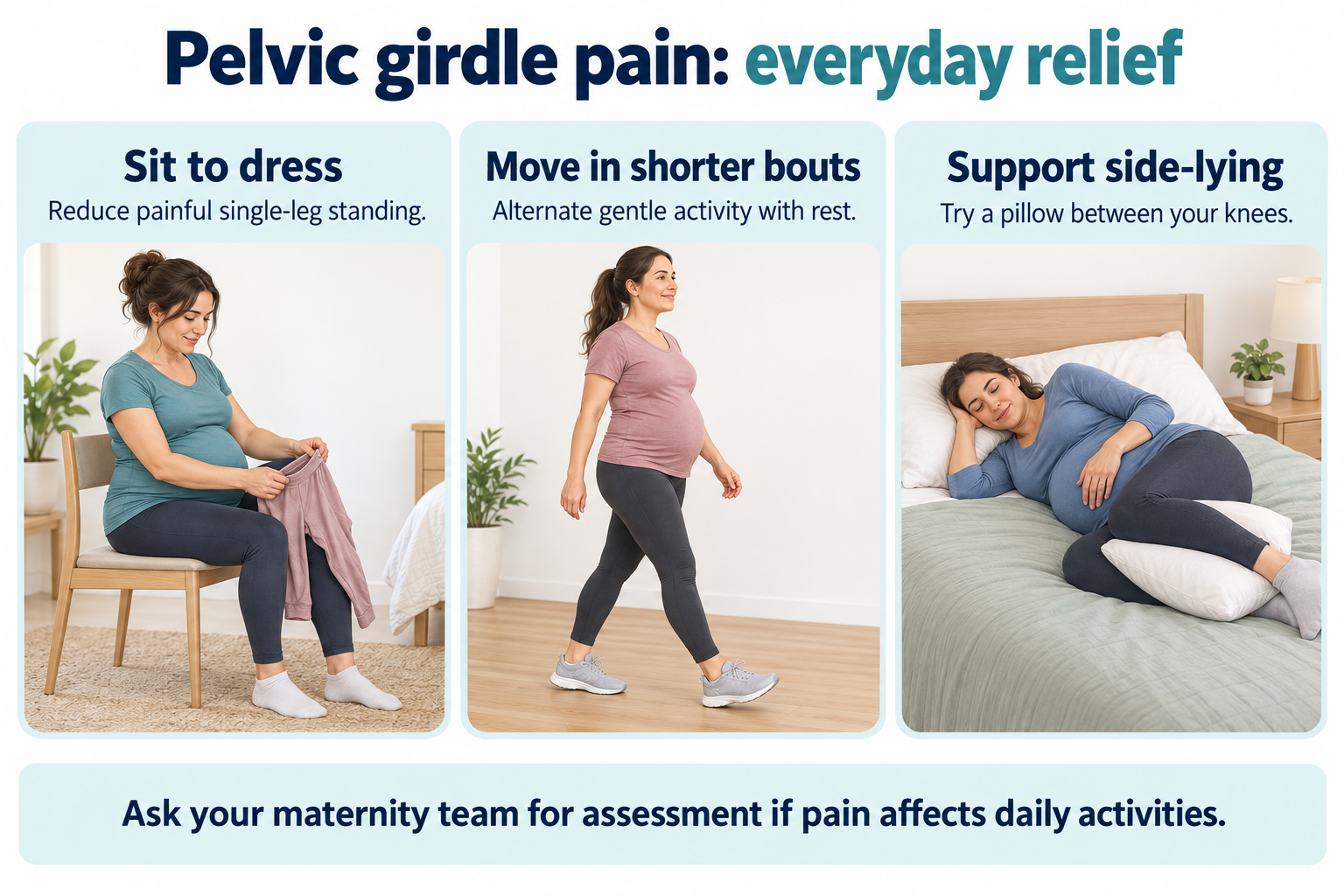
Start with a task you repeat often, such as putting on trousers or getting into the car. Changing that task may offer more practical benefit than adding a long exercise routine to an already difficult day.
- Sit down to dress instead of balancing on one leg.
- Stand with weight comfortably shared between both feet.
- When entering a car, sit first and bring your legs around together within a comfortable range.
- Reduce heavy lifting and avoid carrying a toddler on one hip.
- Limit unnecessary stair trips and use the handrail.
These adaptations are described in hospital advice on looking after the back and pelvis in pregnancy. Treat them as options to test for comfort, not rigid rules that every movement must follow.
| Activity | Change to try | When to seek more help |
|---|---|---|
| Getting dressed | Use a stable chair. | Even seated dressing remains difficult. |
| Walking | Shorten the distance and choose level ground. | Pain causes limping or limits essential trips. |
| Turning in bed | Move legs together and use pillow support. | Sleep is repeatedly disrupted. |
| Desk work | Support the back and feet; change position regularly. | Symptoms continue despite adjustments. |
| Shopping and chores | Split tasks and arrange help with heavy items. | Routine activity causes a prolonged flare-up. |
Use comfortable support for sleep and sitting
Try side-lying with a pillow between your knees and, if helpful, support under your bump. When getting out of bed, roll onto your side, bring your legs over the edge and push up with your arms.
- Choose the more comfortable side; either side is suitable for going to sleep.
- Adjust pillow height so the upper leg feels supported.
- Use a small back cushion and supported feet when sitting.
- Change position before prolonged sitting becomes uncomfortable.
The NHS pregnancy sleep advice recommends going to sleep on your side after 28 weeks. If you wake on your back, simply turn onto your side again. A pillow is a comfort aid, not a treatment that realigns the pelvis.
Stay active in amounts you can manage
Balance movement with rest instead of alternating between overdoing things and spending the next day recovering. For example, try a short level walk rather than a single long outing that reliably increases your pain.
- Break chores into smaller parts and alternate tasks.
- Choose supportive footwear and comfortable walking speed.
- Consider pregnancy-adapted water exercise if it feels comfortable.
- Modify swimming strokes if wide leg movements trigger pelvic pain.
The NHS pregnancy exercise guidance supports starting gently, keeping hydrated and stopping if you feel uncomfortable or unwell. General activity targets are not a requirement to exercise through pelvic pain. Follow any maternity restrictions and seek advice before changing a restricted activity plan.
Try gentle back and pelvic movements
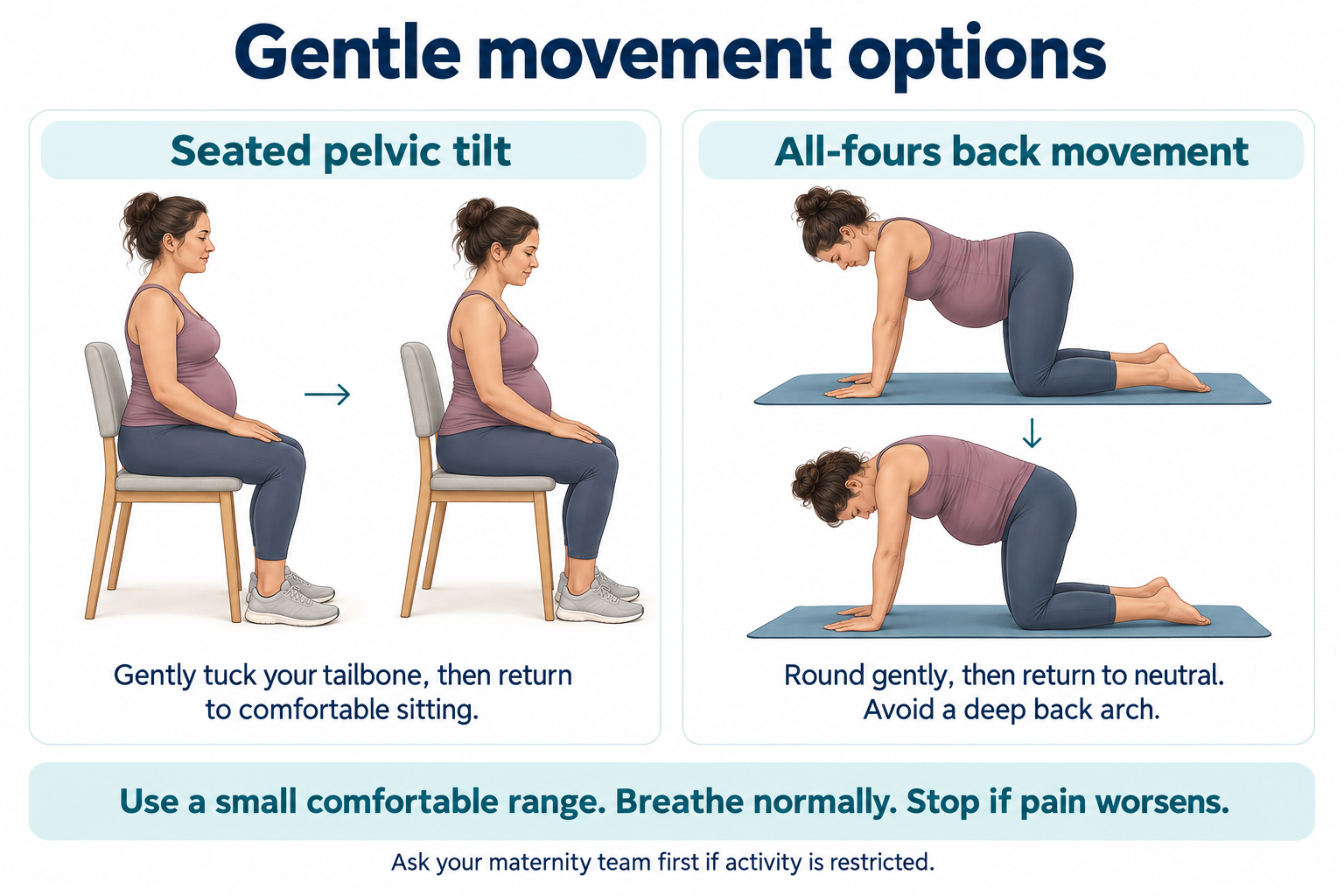
These are options to discuss with your physiotherapist, not a programme everyone with pregnancy pelvic girdle pain must perform. Use a small, easy range, breathe normally and stop if symptoms worsen.
Seated pelvic tilt: Use a stable chair with your feet supported and hips level with or slightly above your knees. Gently tuck the tailbone to soften the lower back curve, then return to comfortable sitting.
- Begin with a few slow repetitions rather than a fixed target.
- Keep the movement small; avoid forceful rocking.
- Skip it if it reproduces pubic, pelvic or back pain.
Gentle all-fours back movement: If getting to the floor is comfortable, use padding under your knees. Place hands under shoulders and knees under hips, gently round your back, then return to neutral without sinking into a deep arch.
- Keep space for your bump and avoid holding your breath.
- Use only the range that feels comfortable.
- Choose a seated alternative if wrists, knees or pelvic pain make the position unsuitable.
These movements appear in NHS physiotherapy exercise advice for pregnancy-related pain. They should not cause a sustained increase in symptoms afterward. Pelvic floor exercises can be part of antenatal care, but pelvic pain may require assessment of both contraction and relaxation rather than simply adding more squeezes.
Consider a support belt and appropriate pain relief
A physiotherapist may suggest a pelvic support belt for selected activities. The NHS advice on pelvic pain in pregnancy includes belts or crutches among options when appropriate.
- Ask for help choosing the type and position.
- Check whether it improves the activity that matters to you.
- Stop using it and seek advice if it causes discomfort.
- Ask about mobility aids if walking remains difficult.
For medication, check with your midwife, doctor or pharmacist. Paracetamol is generally the first-choice medicine for mild to moderate pain in pregnancy when appropriate; follow professional advice and the packet instructions. Do not self-start ibuprofen or other anti-inflammatory painkillers during pregnancy. The NHS Specialist Pharmacy Service pregnancy pain guidance explains why treatment needs to match the individual and stage of pregnancy.
Adjust work and home responsibilities
Ask for practical changes early if your job involves prolonged standing, repeated lifting or long periods at a desk. Aim to preserve useful activity while reducing demands that repeatedly aggravate symptoms.
- Alternate seated and standing tasks where possible.
- Bring frequently used items within easy reach.
- Arrange help with heavy shopping, lifting and demanding chores.
- Tell your maternity team if mobility becomes very restricted.
Severe difficulty moving deserves a care plan rather than advice to simply rest indefinitely. Discuss sleep disruption, distress and concerns about coping as part of the same appointment.
Plan for birth and follow-up after delivery
Most people with PGP can have a vaginal birth; PGP alone does not usually require a caesarean section. The RCOG patient information on PGP and pregnancy describes birth options and care after delivery.
- Record comfortable positions in your birth plan.
- Tell the birth team about painful movements and any mobility aids.
- Ask for help positioning your legs comfortably, particularly with an epidural.
- Request follow-up if pain or walking difficulty persists after birth.
Symptoms often improve after delivery, but recovery varies. Continue an individual plan rather than assuming persistent symptoms must resolve without help.
Conclusion
Pregnancy pelvic girdle pain and lower back relief usually starts with recognising the pattern, getting assessed and making everyday movement more manageable. Use comfortable activity, support and tailored exercise, and review the plan if daily function remains limited. New or unusual symptoms need maternity advice rather than being assumed to be PGP.
Frequently asked questions
Is pelvic girdle pain the same as lower back pain?
They can overlap, but are not identical. PGP can involve the pubic region, buttocks, hips or groin as well as the lower back; an assessment helps identify the likely source.
Can pelvic girdle pain harm my baby?
PGP itself does not harm the baby. However, new pain with bleeding, fluid leakage, fever or changed baby movements needs prompt maternity assessment rather than an assumption that it is PGP.
Does pelvic pain mean my pelvis is unstable?
Pain does not mean your pelvis is falling apart. Pregnancy changes how your body feels and manages activity, and treatment can focus on comfort and function without claiming to realign bones.
Should I stop walking?
Not automatically. Try shorter comfortable distances and level routes, but seek advice if walking causes limping, escalating pain or difficulty completing essential daily activities.
What sleeping position may help?
Side-lying with a pillow between your knees may improve comfort. Go to sleep on your side after 28 weeks; either side is suitable, and you can turn back onto your side if you wake on your back.
Which exercises should I start with?
Small seated pelvic tilts or gentle all-fours back movements may suit some people. Start with a few comfortable movements and ask for an individual plan if they hurt or you have activity restrictions.
Will a pelvic support belt cure the pain?
A belt may make selected activities more comfortable, but it is not a guaranteed cure. Fit, comfort and its effect on your daily tasks should guide its use with physiotherapy advice.
Can I take painkillers for pregnancy back pain?
Ask your maternity team or pharmacist which medicine is appropriate. Paracetamol is commonly the first option when needed; do not self-start anti-inflammatory medicines such as ibuprofen.
Will I need a caesarean birth?
Usually not because of PGP alone. Discuss comfortable birth positions and any other obstetric factors with your maternity team when planning delivery.
When should I seek urgent help?
Contact maternity services for unusual backache, bleeding, fluid leakage, regular tightenings, fever or changed baby movements. New genital or leg numbness, or loss of bladder or bowel control, needs emergency assessment.