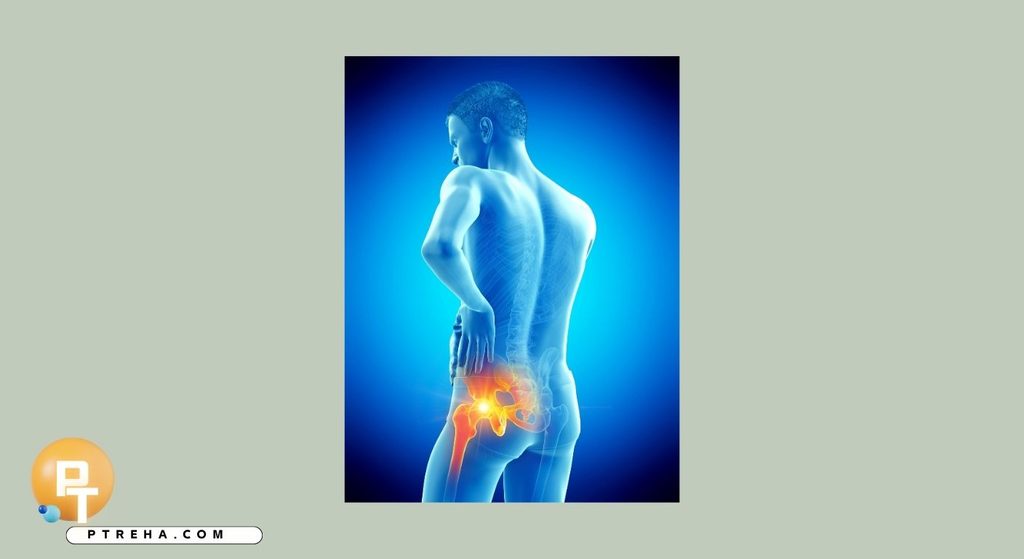
Sciatica describes pain or other nerve-related symptoms affecting the distribution of the sciatic nerve, commonly involving the buttock and back or side of one leg.
Understanding Sciatica and Exercise
Symptoms may include burning or electric-like pain, tingling, numbness, or weakness.
The term sciatica does not identify one specific tissue injury.
Nerve-root irritation can occur for different reasons, including lumbar disc problems, narrowing around the nerve, or other spinal conditions.
Therefore, an exercise that feels helpful for one person may aggravate another person’s symptoms.
Exercise is generally part of active management rather than something that needs to be avoided completely.
Current guidance emphasizes maintaining activity, providing appropriate exercise, and adapting management to the person’s symptoms, function, and clinical findings.
What exercise should aim to achieve
A useful rehabilitation program may aim to:
- Reduce fear of movement.
- Maintain comfortable spinal and hip movement.
- Improve general physical activity.
- Restore strength and endurance.
- Improve tolerance for sitting, standing, walking, or lifting.
- Gradually return to work, sport, or other meaningful activities.
- Help the person manage symptom fluctuations.
- Reduce excessive inactivity and deconditioning.
- Build confidence with normal movement.
- Support long-term physical function.
The goal is not necessarily to eliminate every sensation during exercise.
A better question is whether the overall response is acceptable and whether symptoms settle rather than progressively spreading or becoming more severe.
How to Choose Exercises for Sciatica
There is no single exercise routine that is appropriate for every person with sciatica.
Clinical assessment can help determine whether particular movements, positions, loading strategies, or functional activities are appropriate.
A practical starting point is to identify movements that are relatively comfortable and do not produce a sustained increase in leg symptoms.
Use your symptoms as feedback
During exercise, pay attention to the location and behavior of symptoms rather than focusing only on pain intensity.
For example:
- Mild muscular effort can be acceptable.
- Temporary stiffness can occur after unfamiliar exercise.
- A mild increase that quickly settles may be manageable for some people.
- Increasing pain traveling farther down the leg deserves attention.
- New or increasing numbness should not simply be pushed through.
- New or increasing weakness requires clinical assessment.
- Symptoms that remain substantially worse after exercise suggest that the dosage or exercise selection may need adjustment.
The response over the following hours and the next day can be more informative than how the exercise feels during one repetition.
Avoid the “no pain, no gain” approach
Sciatica involves neural symptoms, so aggressively provoking leg pain is not a useful rehabilitation objective.
Exercises should be progressed according to tolerance and function rather than deliberately reproducing severe radiating symptoms.
This is particularly important when someone has substantial neurological symptoms or has not yet received an appropriate assessment.
Exercises That May Help
The most appropriate exercises depend on the individual’s presentation, but several categories are commonly useful.
1. Walking

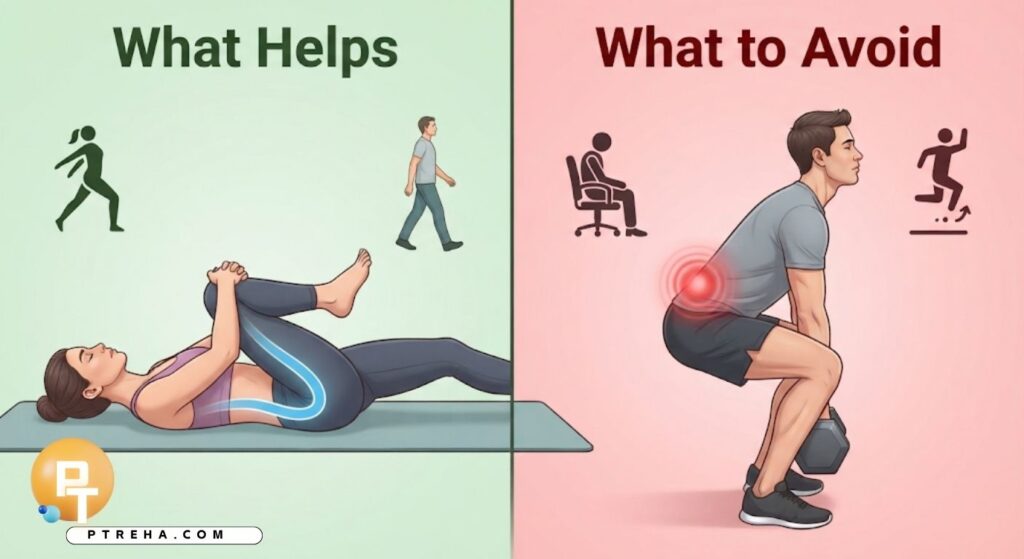
Walking is often a practical way to maintain activity when sitting or lying for prolonged periods makes symptoms worse.
Start with a tolerable duration and frequency rather than setting an arbitrary distance.
If necessary, use several shorter walks instead of one long walk.
Helpful strategies include:
- Walk at an easy pace initially.
- Choose a comfortable surface.
- Begin with a short duration.
- Increase duration gradually.
- Change position regularly during the day.
- Use walking as a break from prolonged sitting.
- Reduce the distance temporarily during a flare.
- Resume progression as symptoms settle.
The objective is to maintain movement without repeatedly provoking a significant increase in leg symptoms.
2. Gentle lumbar movement

Some people tolerate gentle lumbar flexion, while others feel better with extension or a more neutral position.
There is no universal rule that one direction is always correct for sciatica.
A physiotherapist may assess repeated movements and symptom behavior to determine which movement direction is appropriate.
Possible examples include:
- Gentle pelvic tilting.
- Comfortable lumbar flexion.
- Supported lumbar extension.
- Controlled trunk rotation.
- Movement between comfortable spinal positions.
Do not force the end range simply because an exercise is described as a “sciatica stretch.”
3. Hip and lower-limb strengthening
Reduced activity can lead to loss of strength and confidence.
Once symptoms are sufficiently settled, strengthening can become an important part of rehabilitation.
Depending on the person’s presentation, exercises may include:
- Sit-to-stand practice.
- Supported squats.
- Hip bridges.
- Step-ups.
- Hip abduction exercises.
- Calf raises.
- Controlled hip extension.
- Functional lifting practice.
The starting resistance and range of motion should match the person’s current capacity.
4. Trunk endurance and control
Exercise programs may also include trunk strengthening or movement-control work.
The emphasis should be on improving functional capacity rather than trying to hold the spine rigid during every movement.
Examples can include:
- Modified bridge exercises.
- Abdominal bracing with comfortable breathing.
- Controlled heel slides.
- Bird-dog variations.
- Supported dead-bug variations.
- Progressive loaded carries when appropriate.
These exercises should be introduced progressively rather than immediately using high resistance.
Nerve Mobility Exercises: When They May Be Appropriate
Nerve mobility exercises are sometimes called neural glides, nerve glides, or nerve flossing.
They are designed to introduce controlled movement to the neural system rather than aggressively stretching the nerve.
They may be considered when clinical assessment indicates that neural mechanosensitivity is relevant.
A nerve mobility exercise should generally be performed gently.
Repeatedly forcing a strong pulling sensation into the leg is not the purpose of a nerve glide.
A simple example
A clinician may use a seated or supine movement in which the knee, ankle, and spinal position are coordinated to produce a gentle alternating neural movement.
The exact technique should be individualized because the appropriate movement depends on the person’s symptoms and examination findings.
Useful principles include:
- Move slowly.
- Use a comfortable range.
- Avoid forceful stretching.
- Avoid holding an intense neural sensation.
- Monitor symptoms during and after exercise.
- Stop if neurological symptoms progressively worsen.
- Progress gradually.
Nerve mobility is therefore not automatically better than ordinary strengthening or general exercise.
It is one possible component of a broader rehabilitation plan.
What to Avoid During a Sciatica Flare
There are no universally forbidden exercises for every person with sciatica.
However, some approaches are more likely to be inappropriate when they repeatedly aggravate symptoms.
Avoid prolonged inactivity
Staying in bed or spending most of the day lying down can reduce activity and contribute to stiffness and deconditioning.
The NHS recommends remaining as active as possible and avoiding prolonged sitting or lying when managing typical sciatica.
Short periods of comfortable rest can be useful when symptoms are severe, but prolonged bed rest should not become the main treatment strategy.
Avoid aggressive stretching
A common mistake is repeatedly stretching the hamstrings, buttock, or lower back because the leg feels tight.
If the sensation is partly related to neural sensitivity, forcing a strong stretch may aggravate the symptoms rather than solve the underlying problem.
Be especially cautious with:
- Forceful hamstring stretching.
- Long-duration stretches that reproduce leg pain.
- Repeated toe-touching when it clearly aggravates symptoms.
- Strong combined spinal and hip stretching.
- Stretching into numbness or tingling.
Avoid sudden high-load exercise
During an acute flare, suddenly returning to heavy deadlifts, maximal squats, sprinting, or intense gym sessions may exceed current capacity.
Instead, reduce the load temporarily and rebuild it progressively.
A sensible progression may look like:
daily movement → basic strengthening → increased resistance → functional loading → sport or work-specific loading
The exact progression depends on symptoms, strength, neurological findings, and the person’s goals.
Exercise Dosage: How Much Is Enough?
Exercise dosage should be individualized.
There is no universally correct number of repetitions or sessions for everyone with sciatica.
A useful approach is to begin below the person’s maximum tolerance and assess the response.
Practical dosage principles
- Start with a manageable workload.
- Use controlled repetitions.
- Avoid exercising to exhaustion.
- Allow adequate recovery.
- Increase one variable at a time.
- Increase repetitions before adding substantial resistance when appropriate.
- Progress duration for walking gradually.
- Monitor symptoms later in the day.
- Reassess the next morning.
- Reduce the dose if symptoms are consistently deteriorating.
A physiotherapist can help determine whether the problem is exercise selection, exercise dosage, technique, or an unrelated change in the condition.
A Practical Exercise Plan for Sciatica
The following is an example of how a general rehabilitation routine might be organized.
It is not a universal prescription, and people with significant neurological symptoms should be assessed before following an exercise program.
| Rehabilitation goal | Possible exercise | Starting approach | What to monitor |
|---|---|---|---|
| Maintain activity | Walking | Short, comfortable bouts | Leg pain during and after walking |
| Maintain spinal movement | Gentle lumbar movement | Comfortable range | Directional response of symptoms |
| Hip strength | Bridge or supported hip exercise | Low resistance | Back and leg symptoms |
| Functional strength | Sit-to-stand | Controlled repetitions | Movement quality and tolerance |
| Lower-limb strength | Step-up or calf raise | Supported if necessary | Leg control and symptoms |
| Trunk endurance | Modified trunk exercise | Low-load | Fatigue and symptom response |
| Neural mobility | Gentle nerve glide | Small range | Tingling, pain, numbness |
| Return to activity | Functional loading | Gradual progression | Recovery between sessions |
Example routine
A person with relatively stable symptoms might begin with a short walk followed by one or two comfortable mobility exercises and a small amount of strengthening.
As tolerance improves, the emphasis should gradually shift toward normal activities and functional strength rather than endlessly repeating symptom-relief exercises.
How to Modify Exercises When Symptoms Increase
A temporary increase in symptoms does not automatically mean that tissue damage has occurred.
However, a clear and sustained deterioration should be treated as useful feedback.
If symptoms increase, consider:
- Reducing the exercise range.
- Reducing repetitions.
- Reducing resistance.
- Slowing the movement.
- Taking longer recovery periods.
- Choosing an easier variation.
- Replacing the exercise temporarily.
- Reducing walking duration.
- Avoiding repeated aggravating positions.
- Seeking professional reassessment if symptoms continue to worsen.
One particularly important distinction is between local muscular effort and worsening neurological symptoms.
Increasing weakness, spreading numbness, or progressively worsening leg symptoms deserves more attention than ordinary post-exercise muscle fatigue.
When Sciatica Needs Medical Assessment
Exercise advice should never replace appropriate clinical assessment when symptoms suggest significant neurological involvement or another serious condition.
Seek medical assessment when symptoms are persistent, worsening, significantly limiting normal activities, or accompanied by neurological changes.
Urgent assessment is particularly important with:
- New bladder-control problems.
- Difficulty starting urination.
- Loss of bowel control.
- Numbness around the genitals or anus.
- Significant or worsening weakness in both legs.
- Severe or worsening symptoms affecting both legs.
- New major neurological changes.
- Symptoms following a serious trauma.
- Significant systemic illness or other concerning symptoms.
These features can indicate a condition requiring urgent medical evaluation.
Routine imaging is also not automatically required for every person with sciatica.
Clinical assessment helps determine whether imaging or specialist referral is appropriate, particularly when serious pathology or significant neurological deficits are suspected.
Returning to Normal Activities
Successful rehabilitation is not simply about finding an exercise that temporarily reduces pain.
The longer-term objective is to restore the activities that matter to the person.
This could mean:
- Returning to work.
- Sitting comfortably for longer periods.
- Walking farther.
- Returning to recreational exercise.
- Lifting safely.
- Climbing stairs.
- Returning to running.
- Resuming gym training.
- Sleeping with fewer interruptions.
- Managing occasional symptom flares independently.
As capacity improves, rehabilitation should become increasingly specific to the person’s actual demands.
For example, someone whose job involves lifting may need progressive lifting practice rather than months of gentle stretching.
An athlete may eventually need running, jumping, change-of-direction, and sport-specific loading.
Conclusion
The most useful approach to sciatica nerve pain exercises is usually active, progressive, and individualized.
Walking, comfortable spinal movement, strengthening, trunk and hip conditioning, and carefully selected neural mobility exercises may all have a role, but no single exercise is appropriate for everyone.
Avoiding movement completely is generally not the goal.
Instead, use symptoms as feedback, modify activities that consistently aggravate leg symptoms, build physical capacity gradually, and obtain professional assessment when symptoms are severe, persistent, worsening, or associated with neurological changes.
Evidence-based guidelines emphasize education, remaining active, shared decision-making, and appropriately selected exercise as important components of managing low back pain with lumbosacral radicular symptoms.
Frequently Asked Questions
What is the best exercise for sciatica?
There is no single best exercise for every person with sciatica.
The appropriate choice depends on the person’s symptoms, neurological findings, movement tolerance, functional limitations, and suspected underlying cause.
Walking and gradually progressive strengthening are often useful components of an active rehabilitation program.
Should I stretch when I have sciatica?
Gentle stretching may be comfortable for some people, but aggressive stretching is not automatically beneficial.
If a stretch repeatedly increases radiating leg pain, tingling, or numbness, reduce the range or stop the exercise and consider professional assessment.
Is walking good for sciatica?
Walking can be a useful way to maintain general activity and reduce prolonged sitting or lying.
Start with a tolerable duration and gradually increase it according to your response rather than forcing a fixed distance.
Should I rest with sciatica?
Short periods of rest may be reasonable when symptoms are particularly intense, but prolonged bed rest is generally not recommended.
Maintaining tolerable daily activity helps prevent excessive inactivity and loss of physical capacity.
Can nerve glides help sciatica?
Nerve mobility exercises may be useful for selected patients when neural mechanosensitivity is part of the clinical presentation.
They should be performed gently and should not be treated as aggressive nerve stretching.
Should I exercise if my leg pain increases slightly?
A small and temporary symptom response does not necessarily mean that exercise is harmful.
However, progressively increasing radiating pain, numbness, or weakness is a reason to reduce the exercise and seek clinical guidance if the problem persists.
Are squats safe with sciatica?
Squats are not automatically unsafe for people with sciatica.
The appropriate depth, load, technique, and progression depend on the individual’s symptoms and current capacity.
A modified squat may be introduced and progressed when tolerated.
Can strengthening make sciatica worse?
Any exercise can aggravate symptoms if the intensity, volume, technique, or timing exceeds current tolerance.
Strengthening should therefore be progressed gradually and adjusted according to the person’s response.
When should I stop exercising because of sciatica?
Stop an exercise if it causes a substantial or progressively worsening increase in symptoms, particularly increasing numbness or weakness.
New bladder or bowel problems, saddle-area numbness, or significant neurological deterioration require urgent medical assessment rather than continued exercise.
How long does it take for sciatica to improve?
Recovery varies considerably because sciatica has different causes and presentations.
Many cases improve over weeks to months, but persistent or worsening symptoms require reassessment rather than simply continuing the same exercise routine.
Resources
- NICE – Low back pain and sciatica in over 16s: assessment and management: NICE guideline NG59
- NHS – Sciatica: NHS sciatica guidance
- NHS – Exercises for sciatica problems: NHS sciatica exercise guidance
- KNGF guideline – Management of low back pain and lumbosacral radicular syndrome: PubMed clinical practice guideline
- Systematic review of clinical practice guidelines for lumbosacral radicular pain: PubMed review
- Systematic review and meta-analysis of physiotherapy interventions for sciatica: PubMed systematic review