Yes, what you eat directly affects how well and how fast a broken bone heals.
Bone repair is an energy-hungry process that needs enough calories, protein, calcium, vitamin D, and a handful of supporting nutrients, and a shortfall in any of them can slow recovery.
This article explains what the body needs at each stage of fracture healing, which foods and supplements make sense, what to limit, and how to fit it all into a realistic day of eating.
How Fracture Healing Works and Why Nutrition Matters
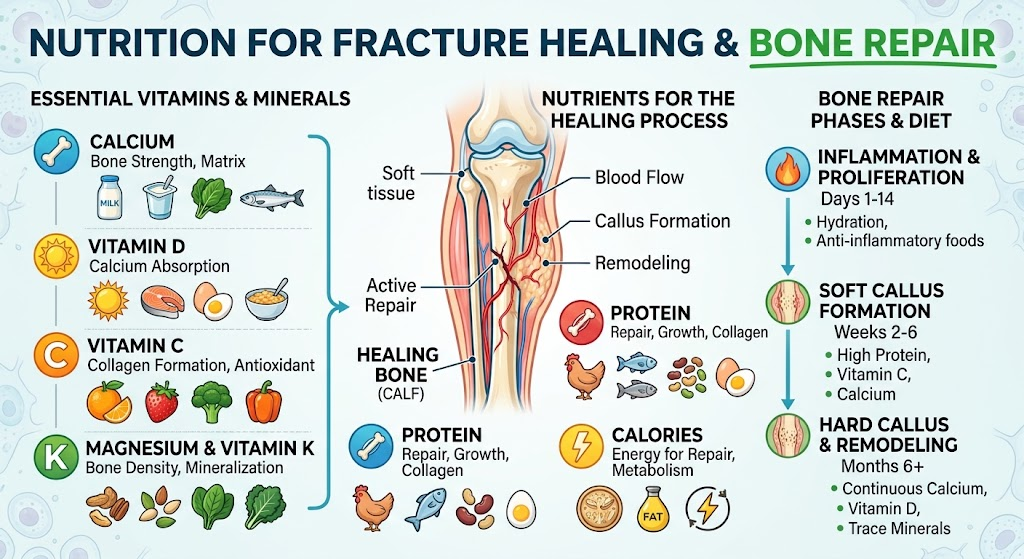
A fracture heals in overlapping phases.
First comes inflammation, when a blood clot forms at the break and immune cells clear debris.
Next, a soft callus of collagen and cartilage bridges the gap, followed by a hard callus of new bone, and finally remodeling, where the bone is reshaped over months to restore its strength.
Every phase builds tissue, and tissue needs raw materials.
In clinic, I see the same pattern again and again: patients focus on the cast, the sling, or the exercises, and treat food as an afterthought.
Yet the body cannot build collagen without protein, cannot mineralize it without calcium and vitamin D, and cannot do any of it well when it is short on energy.
Nutrition supports healing in several ways:
- Supplies amino acids for the collagen framework of the callus
- Provides calcium and phosphate for mineralization
- Supports immune cells that manage early inflammation
- Maintains muscle mass while activity is restricted
- Gives the energy needed for tissue repair
Energy and Protein: The Foundation Most People Underestimate
After a fracture, especially one needing surgery, the body’s energy demand rises.
Eating less because of pain, medication side effects, or reduced appetite is very common.
Under-eating pushes the body to break down muscle, and that is the last thing you want when you are already immobilized.
Protein deserves particular attention.
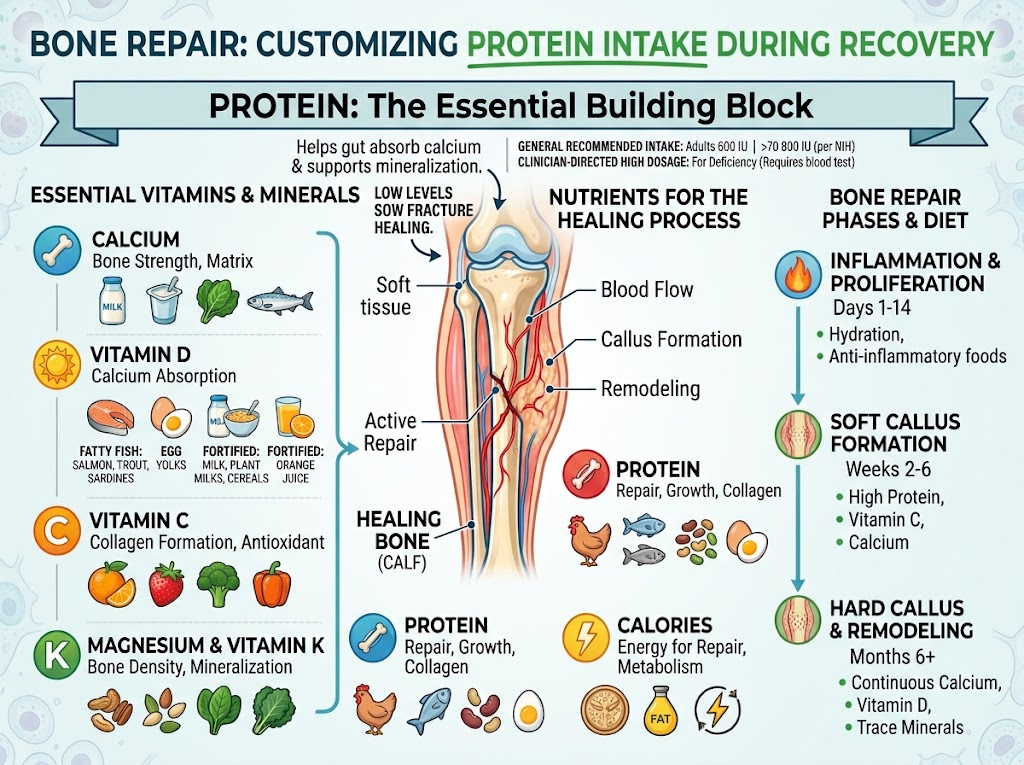
The general recommended intake for healthy adults is 0.8 grams per kilogram of body weight per day, but many clinicians aim higher during fracture recovery, particularly in older adults.
The right target depends on your age, kidney function, and overall health, so confirm it with your physician or a registered dietitian rather than guessing.
A practical way to reach your protein goal is to spread it across the day instead of loading it into dinner.
Good sources include:
- Eggs, Greek yogurt, and cottage cheese
- Fish, poultry, and lean meat
- Beans, lentils, tofu, and tempeh
- Milk or fortified soy milk
- Nuts and seeds as snacks
A simple example: oatmeal with milk and nuts at breakfast, a lentil soup with yogurt at lunch, an egg or yogurt snack in the afternoon, and fish or chicken with vegetables in the evening.
That pattern gets most people well beyond the minimum without effort.
Calcium: The Main Building Mineral
Bone is mostly a calcium-based mineral matrix, so adequate intake matters during repair.
For most adults, the recommended daily amount is around 1,000 mg, rising to about 1,200 mg for women over 50 and men over 70.
The NIH Office of Dietary Supplements calcium fact sheet lists current recommended amounts, food sources, and upper limits.
Food first is the usual approach.
Dairy products, calcium-set tofu, fortified plant milks, canned fish with soft bones, and leafy greens such as kale and bok choy are all useful sources.
Spinach is often cited for calcium, but its oxalates reduce how much you actually absorb.
If you use a supplement, a few practical points apply:
- Take no more than about 500 mg at one time, since absorption drops with larger doses
- Calcium carbonate is best taken with food
- Calcium citrate can be taken with or without food
- Do not exceed the recommended upper limit without medical advice
- Tell your doctor if you have a history of kidney stones
Vitamin D: The Nutrient That Helps You Use the Calcium
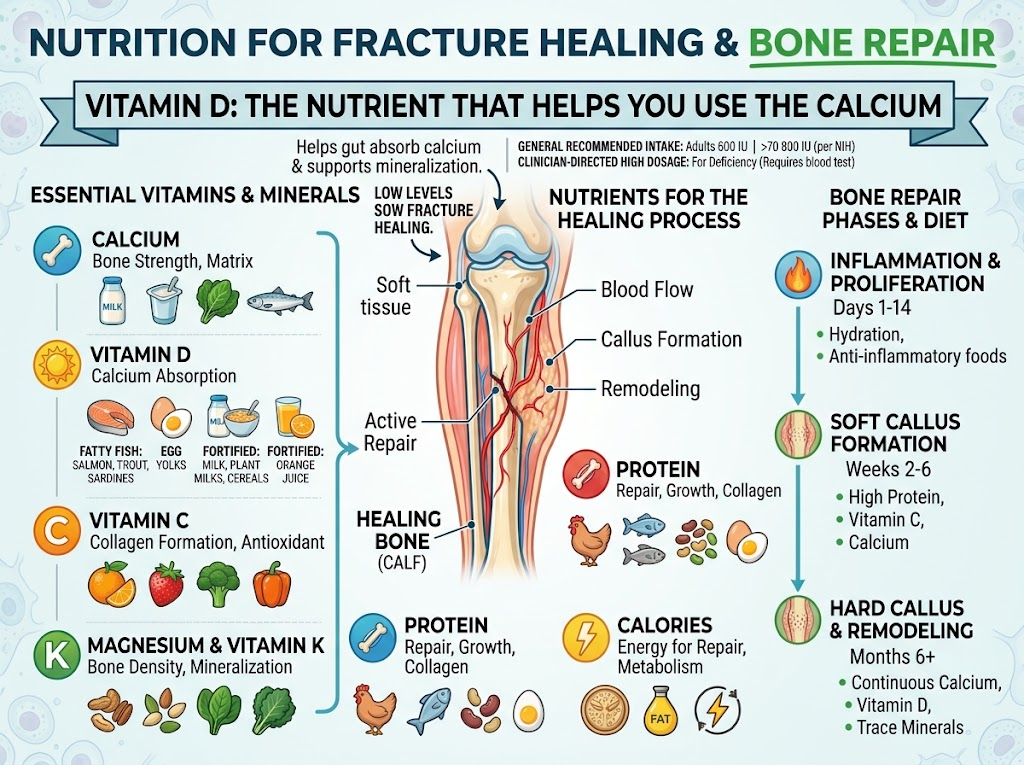
Vitamin D helps the gut absorb calcium and supports bone mineralization.
Low levels are common, and they are one of the first things I think about when a healing fracture seems slower than expected.
Sun exposure, skin tone, latitude, age, and body weight all influence your status, so intake from food alone is often not enough.
The general recommended intake for most adults is 600 IU daily, and 800 IU for those over 70, according to the NIH vitamin D fact sheet.
That page also explains upper limits.
Some people with a deficiency are prescribed higher doses for a limited time, which should be directed by a clinician after a blood test rather than self-started.
Food sources are limited but worth knowing:
- Fatty fish such as salmon, trout, and sardines
- Egg yolks
- Fortified milk, plant milks, and some cereals
- Fortified orange juice
Supporting Nutrients That Play a Role
Protein, calcium, and vitamin D carry most of the weight, but other nutrients help the process along.
None of these replaces a varied diet, and more is not better.
Getting them from food is usually the safest route.
| Nutrient | Role in Bone Repair | Common Food Sources |
|---|---|---|
| Protein | Builds collagen framework and preserves muscle | Eggs, dairy, fish, poultry, legumes, tofu |
| Calcium | Mineralizes the new bone | Dairy, fortified plant milks, calcium-set tofu, canned fish with bones |
| Vitamin D | Improves calcium absorption | Fatty fish, egg yolks, fortified foods, sunlight |
| Vitamin C | Needed for collagen formation | Citrus, berries, peppers, broccoli, kiwi |
| Vitamin K | Involved in bone protein activation | Leafy greens, broccoli, some fermented foods |
| Magnesium | Part of bone structure and vitamin D metabolism | Nuts, seeds, whole grains, legumes |
| Zinc | Supports tissue repair and immune function | Meat, shellfish, legumes, seeds |
| Phosphorus | Combines with calcium in bone mineral | Dairy, meat, fish, legumes, whole grains |
One caution on vitamin K: if you take warfarin or a similar blood thinner, keep your leafy green intake consistent and speak with your care team before changing it.
Supplements of zinc, magnesium, and others can also interact with medications, so check with a pharmacist or physician first.
What to Limit or Avoid While Your Bone Heals
Some habits work against repair, and a few of them are easy to change.
The most clear-cut is smoking and nicotine use, which is consistently linked with slower healing and higher rates of nonunion, where a fracture fails to knit.
If you smoke, a fracture is a strong reason to ask your doctor about cessation support.
Other things worth moderating:
- Heavy alcohol intake, which interferes with bone formation and increases fall risk
- Very restrictive or crash dieting, which reduces the energy and protein available for repair
- Excessive salt, which increases calcium loss in urine
- Large amounts of caffeine, which has a small effect on calcium balance
- High-dose supplements taken without medical guidance
Pain medication is a separate question.
Some research has raised concerns about anti-inflammatory drugs and bone healing, but the evidence is mixed, and surgeons differ in their preferences.
Do not stop or start any medication on your own; ask your treating physician what is appropriate for your fracture.
Special Situations: Age, Surgery, and Dietary Patterns
Not everyone starts from the same place, and the plan should reflect that.
Individual needs vary with age, health conditions, and the type of fracture.
Older Adults and Fragility Fractures
A fracture from a minor fall in an older adult often signals underlying bone loss.
In this group, good nutrition matters not only for healing but for preventing the next break.
Ask your doctor whether bone density testing and osteoporosis assessment are appropriate, since nutrition alone does not treat osteoporosis.
Vegetarian, Vegan, and Lactose-Intolerant Patients
These diets can fully support healing with planning.
The usual risk areas are calcium, vitamin D, protein quantity, and sometimes vitamin B12.
Fortified foods, calcium-set tofu, legumes, and supplements where needed can fill the gaps, and a registered dietitian can help you check the numbers.
After Surgery or With Limited Appetite
After fixation surgery, appetite and digestion are often off for a while.
Small, frequent meals, protein-rich snacks, and oral nutrition drinks recommended by your care team can help.
If you are losing weight unintentionally or struggling to eat, tell your doctor early.
A Sample Day of Eating for Fracture Recovery
Patients often ask what this looks like in practice.
The example below is general and not a prescription, so adjust it to your needs, allergies, and medical advice.
The MyPlate website from the U.S.
Department of Agriculture offers a useful framework for building balanced meals.
- Breakfast: Greek yogurt with berries, oats, and walnuts, plus a glass of fortified milk or soy milk
- Mid-morning: A boiled egg and an orange
- Lunch: Lentil and vegetable soup with whole-grain bread and a side of broccoli
- Afternoon snack: Cottage cheese or a handful of almonds with fruit
- Dinner: Baked salmon, brown rice, and sautéed kale or bok choy
This pattern provides protein at every meal, several calcium sources, a vitamin D source from fish and fortified milk, and plenty of vitamin C from fruit and vegetables.
When to Speak With a Professional
General guidance only goes so far.
Your orthopedic surgeon, physician, physical therapist, or a registered dietitian can tailor the plan to your situation.
You can find qualified dietitians through the Academy of Nutrition and Dietetics.
Consider seeking individual advice if any of these apply:
- Your fracture is healing slowly or has been labeled a delayed or nonunion
- You have had more than one fracture from low-impact events
- You have kidney disease, a digestive disorder, or diabetes
- You take blood thinners, steroids, or other long-term medications
- You are underweight, losing weight, or unable to eat normally
As a physical therapist, I would also add that nutrition and movement work together.
Appropriate, surgeon-approved loading and exercise stimulate bone, while good nutrition gives that bone something to build with.
Conclusion
Fracture healing depends on more than rest and time.
Enough energy, steady protein through the day, adequate calcium and vitamin D, and a varied diet rich in fruit, vegetables, and whole foods give the body what it needs to rebuild.
Avoid smoking, keep alcohol modest, and check with your care team before starting supplements or changing medications.
If healing seems slow, nutrition is one of the first things worth reviewing with your clinician.
FAQ
What is the best diet for faster fracture healing?
There is no single miracle diet.
A balanced pattern with enough calories, protein at every meal, calcium-rich foods, a reliable vitamin D source, and plenty of fruit and vegetables supports repair best.
Consistency matters more than any one food.
How much protein do I need when healing a broken bone?
The general adult recommendation is 0.8 grams per kilogram of body weight daily, and many clinicians aim higher during fracture recovery, especially in older adults.
The right figure depends on your age, kidney health, and medical situation, so ask your physician or a registered dietitian for a personal target.
Should I take calcium supplements after a fracture?
Not automatically.
If you meet your needs through food, a supplement may be unnecessary, and excess calcium can cause problems such as constipation or kidney stones in susceptible people.
If your diet falls short, a supplement in modest divided doses may help, but discuss it with your doctor first.
Is vitamin D really that important for bone repair?
Yes.
Vitamin D helps your body absorb calcium and supports mineralization of new bone.
Deficiency is common, and a blood test can show whether you need more than the usual intake.
Do not take high doses without clinical guidance.
Does milk help broken bones heal?
Milk and other dairy products provide calcium, protein, and often added vitamin D, so they are a convenient way to get several key nutrients.
They are not required, though.
Fortified plant milks, calcium-set tofu, and other foods can do the same job.
Can I heal a fracture on a vegan diet?
Yes, with attention to protein, calcium, vitamin D, and vitamin B12.
Fortified foods, soy products, legumes, and targeted supplements can cover the gaps.
A dietitian can help you check that the plan is complete.
Do collagen supplements speed up fracture healing?
The evidence is not strong enough to say they speed healing in people who already eat enough protein.
Your body builds collagen from the amino acids found in ordinary protein foods, along with vitamin C.
Spending on whole-food protein is a more reliable investment.
Does smoking really slow down bone healing?
Yes.
Smoking and nicotine use are consistently associated with slower healing and a higher risk of nonunion.
Stopping, even temporarily, is one of the most useful things you can do for a fracture, and your doctor can suggest support options.
Do anti-inflammatory painkillers affect fracture healing?
The evidence is mixed, and practice varies between surgeons and fracture types.
Because of that, it is best to use whatever pain plan your treating physician recommends and to ask before adding over-the-counter anti-inflammatories.
How long should I keep eating for bone healing?
Bone remodeling can continue for months after the break feels better, so good habits are worth maintaining well past the point where you leave the cast or sling.
Many people find it easiest to simply adopt these eating habits permanently, since they also support long-term bone health.