
Yes, small couch and living room seating posture modifications can make sitting more comfortable, especially when a deep or soft sofa leaves your back, feet, or screen poorly supported. The goal is a supported position you can change easily, not one rigid “perfect” posture.
Why couch sitting often feels different from chair sitting
Couches are designed for relaxation, so the seat may be deep, low, and soft. That combination can make the pelvis slide forward, round the trunk, leave the feet unsupported, or turn the head toward a screen.
- A deep seat keeps the back away from the backrest.
- Soft cushions allow the pelvis to sink unevenly.
- A low seat can make standing more demanding.
- A television or laptop placed to one side encourages repeated rotation.
Start with a stable base of support
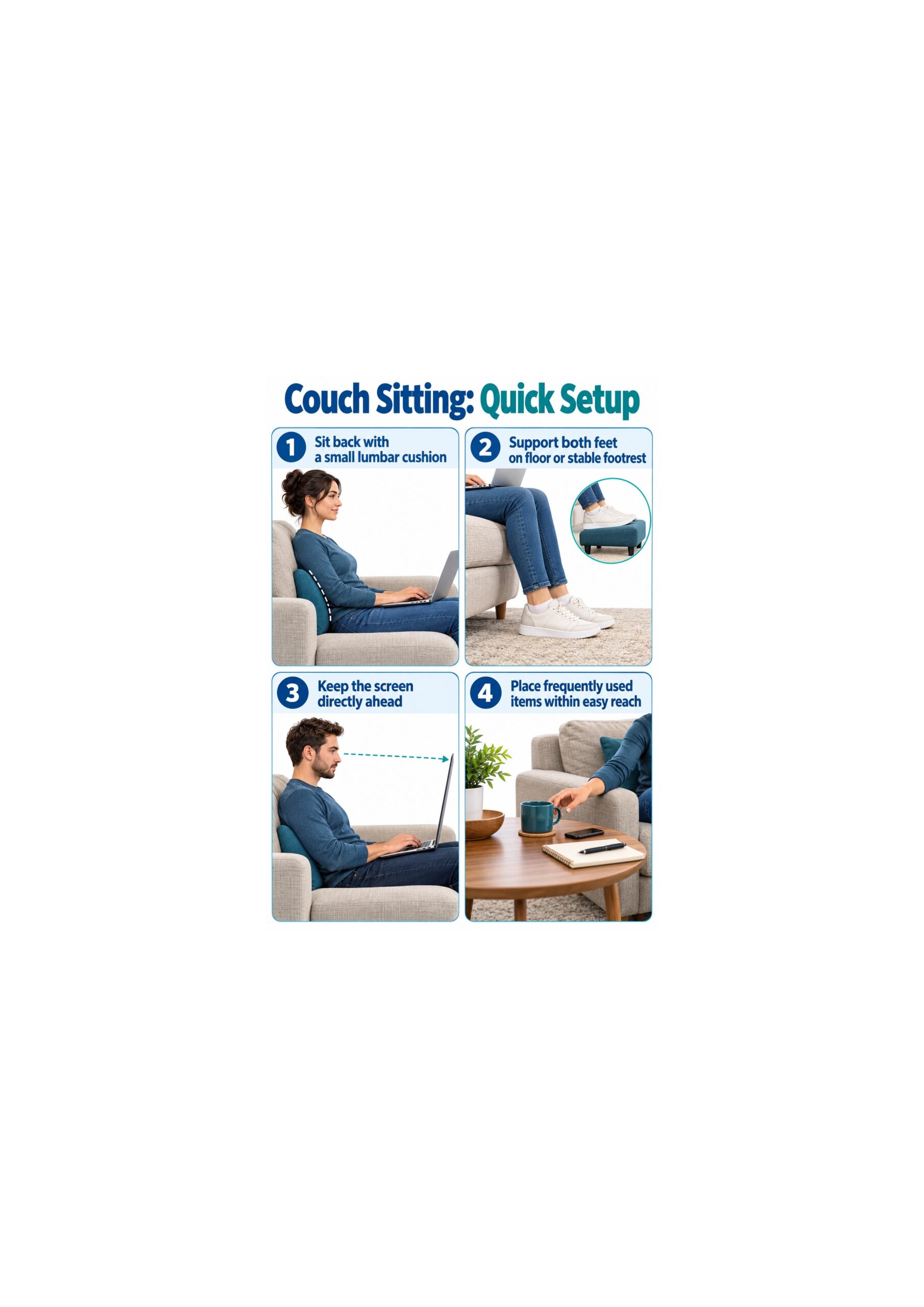
Sit far enough back that the trunk can use the backrest or a cushion. Keep both feet supported when you want an upright position, while allowing comfortable variation rather than forcing symmetry all evening.
- Clear thick throws or loose cushions from under the pelvis.
- Use a firm seat location that does not slope sharply.
- Place the feet on the floor or on a stable foot support.
- Leave enough room to change leg position safely.
Add back support without overcorrecting
A small firm cushion or rolled towel can fill the gap behind the lower back when the couch is too deep. NIOSH advises using pillows for back support and sitting more upright when a couch is the only available work surface in its working-from-home ergonomics guidance.
- Place support in the gap rather than pushing the whole trunk forward.
- Use enough firmness to prevent collapse without creating a hard pressure point.
- Support the head during a reclined position if the backrest is low.
- Remove or reposition the cushion when you change posture.
Manage seat depth and foot support
If the seat edge reaches the back of the knees before the back meets the cushion, shorten the effective seat depth. A cushion behind the trunk is often more useful than balancing at the front edge.
- Move a firm cushion behind the back to bring support forward.
- Use a stable footrest when the feet do not reach comfortably.
- Avoid perching with only the toes contacting the floor.
- Check that the seat edge does not create firm pressure behind the knees.
Place the television, laptop, or book in front of you
Repeatedly turning the head or trunk toward one side can become uncomfortable. For longer viewing or reading, bring the main task directly ahead and raise a laptop from the lap when practical.
- Center the television with the usual seating position.
- Use a separate keyboard and mouse if a laptop is raised for prolonged work.
- Support a book or tablet rather than holding it low for long periods.
- Change seats or viewing direction if the room layout cannot be altered.
The OSHA guidance on working positions describes supported sitting and frequent position changes for computer tasks. These principles can help when a living room temporarily becomes a workspace.
Support the arms and keep items within reach
Arm support can reduce the effort of holding the shoulders forward, but armrests or cushions should not push the shoulders upward. Place controls, drinks, and reading materials where they can be reached without repeated twisting.
- Rest the forearms lightly on cushions or armrests.
- Keep the shoulders relaxed rather than elevated.
- Move the side table closer before settling in.
- Do not place a hot drink where standing up may knock it over.
Use reclined and side-lying positions thoughtfully
Relaxed positions are reasonable when the head, trunk, and limbs feel supported. Problems arise when the neck is held sideways toward the television, one shoulder is compressed for a long time, or the lower body is twisted relative to the trunk.
- Support the head so it is not bent sharply forward or sideways.
- Use a pillow between the knees in side lying if it feels more comfortable.
- Keep the screen in the line of sight for the position you choose.
- Change sides rather than always loading the same hip or shoulder.
Make standing up from a low couch easier
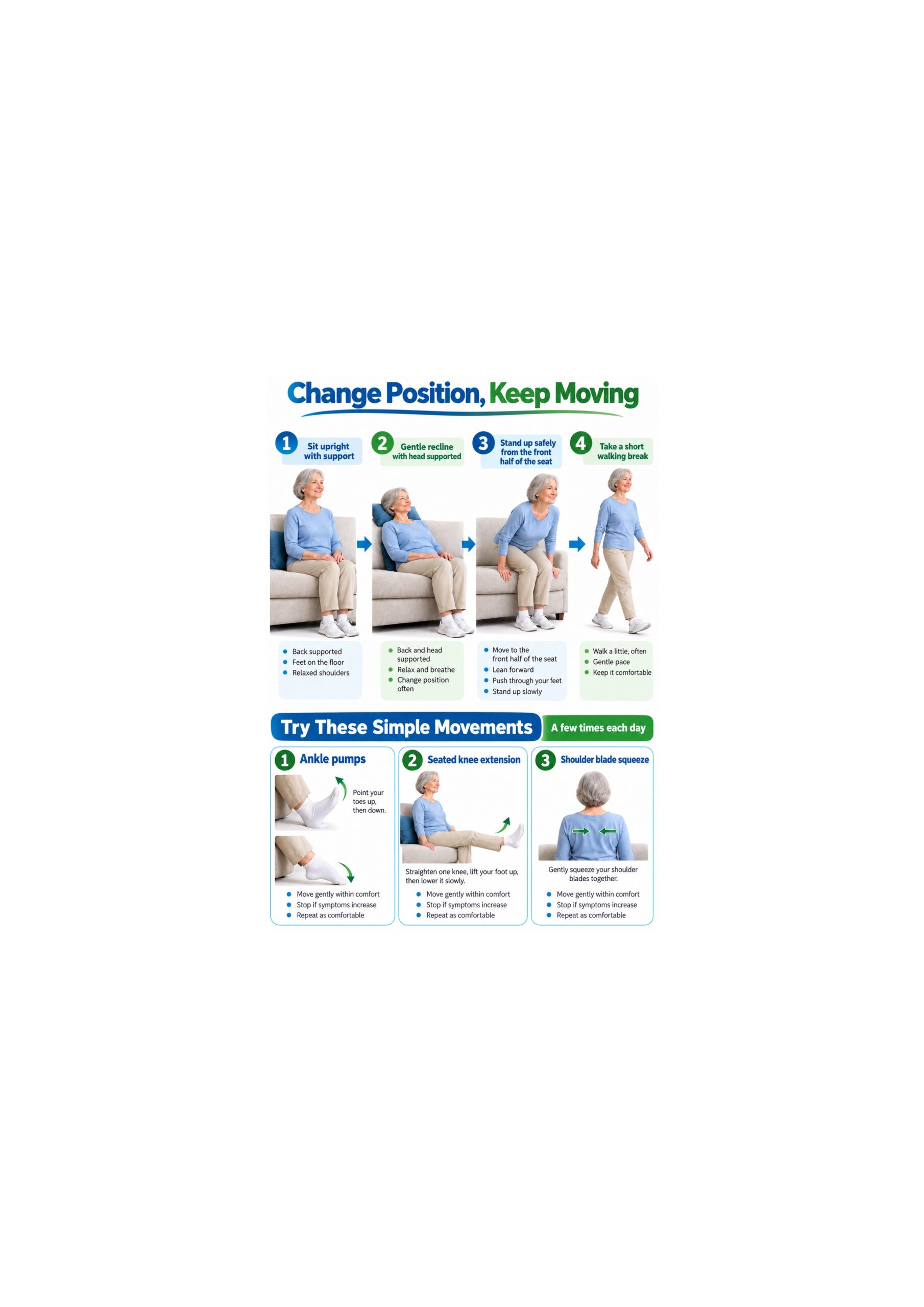
Move toward the front half of the seat before standing rather than trying to rise from a deep recline. Place the feet where they can accept weight, lean the trunk forward, and use a stable armrest if needed.
- Remove loose rugs or objects near the feet.
- Avoid pulling on a light coffee table or unstable furniture.
- Choose a firmer or higher seat after surgery or when leg strength is limited.
- Ask for assistance if balance is uncertain.
Change position and add gentle movement
No couch setup removes the need to move. OSHA notes that even a good working position should be changed regularly, including brief standing and walking.
- Ankle pumps: alternate lifting the toes and heels within comfort.
- Seated knee extension: slowly straighten one knee, then lower it.
- Shoulder-blade squeeze: gently draw the shoulder blades together without shrugging.
- Walking break: stand and walk when it is safe and practical.
Match the modification to the problem
| What you notice | Likely contributor | Practical modification |
|---|---|---|
| Back does not reach the backrest | Seat is too deep | Add a firm cushion behind the trunk |
| Feet dangle | Seat is too high or deep | Use a stable foot support and shorten seat depth |
| Neck turns toward the television | Screen is off-center | Center the screen or change seating position |
| Hard to stand | Seat is low or very soft | Use a firmer, higher seat and stable arm support |
| Shoulders feel held forward | Device or controls are too far away | Bring the task closer and support the forearms |
- Change one feature at a time so you can judge its effect.
- Keep useful supports simple and easy to reposition.
- Stop a modification that creates numbness or a new pressure point.
- Prefer furniture changes for long sessions rather than relying on willpower.
When couch posture is not the whole explanation
Persistent pain can have many contributors and may not resolve through furniture changes alone. Seek individual assessment for symptoms that are worsening, follow an injury, disturb sleep, or include weakness, numbness, marked swelling, fever, or changes in balance.
- Symptoms continue away from the couch.
- One position consistently causes radiating pain or numbness.
- Standing up becomes newly difficult or unsafe.
- A health condition or recent surgery requires specific precautions.
Conclusion
Useful couch posture modifications provide support, reduce awkward reach, and make movement easier. Start with the back, feet, and screen, then vary positions and take regular movement breaks instead of trying to hold one posture.
Frequently asked questions
Is sitting on a couch bad for posture?
No single couch position is automatically harmful. Comfort, support, time in one position, and the ability to move all matter.
Where should a lumbar cushion sit on a couch?
Place it in the gap behind the lower back so the trunk can rest against support without being pushed too far forward.
What can I do if the couch is too deep?
Add a firm cushion behind the trunk to shorten the effective seat depth and keep the feet supported.
Should my feet always stay flat on the floor?
Full foot support is useful for upright sitting and standing up, but comfortable position changes are also reasonable.
Is lying on the couch better than sitting?
Either can be comfortable when the head, trunk, and limbs are supported. Avoid holding the neck rotated toward a screen.
Can I work on a laptop from the couch?
Short tasks may be manageable, but longer work is easier to support when the screen is raised and a separate keyboard and mouse are used.
How do I stop sliding forward on a sofa?
Use a firmer seating area, remove loose cushions under the pelvis, and add support behind the back rather than repeatedly pulling yourself upright.
What is the safest way to stand from a low couch?
Move forward, place the feet securely, lean the trunk forward, and push through the feet or a stable armrest.
Can a cushion cure back pain?
A cushion may improve support, but it does not treat every cause of back pain. Persistent or worsening symptoms need individual assessment.
How often should I change position?
Change before discomfort builds and use natural breaks to stand or walk. The right interval varies with the person and activity.