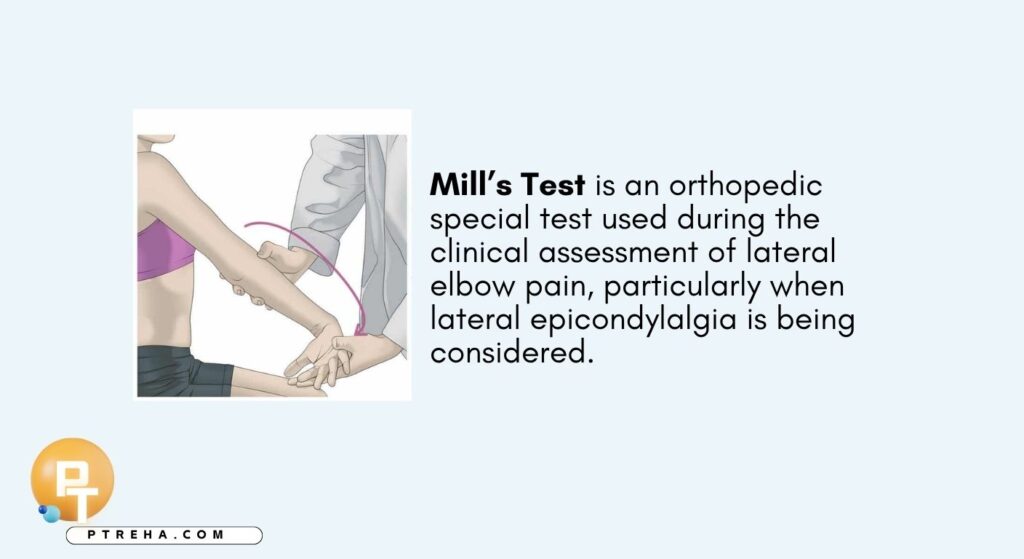
Mill’s Test is an orthopedic special test used during the clinical assessment of lateral elbow pain, particularly when lateral epicondylalgia is being considered.
What Is the Mill’s Test?
The commonly described maneuver passively combines forearm pronation, wrist flexion, and elbow extension while the clinician monitors the lateral elbow for reproduction of the patient’s familiar pain.
The test is therefore primarily a pain-provocation assessment, rather than a measurement of muscle strength, range of motion, or tendon integrity.
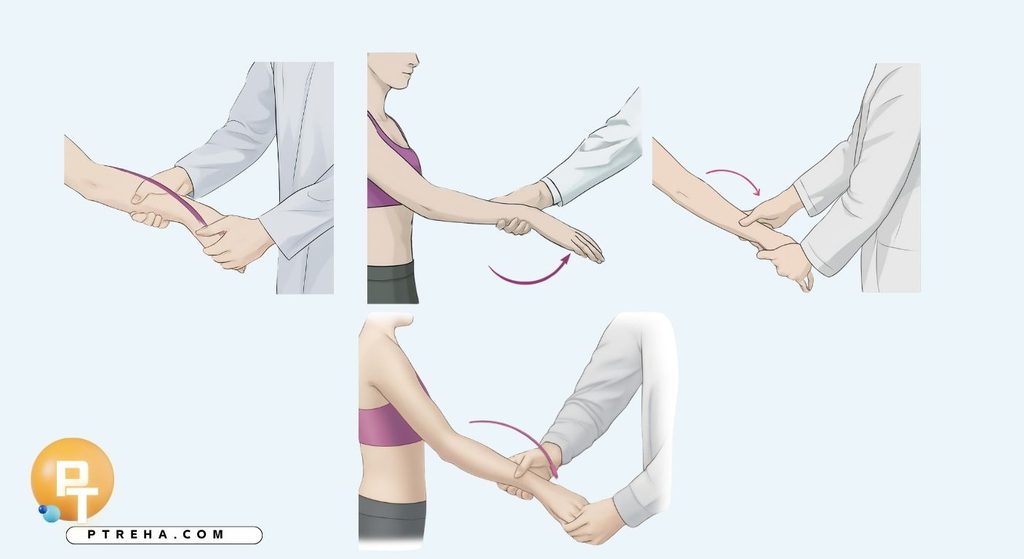
Different clinical references describe variations in the starting position and exact hand placement. The technique below describes the commonly used passive-stretch version in which the forearm is pronated, the wrist is flexed, and the elbow is extended.
“The location and character of the reproduced pain matter as much as the movement itself.”
Purpose of the Mill’s Test
The Mill’s Test may be used to:
- Reproduce familiar lateral elbow pain during a controlled stretch maneuver.
- Contribute to the clinical assessment of suspected lateral epicondylalgia.
- Examine the response of the lateral elbow region to combined wrist, forearm, and elbow positioning.
- Complement other examination procedures such as palpation and resisted wrist-extension testing.
- Help determine whether the patient’s symptoms are mechanically reproduced during passive loading of the involved region.
A pain response should be interpreted in the context of the patient’s complete clinical presentation rather than treated as proof of a specific tendon lesion.
Mill’s Test Indications
The test may be considered when a patient presents with:
- Lateral elbow pain.
- Pain associated with gripping, lifting, or repetitive upper-limb activity.
- Local tenderness around the lateral epicondyle.
- Symptoms that may be consistent with lateral epicondylalgia.
- Reproduction of symptoms during loading or stretching of the wrist-extensor region.
It is particularly useful when incorporated into a broader elbow examination rather than used in isolation.
Mill’s Test Contraindications and Precautions
There is no universally established list of unique Mill’s-Test-specific contraindications. Instead, the clinician should apply general precautions appropriate to a pain-provoking passive maneuver.
Use caution when:
- The patient has recently sustained significant elbow, forearm, or wrist trauma.
- There is suspected fracture, dislocation, or substantial acute tissue injury.
- The patient has severe or unexplained pain with passive movement.
- The available range of motion is substantially restricted.
- The maneuver reproduces neurological symptoms rather than the patient’s familiar lateral elbow pain.
- The patient cannot tolerate the position safely.
The movement should be performed gradually and should not be forced through painful or restricted range.
Patient Position
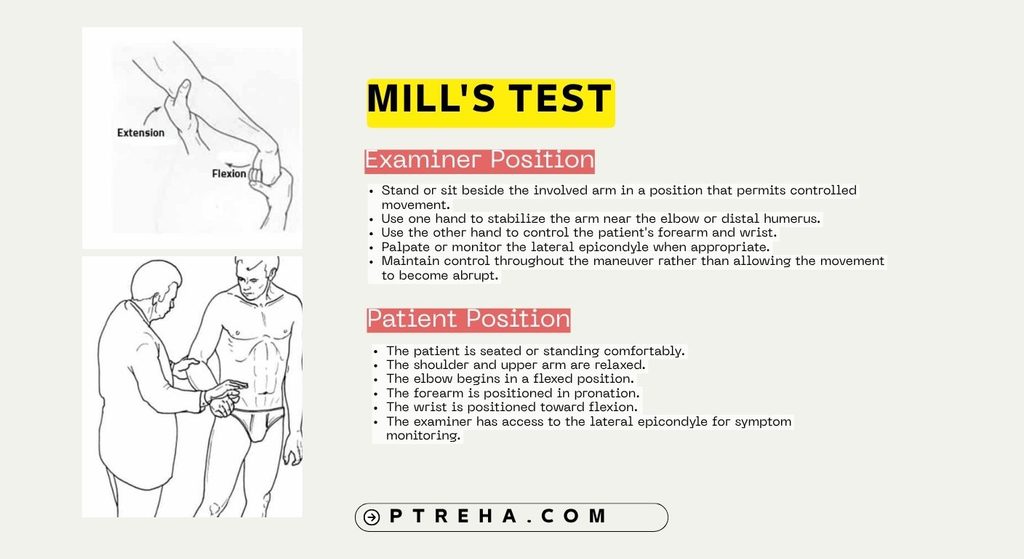
A commonly described passive version uses the following position:
- The patient is seated or standing comfortably.
- The shoulder and upper arm are relaxed.
- The elbow begins in a flexed position.
- The forearm is positioned in pronation.
- The wrist is positioned toward flexion.
- The examiner has access to the lateral epicondyle for symptom monitoring.
Some descriptions use a seated position with the elbow subsequently brought into extension, while others describe the patient standing. The exact starting position can therefore vary between clinical references.
Examiner Position
The examiner should:
- Stand or sit beside the involved arm in a position that permits controlled movement.
- Use one hand to stabilize the arm near the elbow or distal humerus.
- Use the other hand to control the patient’s forearm and wrist.
- Palpate or monitor the lateral epicondyle when appropriate.
- Maintain control throughout the maneuver rather than allowing the movement to become abrupt.
Good stabilization is important because unwanted movement at the shoulder or forearm can change the mechanical loading experienced during the test.
How to Perform the Mill’s Test
A commonly described passive-stretch procedure is:
- Position the patient comfortably with the elbow initially flexed.
- Palpate the lateral epicondyle to establish the patient’s baseline symptoms.
- Position the forearm in pronation.
- Passively move the wrist into flexion.
- While maintaining the wrist position and forearm pronation, gradually extend the elbow.
- Monitor the patient’s symptoms throughout the maneuver.
- Ask whether the maneuver reproduces the patient’s familiar lateral elbow pain.
- Stop or reduce the maneuver if the response becomes excessive or unsafe.
The combination of pronation, wrist flexion, and elbow extension is intended to place the wrist-extensor region under stretch. Descriptions of the maneuver are broadly consistent across clinical references, although the precise starting position and examiner hand placement vary.
Interpretation of the Mill’s Test
The clinically relevant finding is reproduction of the patient’s familiar pain around the lateral epicondyle or adjacent lateral elbow region during the maneuver.
This finding can support the clinical assessment of lateral epicondylalgia, particularly when it agrees with the history, localized tenderness, and other loading tests.
However, pain reproduction is not specific enough to establish the exact anatomical source of pain by itself. A systematic review of elbow examination tests concluded that the available evidence for many elbow special tests is limited and that the tests reviewed did not provide sufficient diagnostic certainty to independently rule conditions in or out.
The response should therefore be documented descriptively, including:
- Where the pain occurred.
- Whether it reproduced the patient’s familiar symptoms.
- Whether symptoms changed as the elbow approached extension.
- Whether symptoms were local or extended elsewhere.
- Whether the response differed from the opposite side, when comparison is clinically appropriate.
What Does a Positive Mill’s Test Mean?
When the conventional terminology is used, a “positive” Mill’s Test generally refers to reproduction of pain around the lateral epicondyle during the stretch maneuver.
Clinically, this finding supports the presence of mechanically provoked lateral elbow pain, but it does not by itself establish lateral epicondylalgia or identify a particular tendon as the sole pain source.
This distinction is important because lateral elbow pain has a differential diagnosis that may include disorders involving structures other than the common extensor tendon region.
The finding becomes more useful when it agrees with the patient’s symptom history, palpation findings, functional complaints, and other relevant examination procedures.
Negative Mill’s Test
A lack of familiar lateral elbow pain during the maneuver means that the test did not reproduce the patient’s symptoms under that particular testing condition.
It should not automatically be interpreted as proof that lateral epicondylalgia is absent. Test performance, symptom irritability, range of motion, positioning, and the patient’s clinical presentation can all influence the response.
For this reason, a non-provocative Mill’s Test should be considered one piece of the examination rather than an exclusion criterion.
Anatomy Involved in Mill’s Test
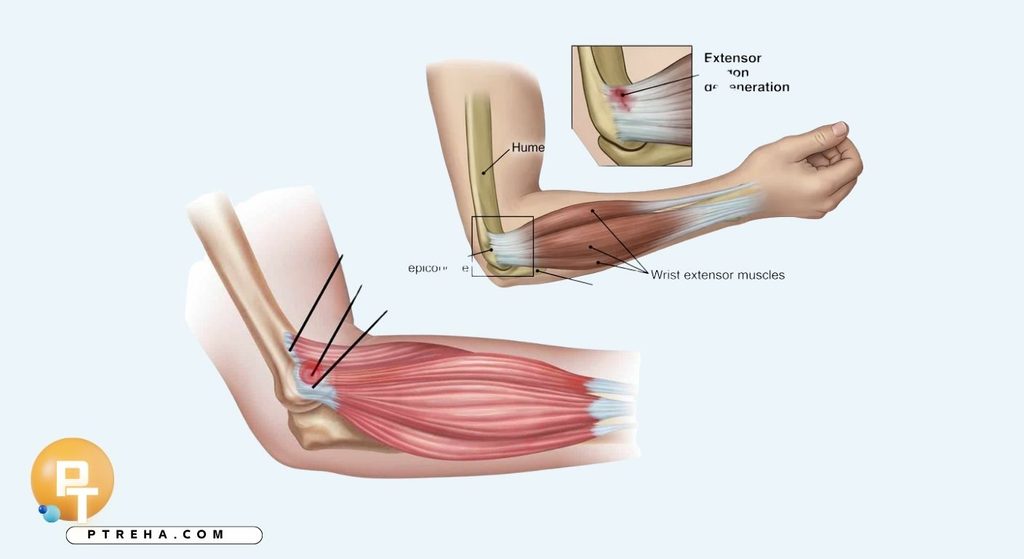
The maneuver involves several anatomical regions and movements:
- Lateral epicondyle of the humerus: a clinically important landmark for localization of lateral elbow pain.
- Common extensor origin: the proximal region of several wrist and finger extensor muscles.
- Wrist extensors: these tissues are placed under stretch when the wrist is flexed while the elbow is extended.
- Forearm: pronation changes the position of the forearm and contributes to the overall test maneuver.
- Elbow joint: progressive extension increases the overall stretch position created by the maneuver.
- Radial-sided neurovascular and musculoskeletal structures: symptoms outside the expected local pain pattern should prompt consideration of alternative or additional sources.
The test should not be interpreted as selectively isolating one individual muscle or tendon. The combined movement affects multiple tissues simultaneously.
Conditions Associated With the Mill’s Test
The Mill’s Test is most commonly discussed in relation to:
- Lateral epicondylalgia, commonly called tennis elbow.
- Lateral elbow pain of uncertain or mixed origin.
A painful response may contribute to the assessment of lateral epicondylalgia, but the test does not independently establish the diagnosis.
Contemporary descriptions of lateral elbow disorders emphasize clinical assessment of pain location, aggravating activities, palpation, loading response, and consideration of competing diagnoses rather than reliance on one special test.
Clinical Significance
The Mill’s Test can be useful when it answers a specific clinical question: Can the patient’s familiar lateral elbow symptoms be reproduced by this controlled stretch maneuver?
Its clinical value increases when the response is consistent with the rest of the examination.
For example, a patient with activity-related lateral elbow pain, localized tenderness, and concordant symptoms during several appropriately selected loading or provocation procedures presents a different clinical picture from a patient whose pain is reproduced only by one passive maneuver.
Clinical examination should also consider alternative explanations for lateral elbow symptoms. Persistent or atypical symptoms, neurological findings, substantial loss of movement, or symptoms inconsistent with a typical presentation warrant broader assessment.
A 2024 international survey of physiotherapists reported that Mill’s Test remains commonly used in the clinical assessment of lateral elbow tendinopathy, but also highlighted variability in the reported diagnostic performance of elbow provocation tests and the common use of multiple examination findings rather than a single test.
“A provocation test is most useful when its result agrees with the patient’s history and the rest of the examination.”
Sensitivity and Specificity
Reported diagnostic-performance estimates for Mill’s Test are not sufficiently consistent to justify a universal sensitivity or specificity value.
Some secondary sources report figures from individual studies, including a sensitivity around 53% and specificity around 100%, but these values should not be presented as universal because they come from specific study populations and protocols. Other reviews and contemporary literature report variability in estimates.
The systematic review by Zwerus and colleagues found substantial limitations in the diagnostic-accuracy literature for elbow clinical tests, including methodological concerns, and concluded that the available tests did not provide sufficient certainty to independently rule in or rule out an elbow disorder.
For that reason, numerical sensitivity and specificity values are not recommended as universal clinical characteristics of Mill’s Test.
Diagnostic Accuracy
Mill’s Test should not be treated as a stand-alone diagnostic test for lateral epicondylalgia.
The available literature supports its role as one component of clinical examination, but the diagnostic-accuracy evidence is limited and protocol-dependent. The systematic review of elbow examination specifically noted that many described tests lack robust diagnostic-accuracy evidence and that methodological limitations were present in much of the available literature.
Consequently, the clinician should integrate the test with:
- Patient history.
- Symptom behavior.
- Localization of pain.
- Palpation.
- Resisted loading.
- Functional activities.
- Range-of-motion assessment.
- Neurological examination when indicated.
- Differential diagnosis.
Common Mistakes in Mill’s Test
Common technical errors include:
- Moving the elbow too quickly.
- Failing to maintain the intended wrist position.
- Allowing the forearm to move out of pronation.
- Using excessive force to obtain a response.
- Ignoring the patient’s baseline pain.
- Failing to determine whether the reproduced pain is familiar to the patient.
- Treating any discomfort as evidence of lateral epicondylalgia.
- Assuming that pain at the lateral epicondyle identifies one specific pathological structure.
- Using the test without considering alternative causes of lateral elbow pain.
- Treating a single test result as sufficient for diagnosis.
The quality of interpretation is often more important than simply obtaining a pain response.
Tips for Performing the Mill’s Test
For a more clinically useful examination:
- Explain the maneuver before beginning.
- Establish the patient’s familiar symptom location first.
- Stabilize the arm carefully.
- Apply the movement slowly and progressively.
- Monitor both pain location and symptom quality.
- Avoid forcing the elbow into an uncomfortable end range.
- Compare with the unaffected side only when the comparison is clinically meaningful.
- Document the exact symptom response rather than simply writing “positive.”
- Interpret the result alongside other examination findings.
- Reassess if the patient’s symptoms do not fit the expected clinical pattern.
Mill’s Test is most useful when it is treated as a clinical information-gathering procedure, not as a diagnostic shortcut.
Summary
- Mill’s Test is an orthopedic special test used during assessment of lateral elbow pain, particularly suspected lateral epicondylalgia.
- The commonly described maneuver combines forearm pronation, wrist flexion, and elbow extension to provoke symptoms from the lateral elbow region.
- Reproduction of the patient’s familiar lateral elbow pain may support the clinical assessment but does not independently establish a diagnosis.
- There is no sufficiently consistent evidence to present a universal sensitivity or specificity value for the test.
- Clinical interpretation should incorporate history, palpation, loading, functional assessment, and differential diagnosis.
Mill’s Test remains a practical component of the elbow examination, but its value lies in how it contributes to the overall clinical reasoning process. A carefully performed maneuver combined with concordant history and examination findings provides more useful information than an isolated “positive” test result.
Resources and External Links
- Zwerus EL, Somford MP, Maissan F, et al. Physical examination of the elbow, what is the evidence? A systematic literature review. British Journal of Sports Medicine. This systematic review examines the diagnostic evidence for clinical elbow tests and highlights the limitations of relying on individual tests.
- Conservative Management of Lateral Epicondylalgia: A Review. Provides an overview of clinical examination and differential considerations in lateral elbow disorders.
- Physiotherapy practices in the clinical assessment of lateral elbow tendinopathy: An international survey. Describes contemporary clinical use of examination procedures for lateral elbow tendinopathy and discusses variability in diagnostic-test evidence.
- Mill’s Test – Physiopedia. Provides a commonly described clinical technique and overview of the test.
- Mill’s Test – PhysioHub. Provides an alternative description of the passive-stretch technique and discusses its clinical context.