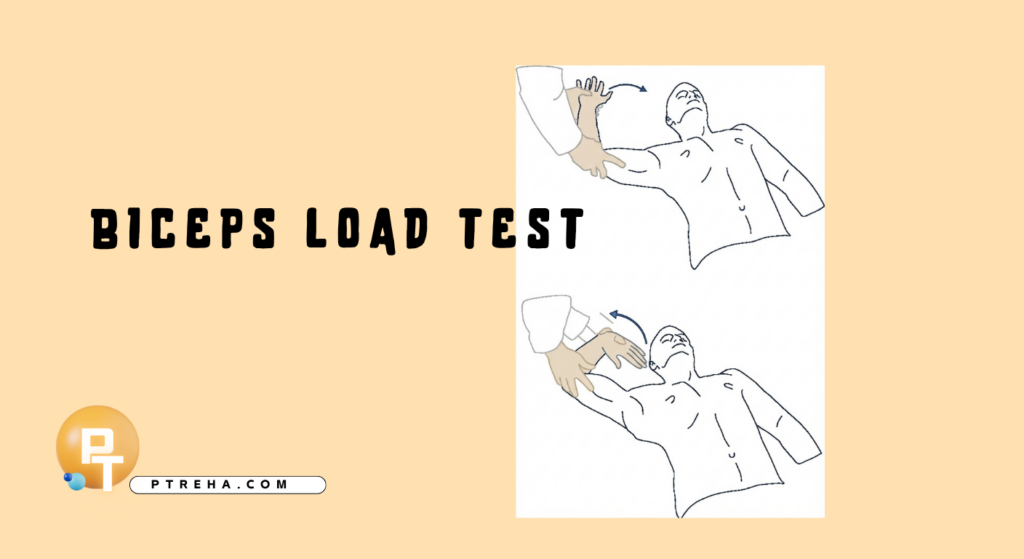
The Biceps Load Test is an orthopedic special test used during shoulder assessment, primarily to examine whether symptoms are associated with pathology of the superior glenoid labrum and the biceps–labral complex. The test is best interpreted as one component of a broader clinical examination rather than as a stand-alone method for diagnosing a SLAP lesion.
What Is the Biceps Load Test?
The Biceps Load Test is an orthopedic shoulder special test originally described for patients with recurrent anterior shoulder instability and suspected superior labral injury. It places the shoulder in an abducted and externally rotated position and then uses resisted elbow flexion to load the long head of the biceps and its attachment to the superior labral region.
Two related protocols are commonly described:
- Biceps Load Test I: developed for patients with recurrent anterior shoulder dislocation or instability. The response to resisted elbow flexion is compared with the patient’s apprehension in the provocative shoulder position.
- Biceps Load Test II: developed as a modification intended to assess SLAP lesions without requiring the same recurrent-instability context. It uses greater shoulder elevation and interprets pain produced during resisted elbow flexion as the test finding.
The two tests should not be treated as interchangeable because their procedures and original study populations differ.
Purpose of the Biceps Load Test
The test may be used to:
- Examine the superior biceps–labral complex during a provocative shoulder position.
- Reproduce symptoms that may be associated with superior labral pathology.
- Contribute to the clinical assessment of a patient with suspected SLAP-related pathology.
- Add information to the assessment of a shoulder with a history of instability, particularly when using the original Biceps Load Test I.
- Help determine whether further assessment of intra-articular shoulder pathology may be warranted.
The test does not independently establish the presence or severity of a labral lesion.
Biceps Load Test Indications
The Biceps Load Test may be considered when the clinical presentation raises concern about superior labral or biceps-anchor involvement, particularly when the patient reports symptoms during activities involving overhead use, loading, throwing, or positions associated with shoulder instability.
It may also be useful when other elements of the shoulder examination produce findings that warrant further assessment of intra-articular pathology.
The original Biceps Load Test I was studied specifically in patients with recurrent anterior shoulder dislocation, so applying its published diagnostic results to every patient with shoulder pain is not appropriate.
Biceps Load Test Contraindications and Precautions
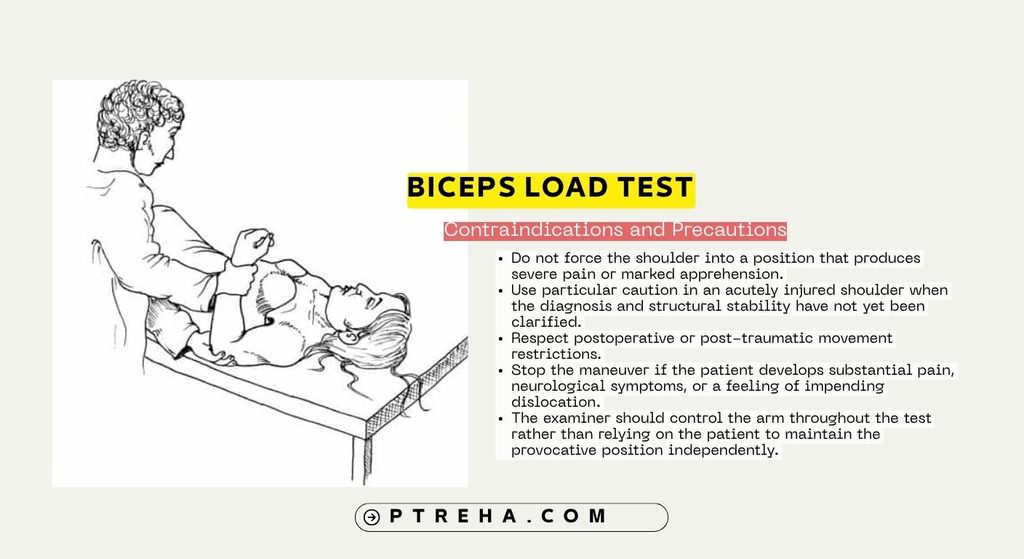
No universally established, test-specific contraindication is defined in the original descriptions.
Clinically relevant precautions include:
- Do not force the shoulder into a position that produces severe pain or marked apprehension.
- Use particular caution in an acutely injured shoulder when the diagnosis and structural stability have not yet been clarified.
- Respect postoperative or post-traumatic movement restrictions.
- Stop the maneuver if the patient develops substantial pain, neurological symptoms, or a feeling of impending dislocation.
- The examiner should control the arm throughout the test rather than relying on the patient to maintain the provocative position independently.
The test is provocative by design, so symptom reproduction should never be pursued at the expense of patient safety.
Patient Position
Biceps Load Test I
The commonly described original position is:
- Patient lying supine.
- Shoulder positioned at approximately 90° of abduction.
- Shoulder externally rotated into the position used for the anterior apprehension maneuver.
- Elbow flexed to approximately 90°.
- Forearm in supination.
These angles describe the published test protocol and should not be interpreted as universal physiological thresholds.
Biceps Load Test II
For the second protocol:
- Patient lies supine.
- Shoulder is elevated to approximately 120°.
- Shoulder is externally rotated toward its available end position.
- Elbow is flexed to approximately 90°.
- Forearm is supinated.
These angles describe the published protocol rather than universal clinical requirements.
Examiner Position
- Position yourself beside the involved shoulder where you can control the patient’s arm securely.
- Support the elbow and control the wrist or forearm.
- Maintain the shoulder position throughout the maneuver.
- Apply resistance smoothly rather than suddenly.
- Observe the patient’s pain, apprehension, and response to resisted elbow flexion rather than relying only on verbal reporting.
A consistent starting position is important because changes in shoulder elevation or rotation can alter the mechanical demands of the test.
How to Perform the Biceps Load Test
Biceps Load Test I
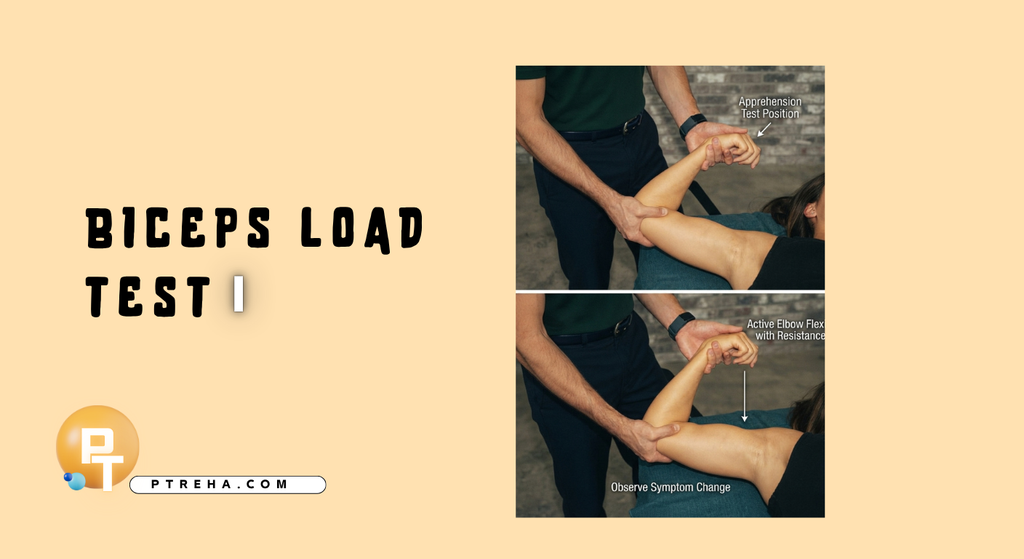
- Position the patient supine with the shoulder abducted to approximately 90° and the elbow flexed to approximately 90°.
- Place the forearm in supination.
- Gently externally rotate the shoulder toward the position used for the apprehension test.
- Note the patient’s apprehension or discomfort in this position.
- Maintain control of the shoulder and ask the patient to actively flex the elbow.
- Apply resistance to elbow flexion.
- Observe whether the patient’s apprehension or discomfort becomes less, unchanged, or more pronounced.
In the original protocol, improvement of apprehension during resisted elbow flexion was considered a negative response, whereas persistent or increased apprehension was considered a positive response.
Biceps Load Test II
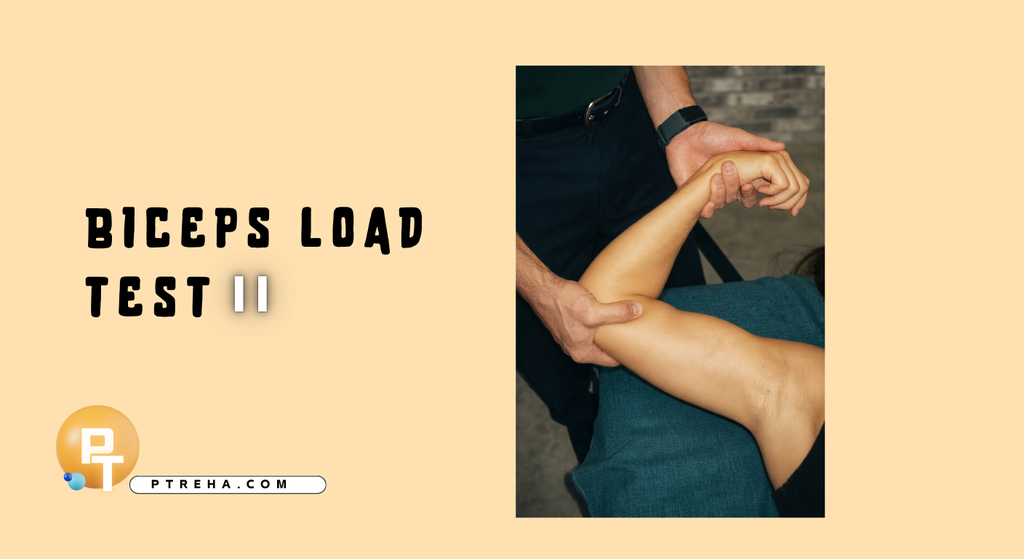
The second protocol is performed differently:
- Position the patient supine.
- Elevate the arm to approximately 120°.
- Externally rotate the shoulder toward its maximal available position.
- Keep the elbow at approximately 90° of flexion with the forearm supinated.
- Ask the patient to flex the elbow against examiner resistance.
- Determine whether resisted elbow flexion produces new or increased pain.
In the original Biceps Load Test II study, pain provoked during resisted elbow flexion was considered a positive response, whereas absence of pain or reduction in pre-existing symptoms was considered negative.
Because the interpretation differs between Test I and Test II, documenting which version was performed is clinically useful.
What Constitutes a Positive Test?
For Biceps Load Test I, a positive response is traditionally described as persistence or aggravation of apprehension or discomfort during resisted elbow flexion in the provocative shoulder position.
For Biceps Load Test II, the original protocol defines a positive response as pain produced during resisted elbow flexion.
These findings should be documented precisely. Statements such as “positive for SLAP tear” are too strong because the physical examination alone does not establish the structural diagnosis.
What Does a Positive Biceps Load Test Mean?
A positive result may increase clinical suspicion of superior labral or biceps-anchor pathology, depending on the specific protocol and the patient’s presentation.
However, pain or apprehension during the maneuver is not specific to one anatomical lesion. The result must be interpreted alongside the patient’s history, mechanism of injury, shoulder instability findings, range of motion, strength, symptom behavior, and other examination findings.
“A provocative test is a clinical finding, not a diagnosis.”
This distinction is especially important for SLAP pathology because patients may have coexisting shoulder disorders, and the clinical significance of superior labral abnormalities can be difficult to establish from one examination maneuver alone.
Negative Biceps Load Test
For the original Biceps Load Test I, reduction or relief of apprehension during resisted elbow flexion is traditionally interpreted as a negative response.
For Biceps Load Test II, a negative result in the original description means that pain is not elicited, or that previously present symptoms do not increase during resisted elbow flexion.
A negative test does not completely exclude superior labral pathology. The diagnostic value of a negative finding depends on the population, examination protocol, pretest probability, and the quality of the available evidence.
Anatomy Involved in Biceps Load Test
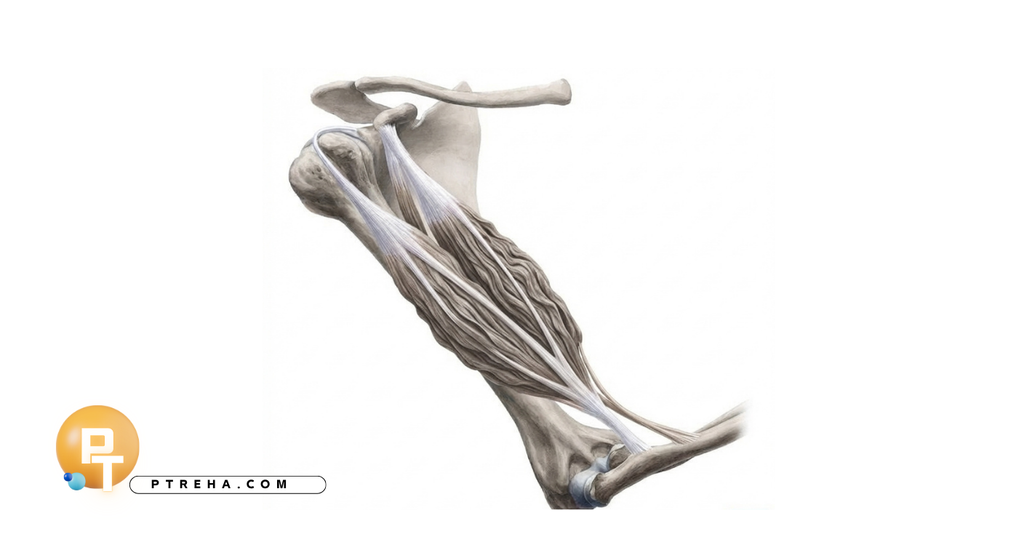
Relevant structures include:
- Glenoid labrum, particularly the superior portion.
- Long head of the biceps brachii tendon, which has an attachment relationship with the superior glenoid and labral complex.
- Biceps anchor region at the superior glenoid.
- Glenohumeral joint, which is placed in an abducted and externally rotated position during the test.
- Elbow flexor musculature, particularly the biceps brachii, which is actively loaded during resisted elbow flexion.
The superior labrum and biceps attachment have anatomical variability, which is one reason that imaging and clinical findings should be interpreted carefully rather than assuming that every superior labral variation represents symptomatic pathology.
The test loads the biceps–labral region, but it should not be described as selectively isolating the superior labrum or biceps anchor.
Conditions Detected / Associated With the Test
The Biceps Load Test has principally been studied in relation to:
- Superior labral anterior-to-posterior (SLAP) lesions.
- Superior biceps–labral pathology.
- In the original Biceps Load Test I literature, patients with recurrent anterior shoulder instability and associated superior labral lesions.
It should not be presented as a test that detects every form of shoulder instability, biceps tendinopathy, rotator cuff pathology, or generalized shoulder pain.
Clinical Significance
The practical value of the Biceps Load Test is greatest when it is incorporated into a structured shoulder examination.
Clinicians should consider:
- The patient’s mechanism of injury and symptom history.
- Whether symptoms are associated with instability, overhead loading, or throwing.
- Whether the test reproduces the patient’s familiar symptoms.
- Findings from other shoulder examination procedures.
- Whether the overall pattern is consistent with intra-articular pathology.
- Whether additional investigation is warranted when the clinical picture remains unclear.
A single special test should not be used in isolation to label a patient with a SLAP lesion. Systematic reviews have highlighted limitations in the evidence base for shoulder special tests and substantial variation between studies and patient populations.
Sensitivity and Specificity
Published figures exist, but they should be treated as study-specific rather than universal test characteristics.
In the original 1999 study of 75 patients with proven unilateral anterior shoulder dislocations, Biceps Load Test I had a reported sensitivity of 90.9% and specificity of 96.9% for the study’s identified superior labral pathology.
In the original 2001 study of 127 patients undergoing arthroscopic assessment, Biceps Load Test II had a reported sensitivity of 89.7% and specificity of 96.9%.
These values should not be applied automatically to a general physiotherapy population. Later systematic reviews identified methodological concerns, differences in patient spectrum, and variation in test performance.
Diagnostic Accuracy
The evidence for the diagnostic accuracy of the Biceps Load Test is protocol- and population-dependent.
Earlier systematic reviews identified Biceps Load I and II as promising tests based on individual studies, while also warning that accuracy could be overestimated because of methodological problems such as verification bias and case-control designs.
Later systematic review evidence concluded that the diagnostic performance of individual shoulder physical examination tests was generally limited and that the original Biceps Load II findings were not sufficiently robust to be accepted as universally generalizable.
Consequently, the Biceps Load Test should be considered a clinical assessment tool that contributes to diagnostic reasoning, not a stand-alone diagnostic procedure.
Common Mistakes in Biceps Load Test
- Confusing Biceps Load Test I with Biceps Load Test II.
- Changing the shoulder position substantially from the described protocol.
- Failing to distinguish apprehension from pain.
- Calling any shoulder pain during resisted elbow flexion a confirmed SLAP lesion.
- Applying the original diagnostic statistics to patients who differ substantially from the study population.
- Using excessive force during external rotation or resisted elbow flexion.
- Repeating the test aggressively after clear symptom reproduction.
- Ignoring the patient’s history and the results of the rest of the shoulder examination.
- Assuming that a superior labral abnormality on imaging necessarily explains the patient’s symptoms.
Tips for Performing the Biceps Load Test
- Document which version of the test was used.
- Establish the patient’s baseline symptoms before applying resistance.
- Use smooth, controlled resistance.
- Maintain the shoulder position consistently.
- Ask specifically whether the symptom reproduced is the patient’s familiar pain or apprehension.
- Compare the response with other relevant shoulder findings.
- Stop if symptoms become excessive or the patient feels genuinely unstable.
- Interpret the test within the context of the complete examination rather than as an isolated diagnostic answer.
“The most useful result is not simply whether the test is positive, but what symptom was reproduced and how that finding fits the rest of the examination.”
Summary
- The Biceps Load Test is an orthopedic shoulder special test associated primarily with assessment of the superior biceps–labral complex and suspected SLAP pathology.
- Biceps Load Test I and Biceps Load Test II are different protocols and should be identified separately.
- Test I evaluates the patient’s apprehension response during resisted elbow flexion in an abducted, externally rotated shoulder position; Test II uses a higher arm elevation and traditionally focuses on pain provoked by resisted elbow flexion.
- Original studies reported high diagnostic performance, but later reviews have raised important concerns about study design, spectrum effects, and generalizability.
- A Biceps Load Test finding does not by itself establish a SLAP lesion and should be integrated with the history, physical examination, and other appropriate investigations.
The Biceps Load Test can be a useful component of a shoulder examination when performed carefully and interpreted in context. Its greatest clinical value comes from combining the patient’s symptom response with the broader pattern of examination findings rather than treating one provocative maneuver as definitive.
Resources and External Links
Kim SH, Ha KI, Han KY. Biceps load test: a clinical test for superior labrum anterior and posterior lesions in shoulders with recurrent anterior dislocations.
PubMed — Original Biceps Load Test study
Kim SH, Ha KI, Ahn JH, et al. Biceps load test II: A clinical test for SLAP lesions of the shoulder.
PubMed — Biceps Load Test II study
Munro W, Healy R. The validity and accuracy of clinical tests used to detect labral pathology of the shoulder: a systematic review.
PubMed — Systematic review of shoulder labral tests
Gismervik SO, et al. Physical examination tests of the shoulder: a systematic review and meta-analysis of diagnostic test performance.
BMC Musculoskeletal Disorders — Systematic review and meta-analysis
Hegedus EJ, et al. Which physical examination tests provide clinicians with the most value when examining the shoulder?
PubMed — Evidence update on shoulder physical examination tests
Contemporary review of SLAP/biceps-anchor diagnosis.
PubMed — Current evidence and clinical considerations