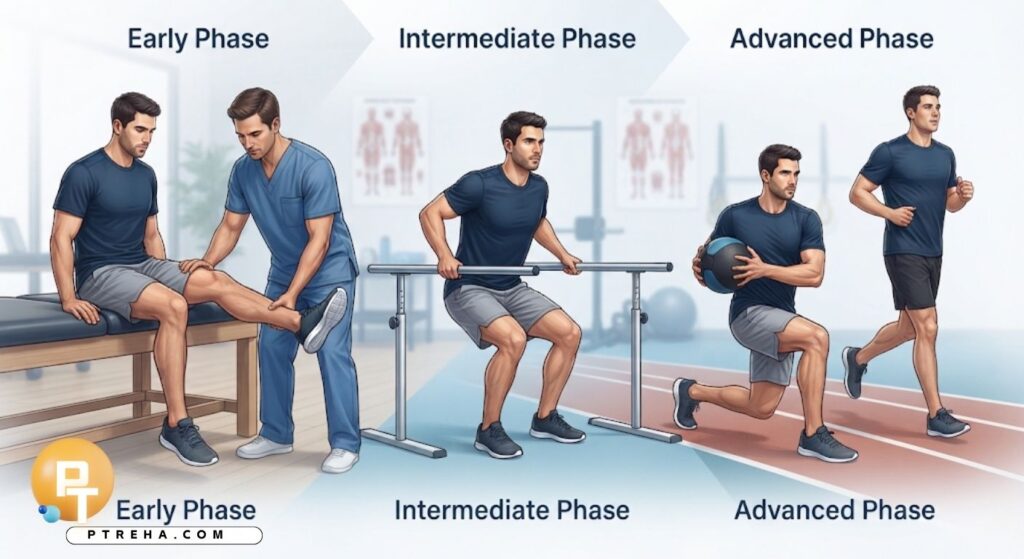
A quad strain is an injury to one or more of the quadriceps muscles, often occurring during sprinting, kicking, jumping, rapid acceleration, or forceful eccentric loading.
Quad strain rehabilitation protocols for athletes should progress from symptom control and restoration of movement to progressive strengthening, running, sport-specific loading, and carefully assessed return to competition rather than relying on a fixed number of days.
Understanding a Quad Strain
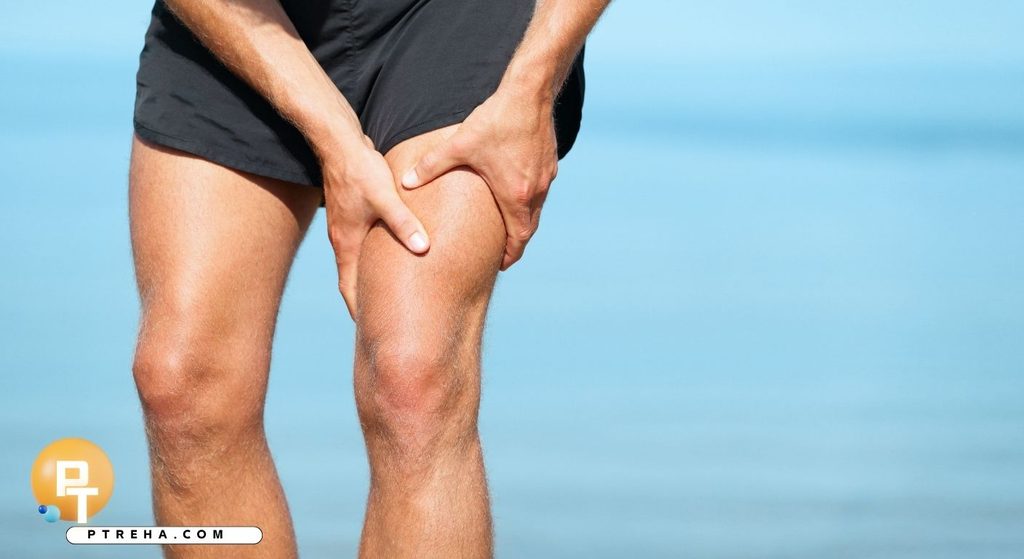
The quadriceps consists of the rectus femoris, vastus lateralis, vastus medialis, and vastus intermedius.
The rectus femoris crosses both the hip and knee, making it particularly important in activities that combine hip extension with knee flexion or require powerful hip flexion and knee extension.
A strain may involve muscle fibers, the musculotendinous region, or associated connective tissue.
The clinical presentation can range from localized discomfort with relatively preserved function to substantial pain, weakness, and difficulty running.
Common mechanisms include:
- Sprinting at high speed
- Sudden acceleration
- Forceful kicking
- Jumping and landing
- Rapid changes of direction
- Powerful knee extension
- Excessive eccentric loading
- Returning to intense training too quickly
The rectus femoris is frequently involved in athletic quadriceps injuries because it crosses two joints and is exposed to substantial lengthening and force during high-speed activities.
Proximal rectus femoris injuries can have a different clinical course from uncomplicated lower-grade muscle strains and may require specialist assessment.
Initial Assessment and Clinical Classification
Rehabilitation should begin with an appropriate clinical assessment rather than immediately applying a generic exercise program.
The clinician should establish the injury mechanism, location of symptoms, functional limitations, irritability, and whether the presentation is consistent with a muscle strain or another condition.
Important assessment findings include:
- Location of tenderness
- Pain during resisted knee extension
- Pain during resisted hip flexion
- Pain during passive muscle lengthening
- Active knee range of motion
- Hip range of motion
- Walking pattern
- Ability to perform a controlled squat
- Quadriceps strength
- Pain during functional movement
- Previous quadriceps injury
- Sporting demands
The clinician should also consider alternative diagnoses when the presentation is atypical, severe, or associated with substantial functional loss.
A sudden traumatic event followed by marked weakness, extensive bruising, a palpable defect, or inability to perform expected movements warrants further medical evaluation.
Proximal rectus femoris injuries and significant structural injuries may require imaging and specialist input.
Strain Severity and Rehabilitation Planning
A useful rehabilitation classification considers the athlete’s clinical impairment and functional capacity rather than treating a grade as a precise prediction of recovery time.
| Clinical presentation | Typical rehabilitation emphasis |
|---|---|
| Mild symptoms with preserved function | Early loading, progressive strengthening, gradual running |
| Moderate pain or weakness with functional limitation | Controlled loading, progressive resistance, restoration of running capacity |
| Severe weakness, substantial functional loss, or suspected major structural injury | Medical assessment, individualized rehabilitation, and potentially imaging |
| Proximal rectus femoris or tendon-related injury | Specialist assessment and more individualized loading progression |
The severity of the injury should influence exercise selection, loading rate, and progression.
A fixed calendar-based protocol cannot account for differences in tissue involvement, athlete characteristics, sport demands, or response to rehabilitation.
Phase 1: Protect the Injury and Restore Basic Movement

The initial goal is not complete inactivity.
Excessive rest can reduce physical capacity, while aggressive loading may aggravate the injured tissue.
Early rehabilitation should focus on maintaining tolerable movement and introducing appropriate muscle activation without provoking a meaningful increase in symptoms.
Useful early exercises may include:
- Comfortable walking
- Gentle active knee flexion and extension
- Pain-limited quadriceps isometric contractions
- Low-load straight-leg raises when tolerated
- Gentle hip movements
- Low-resistance cycling when comfortable
- Trunk and upper-body conditioning
- Uninvolved-limb strengthening
- Low-load calf exercises
- General aerobic conditioning that does not aggravate symptoms
The exact dosage should be individualized.
A useful clinical principle is to monitor symptoms during exercise and again afterward rather than judging an exercise solely by how it feels during the session.
If an exercise consistently produces increasing pain, swelling, loss of movement, or deterioration in function afterward, its intensity, range, volume, or frequency should be modified.
Early-Phase Goals
Progression toward the next phase generally requires improving symptoms and basic function rather than simply reaching a particular day after injury.
Look for:
- Reduced resting symptoms
- Improving walking tolerance
- Improving knee movement
- Better tolerance of low-load contractions
- Reduced local tenderness
- Improved ability to perform daily activities
- No significant worsening after rehabilitation sessions
The athlete should retain conditioning in ways that do not unnecessarily load the injured quadriceps.
Phase 2: Progressive Quadriceps Strengthening
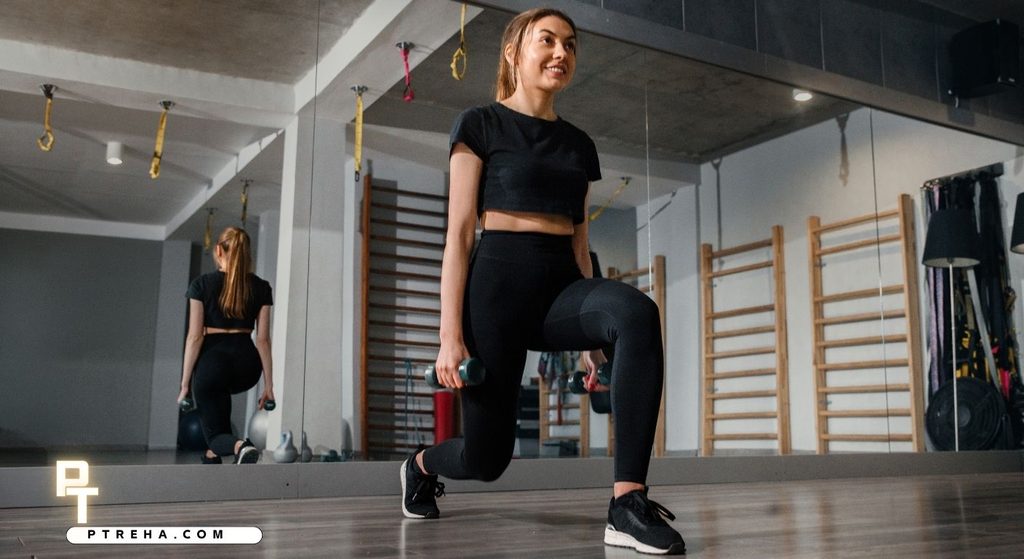
Once basic movement is tolerated, rehabilitation should progressively expose the quadriceps to greater force.
Strength training is a central component of recovery because an athlete eventually needs to tolerate the high forces associated with acceleration, sprinting, jumping, deceleration, and sport-specific movements.
Potential exercises include:
- Isometric knee extension
- Sit-to-stand exercises
- Partial-range squats
- Split squats
- Step-ups
- Leg press
- Controlled lunges
- Spanish squat variations when appropriate
- Knee-extension exercises
- Single-leg strengthening
Exercise selection should reflect the athlete’s current capacity.
For example, a football player who cannot tolerate a controlled step-down should not immediately progress to maximal sprinting or repeated kicking.
Resistance should increase progressively as symptoms and movement quality permit.
Introducing Eccentric Loading
Quadriceps rehabilitation should eventually include controlled eccentric loading because many sporting tasks require the athlete to absorb force rather than simply produce it.
Examples include:
- Slow squats
- Decline squat variations when appropriate
- Controlled step-downs
- Split-squat lowering
- Single-leg squat progressions
- Deceleration drills
- Landing-control exercises
The objective is not to make every exercise eccentric-only.
Instead, eccentric loading should become part of progressively more demanding strength and functional exercises.
Phase 3: Restore Strength, Power, and Movement Capacity
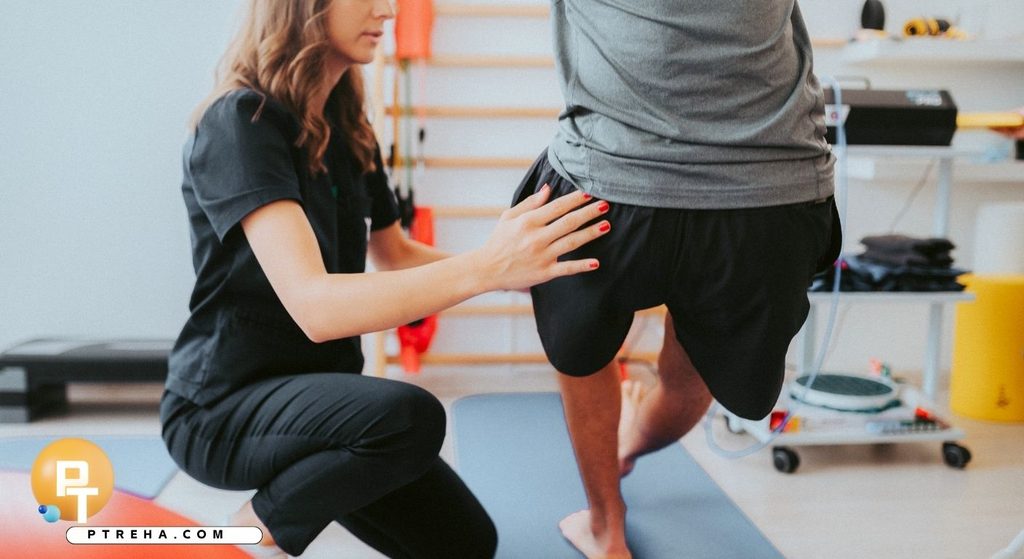
As the athlete improves, rehabilitation should move beyond basic strengthening toward the physical qualities required by the sport.
A runner may need to tolerate repeated acceleration and high-speed running.
A football player may require sprinting, kicking, cutting, jumping, and repeated high-intensity efforts.
Useful progressions can include:
- Heavier bilateral strength exercises
- Heavier unilateral exercises
- Faster concentric movements
- Low-level plyometrics
- Hopping progressions
- Jump-and-land drills
- Acceleration drills
- Deceleration drills
- Change-of-direction exercises
- Progressive kicking exposure
The athlete should demonstrate adequate control before increasing speed or complexity.
A common mistake is to restore gym strength while neglecting high-speed sport exposure.
An athlete may tolerate squats well but still lack the capacity required for maximal sprinting or kicking.
Phase 4: Running and Sport-Specific Rehabilitation
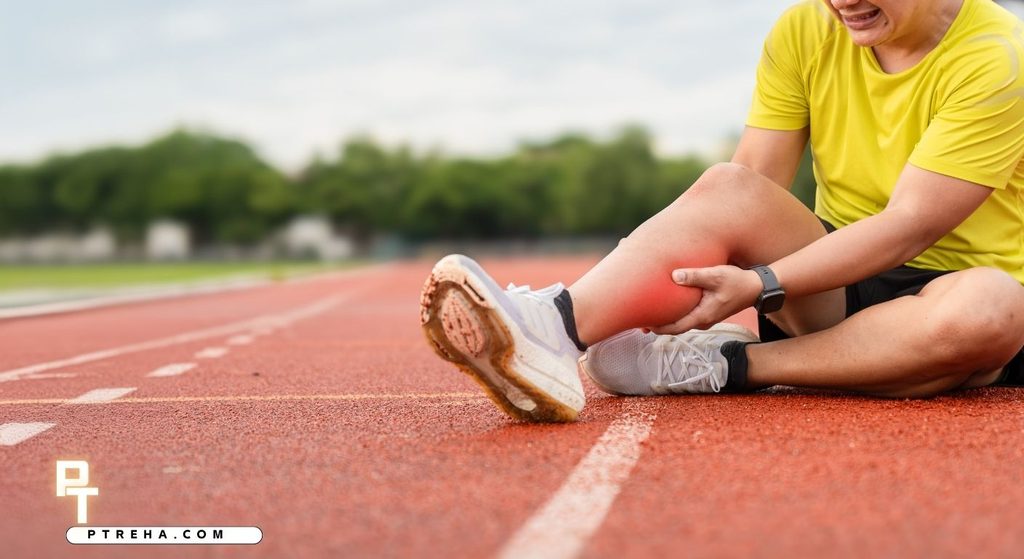
Running should be progressed according to the athlete’s sport and current capacity.
A practical progression may move from:
- Walking
- Brisk walking
- Easy jogging
- Moderate running
- Faster running
- Acceleration
- High-speed running
- Sprinting
- Repeated sprint exposure
- Sport-specific movement
Not every athlete needs maximal sprinting immediately.
The progression should expose the quadriceps to gradually increasing velocity, force, range, and repetition.
For a football player, rehabilitation might progress from straight-line jogging to controlled acceleration, then higher-speed running, cutting, passing, kicking, and eventually unrestricted training.
For a sprinter, the later stages should emphasize progressive acceleration and maximal-velocity exposure because these demands are central to the sport.
Monitoring the Response
The athlete’s response between sessions is as important as performance during the session.
Monitor:
- Pain during activity
- Pain after activity
- Pain the following day
- Local tenderness
- Knee range of motion
- Strength
- Running mechanics
- Perceived confidence
- Training load
- Fatigue
A temporary increase in symptoms does not automatically mean that tissue damage has occurred, but a clear deterioration in function or persistent symptom escalation should prompt reassessment.
Return-to-Sport Testing
Return to sport should be treated as a progression rather than a single clearance event.
The athlete moves from rehabilitation to modified participation, unrestricted sport, and eventually full performance capacity.
For quadriceps injuries, commonly reported return-to-sport considerations include absence of clinically important pain, restoration of movement, functional performance, completion of training, and appropriate strength assessment.
However, the evidence specifically supporting quadriceps return-to-sport criteria remains limited, so no single test should be treated as definitive.
Useful assessment domains include:
- Pain-free or appropriately symptom-controlled movement
- Full or functionally adequate knee range of motion
- Resisted quadriceps contraction
- Quadriceps strength
- Single-leg functional tasks
- Jumping and landing
- Acceleration
- Deceleration
- Change of direction
- Sport-specific drills
- Completion of a full training session
Where objective strength testing is available, it can provide useful information about residual deficits.
Handheld dynamometry, fixed dynamometry, or isokinetic testing may be used depending on the clinical environment.
Example Return-to-Sport Scenario
Consider a football player recovering from a rectus femoris strain.
The athlete first regains comfortable walking and basic knee movement.
Strength training is then progressed from low-load contractions to squats, split squats, unilateral exercises, and higher-load resistance work.
Running is subsequently introduced, followed by acceleration, higher-speed running, cutting, and progressive kicking.
Before unrestricted competition, the player should demonstrate appropriate physical capacity and tolerate a sport-specific training exposure without a clinically meaningful deterioration in symptoms or function.
The exact progression should be individualized rather than determined solely by the number of days since injury.
Preventing Reinjury After a Quad Strain
Rehabilitation should not stop when the athlete can jog without pain.
The final stages should address the demands that contributed to the original injury and the loads the athlete will encounter during competition.
Useful prevention strategies include:
- Maintain quadriceps strength
- Maintain whole-lower-limb strength
- Progress sprint exposure gradually
- Avoid sudden spikes in training load
- Maintain appropriate warm-up routines
- Continue high-speed running exposure when relevant
- Develop deceleration capacity
- Address sport-specific demands
- Avoid rushing back after symptom improvement
- Continue strength training after return to competition
The athlete should also understand that feeling better is not equivalent to restoring full performance capacity.
Return-to-sport research emphasizes that the decision is multifactorial and should incorporate the athlete’s sport, rehabilitation status, physical capacity, psychological readiness, and the demands of participation.
When Further Medical Assessment Is Needed
Most uncomplicated muscle strains can be managed conservatively, but not every anterior-thigh injury is a straightforward strain.
Further assessment is appropriate when there is:
- Severe or rapidly worsening pain
- Major loss of strength
- Inability to walk normally
- Extensive bruising or swelling
- A palpable muscle defect
- Persistent loss of knee movement
- Recurrent symptoms despite appropriate rehabilitation
- Suspicion of proximal rectus femoris injury
- Symptoms that do not follow the expected clinical pattern
- Significant functional deterioration
Imaging is not automatically required for every quadriceps strain.
It may become useful when the diagnosis is uncertain, the injury appears substantial, symptoms are persistent, or the findings could change management.
Conclusion
Effective quad strain rehabilitation protocols for athletes should be criterion-based and progressively expose the injured quadriceps to the forces and movement demands required by the athlete’s sport.
The rehabilitation pathway commonly progresses from symptom-controlled movement and early activation to strengthening, eccentric loading, power development, running, sport-specific drills, and full training.
Return to sport should not depend on a single strength number, imaging finding, or predetermined timeline.
Current evidence supports using multiple domains, while recognizing that the evidence base for quadriceps-specific return-to-sport criteria remains limited.
FAQ: Quad Strain Rehabilitation
How long does a quad strain take to heal?
Recovery time varies according to the location and severity of the injury, the athlete’s functional limitations, and the demands of the sport.
A mild strain may progress relatively quickly, while a more substantial injury or proximal rectus femoris injury can require considerably longer rehabilitation.
Can I train with a quad strain?
Training may be possible if the activity does not significantly aggravate symptoms and can be appropriately modified.
Athletes can often maintain cardiovascular fitness and train unaffected body regions while progressively loading the injured quadriceps under appropriate clinical guidance.
Should I stretch a strained quadriceps?
Aggressive stretching is generally inappropriate during the highly irritable stage of an injury.
As symptoms settle, controlled restoration of muscle length and movement can be incorporated progressively, particularly when range-of-motion limitations are affecting function.
When should strengthening begin after a quad strain?
Appropriate strengthening can usually begin early with a tolerable load rather than waiting until the athlete is completely symptom-free.
The initial exercise may be an isometric contraction or another low-load movement, followed by progressive resistance as capacity improves.
Is running safe after a quad strain?
Running should be reintroduced progressively rather than treated as an all-or-nothing activity.
The athlete should first demonstrate sufficient walking and strengthening capacity before progressing through jogging, faster running, acceleration, and eventually sport-specific high-speed actions.
Can a quad strain happen again?
Yes.
Recurrence is possible, particularly when an athlete returns to high-intensity activity before restoring sufficient strength and sport-specific capacity.
Progressive rehabilitation and appropriate exposure to the demands of the sport are important parts of reducing this risk.
Is the rectus femoris the most commonly injured quadriceps muscle?
The rectus femoris is frequently involved in athletic quadriceps injuries, partly because it crosses both the hip and knee and is exposed to high demands during sprinting and kicking.
Proximal rectus femoris injuries can differ substantially from simpler muscle strains and should be assessed appropriately.
Do I need an MRI for a quad strain?
Not every quadriceps strain requires MRI.
Clinical assessment is often sufficient for uncomplicated injuries, while imaging may be considered when the diagnosis is uncertain, the injury appears severe, symptoms persist, or a structural injury requiring different management is suspected.
What exercises are best for quad strain rehabilitation?
There is no single best exercise for every athlete.
A rehabilitation program commonly progresses through isometric contractions, squats, split squats, step-ups, progressive knee-extension work, unilateral strengthening, eccentric loading, plyometrics, running, and sport-specific drills according to the athlete’s capacity.
When can an athlete return to competition after a quad strain?
Competition should be considered after the athlete has progressed through rehabilitation, demonstrated appropriate strength and functional capacity, tolerated sport-specific activities, and successfully managed the demands of training.
Return-to-sport decisions should be individualized and made collaboratively rather than based solely on time since injury.
Resources
- Diagnosis and Management of Quadriceps Strains and Contusions – Clinical Review
- Return-to-Play Criteria Following Lower Limb Muscle Injuries in Soccer – Systematic Review
- Return to Sport After Muscle Injury – Review
- Management of Proximal Rectus Femoris Injuries – Systematic Review
- Return to Sport Consensus Statement – British Journal of Sports Medicine