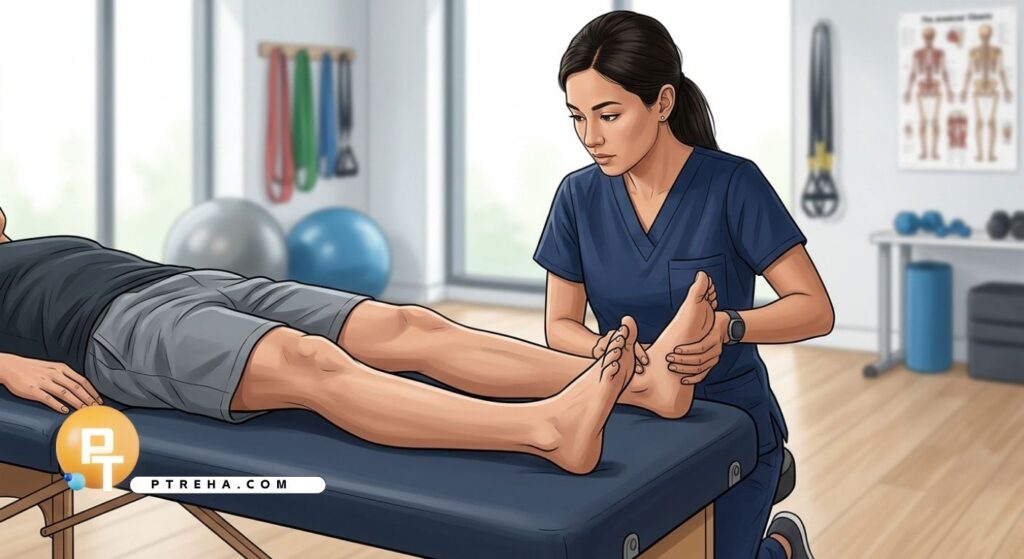
How to Compare Bilateral Findings in Physical Therapy
September 20, 202614 min read
How to Compare Bilateral Findings in Physical Therapy is an essential clinical reasoning skill for identifying meaningful asymmetry in movement, strength, range of motion, sensation, swelling, muscle bulk, posture, and functional performance. Comparing one side with the other can reveal subtle differences, but the opposite side should be treated as a reference rather than automatically assumed to be normal.
Why Bilateral Comparison Matters in Physical Therapy
Side-to-side comparison gives the physical therapist an immediate internal reference for the patient’s own body. It can make differences in appearance, movement, tenderness, swelling, strength, or neurological findings easier to recognize than examining one side alone.
This approach is particularly useful when the finding is subtle. A small difference in quadriceps bulk, ankle swelling, shoulder motion, grip strength, or sensation may become more apparent when the corresponding structure is examined under comparable conditions.
However, bilateral comparison is not a diagnostic test by itself. The clinical meaning of an asymmetry depends on the patient’s history, symptoms, age, activity level, previous injury, dominance, occupation, examination method, and the broader pattern of findings.
What Can Be Compared Bilaterally?
A systematic comparison may include:
Visible alignment
Muscle bulk
Skin color and condition
Swelling or effusion
Temperature
Palpation tenderness
Active range of motion
Passive range of motion
Muscle performance
Sensory responses
Reflexes
Gait and functional movement
The comparison should answer a clinical question rather than become a routine search for differences. A difference matters when it helps explain the patient’s symptoms, functional limitations, or examination findings.
Clinical principle: Compare sides to identify differences, but interpret those differences in context rather than labeling every asymmetry as abnormal.
What Does a Bilateral Comparison Actually Tell You?
Bilateral comparison primarily provides within-person comparative information. It may help determine whether a finding is more pronounced on one side, present on both sides, or apparently symmetrical.
The most useful approach is to document the actual observation rather than simply writing “normal” or “abnormal.”
For example, instead of documenting “right shoulder ROM abnormal,” a more useful record might state that active shoulder elevation was limited by pain on the right compared with the left, with the exact measurement recorded when a reliable measurement procedure was used.
Three Possible Patterns
When comparing sides, the finding may be:
Predominantly unilateral
Present bilaterally but unequal
Present bilaterally and broadly symmetrical
A unilateral difference may be relevant in an injury or localized condition. Bilateral findings may instead suggest a systemic process, generalized deconditioning, habitual movement pattern, age-related change, or another factor affecting both sides.
Symmetry also does not prove the absence of pathology. A patient can have clinically important problems affecting both limbs, meaning that comparing right with left could falsely appear reassuring.
How to Compare Bilateral Findings in Physical Therapy
The quality of a bilateral comparison depends heavily on whether both sides are examined under equivalent conditions.
Before beginning, determine exactly what you are comparing. Define the body region, movement, task, position, resistance, measurement device, and outcome of interest.
A Practical Comparison Sequence
A consistent sequence may include:
Observe both sides before touching the patient.
Compare the same anatomical landmarks.
Note muscle size and contour.
Look for swelling, discoloration, or deformity.
Compare active movement.
Compare passive movement when clinically appropriate.
Palpate corresponding structures.
Assess strength using the same method.
Compare neurological findings when indicated.
Compare functional performance during an equivalent task.
For example, when evaluating a painful knee, inspect both knees before palpation. Look for swelling, contour changes, quadriceps wasting, alignment, and movement behavior before moving into more specific examination procedures. Comparison with the unaffected side can help identify subtle effusion or other differences.
Standardize the Conditions
A useful comparison requires consistency.
Keep the patient in the same position.
Use the same anatomical landmarks.
Use the same examiner when possible.
Apply the same instructions.
Use equivalent resistance.
Use the same measurement instrument.
Keep the range of movement procedure consistent.
Record pain and symptom response for each side.
Avoid changing the task between limbs.
Repeat a measurement when technique or patient effort is questionable.
This is important because measurement error can sometimes look like a true side-to-side difference. Research on joint measurement shows that the precision of range-of-motion testing depends on the measurement method and protocol used.
Comparing Appearance, Palpation, and Range of Motion
Visual inspection is often the first bilateral comparison and can be performed before formal measurements.
The therapist may compare:
Limb or joint contour
Muscle bulk
Postural alignment
Joint position
Edema
Bruising
Skin changes
Scarring
Deformity
Movement strategy
Clinical examination references commonly recommend examining both sides because asymmetry can reveal subtle changes that are difficult to recognize when only one side is examined.
Palpation
Palpation can be compared for warmth, tenderness, swelling, tissue texture, and the location of symptoms. The comparison should be gentle and should not deliberately provoke unnecessary pain merely to establish a difference.
For example, during an ankle examination, the therapist may compare warmth and swelling between ankles and then palpate specific bony and ligamentous structures. The contralateral side can help the examiner recognize subtle swelling or differences in tenderness.
Active and Passive Motion
Range of motion should not be compared merely by looking at whether one limb “moves more.”
Consider:
Starting position
Direction of movement
Active versus passive movement
Pain
End-feel characteristics when relevant
Compensatory movement
Quality and control
Exact measurement when appropriate
For example, a patient might demonstrate similar shoulder elevation on both sides but use greater trunk extension or scapular compensation on the symptomatic side. A purely numerical comparison could therefore miss an important qualitative difference.
Comparing Bilateral Strength Without Overinterpreting It
Strength is one of the most frequently compared bilateral findings, but it is also one of the easiest to oversimplify.
Dominance, training history, pain, effort, previous injury, neurological status, and testing technique may all influence the result. Research has demonstrated that meaningful natural differences can exist between dominant and nondominant limbs, so an arbitrary universal percentage should not be used as a general rule for impairment.
Practical Strength Comparison
When comparing strength:
Identify the specific muscle action.
Position both limbs identically.
Stabilize consistently.
Explain the task clearly.
Use comparable resistance.
Observe compensations.
Record pain during testing.
Consider whether effort is comparable.
Use an objective instrument when appropriate.
Interpret the finding with other examination data.
Manual muscle testing can identify obvious weakness, but its ability to detect smaller between-side strength differences is limited compared with instrumented strength measurement in some settings.
For this reason, documentation should distinguish between a true measured strength difference and a therapist’s clinical impression based on manual testing.
Comparing Neurological Findings
Bilateral comparison has particular value in neurological examination.
Motor function, sensation, coordination, and reflexes are commonly assessed on both sides. Comparing right with left can help reveal asymmetry in motor or sensory function, especially when the pattern corresponds with the patient’s neurological history and other examination findings.
Sensation
Sensory comparison should use equivalent locations and stimuli.
The therapist may compare:
Light touch
Pinprick when appropriate
Vibration
Joint position sense
Temperature
Patient-reported sensory quality
A reported difference should be mapped and described rather than reduced to “positive” or “negative.”
For example, a patient may report that light touch feels diminished over a specific region of one foot. The therapist should document the location, type of sensory change, reproducibility, and relationship to the overall neurological examination.
Reflexes
Deep tendon reflexes are also interpreted by comparing sides. Asymmetry may be clinically relevant, but reflexes should be interpreted together with strength, sensation, tone, coordination, history, and other neurological findings rather than in isolation.
Bilateral Comparison During Functional Testing
Comparison becomes more complicated when the test itself involves a whole-body task.
A patient may have unequal single-leg performance, for example, but the difference may result from pain, fear, strength, balance, motor control, previous training, or the strategy chosen to complete the task.
Useful bilateral functional comparisons include:
Single-leg balance
Repeated heel raises
Step-down performance
Sit-to-stand loading
Stair negotiation
Single-leg squat
Walking pattern
Reaching tasks
Jump or hop tasks when clinically appropriate
Hand-specific functional tasks
Observe both performance quantity and movement quality.
For example, two limbs may complete the same number of repetitions, but one side may demonstrate trunk lean, reduced depth, slower loading, or an altered foot position. The numerical result alone would not capture those differences.
Why Limb Symmetry Can Be Misleading
The contralateral limb is not always a valid “normal” control.
This is especially important when the patient has a bilateral condition or when the opposite limb has also adapted to an injury. Research in rehabilitation has shown that a seemingly acceptable limb symmetry index can coexist with reduced performance in both limbs.
Therefore, bilateral comparison is strongest when combined with:
Reference values appropriate to the relevant population
Standardized outcome measures
The patient’s baseline
Functional goals
Symptoms and history
Measurement error
Clinical pattern recognition
APTA guidance similarly emphasizes selecting tests and measures that are appropriate to the clinical question and interpreting them in relation to the individual and the available evidence.
Common Mistakes When Comparing Bilateral Findings
One of the most common mistakes is assuming that the “good side” is automatically normal.
The opposite limb may have old injuries, pain, weakness, surgery, neurological impairment, or its own movement strategy. It may also differ naturally because of dominance or habitual activity.
Avoid These Errors
Treating every asymmetry as pathology
Treating symmetry as proof of normality
Using an arbitrary percentage as a universal impairment threshold
Comparing measurements taken in different positions
Ignoring pain during testing
Ignoring compensatory movements
Changing instructions between sides
Assuming manual testing detects every small strength difference
Ignoring bilateral disease
Using a limb symmetry index as the only outcome
Forgetting measurement error
Recording conclusions without the actual findings
A better clinical approach is to ask: What does this difference mean in this patient?
That question shifts the assessment from simple comparison toward clinical reasoning.
Helpful Bilateral Comparison Examples
Example: Ankle Sprain
A patient presents with lateral ankle pain after an inversion injury.
The therapist may compare both ankles for:
Swelling
Bruising
Temperature
Tenderness
Weight-bearing tolerance
Active movement
Passive movement
Calf muscle function
Sensation
Functional loading
The comparison can help identify differences, but the therapist should still assess the injured ankle using the history and appropriate clinical tests rather than assuming that every difference confirms a particular structure is injured.
Example: Shoulder Pain
A patient reports pain when reaching overhead.
The therapist compares both shoulders and finds similar active elevation, but the symptomatic side shows earlier pain, altered scapular movement, and increased trunk compensation.
Here, bilateral numerical range may appear similar, while movement quality and symptom response differ. This is why side-to-side comparison should include both measurable values and movement observation.
Example: Neurological Presentation
A patient reports unilateral hand numbness.
The therapist compares sensation, grip performance, selected muscle actions, coordination, and reflexes between sides.
An asymmetry becomes more clinically meaningful when several findings form a consistent neurological pattern rather than when a single isolated comparison is abnormal.
How to Document Bilateral Findings Clearly
Good documentation should allow another clinician to understand exactly what was found.
Instead of writing:
“Left side weaker.”
Write something more specific, such as:
“Knee extension strength was reduced on the left compared with the right during standardized testing, with pain reported at the left anterior knee during resisted effort.”
Useful documentation should include:
Side tested
Body region
Test or measurement
Patient position
Relevant measurement value
Symptom response
Qualitative movement observations
Comparison side
Functional relevance
Any factors that could affect reliability
This approach also makes reassessment easier because the same procedure can be repeated under comparable conditions.
A Practical Bilateral Comparison Checklist
Before concluding that a side-to-side difference is clinically important, ask:
Is the difference reproducible?
Was the testing procedure standardized?
Is the opposite side truly an appropriate reference?
Could limb dominance explain part of the difference?
Is pain influencing performance?
Is effort comparable?
Is the finding present at rest, during movement, or both?
Does the finding match the patient’s symptoms?
Is the difference supported by other examination findings?
Could measurement error account for the observed difference?
Is there evidence of a bilateral condition?
Does the finding affect the patient’s activity or participation?
These questions help prevent overinterpretation and keep bilateral comparison within a broader patient-centered examination.
Conclusion
How to Compare Bilateral Findings in Physical Therapy is best understood as a clinical reasoning strategy rather than a simple right-versus-left measurement exercise. Comparing corresponding structures under standardized conditions can reveal useful asymmetries in appearance, movement, strength, sensation, reflexes, and function, but the opposite side is a reference—not automatically a perfect normal control.
The most useful interpretation comes from combining bilateral findings with the patient’s history, symptoms, functional goals, standardized measurements, measurement error, and the possibility that both sides may be affected. This produces a more defensible examination and avoids turning a normal anatomical variation into a pathological finding.
FAQ
What is bilateral comparison in physical therapy?
Bilateral comparison means examining corresponding structures or functions on both sides of the body and considering their similarities and differences. It may involve appearance, movement, strength, sensation, reflexes, swelling, tenderness, or functional performance.
Why do physical therapists compare both sides?
Comparing both sides can make subtle asymmetries easier to recognize and can provide an individualized reference for the patient. It is commonly incorporated into musculoskeletal and neurological examinations.
Is the unaffected side always considered normal?
No. The opposite side may have previous injury, disease, weakness, pain, neurological impairment, or natural differences related to dominance and activity. Bilateral comparison should therefore be interpreted rather than automatically treated as a normal-versus-abnormal comparison.
Should both sides be tested in exactly the same way?
As far as clinically practical, yes. Consistent positioning, instructions, resistance, measurement tools, anatomical landmarks, and testing procedures improve comparability and reduce the possibility that technique differences create an apparent asymmetry.
Can bilateral comparison diagnose a condition?
Bilateral comparison alone generally should not be treated as a diagnosis. It is an examination strategy that contributes information to the overall clinical reasoning process, which may include the history, systems review, tests and measures, and other diagnostic evidence.
Is a small strength difference always abnormal?
No. Strength can naturally differ between limbs, and dominance, training, occupation, previous injuries, pain, and testing conditions can influence performance. Evidence does not support applying one universal side-to-side percentage as a general definition of impairment.
Can bilateral comparison be used for neurological examination?
Yes. Muscle strength, sensation, coordination, and reflexes are commonly examined bilaterally. Side-to-side differences can provide useful information when interpreted with the rest of the neurological examination.
Why is movement quality important when both sides have similar range of motion?
Two sides can achieve a similar endpoint while using different movement strategies. Pain, altered motor control, trunk compensation, or different loading patterns may therefore be missed if the therapist records only a range-of-motion number.
Is a limb symmetry index enough to determine recovery?
No. A limb symmetry index can be useful in selected contexts, but it should not be interpreted alone. Studies have shown that similar performance between limbs can sometimes occur because the opposite limb has also lost function.
What is the best way to document a bilateral difference?
Document the specific test, side, measurement or observation, testing conditions, symptoms, and comparison finding. Clear documentation is more useful than statements such as “left abnormal” or “right weaker” without supporting detail.
Resources
MSD Manual Professional Edition — Evaluation of the Patient With Joint Symptoms Open resource
MSD Manual Professional Edition — Evaluation of the Ankle Open resource
NCBI Bookshelf — The Musculoskeletal Examination Open resource
NCBI Bookshelf — Approach to Musculoskeletal Examination Open resource
APTA — Initial Examination and Evaluation Open resource
PubMed — Deficits in Contralateral Limb Strength Can Overestimate Limb Symmetry Index Open research record
PubMed — Limb Symmetry Index and Contralateral Limb Function After ACL Reconstruction Open research record
PubMed — Manual Muscle Testing and Between-Side Differences Open research record