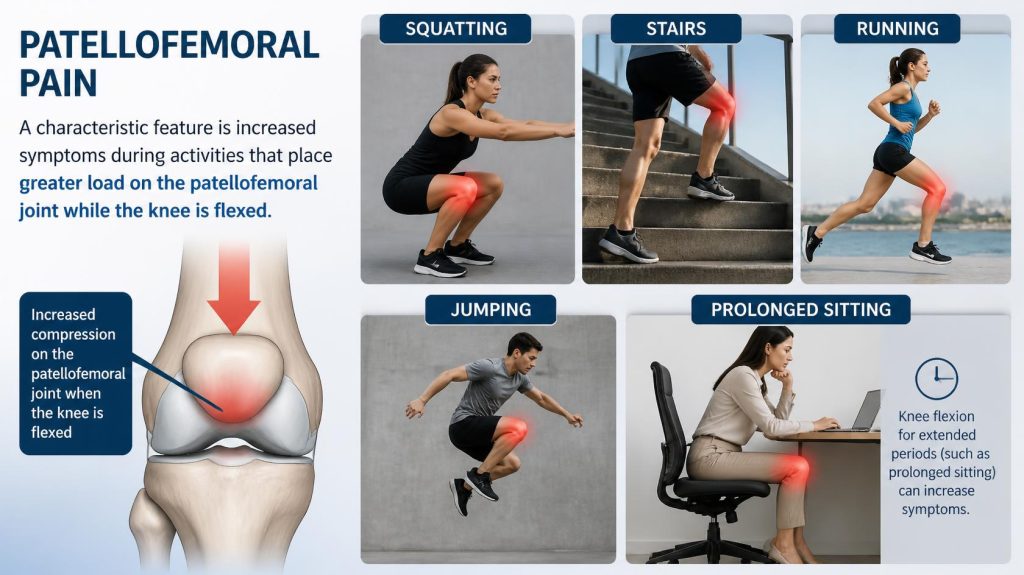
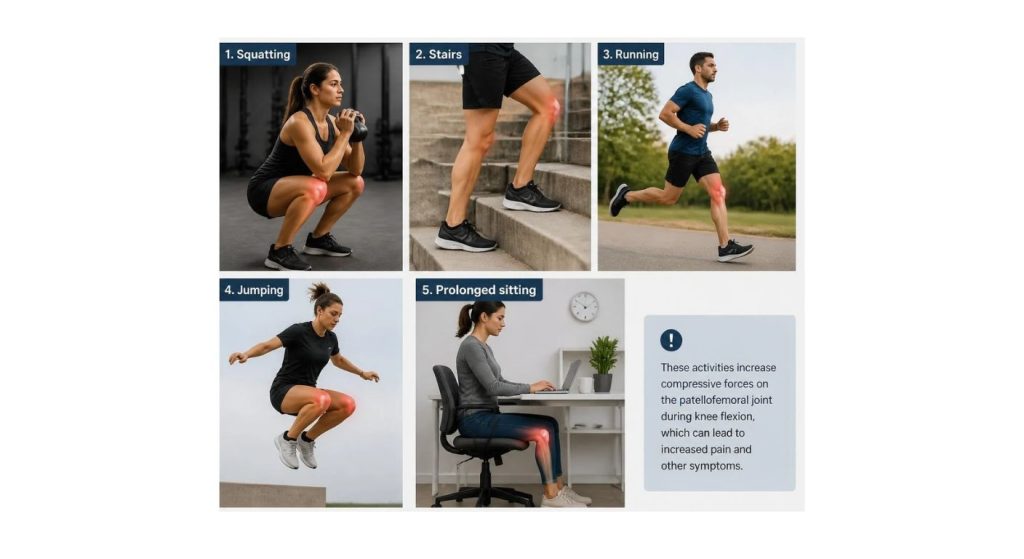
Patellofemoral pain syndrome, commonly referred to as patellofemoral pain (PFP), is a common cause of anterior knee pain. It is typically felt around or behind the patella and is often aggravated when the knee is loaded while bent, such as during squatting, stair climbing, running, jumping, or prolonged sitting.
The condition can affect athletes and physically active people, but it is not limited to sports participants. Symptoms may develop gradually and can interfere with exercise, work, daily activities, and prolonged sitting. Patellofemoral pain may also persist or recur if contributing factors are not adequately addressed.
What Is Patellofemoral Pain Syndrome?
Patellofemoral pain refers to pain originating from structures around the patella and the patellofemoral joint. The term describes a clinical presentation rather than one specific structural lesion.
Patients commonly report poorly localized pain at the front of the knee. The discomfort may be described as aching, pressure, soreness, or sharp pain depending on the activity and individual.
A characteristic feature is increased symptoms during activities that place greater load on the patellofemoral joint while the knee is flexed. Squatting, stairs, running, jumping, and prolonged sitting are common examples.
Importantly, anterior knee pain does not automatically indicate patellofemoral pain. Other conditions can produce similar symptoms, so the diagnosis should be based on the clinical presentation and appropriate exclusion of alternative causes.
Patellofemoral pain is primarily a clinical diagnosis based on the patient’s symptoms and reproduction of familiar pain during functional activities.
Common Symptoms
The most common symptom is pain around or behind the kneecap. The location can be difficult for the patient to identify precisely.
Typical symptoms include:
- Pain around or behind the patella
- Pain during squatting
- Pain when walking up or down stairs
- Discomfort during running or jumping
- Pain after prolonged sitting with the knee bent
- Pain during lunges or repeated knee bending
- Reduced tolerance for sports or physical activity
- Occasional clicking or grinding sensations
Symptoms often increase when the amount or intensity of activity changes. For example, a runner may develop symptoms after increasing running volume, adding hills, or returning to training after a period of reduced activity.
Pain severity can vary considerably. Some people experience mild discomfort only during exercise, while others have pain during everyday activities.
Causes and Contributing Factors
There is usually no single cause of patellofemoral pain. Instead, symptoms can develop when the demands placed on the knee exceed the individual’s current capacity.
Potential contributing factors include:
- Sudden increases in training load
- Reduced strength of the hip or knee musculature
- Altered lower-limb movement coordination
- Reduced muscle flexibility
- Changes in running volume or technique
- Repetitive squatting, jumping, or stair use
- Foot posture or excessive pronation in some individuals
- Reduced tolerance following a period of inactivity
The relationship between biomechanics and pain is complex. A particular movement pattern should not automatically be considered the cause of symptoms. Instead, the clinician should determine whether a specific impairment is relevant to the individual’s pain and functional limitations.
For runners, changes in running cadence or other aspects of running mechanics may sometimes be incorporated into rehabilitation when the clinical assessment indicates that they are appropriate.
Clinical Examination
Patellofemoral pain is primarily diagnosed clinically. There is no single physical examination test that establishes the diagnosis in every patient.
A useful assessment begins with a detailed history. The clinician should identify:
- Location and nature of the pain
- Activities that reproduce symptoms
- Recent changes in physical activity
- Training volume and intensity
- Previous knee injuries
- Occupational demands
- Sporting requirements
- Symptoms such as locking, giving way, or swelling
The clinician should then attempt to reproduce the patient’s familiar pain using functional activities.
Squat Test
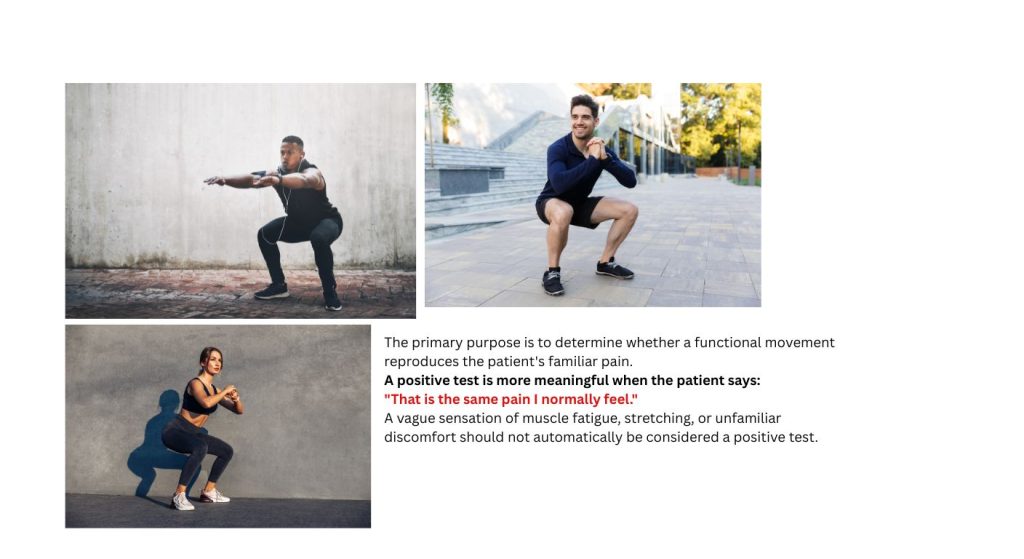
Squatting is particularly useful because it loads the patellofemoral joint while the knee is flexed.
Reproduction of the patient’s familiar retropatellar or peripatellar pain during squatting supports the diagnosis of patellofemoral pain.
The clinician can also observe:
- Knee alignment
- Trunk position
- Hip control
- Depth of the squat
- Movement symmetry
- Pain response
The primary purpose is to determine whether a functional movement reproduces the patient’s familiar pain.
A positive test is more meaningful when the patient says:
“That is the same pain I normally feel.”
A vague sensation of muscle fatigue, stretching, or unfamiliar discomfort should not automatically be considered a positive test.
Step-Down Test
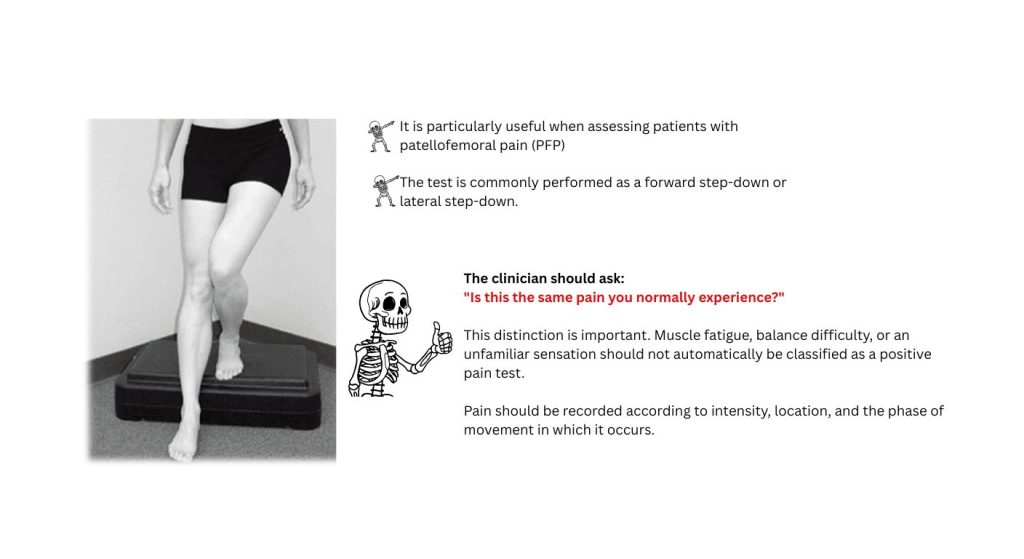
A step-down test can be used to assess pain and lower-limb movement coordination.
The clinician observes the patient’s ability to control the hip, knee, and ankle while lowering the body from a step. Pain reproduction and movement characteristics can provide useful information for rehabilitation planning.
Single-Leg Squat
A single-leg squat increases the functional demand on the lower limb and can help assess strength, movement coordination, and symptom reproduction.
The test should not be interpreted simply as a search for a “perfect” knee position. The important question is whether the observed movement is associated with the patient’s symptoms and whether it represents a modifiable functional limitation.
Clinical guidelines recommend functional tests such as squats, step-downs, and single-leg squats when assessing activity limitations and lower-limb movement coordination.
Differential Diagnosis
Anterior knee pain has several possible causes. A diagnosis of patellofemoral pain should therefore involve consideration of other conditions.
Important differential diagnoses include:
- Patellar tendinopathy
- Patellar instability
- Knee osteoarthritis
- Meniscal pathology
- Anterior cruciate ligament-related problems
- Hoffa’s fat pad irritation
- Osgood-Schlatter disease in adolescents
- Sinding-Larsen-Johansson syndrome
- Bursitis
- Referred pain from the hip or lumbar spine
Patellar tendinopathy, for example, typically produces more localized tenderness around the inferior pole of the patella or patellar tendon rather than the more diffuse peripatellar pain commonly associated with PFP.
Symptoms such as significant swelling, true mechanical locking, recurrent instability, major trauma, fever, unexplained systemic symptoms, or severe inability to bear weight require appropriate medical evaluation rather than assuming uncomplicated patellofemoral pain.
Management of Patellofemoral Pain
Management should be individualized according to the patient’s symptoms, functional goals, physical findings, and activity demands.
The strongest consistent component of rehabilitation is exercise therapy. Current evidence supports combining hip- and knee-targeted exercises rather than relying exclusively on knee exercises.
Treatment can include:
- Education and load management
- Hip and knee strengthening
- Gradual exposure to aggravating activities
- Movement retraining when appropriate
- Running retraining for selected runners
- Patellar taping in selected cases
- Foot orthoses for appropriate patients
- Progressive return to sport or activity
Exercise Therapy
Exercise therapy is the central component of rehabilitation.
Knee-targeted exercises can strengthen the quadriceps and improve the capacity of the knee to tolerate loading. Examples include squats, resisted knee extensions, step-ups, and other progressively loaded exercises.
Hip-targeted exercises focus particularly on the posterolateral hip musculature. Examples may include resisted hip abduction, hip extension exercises, lateral band exercises, and functional single-leg strengthening.
A rehabilitation program should progress according to symptoms, strength, functional capacity, and the patient’s goals rather than relying on a single universal exercise prescription.
Evidence-based guidelines recommend combined hip- and knee-targeted exercise therapy for reducing pain and improving function in people with patellofemoral pain.
Load Management
Reducing or modifying aggravating activities can help control symptoms while maintaining appropriate physical activity.
This does not necessarily mean complete rest. Instead, the clinician can modify variables such as:
- Running distance
- Running speed
- Hills
- Jumping volume
- Squatting depth
- Training frequency
- Recovery time
The objective is to maintain an appropriate level of activity while gradually increasing the knee’s capacity to tolerate load.
Patellar Taping
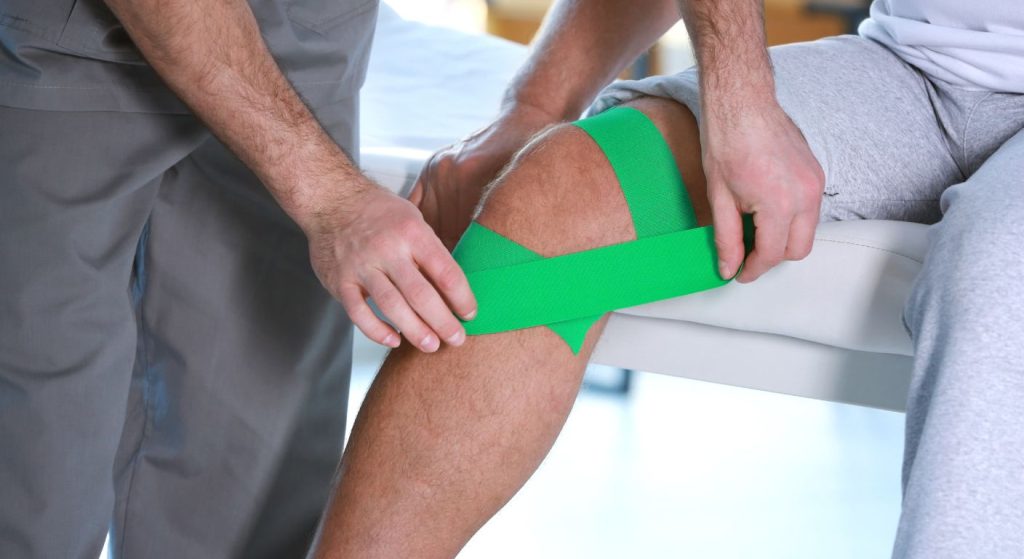
Patellar taping can be used as an adjunct to exercise in selected patients.
Tailored taping may provide short-term pain reduction and can make exercise more comfortable. However, it should not replace progressive strengthening and rehabilitation. Evidence suggests that its benefits are primarily short term.
Foot Orthoses
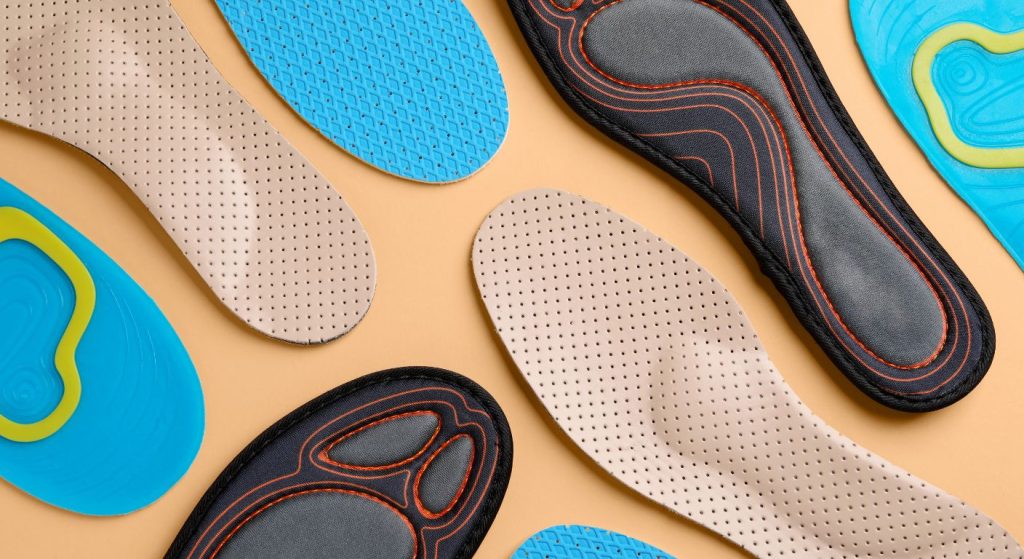
Prefabricated foot orthoses may be useful for some patients, particularly those with greater-than-normal foot pronation.
Their role is generally short term, and guidelines recommend combining them with exercise rather than using them as a stand-alone treatment. There is insufficient evidence to routinely prefer custom orthoses over prefabricated devices for this condition.
Running Retraining
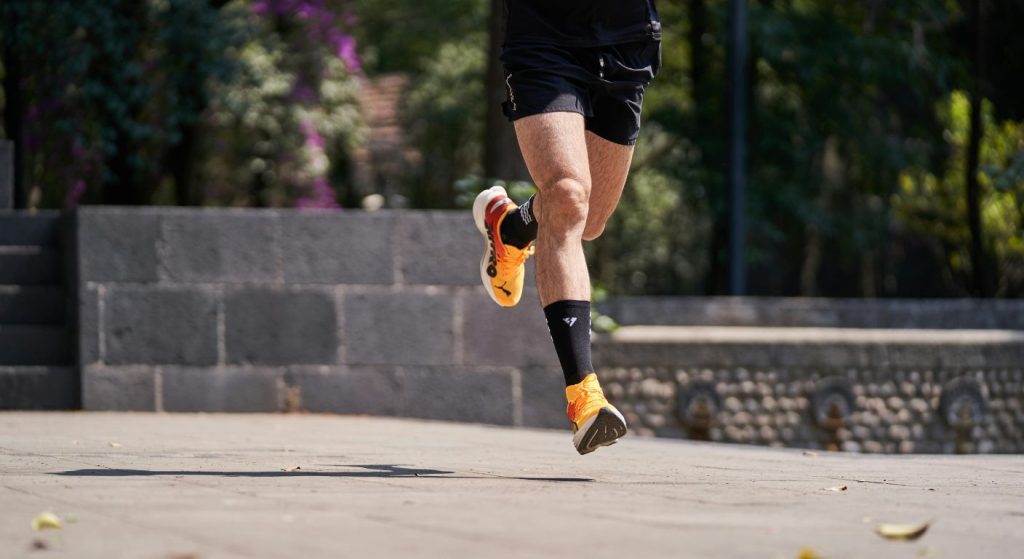
Running retraining may be appropriate for runners whose symptoms are associated with specific running characteristics.
Possible strategies include increasing running cadence, modifying excessive hip adduction, or changing foot-strike characteristics in selected runners.
These changes should be individualized rather than prescribed routinely to every patient with patellofemoral pain.
What Treatments Are Not Recommended as Stand-Alone Approaches?
Exercise should remain the central element of rehabilitation.
Clinical guidelines do not recommend several passive treatments as primary interventions for patellofemoral pain. These include isolated manual therapy, dry needling, therapeutic ultrasound, electrical stimulation, and other biophysical agents.
Patellofemoral braces, sleeves, and straps are also not routinely recommended as treatment for PFP.
Manual therapy may occasionally be considered as part of a broader rehabilitation program when clinically appropriate, but it should not replace active exercise therapy.
Prognosis and Return to Activity
Many patients improve with appropriate conservative management, but recovery can be gradual.
A successful rehabilitation program should focus not only on reducing pain but also on restoring the patient’s ability to perform the activities that matter to them.
For an athlete, this may involve a gradual progression from basic strengthening to running, jumping, change-of-direction exercises, and sport-specific training.
For a non-athlete, rehabilitation may focus on activities such as stairs, walking, squatting, work tasks, or prolonged sitting.
Returning to activity should be based on functional tolerance rather than simply waiting for every symptom to disappear before moving.
The goal of rehabilitation is not simply to make the knee pain-free at rest; it is to progressively restore the capacity required for normal activity.
Patellofemoral Pain Syndrome Exercises
A rehabilitation program may include exercises such as:
- Squats
- Step-downs
- Split squats
- Lunges
- Resisted knee extensions
- Hip abduction exercises
- Hip extension exercises
- Lateral band walks
- Single-leg strengthening
- Progressive running drills
The appropriate exercises, resistance, volume, and progression should be determined according to the patient’s presentation.
Exercises that initially cause mild symptoms may sometimes be modified rather than completely abandoned. However, significant or progressively worsening pain should prompt reassessment of exercise selection and loading.
The objective is progressive strengthening and improved tolerance to functional loading.
When Should a Patient Seek Medical Assessment?
Professional assessment is appropriate when anterior knee pain is persistent, significantly limits activity, or does not improve with appropriate activity modification and rehabilitation.
Urgent assessment may be necessary when knee pain follows significant trauma or is accompanied by substantial swelling, inability to bear weight, repeated episodes of instability, true locking, fever, or other concerning symptoms.
A physiotherapist, sports medicine clinician, orthopedic clinician, or other appropriately qualified healthcare professional can assess the symptoms and determine whether further investigation is necessary.
Imaging is not automatically required for every patient with suspected patellofemoral pain. The diagnosis is generally clinical, while imaging may be considered when another condition is suspected or when symptoms do not follow the expected course.
Frequently Asked Questions
What is patellofemoral pain syndrome?
Patellofemoral pain syndrome is a clinical condition characterized by pain around or behind the kneecap, particularly during activities that load the knee while it is flexed.
Where is patellofemoral pain usually felt?
Pain is typically felt around or behind the patella. Patients may describe it as diffuse anterior knee pain rather than pointing to one precise structure.
Does running cause patellofemoral pain?
Running does not necessarily cause PFP, but changes in running volume, intensity, hills, or training load can increase symptoms in susceptible individuals.
Is patellofemoral pain the same as runner’s knee?
The terms are sometimes used interchangeably because PFP is common among runners. However, “runner’s knee” is a less precise term and can refer broadly to anterior knee pain.
Are squats good for patellofemoral pain?
Squats can be an effective component of rehabilitation when appropriately selected and progressed. They can strengthen the lower limb while gradually increasing the knee’s capacity to tolerate load.
Should I stop exercising if I have patellofemoral pain?
Complete rest is not generally necessary. Activity can often be modified while maintaining appropriate exercise and gradually rebuilding load tolerance.
Do knee braces help patellofemoral pain?
Routine use of patellofemoral braces, sleeves, or straps is not recommended by current clinical practice guidelines. Exercise remains the primary treatment.
Can hip strengthening help knee pain?
Yes. Hip-targeted strengthening is an important component of rehabilitation for PFP, particularly when combined with knee-targeted strengthening.
Are foot orthotics useful?
Prefabricated foot orthoses can provide short-term pain relief for selected patients, particularly those with greater-than-normal pronation. They are generally used alongside exercise therapy.
How is patellofemoral pain diagnosed?
Diagnosis is primarily clinical. Reproduction of familiar anterior knee pain during activities such as squatting or stair climbing supports the diagnosis, while other potential causes of anterior knee pain should be excluded.
Key Points
Patellofemoral pain syndrome is a common cause of anterior knee pain associated with activities that load the patellofemoral joint.
The diagnosis is primarily clinical and should include reproduction of the patient’s familiar symptoms during functional activities and consideration of alternative diagnoses.
Exercise therapy is the cornerstone of treatment. Programs combining hip- and knee-targeted exercises are generally preferred over isolated knee exercises.
Load management is important, particularly when symptoms are associated with changes in sporting or physical activity.
Patellar taping and prefabricated foot orthoses can be useful adjuncts for selected patients, while several passive treatments should not replace active rehabilitation.
The rehabilitation plan should ultimately be individualized according to the patient’s symptoms, functional limitations, physical findings, and activity goals.