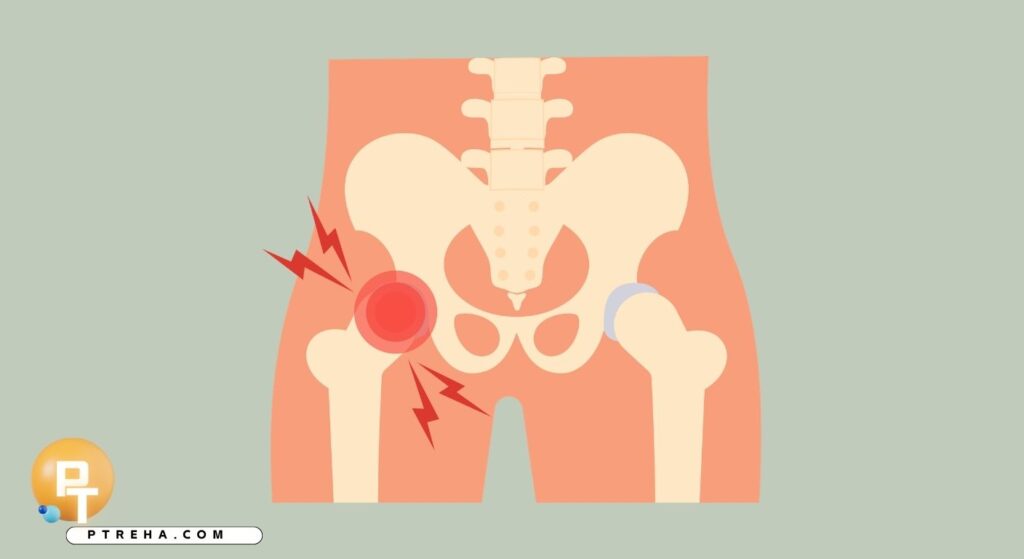
Hip impingement, clinically referred to as femoroacetabular impingement syndrome (FAIS), can cause activity-related groin or hip pain, restricted movement, and difficulty with tasks such as squatting, running, sitting, or changing direction.
A well-designed rehabilitation program usually combines symptom-guided activity modification, hip and trunk strengthening, movement retraining, and carefully selected mobility exercises rather than forcing the hip into painful ranges.
What Is Hip Impingement (FAIS)?
Femoroacetabular impingement syndrome occurs when a person has symptoms and clinical findings associated with hip movement, together with relevant imaging findings.
The condition may involve cam morphology, pincer morphology, or a combination of both, but the presence of a bony morphology on imaging alone does not establish FAIS.
Cam morphology describes a change in the shape of the femoral head-neck region, while pincer morphology involves increased acetabular coverage or another acetabular structural feature.
These anatomical findings can exist without pain, which is why rehabilitation should be based on the individual’s symptoms, functional limitations, examination findings, and goals rather than imaging alone.
Common symptoms may include:
- Deep pain around the groin or front of the hip
- Pain during hip flexion and rotation
- Discomfort after prolonged sitting
- Pain during squatting or lunging
- Reduced tolerance for running or cutting
- A catching, clicking, or locking sensation
- Hip stiffness
- Difficulty getting into or out of a car
- Pain when putting on shoes or socks
- Reduced confidence with sport-specific movements
FAIS is therefore more than simply having an anatomical variation.
The diagnosis requires a combination of appropriate symptoms, clinical signs, and imaging findings.
Clinical point: A cam or pincer morphology on an X-ray or scan does not automatically mean that the person has symptomatic hip impingement.
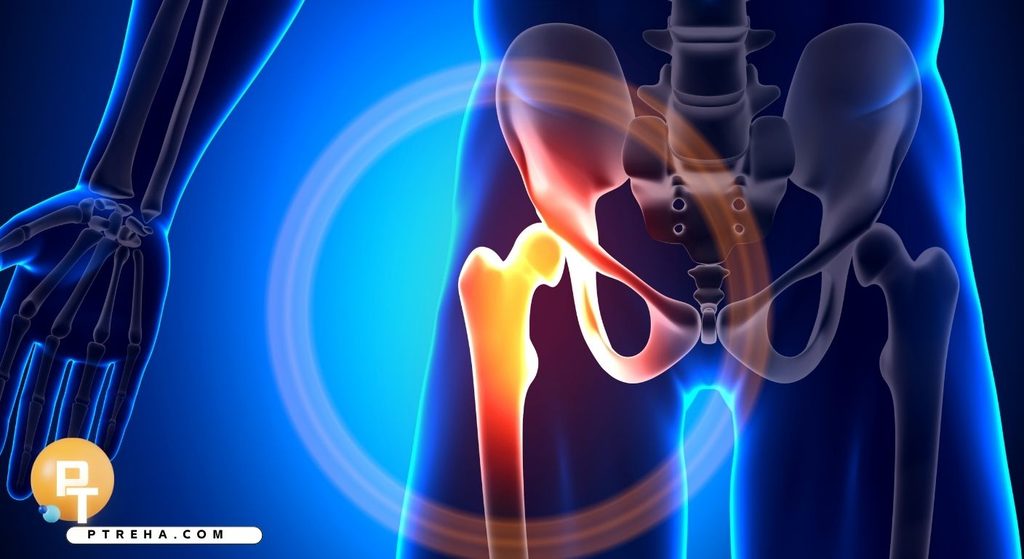
Why Mobility and Strengthening Exercises Matter
Exercise therapy is a central component of conservative management for FAIS.
Physiotherapy consensus recommendations emphasize education, individualized exercise, strengthening, movement modification, and gradual progression according to symptoms and functional goals.
The objective is not to force the femoral head through a painful range or to “reshape” the hip with stretching.
Instead, rehabilitation aims to improve the person’s capacity to move, load, and perform activities with less irritation.
A useful program may address:
- Hip abductor strength
- Hip extensor strength
- Hip external and internal rotation control
- Trunk and lumbopelvic control
- Single-leg stability
- Functional movement patterns
- General lower-limb strength
- Hip mobility where it is genuinely limited
- Exercise tolerance
- Sport-specific loading
Recent physiotherapy research also shows that strengthening and education are commonly used components of contemporary FAIS management, while mobility work and manual therapy may be incorporated according to individual findings.
The exact exercises should therefore be individualized.
An exercise that feels comfortable and useful for one person may reproduce symptoms in another.
Mobility Exercises for Hip Impingement
Mobility exercises can be useful when hip or adjacent-joint movement is restricted, but they should not be treated as a requirement to achieve maximal hip range.
In FAIS, repeatedly pushing into a painful combination of deep hip flexion, adduction, and rotation may aggravate symptoms.
The general rule is simple: work within a comfortable or tolerable range and avoid repeatedly provoking the familiar deep hip pain.
1. Quadruped Rock-Back
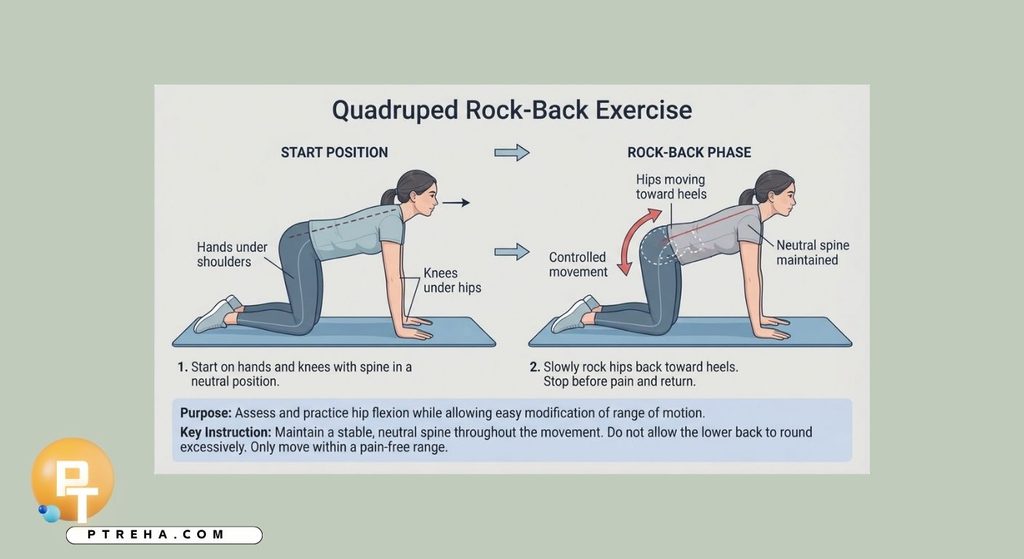
Start on your hands and knees with your spine in a comfortable neutral position.
Slowly move your hips backward toward your heels while maintaining control.
Stop before the movement produces significant familiar hip or groin pain, then return to the starting position.
This exercise can help assess and practice hip flexion while allowing the range to be modified easily.
Practical points:
- Move slowly.
- Keep the movement controlled.
- Do not force the hips toward the heels.
- Experiment with a slightly wider or narrower knee position.
- Use a smaller range if symptoms appear.
2. Half-Kneeling Hip Flexor Mobility
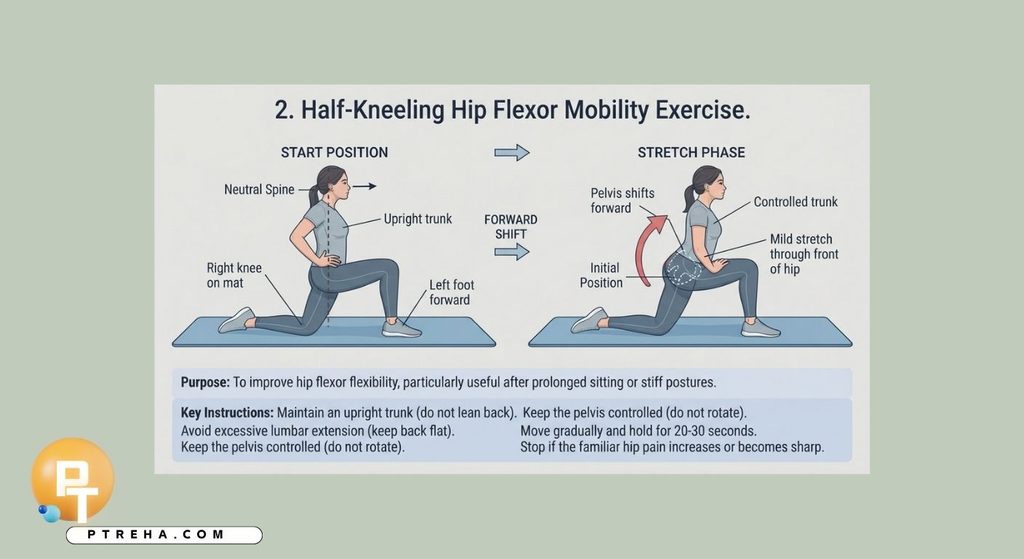
Place one knee on a comfortable surface and the opposite foot forward.
Gently shift your pelvis forward while keeping your trunk controlled.
The movement should create a mild stretch through the front of the hip rather than a sharp or deep joint pain.
Try to:
- Maintain an upright trunk.
- Avoid excessive lumbar extension.
- Keep the pelvis controlled.
- Move gradually.
- Stop if the familiar hip pain increases.
This exercise may be particularly useful when prolonged sitting or repetitive hip-flexed positions are accompanied by stiffness.
3. Supported Hip Rotation
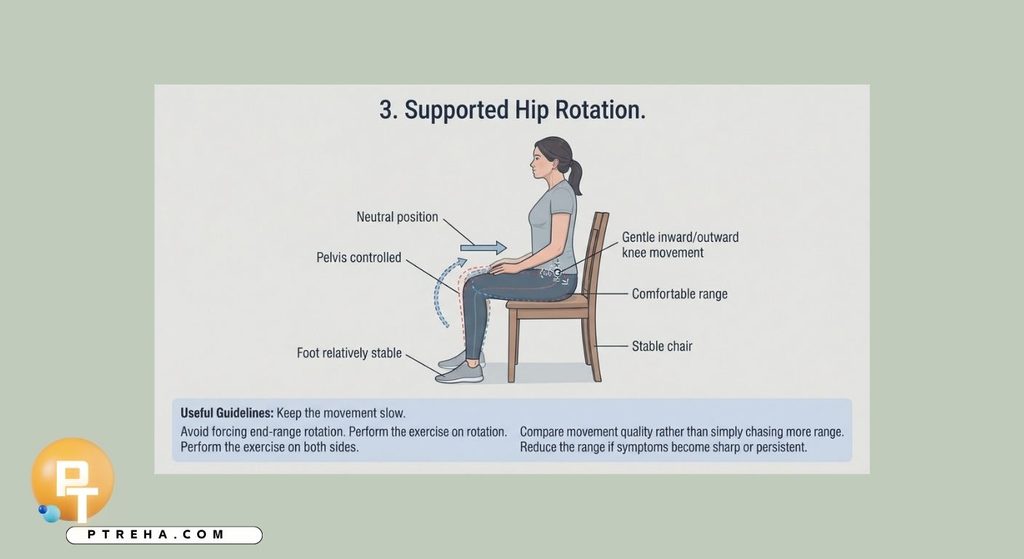
Sit on a stable chair with both feet supported.
Move one knee gently inward and outward while keeping the foot relatively stable and the pelvis controlled.
The movement should remain within a comfortable range.
Useful guidelines:
- Keep the movement slow.
- Avoid forcing end-range rotation.
- Perform the exercise on both sides.
- Compare movement quality rather than simply chasing more range.
- Reduce the range if symptoms become sharp or persistent.
4. Adductor Rock-Back
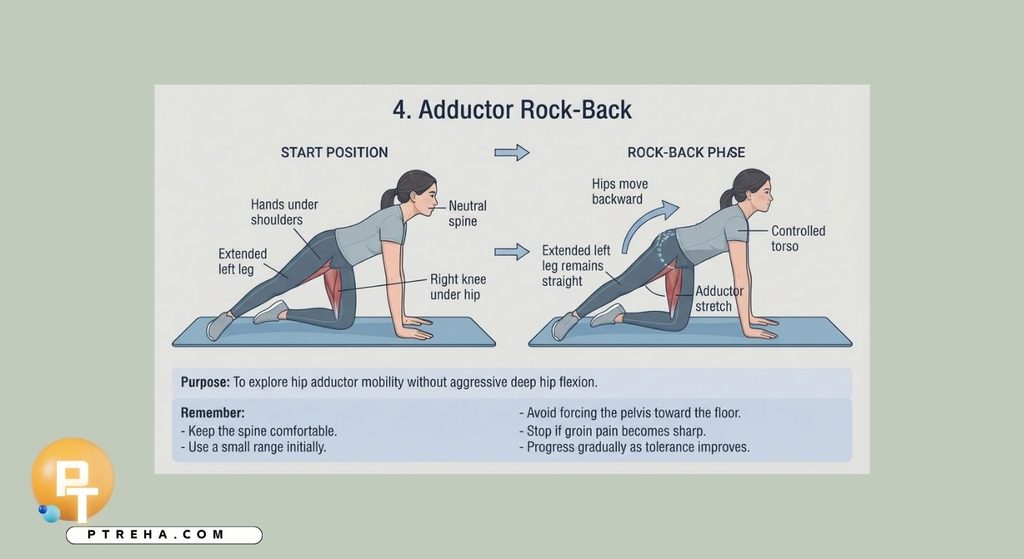
From a quadruped position, extend one leg gently out to the side.
Shift your hips backward while maintaining control, then return to the starting position.
This provides a way to explore hip adductor mobility without aggressively pushing the hip into a deep flexed position.
Remember:
- Keep the spine comfortable.
- Use a small range initially.
- Avoid forcing the pelvis toward the floor.
- Stop if groin pain becomes sharp.
- Progress gradually as tolerance improves.
Strengthening Exercises for Hip Impingement
Strengthening is often more important than simply trying to increase hip range.
Improving the capacity of the hip and trunk muscles can help a person tolerate walking, stairs, running, lifting, and sport more effectively.
The ISHA physiotherapy consensus supports individualized strengthening as an important part of non-surgical FAIS management.
1. Glute Bridge
Lie on your back with your knees bent and feet supported on the floor.
Gently brace your trunk and lift your pelvis until your hips are extended without excessive lumbar arching.
Lower slowly and repeat.
Focus on:
- Controlled hip extension
- Even loading between both legs
- Avoiding excessive spinal extension
- Smooth rather than explosive movement
- Gradually increasing resistance when appropriate
A bridge can later be progressed by increasing resistance, changing the lever, or moving toward single-leg variations when control is adequate.
2. Side-Lying Hip Abduction
Lie on your side with the exercising leg on top.
Keep the pelvis stable and lift the upper leg in a controlled manner.
Avoid allowing the trunk to roll backward as the leg rises.
Key points:
- Keep the pelvis stacked.
- Use a comfortable range.
- Avoid swinging the leg.
- Think about moving from the hip rather than the trunk.
- Progress resistance only when technique remains controlled.
This exercise targets the hip abductors and can be useful when building lateral hip capacity.
3. Side-Lying Clamshell
Lie on your side with your knees comfortably bent.
Keep the feet together and rotate the upper knee upward without allowing the pelvis to roll backward.
Return slowly to the starting position.
The exercise should challenge the lateral hip musculature without producing significant joint pain.
4. Sit-to-Stand
Sit on a stable chair with your feet positioned comfortably.
Lean your trunk slightly forward and stand up using controlled hip and knee extension.
Slowly return to the chair.
This exercise is valuable because it connects isolated strengthening with a functional task.
Progress it by:
- Using a lower chair
- Adding external resistance
- Increasing repetitions
- Performing a controlled single-leg variation when appropriate
- Transitioning to squatting patterns
If deep hip flexion aggravates symptoms, start with a higher chair and a smaller movement.
5. Step-Up
Stand in front of a low step.
Place one foot on the step and push through the supporting leg to step upward.
Lower with control.
Step height should be selected according to the person’s current strength, balance, and symptom response.
Quality matters more than height:
- Keep the pelvis controlled.
- Avoid excessive knee collapse.
- Maintain steady trunk control.
- Push through the whole foot.
- Lower slowly.
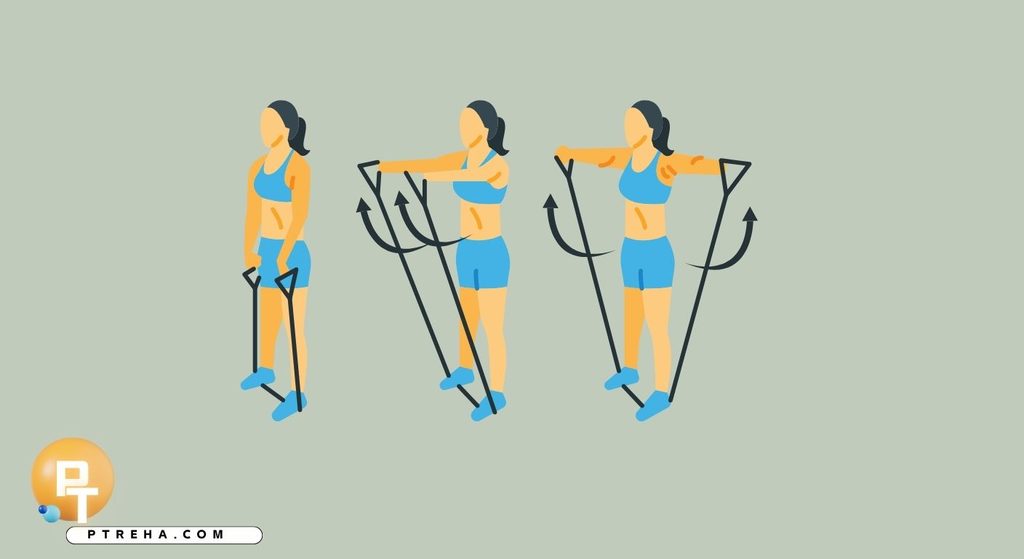
6. Lateral Band Walk
Place a resistance band around the thighs or lower legs according to the person’s ability.
Maintain a slight knee and hip bend and take controlled sideways steps while keeping the pelvis relatively level.
Helpful cues include:
- Small steps
- Controlled tension
- Stable pelvis
- Avoiding excessive trunk sway
- Maintaining consistent foot position
This exercise can be progressed by increasing resistance or step distance.
How to Build a Practical Exercise Program
There is no single exercise prescription that is appropriate for everyone with FAIS.
The program should reflect irritability, strength deficits, mobility restrictions, occupational demands, recreational activities, and the person’s rehabilitation goals.
A practical progression may look like this:
| Rehabilitation goal | Example exercise | Main focus | Progression |
|---|---|---|---|
| Comfortable hip movement | Quadruped rock-back | Controlled hip flexion | Gradually increase range |
| Hip mobility | Half-kneeling mobility | Hip extension tolerance | Increase control and range |
| Hip extensor strength | Glute bridge | Hip extension | Resistance or single-leg variation |
| Lateral hip strength | Side-lying abduction | Hip abductor capacity | Add resistance |
| Hip rotational control | Clamshell | Rotational control | Increase resistance |
| Functional strength | Sit-to-stand | Hip and knee extension | Lower chair or add load |
| Single-leg capacity | Step-up | Strength and control | Increase step height |
| Dynamic control | Lateral band walk | Frontal-plane control | Increase resistance |
| Sport preparation | Controlled split squat | Lower-limb strength | Add load and range |
| Return to activity | Activity-specific drills | Load tolerance | Gradual complexity |
A useful session can combine two or three mobility exercises with several strengthening exercises rather than attempting to perform every available hip exercise.
Managing Symptoms During Exercise
Pain monitoring is important because the purpose of rehabilitation is to improve capacity without repeatedly provoking a significant flare-up.
A mild sensation of effort, stretching, or muscular fatigue is different from sharp, escalating, or strongly familiar joint pain.
The response later that day and the following day also provides useful information about whether the training load was appropriate.
Consider modifying an exercise when:
- Pain becomes sharp.
- Symptoms progressively increase during the set.
- The movement becomes uncontrolled.
- You begin compensating through the pelvis or trunk.
- Hip symptoms remain substantially worse after training.
- A previously tolerated activity suddenly becomes difficult.
- You repeatedly experience catching or locking.
- The exercise produces symptoms that interfere with normal activity.
Possible modifications include:
- Reducing range of motion
- Reducing resistance
- Reducing repetitions
- Increasing rest periods
- Changing the exercise position
- Choosing a different exercise
- Temporarily reducing aggravating activities
Exercise progression should be based on response and function rather than simply following a predetermined schedule.
Activities That May Need Modification
People with FAIS do not necessarily need to avoid all hip flexion, squatting, running, or sport.
Instead, activities can often be modified according to the person’s symptoms and current capacity.
Potentially aggravating activities may include:
- Repeated deep squatting
- Deep lunges
- Prolonged low sitting
- Repetitive pivoting
- High-volume kicking
- Sudden increases in running
- Deep loaded hip-flexion exercises
- High-volume cutting drills
- Positions that repeatedly reproduce familiar groin pain
This does not mean that these movements are permanently harmful.
A person may gradually regain tolerance through appropriate loading and movement progression.
For example, someone who develops pain during deep squats may initially use a higher squat depth, reduce external load, and improve hip and lower-limb strength.
Once symptoms and movement tolerance improve, squat depth and resistance can be gradually increased.
When to Seek Professional Assessment
Persistent hip or groin pain should not automatically be attributed to FAIS.
Several conditions can produce similar symptoms, and imaging findings alone cannot establish that a person’s pain is caused by hip impingement.
A physiotherapist or appropriate healthcare professional can assess:
- Symptom behavior
- Hip range of motion
- Hip and lower-limb strength
- Functional movement
- Lumbar and pelvic contribution
- Sport or occupational demands
- Relevant clinical tests
- Previous injuries
- Response to loading
- Whether further medical assessment is appropriate
Seek medical assessment when symptoms are severe, progressive, associated with significant trauma, accompanied by systemic symptoms, or associated with substantial loss of function.
A clinician should also consider alternative sources of hip or groin pain when the presentation does not fit FAIS.
Mobility and Strengthening After Hip Arthroscopy
The exercises discussed above are primarily intended to explain conservative rehabilitation principles.
They should not be treated as a universal postoperative protocol.
After hip arthroscopy, exercise selection and progression depend on the procedure performed, including whether the labrum, capsule, cartilage, or bony morphology was surgically addressed.
Postoperative rehabilitation therefore needs to follow the surgeon’s restrictions and the treating rehabilitation professional’s assessment.
Postoperative rehabilitation may include:
- Protected weight-bearing when indicated
- Gradual restoration of range of motion
- Early muscle activation
- Progressive hip strengthening
- Trunk and pelvic control
- Gait retraining
- Functional strengthening
- Gradual return to running
- Sport-specific progression
- Criteria-based progression
The presence of postoperative precautions makes generic internet exercise programs particularly inappropriate immediately after surgery.
Conclusion
Hip impingement (FAIS) mobility and strengthening exercises should be selected according to symptoms, movement limitations, strength deficits, functional requirements, and rehabilitation goals.
Effective exercise therapy is not about forcing the hip into maximum range; it is about progressively improving movement quality, muscular capacity, load tolerance, and confidence with meaningful activities.
Mobility work can be useful when appropriate, while strengthening of the hip and trunk provides an important foundation for functional recovery.
Activity modification and gradual progression can help reduce unnecessary irritation while allowing the person to continue building physical capacity.
The most appropriate program is individualized.
If hip or groin pain persists, limits daily activity, or repeatedly returns despite sensible exercise modification, professional assessment is appropriate to clarify the diagnosis and guide rehabilitation.
Frequently Asked Questions About Hip Impingement Exercises
Can exercise improve hip impingement symptoms?
Exercise therapy can help many people with symptomatic FAIS improve pain, physical function, strength, and activity tolerance.
It does not necessarily remove an underlying bony morphology, but rehabilitation can improve the person’s ability to manage and load the hip.
Should I stretch my hip if I have FAIS?
Stretching may be appropriate when a specific mobility limitation is contributing to functional problems, but aggressive stretching into painful hip flexion or rotation is not automatically beneficial.
The exercise should be selected according to the individual’s examination and symptom response.
Are squats safe with hip impingement?
Squats are not automatically contraindicated.
If deep squatting reproduces symptoms, modifying depth, resistance, stance, volume, or tempo can make the exercise more tolerable while strength and capacity are developed.
Which muscles should I strengthen for FAIS?
Rehabilitation commonly addresses the hip abductors, extensors, rotators, and other lower-limb muscles, together with trunk and lumbopelvic control.
The exact priorities depend on the person’s strength assessment and functional requirements.
Can strengthening exercises make hip impingement worse?
Any exercise can temporarily aggravate symptoms if the load, range, volume, or technique exceeds current tolerance.
This does not mean strengthening is inappropriate; it means the exercise dose or movement needs to be modified.
How often should I perform FAIS exercises?
Frequency depends on the exercise and its intensity.
Mobility work may be performed more frequently when well tolerated, whereas challenging strengthening sessions generally require recovery between sessions.
A physiotherapist can individualize the weekly schedule.
Can I continue running with FAIS?
Some people can continue running with appropriate modifications, while others need a temporary reduction in running volume or intensity.
Factors such as symptoms, running load, strength, recovery, and functional goals should guide progression.
Do I need surgery for femoroacetabular impingement syndrome?
Not everyone with FAIS requires surgery.
Conservative management can include education, activity modification, and structured rehabilitation, while surgery may be considered in selected patients when symptoms and functional limitations persist despite appropriate non-surgical care.
Should I exercise if my hip clicks?
Clicking does not automatically indicate serious joint damage.
Its significance depends on whether it is associated with pain, catching, locking, weakness, or functional limitation, so persistent painful mechanical symptoms should be assessed clinically.
What should I do if exercises increase my hip pain?
First, reduce the provoking range, resistance, repetitions, or overall training volume and monitor the response.
If pain continues to increase, becomes severe, or is associated with substantial functional deterioration, seek assessment from an appropriately qualified healthcare professional rather than repeatedly pushing through the symptoms.
Resources
- The Warwick Agreement on Femoroacetabular Impingement Syndrome — PubMed
- International Society of Hip Preservation physiotherapy consensus on FAIS — PubMed
- Oxford Consensus on Cam Morphology and FAIS — British Journal of Sports Medicine
- Oxford Consensus research priorities for the young person’s hip — PubMed
- Physiotherapy and Exercise Therapy After Surgical Treatment of FAIS — PubMed
- Recent physiotherapy practice research for FAIS — PubMed
- Recent review of physiotherapy protocols for FAIS — PubMed