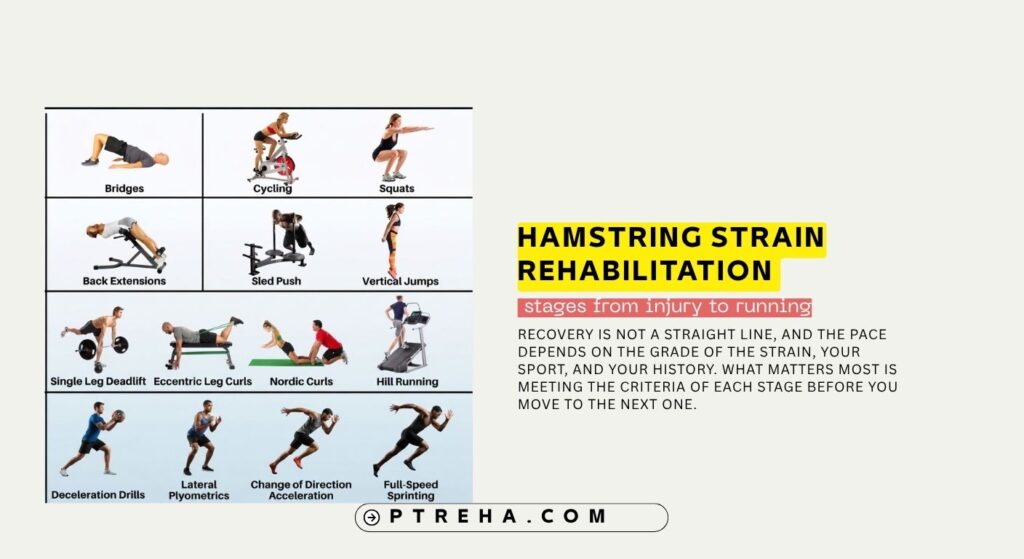
A hamstring strain is one of the most common injuries in sport, and it is also one of the most likely to come back if you rush the return. The hamstring strain rehabilitation stages from injury to running follow a clear progression: calm the acute injury, restore pain-free movement, rebuild strength and control, then reintroduce speed before you return to full running. This guide breaks each stage down into practical steps, simple tests, and realistic timelines so you can move forward with confidence instead of guesswork.
Recovery is not a straight line, and the pace depends on the grade of the strain, your sport, and your history. What matters most is meeting the criteria of each stage before you move to the next one.
What a Hamstring Strain Actually Is
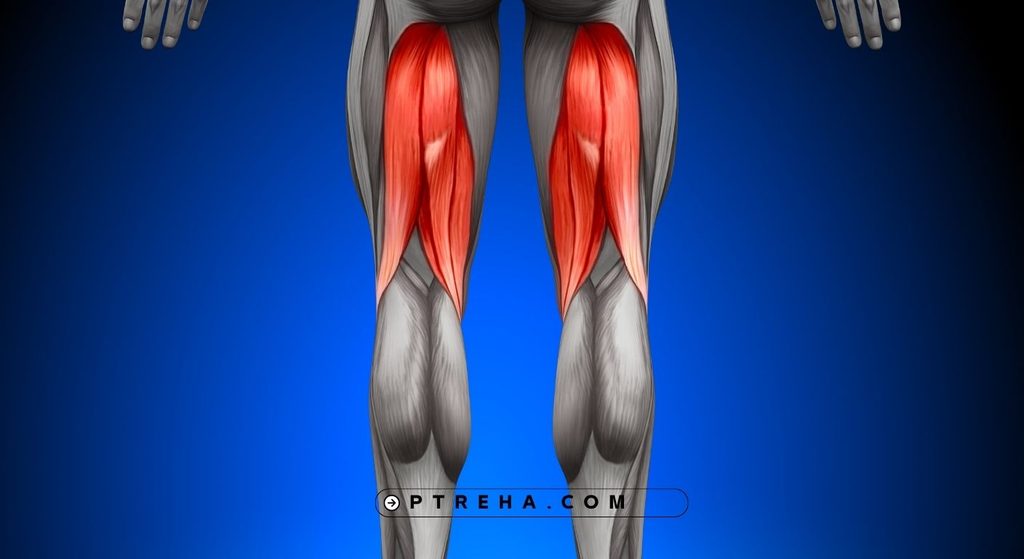
The hamstrings are a group of muscles at the back of the thigh that bend the knee and extend the hip. A strain happens when these fibers are overloaded, usually during sprinting or a sudden stretch.
Most strains affect the long head of the biceps femoris, close to the hip, though the muscle belly and the tendon near the knee can also be involved. Where the injury sits changes how it heals and how you train around it.
The Three Grades You Should Know
- Grade 1: Mild tightness and discomfort, minimal fiber damage, usually a short recovery.
- Grade 2: Partial tear with clear pain, weakness, and sometimes bruising, needing a longer plan.
- Grade 3: Complete rupture, which is rare and often needs specialist or surgical review.
Knowing the grade gives you a realistic starting point. A grade 1 strain and a grade 3 rupture should never follow the same timeline.
Stage 1: Calm the Acute Injury
The first days are about protecting the tissue and reducing pain. This is not the time to test your limits.
Gentle movement is usually better than complete rest, because it keeps blood flowing and prevents the joint from stiffening. The goal is to stay within a pain-free range.
What to Do in the First Days
- Protect the leg and avoid stretching into pain.
- Use relative rest rather than total bed rest.
- Apply ice briefly if it helps manage discomfort.
- Keep walking short and comfortable.
- Avoid sprinting, lunging, or any sharp pull.
Pain is a signal, not a challenge. In the early stage, staying calm protects the healing tissue.
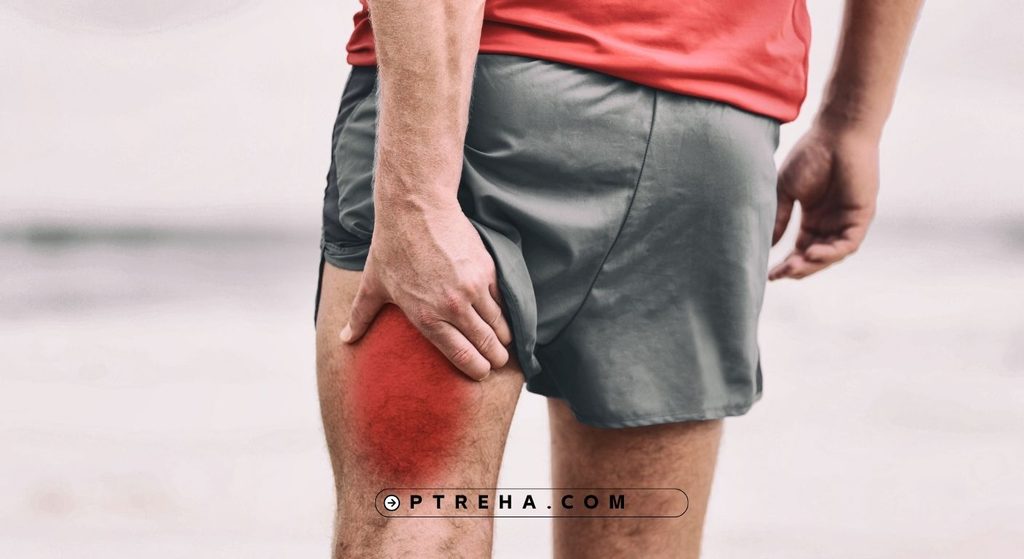
Stage 2: Restore Pain-Free Movement
Once the sharp pain settles, the focus shifts to gentle range of motion. You want the hamstring to lengthen and contract without guarding.
This stage often feels slow, but it sets the foundation for everything that follows. Skipping it is a common reason for setbacks later.
Simple Movement Goals
- Walk with a normal, even stride.
- Perform slow, controlled leg swings.
- Use light isometric holds at low effort.
- Reach a comfortable hip hinge without pain.
- Keep swelling and tightness under control.
Isometric Holds Explained
Isometrics are contractions where the muscle works but does not change length. They are useful early because they build tension with low movement stress.
Start with short holds at a gentle effort, then gradually increase the time and intensity as long as pain stays low.
Stage 3: Rebuild Strength
Strength work is where the hamstring becomes resilient again. The muscle needs to handle load before it can handle speed.
This stage uses slow, controlled movements that challenge the hamstring through a full range. The goal is quality, not heavy weight.
Key Strength Exercises
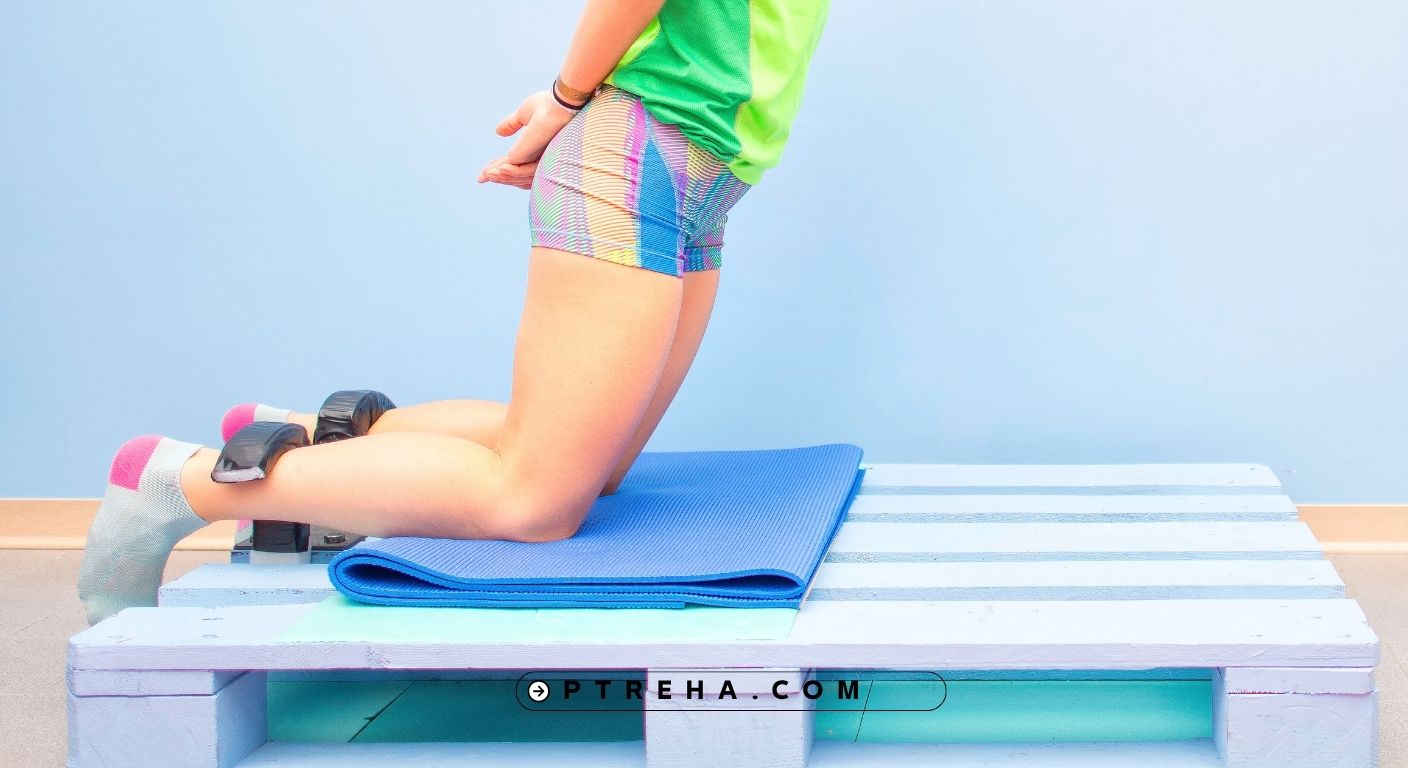
- Nordic hamstring curls, starting with assisted versions.
- Romanian deadlifts with light to moderate load.
- Single-leg bridges and hip thrusts.
- Seated or lying hamstring curls.
- Slow eccentric lowering on all movements.
Why Eccentrics Matter
Eccentric work means the muscle lengthens while producing force. This type of loading is strongly linked to reducing re-injury risk.
Lower the weight slowly, often over three to five seconds, and keep the movement smooth rather than jerky.
Stage 4: Build Control and Stability
Strength alone is not enough. The hamstring also needs to work with the hip, glutes, and core to control movement.
This stage adds balance and coordination drills so the leg behaves well under changing conditions.
Control Drills to Include
- Single-leg balance holds.
- Step-downs from a low platform.
- Lateral band walks.
- Controlled hip hinges with a pause.
- Slow direction changes at walking pace.
If the knee or hip wobbles, slow down. Control is the point, not speed.
Stage 5: Reintroduce Running
Running is the step most people rush, and it is where many strains return. The hamstring must tolerate repeated high-speed contractions before full sprinting.
Return to running gradually, starting with jogging and building toward faster efforts. Monitor how the leg feels during and after each session.
Running Progression Steps
- Start with brisk walking and light jogging.
- Add short, easy running intervals.
- Build to steady runs at a comfortable pace.
- Introduce strides at moderate speed.
- Progress to faster running only when pain-free.
How to Know You Are Ready to Run
You should be able to walk normally, complete strength work without pain, and jog lightly without tightness. If any of these fail, stay in the previous stage a little longer.
Sample Stage Timeline Overview
The table below shows a general guide. Real timelines vary with the grade of injury and your individual response.
| Stage | Main Goal | Typical Focus | Running Status |
|---|---|---|---|
| Stage 1 | Calm the injury | Protection and gentle movement | No running |
| Stage 2 | Restore movement | Range of motion and light isometrics | No running |
| Stage 3 | Rebuild strength | Eccentric and loaded exercises | No running |
| Stage 4 | Build control | Balance and stability drills | Light jogging may begin |
| Stage 5 | Reintroduce running | Progressive running and strides | Gradual return |
Stage 6: Return to Full Speed and Sport
Full recovery means you can sprint, change direction, and compete without fear. This final stage bridges the gap between running and your sport.
Add sport-specific drills, faster sprints, and reactive movements. Keep checking that the leg responds well the next day.
Final Stage Checklist
- Sprint at near full speed without pain.
- Complete cutting and pivoting drills.
- Match strength on both legs.
- Handle a full training session with no reaction.
- Feel confident, not cautious, during movement.
You are ready to return when the leg no longer holds you back, not just when the pain has gone.
Common Mistakes That Slow Recovery
Many setbacks come from doing too much too soon. Understanding the traps helps you avoid them.
- Stretching aggressively in the early stage.
- Skipping strength work once pain fades.
- Returning to sprinting before control is solid.
- Ignoring next-day soreness or tightness.
- Comparing your timeline to someone else’s.
Progress is measured by function, not by the calendar. Let your leg guide the pace.
Monitoring Progress Week by Week
Tracking simple markers keeps you honest. Note pain levels, strength, and how the leg feels after activity.
Useful Things to Track
- Pain score during and after exercise.
- Ability to complete strength sets.
- Confidence during running drills.
- Any tightness the morning after training.
If a marker worsens, step back a stage. Small adjustments prevent bigger problems.
When to Seek Professional Help
Some cases need more than a self-guided plan. Get assessed if pain is severe, bruising is widespread, or you cannot bear weight.
A physiotherapist or sports medicine doctor can confirm the grade and tailor the plan to your sport and goals.
Conclusion
The hamstring strain rehabilitation stages from injury to running are built on patience and progression. You calm the injury, restore movement, rebuild strength, add control, reintroduce running, and then return to full speed.
Each stage has clear goals, and moving forward only when you meet them protects you from re-injury. Follow the sequence, listen to your body, and the return to running becomes far more reliable.
Frequently Asked Questions
How long does a hamstring strain take to heal?
Mild strains may settle within a few weeks, while more significant ones can take several months. The grade of injury and your rehabilitation consistency are the biggest factors.
Can I run with a hamstring strain?
Only once you can walk normally, complete strength work, and jog lightly without pain. Running too early is a common cause of re-injury.
Is stretching good for a hamstring strain?
Gentle movement is helpful, but aggressive stretching early on can irritate the healing tissue. Keep stretches within a comfortable, pain-free range.
What are the best exercises for hamstring recovery?
Eccentric exercises like Nordic curls, Romanian deadlifts, and controlled hamstring curls are among the most useful. They build strength and resilience.
How do I know my hamstring is fully healed?
You can sprint, change direction, and complete full training without pain or next-day tightness. Strength should be close to the other leg.
Should I rest completely after a hamstring strain?
Complete rest is rarely best. Relative rest with gentle, pain-free movement usually supports better recovery.
Why does my hamstring strain keep coming back?
Re-injury often follows a return that skipped strength or speed work. Incomplete rehabilitation leaves the muscle less able to handle load.
Can I prevent hamstring strains?
Regular strength training, especially eccentric work, and a gradual warm-up can lower the risk. Building load tolerance over time matters most.
What does a grade 2 hamstring strain feel like?
It usually brings sharper pain, noticeable weakness, and sometimes bruising. Recovery takes longer than a mild strain.
When should I see a doctor for a hamstring strain?
Seek help if you cannot bear weight, have severe pain, or notice widespread bruising. A professional can confirm the grade and guide treatment.