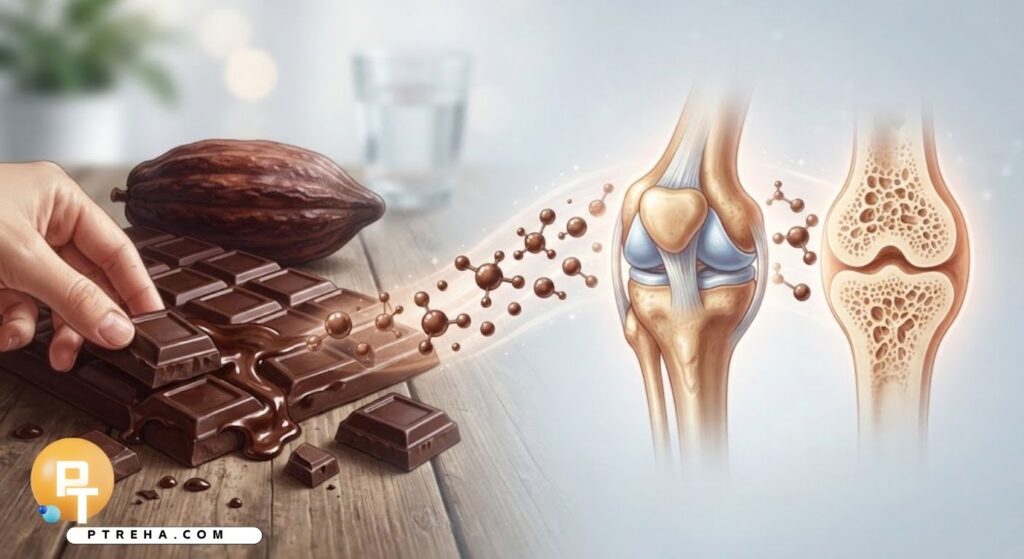
Dark chocolate contains cocoa polyphenols and minerals such as magnesium, copper, iron, phosphorus, and manganese, making it nutritionally different from many conventional sweets.
When discussing dark chocolate and bone and joint health, however, the key is balance: it may contribute useful nutrients to a healthy diet, but current evidence does not support using chocolate to prevent fractures, rebuild bone, or treat arthritis.
Dark Chocolate and Bone and Joint Health: What Does It Really Offer?
Dark chocolate is made with a higher proportion of cocoa solids than milk chocolate.
The exact nutritional profile varies considerably depending on the cocoa percentage, ingredients, manufacturing process, and serving size.
Higher-cocoa products generally provide more cocoa-derived polyphenols and minerals, while often containing less added sugar than sweeter chocolate products.
Dark chocolate can provide:
- Magnesium.
- Copper.
- Manganese.
- Phosphorus.
- Iron.
- Zinc in smaller amounts.
- Cocoa flavanols and other polyphenols.
- Dietary fiber.
- Theobromine.
- A relatively high amount of energy and fat.
These nutrients do not make chocolate a complete food for the musculoskeletal system.
Dark chocolate contains much less calcium than foods such as milk, yogurt, calcium-set tofu, or some fortified foods.
It also does not provide meaningful vitamin D, which is another important nutrient involved in normal bone health.
For this reason, dark chocolate works better as a small component of a varied diet than as a food specifically relied upon for stronger bones.
Is dark chocolate good for Osteoarthritis?
Bone is metabolically active tissue.
It constantly undergoes remodeling involving the breakdown and formation of bone tissue.
Calcium and vitamin D often receive most of the attention, but several other nutrients participate in normal bone metabolism.
Magnesium
Magnesium is involved in numerous biochemical reactions and contributes to normal bone structure and muscle function.
Dark chocolate with a high percentage of cocoa can be a useful dietary source of magnesium.
This can complement, rather than replace, magnesium-rich foods such as:
- Nuts.
- Seeds.
- Legumes.
- Whole grains.
- Leafy green vegetables.
- Avocado.
- Some fortified foods.
Magnesium is also important to normal neuromuscular function.
Adequate intake therefore has relevance to both the skeletal and muscular systems.
Copper and Manganese
Cocoa also provides copper and manganese.
Copper participates in connective-tissue metabolism and several enzyme systems, while manganese functions as a cofactor for enzymes involved in metabolism and tissue formation.
Useful sources of these minerals include:
- Nuts and seeds.
- Whole grains.
- Legumes.
- Shellfish.
- Cocoa products.
- Leafy vegetables.
- Some fruits.
Getting these nutrients from a varied diet is more important than obtaining a particularly large amount from one food.
Phosphorus
Phosphorus is a major structural component of bone, where it works together with calcium.
Dark chocolate contains phosphorus, but most people eating a varied diet already obtain phosphorus from many foods.
Common dietary sources include:
- Dairy products.
- Meat and poultry.
- Fish.
- Eggs.
- Beans.
- Lentils.
- Nuts.
- Whole grains.
Dark chocolate should therefore be considered an additional source rather than an essential one.
Does Dark Chocolate Make Bones Stronger?
This is where an important distinction must be made between nutritional plausibility and proven clinical benefit.
Dark chocolate contains nutrients and plant compounds that could theoretically influence processes related to bone metabolism.
That does not mean eating dark chocolate has been shown to increase bone mineral density or prevent osteoporosis.
A large randomized study examining cocoa flavanol extract in older adults found that supplementation did not significantly reduce clinical fracture risk compared with placebo.
The findings therefore do not support cocoa flavanols as a fracture-prevention treatment.
The details can be reviewed in this randomized cocoa and fracture study published in the Journal of Bone and Mineral Research.
Current evidence supports several practical conclusions:
- Cocoa contains potentially useful bioactive compounds.
- Dark chocolate supplies several bone-related minerals.
- Observational findings cannot prove that chocolate strengthens bone.
- Cocoa supplementation has not been shown to prevent fractures.
- Chocolate should not replace established osteoporosis management.
- Overall dietary quality remains much more important.
- Resistance exercise and weight-bearing activity remain important for bone health.
This also means a person with low bone density should not start consuming large amounts of dark chocolate specifically to increase bone strength.
What Dark Chocolate Cannot Replace
Dark chocolate should not be used as a replacement for:
- Adequate dietary calcium.
- Adequate vitamin D.
- Sufficient protein.
- Appropriate resistance training.
- Weight-bearing physical activity.
- Fall-prevention strategies when required.
- Medical assessment of osteoporosis.
- Prescribed osteoporosis treatment.
Nutrition works as part of an overall strategy rather than through one “bone superfood.”
Dark Chocolate and Joint Health

The relationship between dark chocolate and joint health is even less direct.
Cocoa contains flavanols, including epicatechin, along with several other polyphenolic compounds.
These substances have attracted attention because of their potential effects on oxidative stress, vascular function, and inflammatory pathways.
A systematic review and meta-analysis of controlled trials reported some improvements in measures related to oxidative stress and certain inflammatory responses, although findings differed considerably between outcomes.
The authors concluded that further research is necessary to establish the clinical benefits.
The research can be reviewed through this systematic review of cocoa, inflammation, and oxidative stress.
Potential areas of interest include:
- Cocoa polyphenols and antioxidant activity.
- Effects on oxidative stress.
- Possible modulation of some inflammatory pathways.
- Effects on vascular function.
- Potential interactions with metabolic health.
These findings should not be interpreted as evidence that chocolate relieves osteoarthritis, rheumatoid arthritis, tendinopathy, bursitis, or another specific musculoskeletal disorder.
Can Dark Chocolate Reduce Joint Inflammation?
It is reasonable to say that cocoa contains compounds being studied for anti-inflammatory effects.
It is not accurate to say that eating a chocolate bar is an established treatment for joint inflammation.
Joint pain has many possible causes, including:
- Osteoarthritis.
- Inflammatory arthritis.
- Tendon disorders.
- Joint injury.
- Referred pain.
- Muscle weakness or reduced capacity.
- Persistent pain conditions.
- Mechanical loading that exceeds current tissue capacity.
The treatment strategy needs to address the actual condition rather than simply adding an anti-inflammatory food.
From a physical therapy perspective, nutrition may support general health, but rehabilitation still depends heavily on appropriate movement, progressive loading, strength, mobility, function, and activity management.
Dark Chocolate Compared With Other Bone-Supportive Foods
Dark chocolate has some nutritional advantages, but it is not among the most important foods for supplying calcium, vitamin D, or high-quality protein.
| Food | Main musculoskeletal contribution | Practical role |
|---|---|---|
| Dark chocolate | Magnesium, copper, manganese, cocoa polyphenols | Small addition to a balanced diet |
| Milk or fortified alternative | Calcium, protein; vitamin D when fortified | Useful for bone nutrition |
| Greek yogurt | Protein and calcium | Supports protein and calcium intake |
| Sardines with bones | Calcium, protein and vitamin D | Nutrient-dense bone-supportive choice |
| Salmon | Protein and vitamin D | Supports muscle and bone nutrition |
| Almonds | Magnesium, healthy fats and some calcium | Useful snack or meal addition |
| Leafy greens | Vitamin K, magnesium and variable calcium | Valuable part of a varied diet |
| Beans and lentils | Protein, magnesium and minerals | Helpful plant-based staple |
A strong bone-supportive eating pattern therefore includes a combination of foods rather than emphasizing chocolate.
Useful dietary priorities include:
- Calcium-rich foods.
- Adequate protein.
- Vitamin D sources.
- Vegetables.
- Fruit.
- Legumes.
- Whole grains.
- Nuts and seeds.
- Fish when appropriate.
- Adequate total energy intake.
Dark chocolate can fit comfortably inside this pattern.
How to Choose Dark Chocolate for Bone and Joint Health
The words “dark chocolate” do not automatically indicate a particularly nutritious product.
Chocolate bars can differ substantially in cocoa solids, added sugar, ingredients, portion size, processing, and overall nutritional composition.
A practical approach is to choose a product with a relatively high cocoa percentage, often around 70% cocoa or higher, while also considering the full ingredient list.
When comparing products, look for:
- Cocoa or cocoa mass near the beginning of the ingredient list.
- A clearly stated cocoa percentage.
- Less added sugar when possible.
- A relatively simple ingredient list.
- A serving size that fits your overall diet.
- Products from manufacturers with good quality-control practices.
Higher cocoa content usually means a more intense flavor.
This often makes a smaller portion satisfying compared with sweeter chocolate.
However, increasing the cocoa percentage does not mean there is no downside.
Dark chocolate remains energy-dense and can contain substantial saturated fat.
A very high cocoa percentage therefore does not turn unlimited chocolate consumption into a healthy habit.
How Much Dark Chocolate Should You Eat?
There is no clinically established dose of dark chocolate for improving bones or joints.
This is important because research using standardized cocoa extracts cannot automatically be translated into a specific number of chocolate squares.
A practical serving for many people may be a small amount, such as approximately 20–30 grams, depending on the person’s nutritional needs and overall energy intake.
A small portion can:
- Provide cocoa polyphenols.
- Add magnesium and other minerals.
- Satisfy a preference for chocolate.
- Fit easily into a balanced eating pattern.
- Help control total calorie intake compared with eating directly from a large bar.
You do not need to eat dark chocolate every day to obtain its nutrients.
A varied diet remains preferable to repeatedly relying on a single food.
Practical Ways to Include It
Instead of treating dark chocolate as a supplement, use it as part of normal meals and snacks.
Examples include:
- A few pieces with almonds or walnuts.
- Dark chocolate with fresh berries.
- Grated dark chocolate over plain yogurt.
- A small amount with oatmeal.
- Cocoa with unsweetened yogurt and fruit.
- Dark chocolate alongside a piece of fruit.
- Chopped chocolate added to a nut-and-seed mixture.
These combinations can provide protein, fiber, calcium, vitamins, or healthy fats that chocolate alone does not supply.
Dark Chocolate, Calories, Sugar, and Body Weight

Body weight is not simply a matter of bone or joint health, but energy balance can influence musculoskeletal function.
Dark chocolate is energy-dense.
Large daily portions can therefore add substantial calories even when the chocolate has a high cocoa percentage.
This does not mean dark chocolate must be avoided.
Instead:
- Pay attention to serving size.
- Avoid assuming “dark” means low-calorie.
- Check added sugar.
- Eat it slowly rather than automatically.
- Combine it with nutrient-dense foods.
- Keep it within your overall dietary needs.
- Avoid using chocolate as your primary mineral source.
For a physically active person, dark chocolate can easily fit into an appropriate diet.
For someone trying to manage overall energy intake, portion size becomes particularly relevant.
Joint health is also influenced by many factors beyond diet, including muscle strength, physical activity, sleep, previous injury, metabolic health, occupational loading, and body composition.
Are There Any Concerns With Eating Dark Chocolate?
For most adults, moderate consumption can fit into a balanced diet.
Some situations deserve additional attention.
Cocoa naturally contains caffeine and particularly theobromine, although the amount varies between products.
Dark chocolate may also contain measurable amounts of cadmium because cacao plants can take up the metal from soil.
According to the FDA information on cadmium in foods and chocolate, cadmium concentrations in chocolate vary according to factors including the growing region and cocoa-solid content.
Practical precautions include:
- Avoid relying on very large daily servings.
- Vary your foods rather than eating large quantities of one cocoa product.
- Consider quality-control information from manufacturers when available.
- Remember that more cocoa is not automatically better in unlimited amounts.
- Watch caffeine intake if you are sensitive to stimulants.
- Be aware that chocolate may worsen reflux in some people.
- Account for allergies and individual dietary restrictions.
People with specific medical conditions or prescribed dietary restrictions may need individualized nutrition advice.
A Physical Therapy Perspective on Bone and Joint Health
Good nutrition helps create an environment in which tissues can function and adapt, but diet and physical activity should work together.
From a rehabilitation standpoint, dark chocolate is considerably less important than maintaining adequate nutrition while progressively challenging the musculoskeletal system.
For bones, important physical strategies include:
- Progressive resistance exercise.
- Appropriate weight-bearing activity.
- Balance training when fall risk is present.
- Regular physical activity.
- Progressive loading suited to individual capacity.
- Adequate recovery.
For joints and surrounding muscles, useful strategies may include:
- Strengthening relevant muscle groups.
- Gradual increases in activity.
- Maintaining comfortable joint mobility.
- Adjusting loads during symptom flares.
- Returning gradually to demanding tasks.
- Building tolerance rather than permanently avoiding movement.
For example, someone with knee osteoarthritis gains more from a well-designed strengthening and activity program than from adding dark chocolate in the hope of reducing joint inflammation.
Likewise, a person concerned about osteoporosis needs adequate nutrition, appropriate exercise, and clinical assessment when indicated rather than relying on cocoa-derived nutrients alone.
Conclusion
Dark chocolate can be a nutritious addition to a balanced diet because cocoa provides magnesium, copper, manganese, phosphorus, and polyphenols.
These compounds have biological roles relevant to general health, and cocoa is being studied for effects on oxidative stress and inflammatory pathways.
The evidence does not, however, show that dark chocolate prevents osteoporosis, reduces fractures, repairs cartilage, or treats arthritis.
For bone and joint health, prioritize adequate calcium, vitamin D, protein, varied plant foods, appropriate body weight, resistance and weight-bearing exercise, and condition-specific rehabilitation when needed.
Enjoying a modest portion of high-cocoa dark chocolate can complement those habits rather than replace them.
Frequently Asked Questions
Is dark chocolate good for your bones?
Dark chocolate provides magnesium, copper, manganese, phosphorus, and other nutrients involved in normal body functions, including processes related to bone.
However, it has not been proven to strengthen bones or prevent osteoporosis.
It should be considered one food within an overall bone-supportive diet.
Can dark chocolate increase bone density?
There is not sufficient clinical evidence showing that eating dark chocolate increases bone mineral density.
Bone density is influenced by genetics, age, hormones, physical activity, nutrition, medications, and several medical conditions.
Does dark chocolate contain calcium?
Dark chocolate contains some calcium, but it is not a particularly rich calcium source compared with dairy products, calcium-fortified alternatives, calcium-set tofu, or canned fish with edible bones.
It should not be relied upon to meet daily calcium requirements.
Is dark chocolate good for arthritis?
Dark chocolate contains cocoa polyphenols that have been studied for effects on oxidative stress and inflammatory pathways.
However, there is no strong evidence that dark chocolate itself treats osteoarthritis or inflammatory arthritis.
Appropriate medical management and rehabilitation remain more important.
Can dark chocolate reduce joint pain?
Dark chocolate has not been established as an effective treatment for joint pain.
Because joint pain can arise from many different conditions, persistent or significant symptoms should be evaluated according to their likely cause rather than treated with a particular food.
What percentage of dark chocolate is best?
Products containing around 70% cocoa or more generally provide a greater proportion of cocoa solids and often less sugar than sweeter chocolate varieties.
The cocoa percentage is only one factor.
Ingredients, portion size, added sugar, total calories, and product quality also matter.
How much dark chocolate should I eat for bone health?
There is no scientifically established serving of dark chocolate that improves bone health.
A modest portion of approximately 20–30 grams can fit into many balanced diets, but individual energy needs and health considerations differ.
Is dark chocolate better than milk chocolate for bones?
Dark chocolate typically contains more cocoa solids and therefore more cocoa-derived polyphenols and several minerals.
Neither type should be considered a major bone-building food, and calcium-rich foods, protein, vitamin D, and appropriate exercise remain more important.
Can I eat dark chocolate if I have osteoporosis?
Dark chocolate can generally be included in a balanced diet unless there is an individual reason to limit it.
It should not replace osteoporosis assessment, prescribed treatment, adequate calcium and vitamin D, protein intake, exercise, or fall-prevention strategies.
What foods should I combine with dark chocolate for bone health?
Dark chocolate can be combined with nutrient-dense foods rather than eaten as a stand-alone strategy.
Good combinations include plain yogurt with dark chocolate and berries, almonds with a few chocolate pieces, oatmeal with cocoa and milk, or fruit with a small amount of dark chocolate.
These combinations provide a broader mixture of protein, calcium, fiber, vitamins, minerals, and plant compounds.