A resistance band leg workout for knee and hip rehabilitation is one of the safest ways to rebuild strength after injury or surgery. Bands let you control the load, avoid heavy joint compression, and progress at your own pace. This guide covers the best exercises, how to program them, and the mistakes that slow recovery down.
Whether you are recovering from a meniscus tear, ACL surgery, hip replacement, or chronic knee pain, the principles here will help you train smart and stay consistent.
Why Resistance Bands Work Well for Knee and Hip Rehab
Resistance bands offer accommodating resistance, which means the tension increases as you stretch the band. For rehabilitation, this is useful because the hardest part of the movement usually happens in a safe, controlled range.
Unlike machines or heavy free weights, bands do not load the joint with body weight or momentum. You stay in charge of the speed and range.
- Low joint compression compared to squats with a barbell
- Adjustable resistance by changing band thickness or length
- Portable and inexpensive for home rehab
- Safe for early-stage recovery when used correctly
- Easy to combine with bodyweight and balance work
Rehabilitation is not about how much you lift. It is about how well you control the movement you can already do.
Key Muscles You Need to Rebuild Around the Knee and Hip
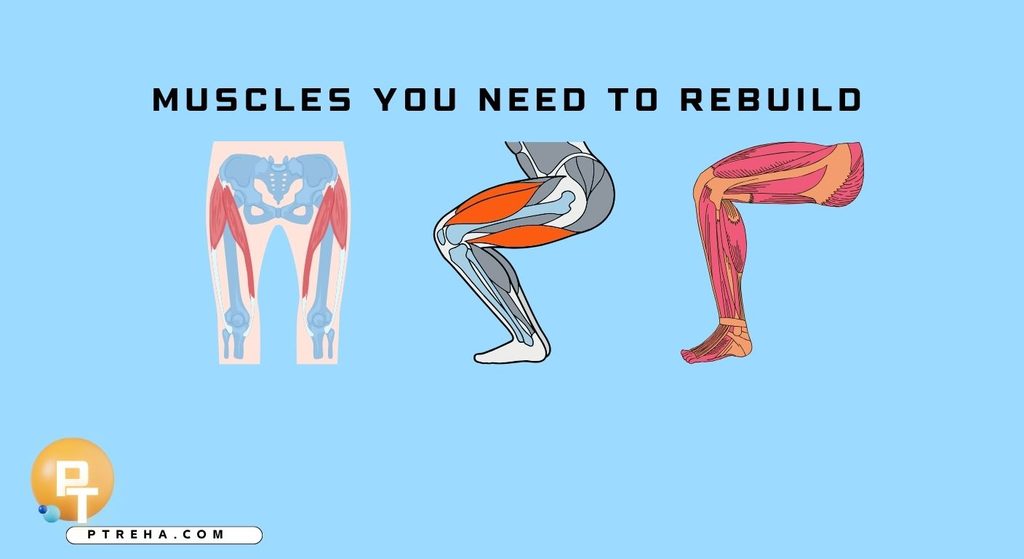
Knee and hip rehab is rarely about one muscle. It is about restoring balance between the muscles that move and stabilize the joint.
For the knee, the quadriceps, hamstrings, and glutes do most of the work. For the hip, the gluteus medius and deep hip rotators are critical for stability.
Primary muscles to target
- Quadriceps for knee extension and shock absorption
- Hamstrings for knee flexion and hip extension
- Gluteus maximus for hip power and pelvic control
- Gluteus medius for hip abduction and single-leg stability
- Hip flexors, trained gently to avoid tightness
- Calves for ankle and knee support during walking
Why the glutes matter more than most people think
Weak glutes often show up as knee pain. When the hip cannot stabilize, the knee drifts inward during movement, which stresses the joint.
This is why a resistance band leg workout for knee and hip rehabilitation should always include hip-focused work, not just knee exercises.
Warm-Up Before Band Training
Never start a rehab session cold. A short warm-up increases blood flow and prepares the joint for controlled loading.
- 5 minutes of easy walking or stationary cycling
- 10 slow bodyweight sit-to-stands
- 10 gentle hip circles in each direction
- 10 slow ankle pumps per foot
- Light band glute bridges for 1 set of 15
Keep the warm-up pain-free. If a movement causes sharp pain, stop and note it.
The Best Resistance Band Exercises for Knee and Hip Rehab
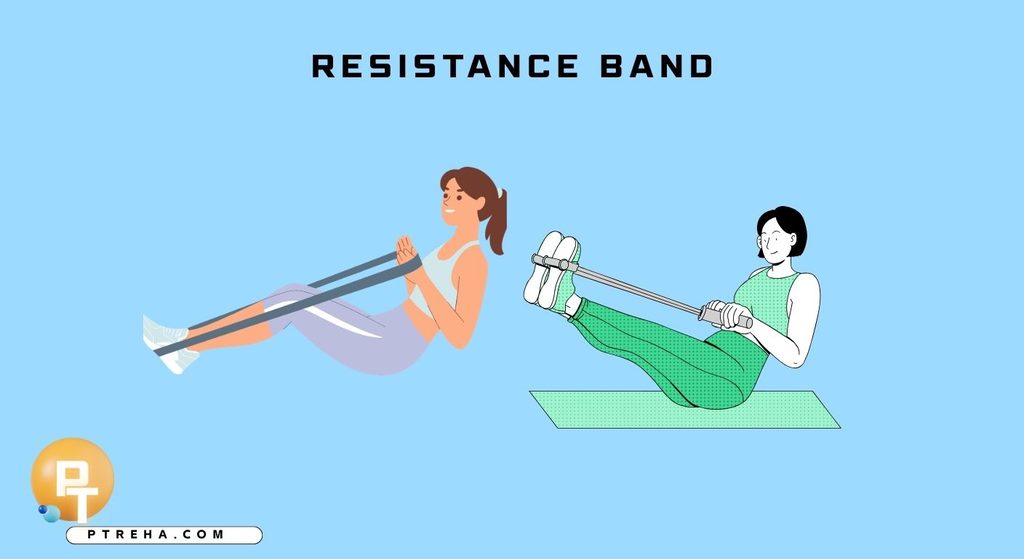
Below is a practical set of exercises that cover the knee, hip, and surrounding stabilizers. Add them gradually rather than all at once.
1. Banded Glute Bridge
Lie on your back with a loop band just above your knees. Press through your heels and lift your hips until your body forms a straight line.
- Sets: 2 to 3
- Reps: 10 to 15
- Focus: squeezing glutes, not arching the lower back
2. Standing Hip Abduction
Place a band around your ankles. Stand tall, holding a wall or chair, and lift one leg out to the side.
- Sets: 2 to 3 per side
- Reps: 10 to 15
- Focus: keep the pelvis level, avoid leaning
3. Terminal Knee Extension
Anchor a band behind you at knee height and loop it around the back of your knee. Straighten your leg against the band.
- Sets: 2 to 3
- Reps: 12 to 20
- Focus: full lockout without snapping the knee
4. Banded Hamstring Curl
Anchor a band low in front of you and loop it around one ankle. Curl your heel toward your glutes against the resistance.
- Sets: 2 to 3 per side
- Reps: 10 to 15
- Focus: slow return, no swinging
5. Lateral Band Walk
Place a loop band above your knees or around your ankles. Step sideways with control, keeping tension on the band.
- Sets: 2 to 3
- Steps: 10 to 15 per direction
- Focus: stay low, knees tracking over toes
6. Banded Sit-to-Stand
Loop a band under your feet and over your shoulders. Stand up from a chair against light resistance.
- Sets: 2 to 3
- Reps: 8 to 12
- Focus: push through the whole foot, control the descent
7. Hip Flexion with Band
Anchor a band low behind you and loop it around one ankle. Lift your knee toward your chest against gentle resistance.
- Sets: 2 per side
- Reps: 10 to 12
- Focus: keep the torso upright, no leaning back
Sample Weekly Resistance Band Leg Workout Plan
Recovery responds best to frequent, moderate sessions rather than one long, hard session. Two to three short sessions per week is a good starting point.
| Day | Focus | Exercises | Volume |
|---|---|---|---|
| Day 1 | Knee control | Terminal knee extension, sit-to-stand, hamstring curl | 2 sets each |
| Day 2 | Hip stability | Glute bridge, lateral band walk, standing abduction | 2 to 3 sets each |
| Day 3 | Full leg | Glute bridge, sit-to-stand, hip flexion, hamstring curl | 2 sets each |
| Day 4 | Rest or walking | Light activity only | 15 to 30 minutes |
Adjust the number of sets based on how the joint feels the next day. Mild soreness is fine. Sharp pain is not.
How to Progress Safely
Progression in rehab is about changing one variable at a time. Do not increase resistance, reps, and range all at once.
- Start with the lightest band that gives tension
- Add reps before adding resistance
- Increase range of motion only when pain-free
- Slow down the return phase for more control
- Add single-leg variations once double-leg feels easy
If you can control the movement slowly, you own it. If you are rushing, the band owns you.
Common Mistakes to Avoid
Most setbacks in band rehab come from a handful of avoidable errors.
- Using a band that is too heavy too soon
- Letting the knee cave inward during squats or steps
- Holding your breath instead of breathing steadily
- Skipping the warm-up and going straight to work
- Ignoring pain signals and pushing through them
- Training only the knee and forgetting the hip
- Doing too many exercises in one session
Quality beats quantity every time in rehabilitation.
When to See a Professional
Resistance band training is effective, but it is not a replacement for medical guidance after surgery or a serious injury.
- Pain that increases during or after sessions
- Swelling that does not settle within a day
- Clicking or locking that feels unstable
- Loss of range of motion that does not improve
- Numbness, tingling, or radiating pain
A physical therapist can assess your movement and adjust the plan to your specific condition.
Tips to Get More From Every Session
Small habits make a big difference over weeks and months of rehab.
- Train at the same time of day for consistency
- Film one set to check your knee and hip alignment
- Keep a simple log of reps, bands, and pain level
- Do a few minutes of mobility after training
- Prioritize sleep and protein for tissue repair
- Walk daily if cleared by your provider
Conclusion
A resistance band leg workout for knee and hip rehabilitation is simple, safe, and highly effective when done with patience. Focus on control, progress gradually, and listen to your body. With consistent short sessions, most people notice better stability, less pain, and stronger legs within a few weeks.
Frequently Asked Questions
How often should I do a resistance band leg workout for knee and hip rehabilitation?
Two to three sessions per week is a good starting point for most people. If your joints feel good, you can add a fourth short session. Always leave at least one rest day between harder sessions.
Can resistance bands really rebuild leg strength?
Yes. Bands create real tension that challenges muscles through a full range of motion. As long as you progress resistance and reps over time, you can build meaningful strength without heavy weights.
What band resistance should I start with?
Start with the lightest band that gives you noticeable tension. You should be able to complete all reps with slow, controlled form. Move up only when the current band feels easy for two full sessions.
Is it normal to feel sore after band training?
Mild muscle soreness for a day or two is normal, especially when you start. Sharp pain, swelling, or soreness that lasts more than a few days is a sign to reduce load and check with a professional.
Can I do these exercises after knee replacement or hip replacement?
Many of these movements are used in post-surgical rehab, but timing matters. Always follow your surgeon’s and physical therapist’s guidelines before starting any exercise program.
Should I train the knee and hip in the same session?
Yes, combining them is usually better. The hip controls the knee, so training both together improves stability and reduces the risk of reinjury.
How long before I see results?
Most people notice improved control and less pain within two to four weeks. Visible strength gains typically take six to eight weeks of consistent training.
Can I use resistance bands if I have arthritis?
Light to moderate band work is often well tolerated with arthritis because it avoids heavy joint compression. Start gently and stop if pain increases.
What if a movement causes pain?
Stop the movement and reduce the range, resistance, or both. If pain continues with lighter versions, skip it and consult a physical therapist.
Do I need other equipment besides bands?
No. A loop band, a long resistance band, and a sturdy anchor point are enough. A chair and a wall help with balance and support.