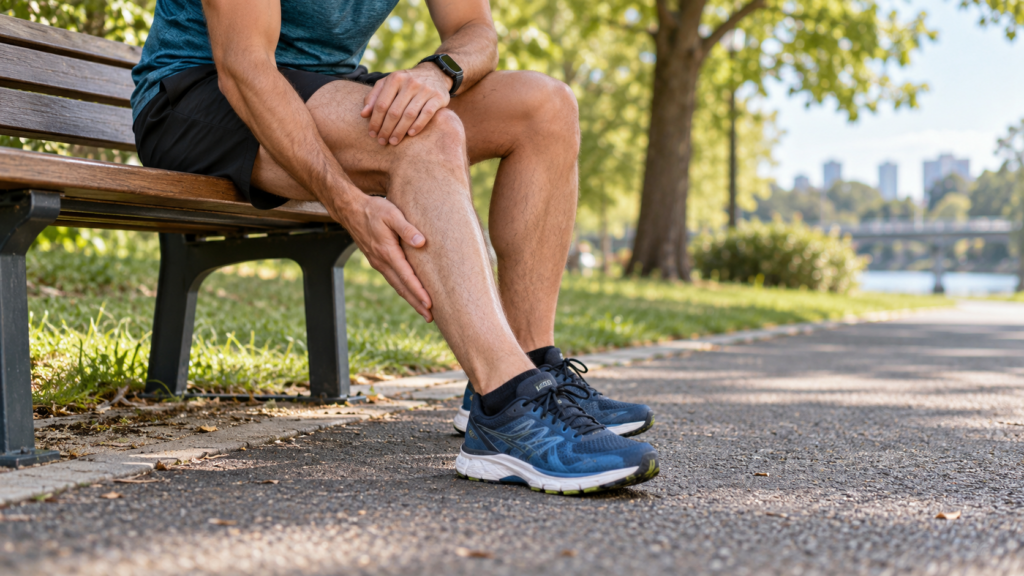
Shin splints, or medial tibial stress syndrome, usually improve by reducing painful running or jumping, rebuilding lower-leg capacity and returning to impact gradually. Prevention means matching training to what your legs can currently tolerate. This article explains practical care, suitable exercise options and the signs that shin pain needs assessment for another injury.
What typical shin splints feel like
Medial tibial stress syndrome commonly causes exercise-related pain along the inner border of the tibia, the larger bone in the lower leg. Tenderness is often spread over a length of the shin rather than confined to one tiny spot.
- Symptoms may start during or after running, jumping or marching.
- The inner shin can feel tender when touched.
- One or both legs may be affected.
The AAOS explanation of shin splints describes the typical pattern and other conditions that can resemble it. Location and tenderness are clues, not a reliable home diagnosis; a bone stress injury can also begin as exercise-related discomfort.
When shin pain needs medical attention
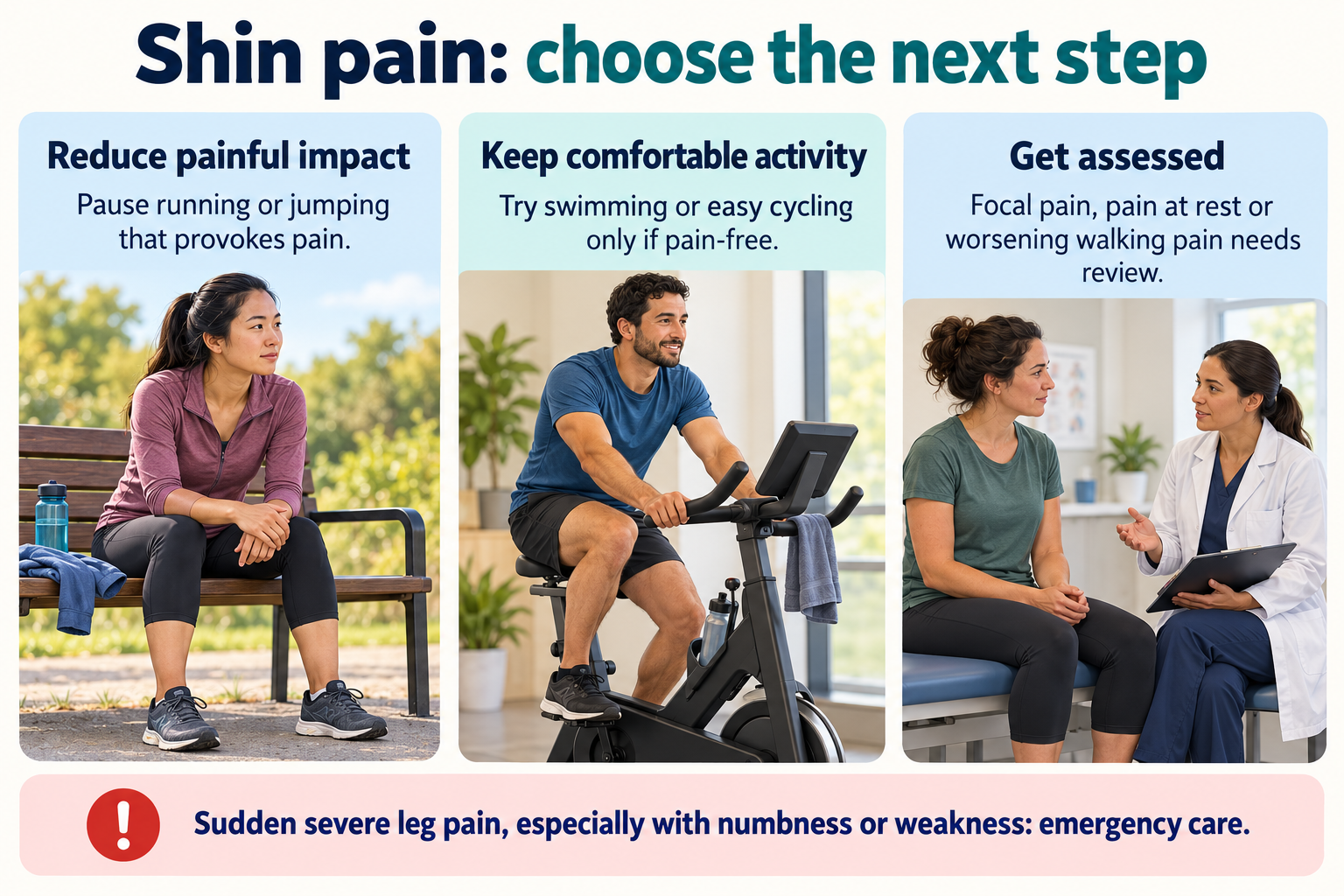
Arrange an assessment if pain is becoming more localised, affects ordinary walking, occurs at rest or at night, or keeps returning despite reducing training. These features can raise concern for a bone stress injury or another cause.
- Stop impact exercise if you are limping or cannot walk comfortably.
- Seek urgent advice for severe pain, significant swelling or pain after an injury.
- Do not repeatedly hop on a painful leg to test whether it is fractured.
Sudden, severe leg pain needs emergency care, particularly with tight swelling, numbness, weakness or difficulty moving the foot. The NHS compartment syndrome guidance explains why an abrupt increase in pressure within a muscle compartment is an emergency.
| Pattern | Possible concern | Next step |
|---|---|---|
| Spread-out inner-shin pain with impact activity | May fit medial tibial stress syndrome | Reduce painful impact; seek assessment if it persists. |
| Focal tenderness, resting pain or worsening walking pain | Possible bone stress injury | Stop running and arrange prompt clinical review. |
| Recurrent exercise-related tightness with tingling or weakness | Possible exertional compartment or nerve problem | Arrange assessment rather than treating it as ordinary shin splints. |
| Sudden severe pain, especially with swelling or neurological symptoms | Possible acute compartment syndrome or other urgent injury | Seek emergency care. |
These patterns overlap. The table helps you choose a next step; it cannot confirm or exclude a diagnosis.
Look for the change that preceded the pain
A training diary can be more useful than blaming a single muscle or shoe. Consider how your total loading changed before symptoms appeared, including sport, gym sessions, work and extra walking.
- Did you add running days, distance or speed?
- Did hills, jumping drills or a new surface appear in the same week?
- Were you restarting after a break?
- Did recovery time decrease while training increased?
Mayo Clinic’s shin splints guidance highlights rapid changes in exercise duration, frequency and intensity. For example, adding a fast session and a longer run together creates a different demand from increasing only one easy outing.
Reduce irritation while maintaining comfortable fitness
Pause the running, jumping or marching that reproduces shin pain. Relative rest means changing the provoking activity, not necessarily stopping all movement.
- Try swimming or easy stationary cycling only if it is pain-free.
- Reduce unnecessary long walks if they aggravate symptoms.
- Keep daily activity within a comfortable level without limping.
For short-term comfort, a cold pack wrapped in a towel can be applied for up to 20 minutes. Do not place ice directly on the skin, and avoid it where sensation or circulation is impaired.
The NHS shin splints advice recommends avoiding the provoking exercise and rebuilding gradually. Ask a pharmacist or clinician about suitable pain relief if needed; relief from medicine is not clearance to run through pain.
- Do not use painkillers to complete a painful training session.
- Avoid repeatedly pressing or aggressively rolling over the tender shinbone.
- Review symptoms if they worsen instead of extending self-treatment indefinitely.
Rebuild calf strength and comfortable movement
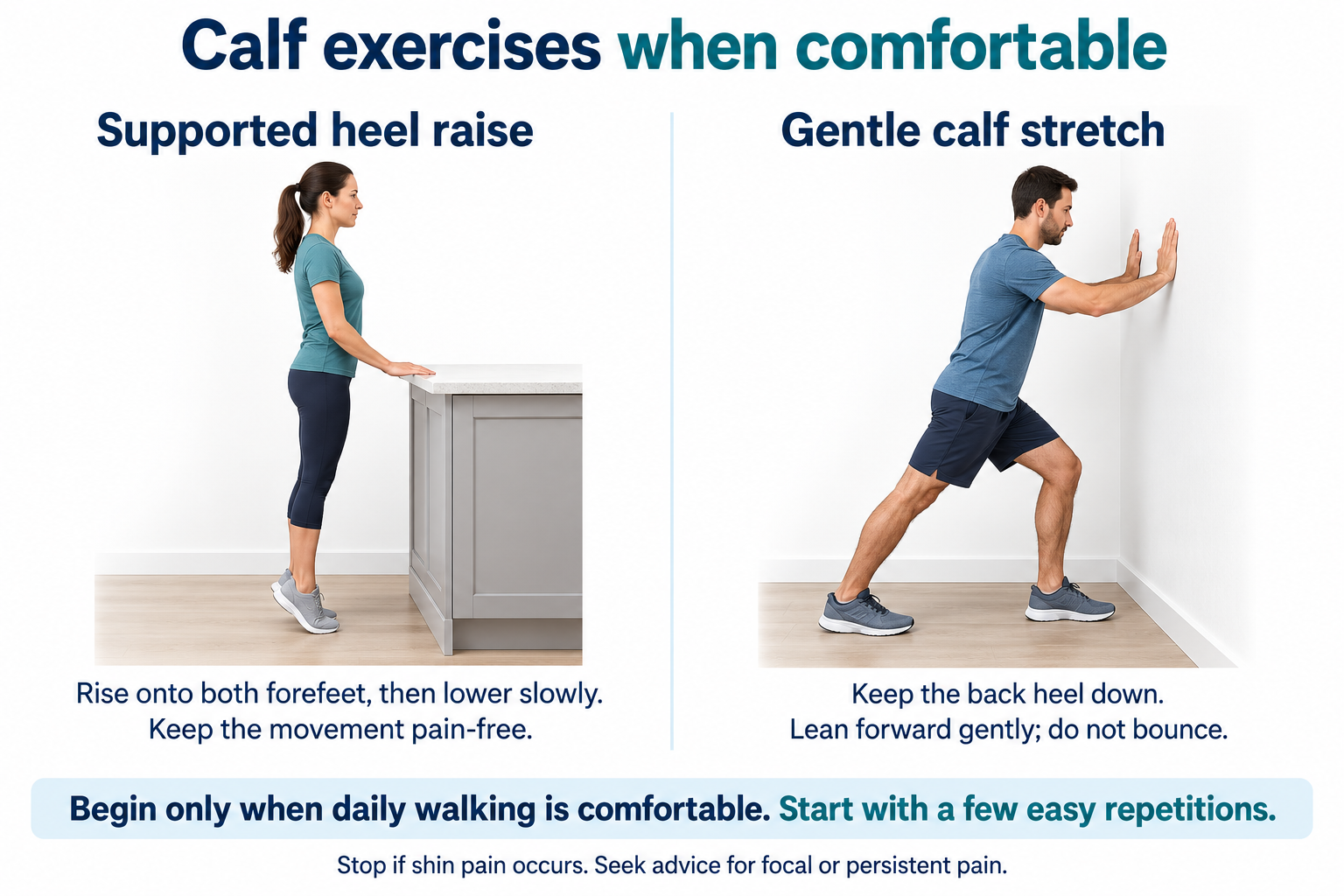
Once ordinary walking is comfortable, gentle exercises may help rebuild capacity. Start with a few easy repetitions, keep them pain-free and seek advice if even a small amount provokes shin pain.
Supported double-leg heel raise: Stand on level ground with both feet comfortably apart and hold a stable counter. Rise onto both forefeet, then lower slowly without bouncing.
- Share your weight between both legs.
- Use a small controlled range initially.
- Stop if shin pain appears during the movement or afterward.
Gentle calf stretch: Face a wall with your hands supported, one foot behind the other. Keep the back knee straight and heel down, and bend the front knee until you feel a mild calf stretch.
- Keep both feet pointing generally forward.
- Hold comfortably without bouncing or forcing the ankle.
- Repeat on the other side and stop if the stretch causes shin pain.
Calf raises and calf stretches appear in hospital exercise advice for shin splints. They are supporting tools, not a substitute for reducing excessive impact.
A physiotherapist may also assess foot strength, balance, ankle movement and hip strength. The Sanford Health rehabilitation guideline progresses care according to individual findings and recovery criteria rather than one timetable for everyone.
Choose footwear and surfaces without expecting a cure
Use comfortable footwear that suits your activity and is not badly worn. Shoes can influence comfort, but replacing them will not compensate for a training load that repeatedly exceeds your current capacity.
- Avoid a sudden switch to a very different shoe style during recovery.
- Start on a predictable, level surface rather than adding hills or uneven trails.
- Discuss inserts with a clinician if foot mechanics or recurrent symptoms warrant assessment.
Cleveland Clinic’s shin splints advice discusses supportive footwear and gradual activity changes. No single shoe, surface or insert guarantees prevention, and a flat foot alone is not a reason to self-prescribe a corrective device.
Return to running through milestones
Begin only when daily activities and walking are pain-free and the reason for any persistent or focal pain has been assessed. Readiness for repeated impact may need a physiotherapist’s review, particularly after a prolonged episode or suspected bone injury.
- Start with an easy walk-run session on level ground.
- Leave recovery time between early runs.
- Increase one demand at a time: running time, frequency, speed or hills.
- Stop if shin pain returns, alters your stride or worsens as you continue.
Berkshire Healthcare’s return-to-running advice emphasises readiness assessment and adapting progression to injury history. A published schedule is a guide, not permission to continue through recurring shin pain.
Check how you feel later that day and the following morning. If the shin is more painful or tender, reduce impact again and get advice if this keeps happening. Do not make up missed training by combining sessions.
Prevent recurrence with consistent load and recovery
Continue lower-leg strengthening after symptoms settle and avoid abrupt jumps in total activity. Prevention is a continuing training habit rather than a stretch performed only when pain appears.
- Keep easy sessions easy when adding a new training demand.
- Plan rest or lower-impact days between demanding sessions.
- Warm up before sport and build from easier to harder movement.
- Include enough sleep and food to support your activity.
NHS running injury-prevention advice explains the relationship between load, recovery and capacity. There is no percentage increase that guarantees safety for every runner; your starting point, injury history and symptoms matter.
Recurrent bone-type pain deserves attention to nutrition as well as training. The AAOS bone stress injury guidance identifies inadequate energy intake and recovery as risk factors. Tell a clinician about restricted eating, unexplained weight changes or menstrual changes where relevant; do not assume supplements alone solve the problem.
What to expect from an assessment
A clinician will ask about the pain pattern, training changes and previous injuries, then examine the leg. Imaging is not automatically required for a typical presentation, but may be needed when the examination suggests a stress injury or another diagnosis.
- Bring a brief record of activity and symptom changes.
- Explain whether pain occurs during walking, rest or sleep.
- Mention tingling, weakness or exercise-related tightness.
- Ask for clear return-to-activity criteria and a review plan.
A normal early X-ray does not necessarily exclude a bone stress injury. If symptoms remain concerning, follow the clinician’s loading advice and follow-up plan rather than using an initial scan as permission to resume running.
Conclusion
Shin splints prevention and care starts with reducing painful impact, identifying recent training changes and rebuilding activity gradually. Pain-free strength work can support recovery, while suitable footwear and consistent recovery habits help manage future demands. Persistent, focal or resting pain needs assessment, and sudden severe leg pain needs emergency care.
Frequently asked questions
Are shin splints the same as medial tibial stress syndrome?
The terms are commonly used together. However, “shin splints” can be used loosely for different causes of shin pain, so the exact diagnosis matters when symptoms are unusual or persistent.
Can I keep running if the pain warms up?
Pain easing after a warm-up does not prove that running is safe. Reduce the provoking impact and seek advice if pain recurs, becomes focal or affects walking.
How long does recovery take?
Recovery varies with severity, symptom duration and how loading is managed. Use comfortable daily activity, strength and graded impact tolerance as milestones rather than choosing a fixed return date.
How can I tell a stress fracture from shin splints?
Focal tenderness, pain at rest or worsening walking pain can raise concern for a bone stress injury, but symptoms overlap. A clinical assessment, sometimes with imaging, is needed rather than a home hopping test.
Does ice cure shin splints?
Ice may offer short-term comfort, but it does not correct excessive training load. Use a cloth barrier and combine symptom relief with appropriate activity modification.
Which exercises should I start with?
When walking is comfortable, a few pain-free supported heel raises and gentle calf stretches may be reasonable starting options. A physiotherapist can adapt strengthening if these reproduce symptoms.
Can I cycle or swim during recovery?
These may maintain fitness if they do not cause shin pain during or afterward. Reduce or stop them if symptoms appear rather than assuming every low-impact activity is suitable.
Do I need special shoes or orthotics?
Not everyone does. Comfortable activity-appropriate shoes are useful, while inserts should address an assessed need rather than being treated as a universal cure.
Is the 10% training rule reliable for everyone?
No fixed weekly percentage guarantees injury prevention. Gradual progression should account for your recent activity, symptoms, recovery and previous injuries.
When is shin pain an emergency?
Sudden severe leg pain needs emergency assessment, particularly with swelling, tightness, numbness, weakness or difficulty moving the foot. Do not assume these symptoms are routine shin splints.