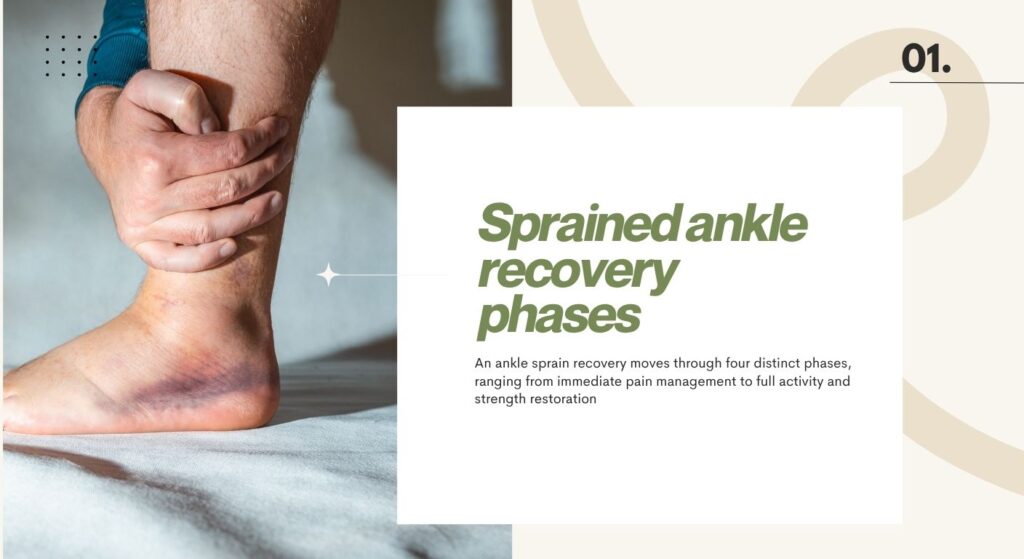
A sprained ankle is one of the most common injuries, yet the recovery timeline confuses almost everyone. The biggest question is not whether you should rest, but when you should start loading the ankle again. Load too early and you risk re-injury. Wait too long and the joint becomes stiff and weak. This guide breaks down the sprained ankle recovery phases and explains exactly when to start loading, with practical steps you can follow at each stage.
You will learn how the healing process unfolds, what “loading” actually means, and how to progress safely from protected rest to full weight-bearing activity.
What Ankle Loading Really Means
Loading is any force placed through the ankle joint. That includes standing, walking, pushing off, and even gentle muscle contractions while the foot is still.
Many people think loading only starts when they walk without crutches. In reality, controlled loading begins much earlier, often within the first few days.
The goal is to give the healing tissue just enough stress to guide repair, without causing new damage. This is sometimes called mechanotherapy, where movement and load help tissue rebuild.
- Passive load: someone moves your ankle for you, or a therapist guides it.
- Active load: you contract your own muscles to move the joint.
- Weight-bearing load: you put body weight through the foot and ankle.
- Functional load: you walk, climb stairs, jog, or jump.
Each type of load has its own timing window. Understanding the phases helps you know which one fits your current stage.
The Three Main Sprained Ankle Recovery Phases
Ankle sprains heal in overlapping phases. They are not strict boxes, but they give a useful roadmap for when to add load.
The phases are commonly described as the inflammatory phase, the proliferation or repair phase, and the remodeling phase. Your symptoms guide the pace more than the calendar.
Phase 1: Protection and Early Motion
This phase covers roughly the first few days after injury. The ankle is swollen, tender, and often bruised.
The priority is to protect the injured ligaments while keeping gentle motion alive. Complete immobilization for long periods is no longer recommended for most mild to moderate sprains.
- Reduce swelling with elevation and compression.
- Begin pain-free range of motion as early as tolerated.
- Use crutches or a brace if walking is painful.
- Avoid stretching into sharp pain.
Early motion helps nutrients reach the healing tissue. It also prevents the joint from becoming stiff, which is a common problem after ankle sprains.
Phase 2: Controlled Loading and Repair
This phase usually begins when swelling and pain start to settle, often within the first week or two for milder sprains. The damaged tissue is now building new collagen.
This is the most important window for starting load. The tissue needs tension to align new fibers properly. Too little load leads to weak, disorganized repair.
- Start partial weight-bearing with support if needed.
- Add resistance bands for ankle strengthening.
- Practice balance on the injured leg.
- Progress walking distance gradually.
Loading should feel like a mild stretch or effort, not a sharp spike of pain. A little discomfort that settles quickly is usually acceptable.
Phase 3: Remodeling and Return to Activity
In this phase, the tissue matures and gets stronger. It can last from several weeks to a few months depending on severity.
Loading now becomes more demanding. You add speed, direction changes, and impact. The ankle must handle forces similar to your sport or daily demands.
- Add hopping and jumping drills.
- Practice cutting and pivoting.
- Build calf and foot strength.
- Test the ankle with sport-specific movements.
Return to full activity is not just about pain. It is about strength, balance, and confidence matching the other side.
When to Start Loading: A Practical Timeline
There is no single day that fits everyone. Sprains range from mild to severe, and healing speed varies. Use the table below as a general guide, not a strict rule.
| Phase | Typical Timing | Loading Focus | Signs You Are Ready to Progress |
|---|---|---|---|
| Protection and early motion | First days | Gentle range of motion, no weight | Swelling stable, pain controlled |
| Controlled loading | First one to two weeks | Partial weight-bearing, light resistance | Walking with less pain, mild swelling |
| Progressive strengthening | Two to six weeks | Full weight-bearing, balance work | Stable walking, good single-leg balance |
| Remodeling and return | Six weeks onward | Running, jumping, direction changes | No pain with sport drills, equal strength |
Severe sprains with complete ligament tears may need longer in each phase. Always follow guidance from a qualified clinician for your specific case.
How to Know You Are Loading Safely
Pain is useful information, but it is not the only signal. Swelling, stiffness, and how the ankle feels the next day all matter.
A simple rule is the twenty-four-hour response. If pain and swelling are not worse the day after loading, you likely handled it well.
- Mild discomfort during activity that fades within an hour is usually fine.
- Swelling that increases and stays up suggests you did too much.
- Sharp pain during loading means stop and reassess.
- Feeling more stable over time is a good sign.
Load is not the enemy. The right amount of load at the right time is what rebuilds a strong ankle.
Track how your ankle responds each day. Small adjustments keep progress steady without setbacks.
Common Loading Mistakes to Avoid
Most recovery delays come from two opposite errors: doing too much too soon, or doing too little for too long.
Both extremes slow you down. The middle path is gradual, consistent loading guided by symptoms.
- Pushing through sharp pain to “toughen it up.”
- Keeping the ankle fully immobilised for weeks.
- Skipping balance training because it feels unimportant.
- Returning to sport before strength matches the other side.
Why Balance Work Matters So Much
After a sprain, the sensors that tell your brain where the ankle is become less reliable. This raises the risk of another sprain.
Balance drills retrain those sensors. They are a form of loading that is easy to start early and progress safely.
- Start by standing on both feet with eyes open.
- Progress to single-leg standing.
- Add eyes closed or a soft surface.
- Add reaching or throwing a ball.
Strength gets you moving again, but balance is what keeps you from going back to the starting line.
Exercises That Match Each Phase
Choosing the right exercise for your phase prevents frustration. Here is how the options line up.
Early Phase Options

- Ankle pumps up and down.
- Gentle circles in both directions.
- Alphabet tracing with the foot.
Middle Phase Options

- Resistance band work in four directions.
- Heel raises with support.
- Single-leg balance holds.
Later Phase Options

- Hopping in place and side to side.
- Lateral band walks.
- Light jogging, then sprinting.
Progress one variable at a time. Add load, then range, then speed, but not all at once.
When to See a Professional
Some sprains need hands-on assessment. Seek help if you cannot bear weight at all, if the ankle looks deformed, or if pain is severe.
Also get checked if swelling does not improve after several days, or if you have numbness or tingling. These signs can point to more than a simple sprain.
- Inability to take four steps without help.
- Bone tenderness along the ankle edges.
- Persistent swelling that will not settle.
- Repeated sprains on the same ankle.
A clinician can rule out fractures and guide your loading plan with more precision.
Building a Long-Term Strong Ankle
Recovery does not end when the pain stops. The final step is making the ankle resilient so it does not fail again.
Keep a simple maintenance routine even after you return to normal activity. A few minutes a few times a week goes a long way.
- Continue balance work weekly.
- Keep calf strength symmetrical.
- Warm up before demanding activity.
- Use a brace during high-risk sports if advised.
Consistency beats intensity. Small, regular loading keeps the ankle strong for years.
Conclusion
The sprained ankle recovery phases move from protection to controlled loading, then to full remodeling. The key is starting load early enough to guide healing, but gently enough to avoid setbacks. Let your symptoms, not just the calendar, set the pace. With steady, progressive loading and balance training, most people return to their normal activities stronger than before.
Frequently Asked Questions
How soon can I start loading a sprained ankle?
Gentle motion can begin within the first few days for most mild to moderate sprains. Partial weight-bearing often starts within the first week or two, depending on pain and swelling. Severe sprains may need longer protection before load is added.
Should I completely rest a sprained ankle?
Complete rest for long periods is not recommended for most sprains. Early gentle motion and controlled loading help tissue heal better. Only certain severe injuries need strict immobilization, and that should be guided by a clinician.
Is it normal to feel some pain when loading?
Mild discomfort that fades within an hour is usually acceptable. Sharp pain during activity, or swelling that worsens the next day, means the load was too much. Adjust and try again at a lower level.
How do I know if I am doing too much?
Check your ankle the next day. If pain and swelling are worse, you pushed too hard. If they are the same or better, your loading level was likely appropriate.
What is the fastest way to recover from an ankle sprain?
There is no single shortcut. The fastest safe path combines early motion, progressive loading, strengthening, and balance work. Skipping steps often leads to setbacks and a longer recovery.
Do I need a brace while loading my ankle?
A brace can help during early weight-bearing and high-risk activity. It supports the joint while you rebuild strength. You should gradually reduce reliance on it as stability improves.
Why is balance training so important after a sprain?
Sprains affect the sensors that control ankle position and stability. Balance drills retrain these sensors and reduce the risk of re-injury. They are a key part of loading at every stage.
Can I walk on a sprained ankle?
Many people can walk with support once pain and swelling allow. Start with crutches or a brace if needed, then reduce support as the ankle tolerates more load. Stop if pain increases sharply.
How long until I can return to sport?
Mild sprains may allow a return in a few weeks, while severe sprains can take several months. You should have full strength, good balance, and no pain with sport-specific drills before returning.
What happens if I load my ankle too early?
Loading too early can re-injure healing tissue, increase swelling, and delay recovery. It may also lead to chronic instability. Progress gradually and let your symptoms guide the pace.