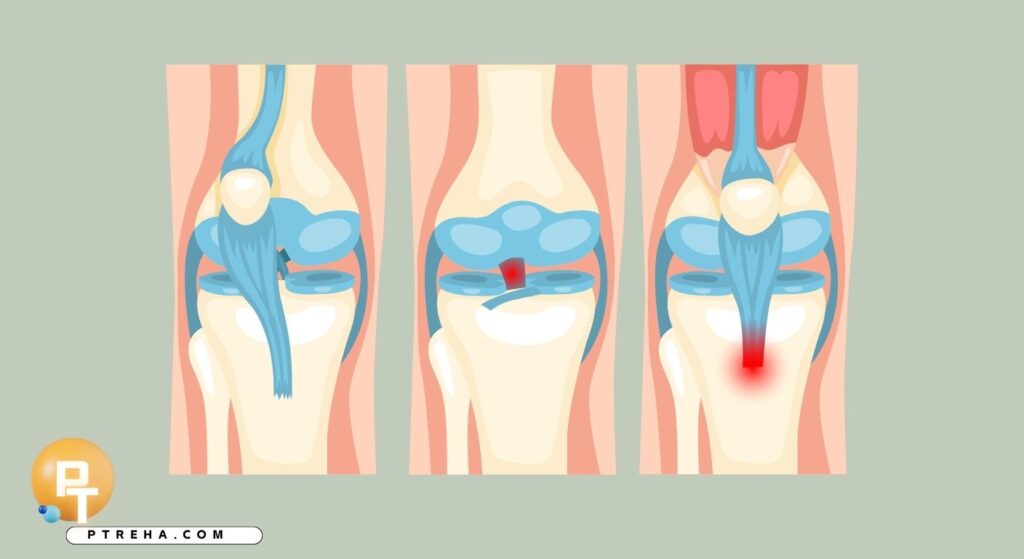
Recovery after anterior cruciate ligament reconstruction (ACLR) is best understood as a progression of healing, motion, strength, movement quality, and functional confidence, not simply a countdown from surgery.
The exact pace depends on the graft, additional procedures such as meniscal repair, the knee’s response, and whether the goal is normal daily activity, recreational exercise, or a demanding pivoting sport.
Current guidance supports combining time-based tissue protection with objective, criterion-based progression.
How to use an ACL recovery timeline
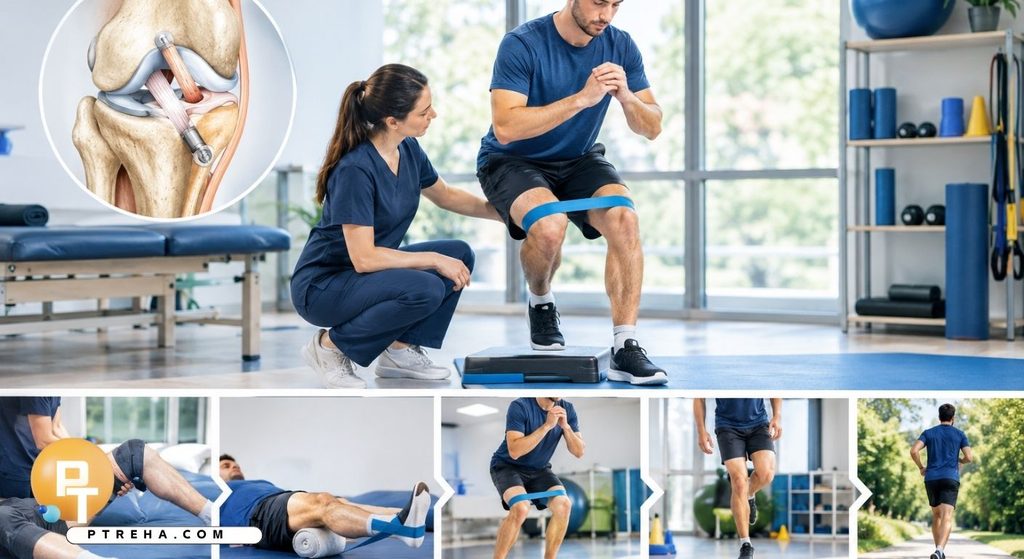
An ACL recovery timeline provides a framework, but it should not be treated as permission to progress because a certain number of weeks has passed.
A patient may reach one milestone quickly while needing more time to restore quadriceps strength, extension, swelling control, or single-leg control.
For example, a patient may walk normally but still have substantial quadriceps weakness.
Another patient may have excellent strength but persistent effusion that limits running progression.
A useful rehabilitation plan therefore asks two questions: Where am I in the healing process? and What can my knee safely demonstrate now?
Core milestones that guide progression
- Pain and swelling are controlled rather than progressively increasing.
- Knee extension is restored and maintained.
- Knee flexion is progressing appropriately for the surgical procedure.
- Quadriceps activation is returning.
- Gait becomes increasingly symmetrical.
- Strength is measured rather than judged only by appearance.
- Single-leg control improves before high-speed or high-impact activity.
- Running is introduced only when clinical and functional criteria are appropriate.
- Plyometrics and change-of-direction drills are progressed gradually.
- Return to sport includes psychological readiness and sport-specific performance.
Phase 1: Immediate postoperative recovery
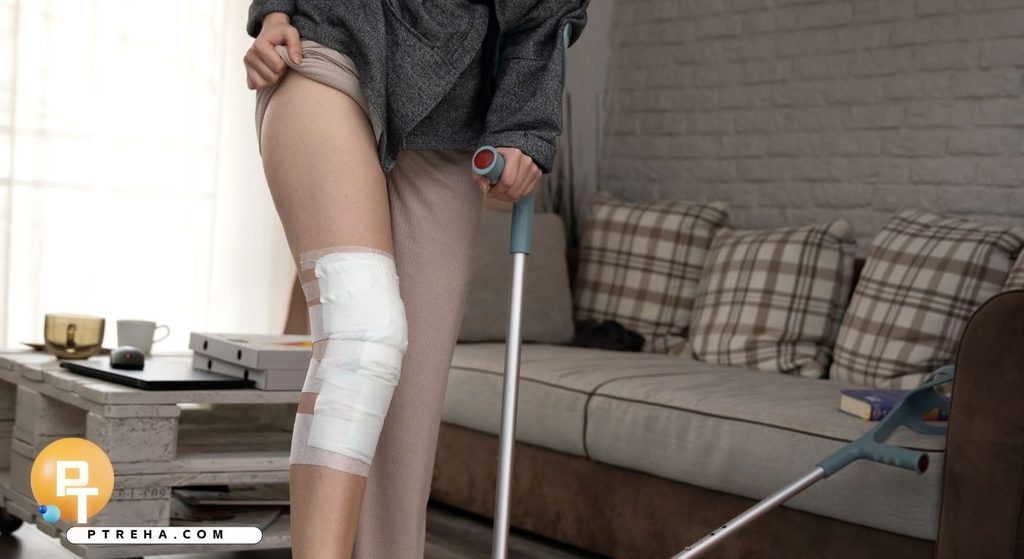
The first stage focuses on protecting the reconstruction while restoring basic knee function.
Early goals commonly include reducing pain and effusion, restoring patellar mobility, regaining full extension, beginning flexion recovery, and re-establishing quadriceps activation.
Early weight bearing and movement may be appropriate after an uncomplicated ACL reconstruction, but the surgeon’s instructions take priority, particularly when another structure has been repaired.
A meniscal repair or other concomitant procedure can require a more conservative progression.
Practical priorities in the early stage
- Follow the surgeon’s weight-bearing and brace instructions.
- Work toward full knee extension without forcing painful motion.
- Address swelling that interferes with movement.
- Perform prescribed quadriceps activation exercises.
- Use crutches until gait is adequately controlled.
- Avoid pivoting or sudden twisting on the surgical limb.
- Monitor the incision and postoperative symptoms.
- Maintain mobility of the patella when instructed.
- Progress knee flexion gradually.
- Reassess the knee response after exercise rather than only during exercise.
Straight-leg raises may be used when adequate quadriceps control is present and a clinically appropriate programme has been prescribed.
Current guidance supports early quadriceps isometrics and straight-leg raises when appropriate, with rehabilitation individualized to the patient and surgical details.
Clinical point: Early rehabilitation is not about doing as many exercises as possible. It is about restoring the basic conditions needed for normal movement: a controlled knee, useful range of motion, and sufficient muscle activation.
Phase 2: Early strength, gait, and movement recovery
As swelling decreases and movement improves, rehabilitation shifts toward rebuilding strength and normalizing everyday function.
Closed-chain exercises, progressive resistance work, balance activities, and controlled functional tasks can become increasingly important.
The quadriceps deserves particular attention because postoperative inhibition and atrophy can create a substantial strength deficit even when the knee feels much better.
Evidence-based guidance supports combining open- and closed-kinetic-chain strengthening rather than treating one category as universally superior.
Milestones to look for
- Walking with a more symmetrical gait.
- Minimal or well-controlled effusion.
- Full extension maintained during daily activity.
- Improving flexion without provoking a persistent reactive swelling response.
- Straight-leg raise without clinically significant lag.
- Better quadriceps contraction.
- Controlled sit-to-stand performance.
- Progression from supported to more independent balance work.
- Increasing tolerance of resistance exercise.
- No repeated giving-way episodes.
Exercise selection should reflect the patient’s current capacity rather than an arbitrary list.
Examples can include sit-to-stand work, squatting variations, leg press, step exercises, calf strengthening, hamstring strengthening when permitted, and hip strengthening.
Open-chain knee extension should not automatically be excluded from rehabilitation.
Current clinical guidance supports appropriately dosed open-chain work within a controlled range while monitoring anterior knee symptoms and modifying load or range when necessary.
Phase 3: Progressive strengthening and single-leg control

Later rehabilitation should look increasingly like preparation for the patient’s actual demands.
Strength training becomes more challenging, and the programme should address the quadriceps, hamstrings, calf, hip musculature, and trunk as part of whole-limb function.
Motor control is not a replacement for strength training.
The evidence-based approach is to combine strengthening with movement-control work, rather than expecting balance exercises alone to restore the required force-producing capacity.
Useful exercise categories
- Progressive bilateral squats.
- Single-leg squat variations.
- Step-ups and step-downs.
- Leg press progression.
- Progressive hamstring loading.
- Calf raises and loaded calf work.
- Hip abductor and extensor strengthening.
- Split squats or similar unilateral patterns.
- Controlled landing drills when appropriate.
- Trunk and pelvic control exercises.
The clinician should also monitor the quality of movement.
A stronger leg that still demonstrates poor control during single-leg loading may not be ready for running, jumping, or cutting.
A practical example is the step-down test.
The question is not simply whether the patient completes the repetition, but whether the knee, hip, ankle, and trunk remain controlled without pain, apprehension, or excessive compensatory movement.
ACL recovery timeline and milestone table
| Rehabilitation stage | Common timeframe | Main priorities | Examples of progression criteria |
|---|---|---|---|
| Immediate postoperative | First couple of weeks | Protect the reconstruction, control symptoms, restore extension, activate quadriceps | Improving swelling, extension, quadriceps control, safe transfers and gait |
| Early rehabilitation | Several weeks | Restore motion, normalize gait, begin progressive strength | Improved ROM, controlled walking, improving strength and function |
| Strength development | Roughly several weeks to a few months | Build quadriceps, hamstring, calf and hip capacity | Better unilateral control, progressive resistance tolerance |
| Running preparation | Later rehabilitation | Establish adequate strength, ROM, impact tolerance and control | Minimal effusion, near-complete ROM, sufficient strength and hopping tolerance |
| Return-to-sport preparation | Advanced rehabilitation | Plyometrics, acceleration, deceleration, cutting and sport-specific work | Objective strength/performance testing, movement quality, psychological readiness |
These timeframes are intentionally broad.
Rehabilitation protocols vary according to tissue healing, graft choice, additional surgery, examination findings, and individual response.
Phase 4: Preparing for running

Running should be treated as a milestone, not as a reward for surviving a certain number of weeks.
Current ACL rehabilitation guidance recommends combining time since surgery with clinical and functional criteria.
Before progressing to running, the clinician should be satisfied that the knee tolerates loading without a persistent increase in pain or effusion.
Adequate motion and useful quadriceps capacity are particularly important.
Common considerations before running
- Full knee extension.
- Flexion close to the required functional range.
- No or minimal effusion.
- Sufficient quadriceps strength.
- Adequate single-leg control.
- Tolerance of repeated low-level impact.
- No significant pain during preparatory drills.
- Ability to perform basic hopping activities when clinically appropriate.
- Good response to the previous training load.
The Aspetar guideline proposes specific examples of criteria for initiating running, including near-complete flexion, full extension, minimal effusion, sufficient quadriceps symmetry, adequate jumping capacity, and pain-free low-impact running preparation.
These are proposed clinical criteria, not universally validated pass/fail rules.
Running should normally begin as a progression from lower-load tasks rather than an immediate return to continuous high-volume running.
Phase 5: Plyometrics, agility, and sport-specific rehabilitation
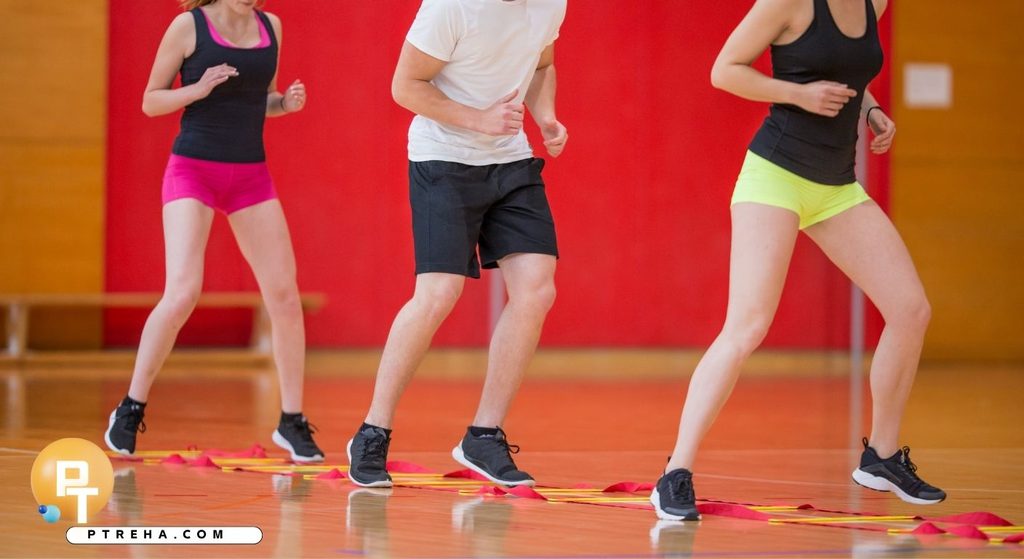
Once strength and basic running tolerance are established, the rehabilitation programme can become progressively more demanding.
Plyometric exercises, acceleration, deceleration, lateral movement, and change-of-direction work may be introduced and progressed according to the patient’s goals.
The movement demands should gradually resemble the activity the patient intends to resume.
Examples of advanced progression
- Bilateral jumping.
- Low-level landing drills.
- Repeated single-leg hopping.
- Forward and lateral hops.
- Acceleration and deceleration.
- Planned change of direction.
- Reactive movement drills.
- Sport-specific footwork.
- Fatigue-tolerant movement practice.
- Controlled integration into training sessions.
The progression should not jump from a controlled gym exercise directly to unrestricted competition.
Load, speed, complexity, and unpredictability should increase progressively.
The AAOS states that functional evaluation, including hop testing, may be considered as one component of return-to-sport decision-making.
It should not be interpreted as a single test that independently proves readiness.
What changes the recovery timeline?
Two people can have very different ACL rehabilitation timelines even after technically similar reconstructions.
Surgical and patient-specific factors matter.
Factors that commonly alter progression
- Meniscal repair or other additional surgery.
- Graft type and donor-site symptoms.
- Postoperative swelling or stiffness.
- Delayed quadriceps activation.
- Persistent strength asymmetry.
- Pre-existing conditioning level.
- Pain that limits loading.
- Poor tolerance to increases in training volume.
- Recurrent knee instability or giving-way.
- Psychological readiness and confidence.
- The demands of the target sport or occupation.
For example, a patient who underwent ACL reconstruction with a concurrent meniscal procedure may have different early weight-bearing and range-of-motion restrictions from a patient with an isolated reconstruction.
The more restrictive surgical protocol should take precedence when procedures are combined.
Graft type can also influence rehabilitation considerations.
Protocols may differ for patellar tendon, hamstring, quadriceps tendon, and allograft reconstructions, so patients should not copy another person’s programme simply because their surgical dates are similar.
When a setback needs clinical review
A temporary increase in symptoms can occur after rehabilitation loading, but persistent or worsening problems should not simply be pushed through.
Contact the treating team when there is
- Increasing rather than settling joint swelling.
- Persistent loss of extension.
- Significant or uncontrolled pain.
- New or recurrent giving-way.
- Sudden loss of previously achieved function.
- Concerning wound drainage.
- Fever or systemic illness.
- Intense calf pain or swelling.
- New symptoms that do not fit the expected postoperative course.
Mass General Brigham specifically advises medical contact for fever, intense calf pain, excessive drainage, uncontrolled pain, or other concerning symptoms after ACL reconstruction.
The key principle is that rehabilitation should be responsive.
If the knee repeatedly becomes more swollen or painful after a particular progression, the answer is often to reassess the dose, technique, recovery, or diagnosis rather than simply repeating the same load.
How clinicians measure progress
A good ACL rehabilitation programme uses more than visual inspection.
Strength and functional measures help identify deficits that may remain hidden during ordinary walking.
Useful reassessment domains
- Knee range of motion.
- Effusion.
- Quadriceps strength.
- Hamstring strength.
- Calf strength.
- Single-leg functional control.
- Hop performance when appropriate.
- Running mechanics.
- Landing mechanics.
- Patient-reported knee function.
- Psychological readiness for higher-demand activity.
Strength symmetry can be expressed using a limb symmetry index, but symmetry alone should not be treated as the whole assessment.
A patient can have two relatively weak limbs and still produce a misleadingly “symmetrical” result.
For high-demand athletes, the Aspetar guideline describes a broader battery incorporating strength, jumping, running mechanics, subjective function, psychological readiness, knee stability, and completion of sport-specific preparation.
The guideline also acknowledges that the exact criteria are not fully validated.
Practical rules for progressing safely
A useful way to think about the ACL recovery timeline is capacity first, complexity second, intensity third.
When one variable increases, the others may need to remain stable so that the knee can adapt.
A practical progression checklist
- Introduce one meaningful loading change at a time.
- Monitor the knee later the same day and the following day.
- Do not use pain alone as the only measure of readiness.
- Reassess swelling after harder sessions.
- Keep strengthening throughout the later phases.
- Train both limbs, not only the reconstructed side.
- Progress single-leg control before high-speed cutting.
- Use objective testing before unrestricted sport.
- Include psychological readiness in return-to-sport decisions.
- Continue injury-prevention and movement-quality training after return.
Remember: Being able to perform one impressive test does not automatically mean the knee is ready for unrestricted sport. Readiness is a combination of healing, strength, movement quality, functional capacity, sport-specific exposure, and confidence.
Conclusion
A post-ACL surgery recovery timeline is most useful when it explains what the patient should be able to do, not merely how many weeks have passed.
Early rehabilitation emphasizes symptom control, extension, motion, and quadriceps activation; middle rehabilitation builds strength and single-leg control; advanced rehabilitation adds running, jumping, agility, and sport-specific demands.
The safest progression is individualized and criterion-based, with biological healing time respected but not used as the only clearance tool.
Rehabilitation should continue until the knee and the person—not simply the calendar—are prepared for the demands of the desired activity.
FAQ
How long does ACL reconstruction rehabilitation usually take?
Recovery is individual, and rehabilitation length depends on the surgical procedure, associated injuries, physical deficits, and the demands of the person’s goal.
Basic daily function may return substantially earlier than high-level running, jumping, cutting, or competitive sport.
When can I walk normally after ACL surgery?
Walking without crutches usually depends on adequate quadriceps control, acceptable pain and swelling, and a safe gait pattern rather than a fixed date.
Some uncomplicated reconstructions allow progressive weight bearing early, while additional procedures can require more protection.
When should I regain full knee extension?
Restoring full extension is an early priority because a persistent extension deficit can interfere with gait and normal knee mechanics.
The exact approach should follow the surgeon’s postoperative restrictions and the physiotherapist’s assessment.
When can I start strengthening exercises?
Quadriceps activation can begin very early when medically appropriate, while progressive resistance training develops as the knee tolerates greater loading.
Current guidance supports both open- and closed-chain strengthening as part of rehabilitation, with exercise selection and loading individualized.
Is swelling normal during ACL rehabilitation?
Some swelling can occur after surgery and after increasing activity, but it should generally trend toward improved control as rehabilitation progresses.
Repeated or increasing effusion can indicate that the current training load or another clinical issue needs reassessment.
When can I start running after ACL reconstruction?
Running is introduced when the knee has adequate motion, minimal effusion, sufficient strength, and appropriate functional readiness.
The Aspetar guideline proposes combining time since surgery with clinical and performance criteria instead of using time alone.
Do I need hop tests before returning to sport?
Hop tests can provide useful functional information, but they are only one part of a return-to-sport assessment.
Current guidance supports considering functional evaluation alongside strength, movement quality, symptoms, sport-specific ability, and other relevant factors.
Does passing a strength test mean I am ready for sport?
No.
Strength is important, but return to high-demand sport also requires adequate movement control, running and jumping capacity, sport-specific preparation, knee stability, symptoms that are well controlled, and psychological readiness.
Why does ACL rehabilitation take so long if the knee feels good?
Feeling better does not mean every physical quality has fully recovered.
Strength deficits, movement-control problems, reduced power, altered confidence, and incomplete exposure to sport-specific demands may remain after everyday activities become comfortable.
Can ACL rehabilitation be faster than the usual timeline?
Some protocols can progress efficiently when tissue-healing requirements, clinical findings, and functional criteria are satisfied.
However, an accelerated timeline should still respect biological healing and postoperative restrictions, particularly when additional procedures are performed.
Resources
Aspetar Clinical Practice Guideline on Rehabilitation After Anterior Cruciate Ligament Reconstruction
Comprehensive evidence-based and consensus guidance covering exercise, strength training, running, return to activity, and progression criteria.
Mass General Brigham — Rehabilitation Protocol for ACL Reconstruction
A practical postoperative protocol explaining phase goals, progression considerations, and situations requiring surgeon input.
American Academy of Orthopaedic Surgeons — ACL Clinical Practice Guidance
Includes evidence summaries concerning postoperative rehabilitation and functional assessment for return to sport.