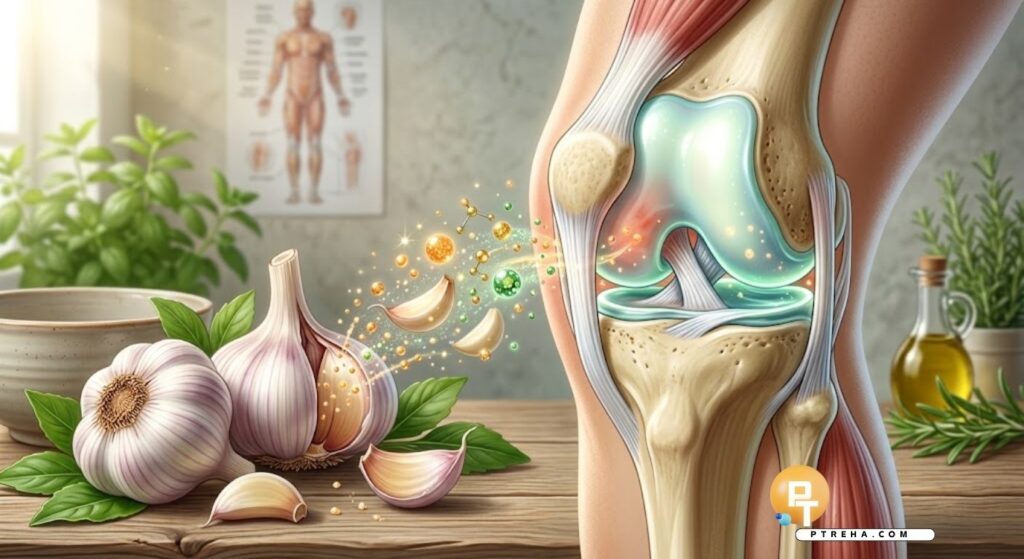
Garlic is widely used as a food, but its sulfur-containing compounds have also attracted interest for their possible effects on inflammation, oxidative stress, and joint symptoms.
Current evidence suggests that garlic can be a useful part of a balanced diet, while limited clinical studies indicate potential benefits for some people with joint conditions.
However, garlic should be viewed as a nutritional component rather than a treatment for arthritis or a replacement for exercise, physical therapy, or appropriate medical care.
Garlic and Joint Health: What Makes Garlic Interesting?
Garlic, or Allium sativum, belongs to the same plant family as onions, leeks, and shallots.
Its characteristic smell comes largely from sulfur-containing compounds that form when garlic is chopped, crushed, or chewed.
One of the best-known compounds associated with fresh garlic is allicin.
Garlic also contains other organosulfur compounds, including diallyl sulfide and diallyl disulfide.
From a joint-health perspective, researchers are interested in these compounds because laboratory studies suggest that some may influence inflammatory signaling and oxidative processes.
Garlic also provides small amounts of several nutrients, including:
- Vitamin B6
- Vitamin C
- Manganese
- Selenium
- Potassium
- Phosphorus
- Copper
- Small amounts of fiber
- Sulfur-containing plant compounds
The nutritional amounts supplied by a typical serving are relatively modest.
Garlic’s research interest therefore comes primarily from its bioactive plant compounds rather than from being a major source of vitamins or minerals.
A recent review of garlic and degenerative musculoskeletal conditions concluded that several garlic-derived compounds show anti-inflammatory and antioxidant activity in experimental models.
Importantly, the authors also emphasized that much of this evidence comes from cell and animal research and that stronger human clinical trials are still needed.
How Garlic May Affect Inflammation Around the Joints
Inflammation is not automatically harmful.
It is an essential biological response involved in healing, immune function, and adaptation to physical stress.
Problems can arise when inflammatory activity becomes persistent or is associated with conditions such as rheumatoid arthritis, metabolic disease, or symptomatic osteoarthritis.
Garlic compounds have been investigated for possible effects on inflammatory pathways involving substances such as:
- Nuclear factor kappa B, or NF-κB
- Tumor necrosis factor alpha
- Interleukins
- Matrix metalloproteinases
- Oxidative stress pathways
- Certain adipokines
- Cellular antioxidant systems
These mechanisms are interesting scientifically, but they should not be confused with proven clinical benefits.
A compound reducing an inflammatory marker in a laboratory dish does not automatically mean that eating garlic will reduce arthritis pain in a person.
For a physical therapist, the more useful question is whether garlic consumption leads to meaningful changes in pain, stiffness, walking capacity, strength, or daily function.
That clinical evidence is much more limited.
What Research Shows About Garlic and Osteoarthritis

Osteoarthritis involves the entire joint rather than cartilage alone.
Depending on the joint and individual, changes may involve cartilage, subchondral bone, synovium, muscles, ligaments, and other surrounding tissues.
Symptoms also do not correspond perfectly with structural changes seen on imaging.
For people with osteoarthritis, important treatment targets commonly include:
- Pain management
- Muscle strength
- Joint mobility
- Walking tolerance
- Physical activity
- Balance when appropriate
- Functional capacity
- Body-weight management when relevant
- Sleep and general health
Garlic has been investigated as an additional nutritional strategy.
One randomized, double-blind, placebo-controlled trial studied overweight or obese postmenopausal women with mild-to-moderate knee osteoarthritis.
Participants received either garlic supplementation or placebo.
The researchers reported a reduction in pain severity in the garlic group compared with placebo and a reduction in the inflammatory marker resistin.
However, tumor necrosis factor alpha did not significantly change between groups.
The full randomized controlled trial on garlic and knee osteoarthritis provides useful clinical evidence, but its findings need to be interpreted according to the population and protocol studied.
Several limitations are important:
- The study involved a specific group of women.
- Participants had knee osteoarthritis.
- The intervention involved garlic tablets rather than ordinary dietary garlic.
- The intervention was relatively short.
- The sample size was modest.
- Results cannot automatically be generalized to every joint condition.
- The study does not establish garlic as an osteoarthritis treatment.
Related analyses have produced somewhat mixed results for pain, stiffness, WOMAC scores, and physical function.
Therefore, the evidence is promising enough to justify further study but not strong enough to recommend garlic as a standalone intervention for osteoarthritis.
Garlic, Rheumatoid Arthritis, and Inflammatory Joint Disease
Rheumatoid arthritis is fundamentally different from osteoarthritis.
It is a systemic inflammatory autoimmune disease requiring appropriate medical management.
Garlic should never be presented as an alternative to disease-modifying treatment.
A randomized placebo-controlled study in women with active rheumatoid arthritis found that garlic supplementation was associated with improvements in several inflammatory markers and clinical outcomes.
Reported changes included:
- Lower C-reactive protein levels
- Lower tumor necrosis factor alpha
- Reduced pain intensity
- Fewer tender joints
- Improvements in a disease-activity measure
- Reduced fatigue
- Changes in swollen-joint counts
The clinical trial examining garlic supplementation in rheumatoid arthritis provides an interesting signal that deserves additional research.
It does not mean that garlic controls rheumatoid arthritis.
The study was relatively small and short, and replication in larger, diverse populations would be necessary before firm clinical conclusions could be made.
For people with inflammatory arthritis, nutrition belongs alongside—not instead of—their medical management, appropriate physical activity, strength training, mobility work, pacing strategies, and rehabilitation.
Can Garlic Protect Joint Cartilage?
This is where claims about garlic often become exaggerated.
Laboratory research has investigated whether compounds derived from garlic can influence enzymes and signaling pathways involved in cartilage degradation.
Some experimental findings suggest potential effects on:
- Matrix metalloproteinase activity
- Chondrocyte inflammatory responses
- Oxidative stress
- Extracellular matrix degradation
- NF-κB-related signaling
- Cellular responses to inflammatory cytokines
These findings provide biologically plausible mechanisms.
They do not prove that eating garlic regenerates cartilage.
There is currently insufficient human evidence to say that garlic can:
- Rebuild lost cartilage
- Reverse osteoarthritis
- Restore joint-space narrowing
- Repair a meniscus
- Heal damaged ligaments
- Eliminate inflammatory arthritis
- Prevent joint replacement
- Replace rehabilitation
This distinction is particularly important in musculoskeletal health because laboratory mechanisms are frequently marketed as proven clinical effects.
A reasonable conclusion is that garlic contains compounds worth studying for musculoskeletal health, but cartilage-protective effects in humans remain unproven.
Garlic as Part of a Joint-Friendly Diet
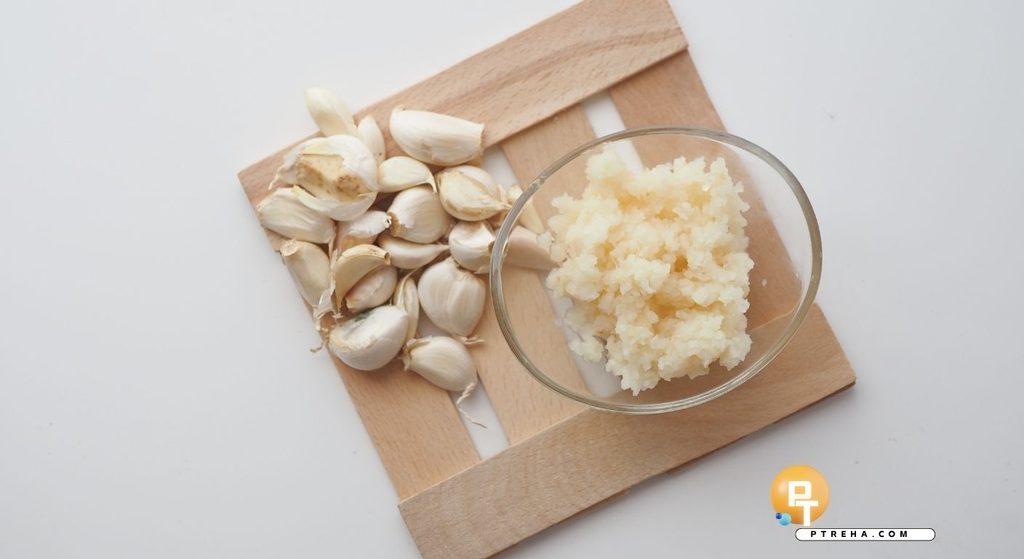
For most people, the practical value of garlic is not taking large doses in an attempt to treat a painful joint.
Its value is easier to justify when garlic helps build a nutritious overall eating pattern.
A joint-supportive diet can emphasize:
- Vegetables of different colors
- Fruits
- Legumes
- Whole grains
- Nuts and seeds
- Fish where appropriate
- Adequate protein
- Unsaturated fats
- Herbs and spices
- Minimally processed foods
Garlic fits naturally into many of these meals.
For example, garlic can be added to:
- Lentil soup
- Vegetable dishes
- Tomato sauces
- Chickpeas
- Bean salads
- Fish dishes
- Chicken dishes
- Roasted vegetables
- Yogurt-based sauces
- Whole-grain pasta
- Homemade hummus
- Stir-fried vegetables
This approach has an important advantage: the goal becomes improving the overall dietary pattern rather than searching for one “anti-inflammatory food.”
A Practical Joint-Supportive Meal Example
A simple meal might include grilled salmon, roasted vegetables seasoned with garlic and herbs, lentils, and a leafy green salad.
Such a meal provides far more than garlic alone.
Depending on the ingredients, it may contribute:
- High-quality protein
- Omega-3 fatty acids
- Fiber
- Potassium
- Magnesium
- Antioxidant compounds
- Vitamins
- Minerals
- Plant phytochemicals
For people undergoing physical therapy, adequate overall nutrition can also support recovery from exercise and the maintenance of muscle mass.
Raw, Crushed, Cooked, or Supplemented Garlic?
Garlic chemistry changes considerably during preparation.
When garlic tissue is crushed or chopped, the enzyme alliinase interacts with alliin and helps produce allicin.
Allicin itself is unstable and can form additional sulfur-containing compounds.
Heat, processing, storage, and supplement manufacturing can all change the compounds ultimately consumed.
That makes comparisons between garlic studies difficult.
Different research protocols may use:
- Fresh garlic
- Garlic powder
- Garlic oil
- Aged garlic extract
- Odorless garlic tablets
- Standardized extracts
- Different doses of active compounds
Consequently, results from a specific supplement cannot automatically be transferred to a clove of fresh garlic.
Using Garlic in Everyday Food
There is no need to create a complicated preparation ritual.
Practical options include:
- Crush garlic into hummus.
- Chop it into tomato sauce.
- Add it to lentils or beans.
- Mix it into marinades.
- Roast it with vegetables.
- Combine it with olive oil and herbs.
- Add small amounts to yogurt sauces.
- Use it to reduce reliance on heavily processed sauces.
People who experience digestive symptoms may tolerate cooked garlic better than larger amounts of raw garlic.
Food tolerance matters more than attempting to maximize one particular garlic compound.
Garlic Supplements vs. Garlic in Food
Food and supplements should not automatically be treated as equivalent.
A garlic supplement may contain a more concentrated amount of particular compounds than a normal meal.
Products may also vary considerably in manufacturing method and chemical composition.
For general nutrition, garlic used as a food is usually the more straightforward approach.
Potential reasons to favor food first include:
- Garlic contributes flavor without requiring a supplement.
- It can replace some salt-heavy sauces.
- It fits into balanced meals.
- Food portions are generally less concentrated.
- Supplement formulations vary.
- Clinical evidence for joint benefits remains limited.
- Supplements can interact with medications.
A supplement should therefore not be assumed to be “better” simply because the dose is larger.
What About Garlic Dosage for Joint Pain?
There is no established clinical garlic dose for treating osteoarthritis, rheumatoid arthritis, or general joint pain.
Some research has used specific supplement doses, but those protocols should not be converted into universal recommendations.
A research dose is not automatically a recommended therapeutic dose.
The correct dose may also depend on:
- Product formulation
- Medication use
- Medical history
- Gastrointestinal tolerance
- Bleeding risk
- Other supplements
- Reason for taking the product
For ordinary nutrition, garlic can simply be incorporated into meals according to preference and tolerance.
Safety, Side Effects, and Medication Considerations
Garlic used in normal food quantities is generally well tolerated by most people.
Concentrated supplements require more caution.
The U.S.
National Center for Complementary and Integrative Health notes that oral garlic may cause abdominal discomfort, flatulence, nausea, body odor, or allergic reactions.
It also warns that garlic supplements may increase bleeding risk, particularly when combined with medications that affect clotting.
Its garlic safety and evidence guidance is a useful resource for people considering supplements.
Potential issues include:
- Heartburn
- Abdominal discomfort
- Gas
- Nausea
- Strong breath odor
- Body odor
- Allergic reactions
- Increased bleeding tendency with concentrated supplements
Extra caution is appropriate when someone:
- Takes anticoagulant medication
- Takes antiplatelet medication
- Uses aspirin regularly
- Has a bleeding disorder
- Is preparing for a procedure
- Takes several supplements
- Experiences persistent gastrointestinal symptoms
- Is pregnant or breastfeeding and considering concentrated supplements
Physical therapists should also ask about supplements during medication and health-history review when relevant.
That information may be particularly important before invasive procedures such as dry needling because substances affecting bleeding risk may influence clinical decision-making.
Where Garlic Fits Into Physical Therapy for Joint Pain
From a rehabilitation perspective, nutrition is one component of a much larger clinical picture.
When a patient reports knee, hip, shoulder, hand, or other joint pain, the priority is understanding how symptoms affect movement and function.
A physical therapy assessment may consider:
- Symptom behavior
- Range of motion
- Muscle strength
- Walking capacity
- Balance
- Functional activities
- Exercise tolerance
- Work demands
- Sleep and recovery
- Physical activity levels
- Relevant psychosocial factors
For common musculoskeletal conditions, progressively dosed exercise usually has a much clearer role in rehabilitation than any individual food.
Depending on the condition and patient, rehabilitation may involve:
- Progressive resistance training
- Aerobic exercise
- Mobility exercises
- Activity modification
- Pacing
- Balance training
- Functional strengthening
- Education
- Gradual exposure to meaningful activities
Nutrition can support these goals rather than compete with them.
For example, a person with knee osteoarthritis may focus on quadriceps and hip strengthening, walking tolerance, appropriate aerobic activity, sleep, and a balanced diet that includes vegetables, legumes, fish, whole grains, and foods flavored with garlic.
That represents a realistic whole-person strategy.
What Matters More Than Garlic for Long-Term Joint Health?
People frequently search for one food capable of reducing joint inflammation.
Joint health does not usually work that way.
For most people, the larger modifiable factors deserve more attention.
Regular Physical Activity
Appropriately dosed movement supports:
- Muscle strength
- Cardiovascular fitness
- Joint function
- Balance
- Mobility
- Physical confidence
- Participation in daily life
Strength Training
Stronger muscles can improve the body’s capacity to manage physical loads.
Programs should be individualized according to the involved joint, symptoms, health status, and functional goals.
Healthy Dietary Patterns
Rather than concentrating exclusively on garlic, build meals around:
- Vegetables
- Fruit
- Whole grains
- Legumes
- Appropriate protein sources
- Nuts
- Seeds
- Fish when included in the diet
- Unsaturated fats
Body-Weight Management When Clinically Relevant
For weight-bearing joints, excess body mass can increase mechanical loading.
Adipose tissue is also metabolically active and may influence inflammatory processes.
Weight management should be approached individually and without implying that every person with joint pain needs to lose weight.
Sleep and Recovery
Poor sleep can influence pain sensitivity, recovery, fatigue, and exercise tolerance.
For many patients, improving sleep and activity patterns may have a larger practical effect than adding a single supplement.
The Bottom Line on Garlic and Joint Health
Garlic is a nutritious culinary ingredient containing several biologically active sulfur compounds.
Laboratory research provides plausible anti-inflammatory and antioxidant mechanisms, while small clinical trials have reported potentially useful changes in pain, stiffness, inflammatory markers, or disease-related symptoms in selected groups.
The evidence is not strong enough to conclude that garlic treats arthritis, protects human cartilage from degeneration, or repairs damaged joints.
For most people, the sensible approach is to use garlic as part of a varied, nutrient-dense diet while concentrating joint management on interventions with stronger evidence, including appropriate exercise, strength development, physical activity, weight management when relevant, adequate recovery, and condition-specific healthcare.
Frequently Asked Questions
Is garlic good for joint health?
Garlic can be part of a healthy eating pattern and contains sulfur-based plant compounds with anti-inflammatory and antioxidant properties.
Limited human research suggests possible benefits for some joint symptoms, but evidence is not strong enough to classify garlic as a treatment for joint disease.
Does garlic reduce joint inflammation?
Garlic compounds can influence inflammatory pathways in laboratory research.
Some small human trials have also reported changes in certain inflammatory markers, but results cannot be generalized to all people or all causes of joint inflammation.
Can garlic help knee osteoarthritis?
A small number of clinical studies in selected populations with knee osteoarthritis have reported improvements in certain outcomes such as pain or stiffness.
The evidence remains limited, and garlic should be considered an adjunct to healthy nutrition rather than a primary osteoarthritis intervention.
Can garlic rebuild cartilage?
There is no convincing clinical evidence that eating garlic or taking garlic supplements rebuilds lost human joint cartilage.
Laboratory findings involving cartilage cells should not be interpreted as proof of cartilage regeneration in people.
Is raw garlic better for joints than cooked garlic?
There is no high-quality evidence showing that raw garlic produces superior clinical joint outcomes.
Preparation changes garlic’s chemical composition, but the most useful form is generally one that fits comfortably into a healthy diet and does not cause digestive problems.
How much garlic should I eat for joint pain?
There is no established therapeutic food dose of garlic for joint pain.
Garlic can be included in normal meals according to personal preference and tolerance rather than treated like a medication.
Are garlic supplements better than fresh garlic?
Not necessarily.
Supplements may provide concentrated or standardized compounds, but formulations differ and the evidence for joint benefits remains limited.
Concentrated supplements may also create more medication-interaction and bleeding concerns than normal culinary use.
Can I take garlic supplements if I use blood thinners?
Garlic supplements may increase bleeding risk and may interact with medications affecting blood clotting.
People taking anticoagulant or antiplatelet medication should discuss concentrated garlic supplements with the healthcare professional responsible for their medication management.
Can garlic replace anti-inflammatory medication?
No.
Garlic should not be used as a substitute for prescribed treatment.
People with inflammatory arthritis or another medically managed joint disorder should continue treatment according to the plan established with their qualified healthcare professional.
What is the best way to support joint health naturally?
A comprehensive approach is more useful than relying on one food.
Regular exercise, progressive strengthening, appropriate physical activity, adequate sleep, a balanced diet, management of relevant body-weight factors, and condition-specific rehabilitation provide a stronger foundation for long-term joint function.