
Yes—bone, joint, and muscle health depends on a coordinated mix of nutrients, not one “best” food or supplement. This guide explains what the key nutrients do, where to find them, and how to build a practical food-first pattern that supports training, recovery, and healthy aging.
How nutrition supports the musculoskeletal system
Bones continually remodel, muscles repair and adapt after loading, and connective tissues maintain the matrix that helps transmit force. Adequate energy and a varied diet provide the raw materials for these processes, while exercise supplies the mechanical stimulus.
- Bone: needs minerals, protein, vitamin D, and regular weight-bearing or resistance loading.
- Muscle: needs sufficient protein, carbohydrate, micronutrients, and progressive activity.
- Joints and connective tissues: benefit from adequate protein, vitamin C, healthy fats, and overall dietary variety.
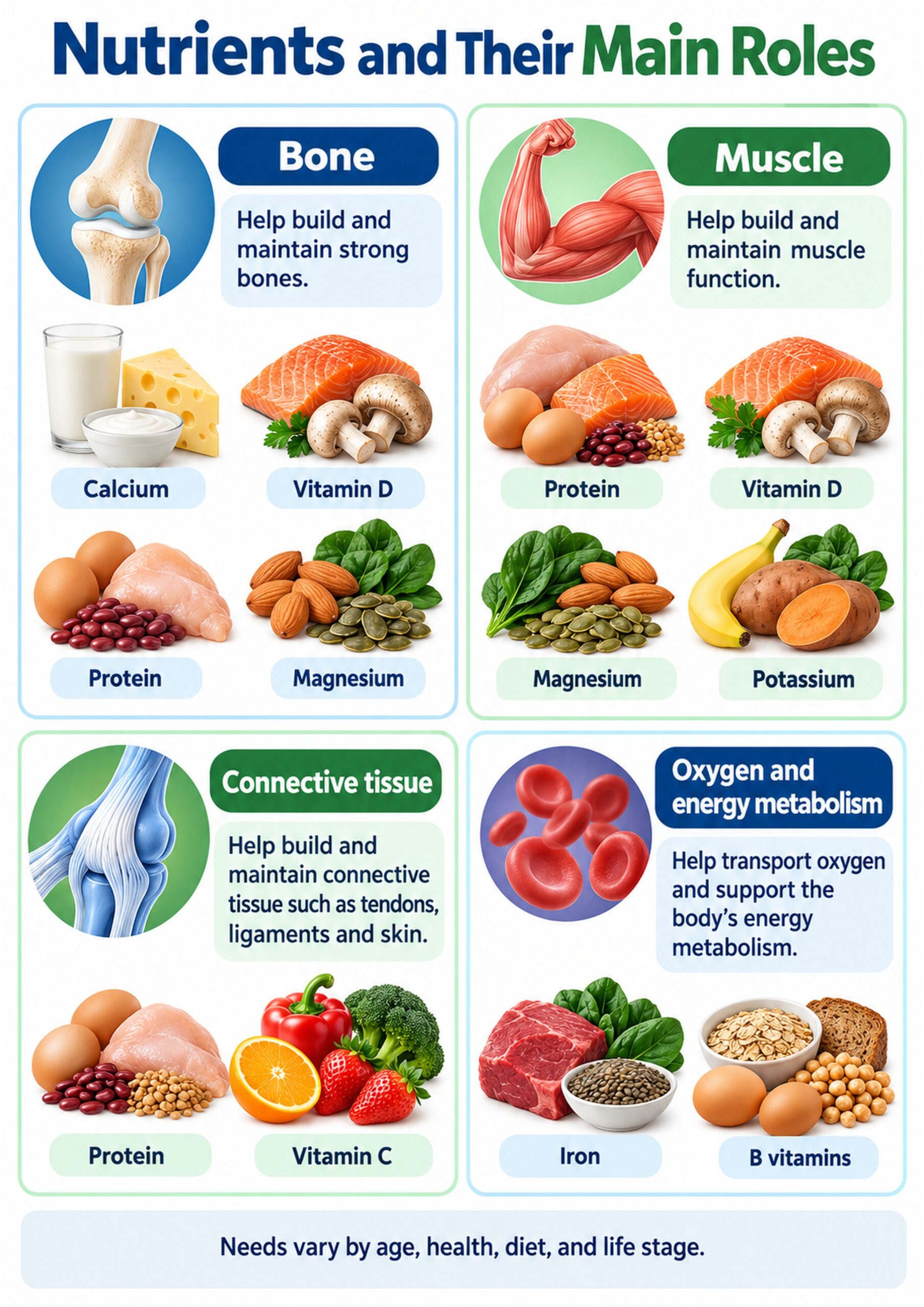
Protein for muscle and connective-tissue maintenance
Protein supplies amino acids used to maintain and repair muscle and other tissues. Daily intake matters, but spreading protein-containing foods across meals can make it easier to meet needs and support recovery.
- Fish, poultry, eggs, lean meat, milk, yogurt, and cheese
- Beans, lentils, peas, soy foods, nuts, and seeds
- A protein food at breakfast, lunch, and dinner rather than concentrating it in one meal
Needs vary with body size, age, health, activity, and recovery demands. People with kidney disease or another condition affecting protein intake should follow individualized clinical advice.
Calcium and vitamin D for bone health
Calcium is a major mineral in bone, while vitamin D helps the body absorb calcium and supports bone mineralization. The National Institute of Arthritis and Musculoskeletal and Skin Diseases guidance on calcium and vitamin D explains why both matter alongside physical activity.
- Calcium sources include dairy foods, calcium-set tofu, canned fish with edible bones, and fortified foods.
- Vitamin D comes from limited food sources, fortified products, and skin synthesis after sun exposure.
- Food labels help confirm whether a plant drink, cereal, or juice is fortified.
Sun exposure is not a dependable or risk-free prescription because production varies with season, latitude, skin pigmentation, age, clothing, and sunscreen use. A clinician may recommend testing or supplementation when deficiency risk is meaningful.
Magnesium and potassium in muscle function
Magnesium contributes to normal muscle and nerve function and participates in bone metabolism. Potassium supports nerve signaling, muscle contraction, and fluid balance; neither should be treated as a stand-alone cure for cramps.
- Magnesium: legumes, nuts, seeds, whole grains, and leafy green vegetables
- Potassium: potatoes, beans, yogurt, fruit, vegetables, and fish
- A varied plant-rich pattern usually supplies several minerals together
The NIH Office of Dietary Supplements magnesium fact sheet describes food sources, deficiency risk, and interactions. People with kidney disease should not increase mineral supplements without medical guidance.
Vitamin C and the connective-tissue matrix
Vitamin C is required for collagen synthesis, which is relevant to tendons, ligaments, cartilage, bone matrix, skin, and blood vessels. It supports tissue formation but does not by itself repair an injured tendon or reverse arthritis.
- Citrus fruit, kiwi, berries, guava, and tomatoes
- Bell peppers, broccoli, cabbage, and other vegetables
- Regular servings of fruit and vegetables rather than relying on high-dose products
Iron and B vitamins for energy and movement
Iron supports oxygen transport, while several B vitamins participate in energy metabolism and red-blood-cell production. Low iron status can contribute to fatigue and reduced exercise tolerance, but symptoms are nonspecific and should be assessed rather than self-diagnosed.
- Iron sources: meat, shellfish, beans, lentils, tofu, and fortified cereals
- B-vitamin sources: whole grains, legumes, animal foods, leafy greens, and fortified foods
- Vitamin C-rich foods can improve absorption of non-heme iron from plant foods
Unexplained fatigue, breathlessness, weakness, or falling performance warrants medical evaluation. Iron supplements can cause harm when taken unnecessarily and may interact with medicines.
Dietary fats and inflammation context
Unsaturated fats are useful energy sources and help absorb fat-soluble vitamins. Omega-3 fats are part of a healthy dietary pattern, but food choices should not be presented as a substitute for diagnosing or treating inflammatory joint disease.
- Choose olive oil, nuts, seeds, avocado, and oily fish regularly.
- Keep highly processed foods and excess alcohol occasional.
- Judge the overall pattern rather than labeling one food “inflammatory.”
Hydration and exercise performance
Fluid needs change with body size, climate, illness, exercise duration, and sweat loss. Hydration supports circulation and performance, but drinking excessive water can also be unsafe.
- Start activity normally hydrated and drink according to thirst for most routine sessions.
- Use water with meals and keep it accessible during exercise.
- For long, hot, or high-sweat sessions, individualized fluid and electrolyte planning may help.
Build a practical food-first pattern
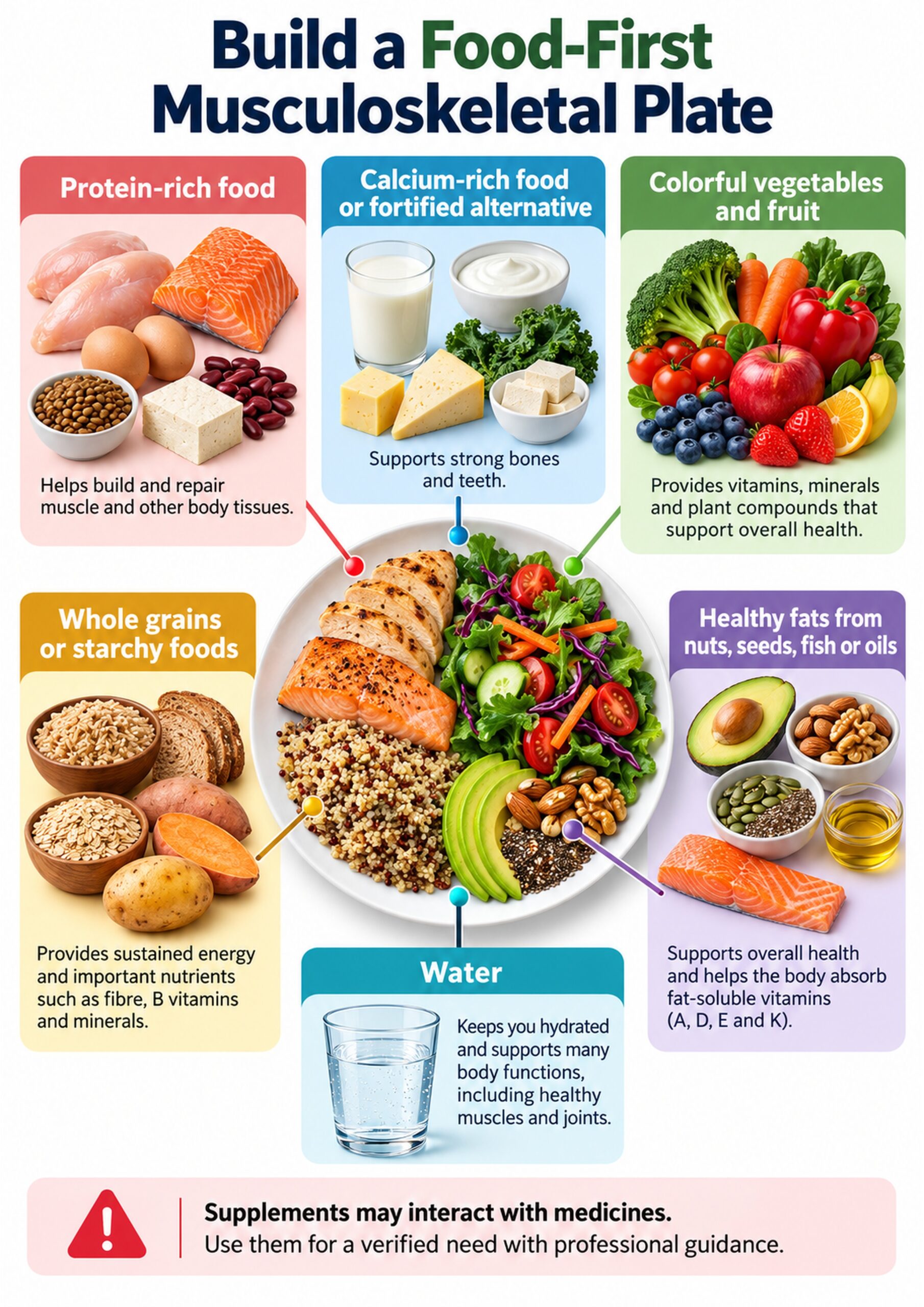
A sustainable plate pattern covers more nutritional ground than chasing isolated nutrients. Adjust portions to appetite, activity, health goals, culture, and access.
- Include a protein source at each main meal.
- Add vegetables or fruit in several colors across the day.
- Choose whole grains or starchy vegetables for training fuel.
- Use calcium-rich or fortified foods regularly.
- Add nuts, seeds, olive oil, or fish for unsaturated fats.
| Nutrient | Key role | Food-first examples | Clinical caution |
|---|---|---|---|
| Protein | Tissue maintenance and repair | Fish, eggs, dairy, soy, beans | Needs vary; individualize in kidney disease |
| Calcium + vitamin D | Bone mineralization and calcium balance | Dairy or fortified alternatives, calcium-set tofu, suitable fish | Deficiency risk and supplements need context |
| Magnesium + potassium | Muscle, nerve, and fluid functions | Legumes, nuts, seeds, greens, potatoes, fruit | Supplement excess can be unsafe, especially with kidney disease |
| Vitamin C | Collagen synthesis | Fruit, peppers, tomatoes, broccoli | Does not independently heal an injury |
| Iron + B vitamins | Oxygen transport and energy metabolism | Meat, legumes, whole grains, fortified foods | Test suspected deficiency before high-dose iron |
When supplements may be appropriate
Supplements can be useful when food intake is insufficient, a deficiency is confirmed, absorption is impaired, or a clinician identifies a specific risk. The NIH vitamin D consumer fact sheet provides evidence-based information on sources, risk groups, and upper limits.
- Check the reason, dose, duration, and possible interactions.
- Avoid stacking products that contain the same nutrient.
- Choose independently tested products when a supplement is advised.
- Review medicines, pregnancy, kidney disease, and liver disease with a qualified clinician.
Match nutrition with loading, sleep, and clinical care
Nutrition supports adaptation; it cannot replace progressive resistance exercise, weight-bearing activity, sleep, or treatment for disease and injury. Persistent pain, recurrent stress injuries, unexplained weakness, appetite loss, or major weight change deserves assessment.
- Use resistance training to stimulate muscle and bone adaptation.
- Progress load gradually and allow recovery between demanding sessions.
- Seek tailored advice when injury, osteoporosis risk, restrictive eating, or a medical condition changes nutritional needs.
Conclusion
The strongest routine is simple: eat enough, distribute protein, include calcium-rich or fortified foods, choose varied plant foods, and stay appropriately hydrated. Combine that pattern with progressive exercise and individualized care when symptoms or health conditions change what is safe.
Frequently asked questions
What is the most important nutrient for bone health?
No single nutrient works alone. Calcium, vitamin D, protein, magnesium, and adequate total energy all contribute, while regular loading provides the stimulus that helps bone adapt.
Can food repair damaged cartilage?
No food has been shown to rebuild damaged cartilage by itself. A balanced diet can support general health and tissue metabolism, while diagnosis, exercise, load management, and medical care address the underlying joint problem.
How can I add more protein without supplements?
Add eggs or yogurt at breakfast, beans or fish at lunch, and poultry, tofu, lentils, or dairy at dinner. Snacks such as milk, soy drinks, nuts, or yogurt can fill gaps.
Do I need a vitamin D test?
Routine testing is not necessary for everyone. A clinician can decide based on symptoms, bone health, limited sun exposure, malabsorption, medicines, or other risk factors.
Are calcium supplements as good as food?
Food provides calcium with other nutrients and is usually the first option. Supplements may be appropriate when intake is inadequate, but the dose and need should be individualized.
Will magnesium stop muscle cramps?
Cramps have many causes, and magnesium is not a universal solution. Consider training load, fatigue, hydration, medicines, nerve or vascular factors, and clinical assessment when cramps persist.
What should I eat after strength training?
A normal meal containing protein, carbohydrate, and fluid is practical for most people. Examples include yogurt with fruit and oats, eggs with whole-grain toast, or rice with beans and vegetables.
Can an anti-inflammatory diet cure arthritis?
No diet cures arthritis. A plant-rich dietary pattern may support cardiovascular and metabolic health, while arthritis treatment should match the diagnosis and include appropriate movement and medical care.
How does hydration affect joints?
Hydration supports normal circulation and physical performance, but extra water does not lubricate a painful joint on demand or reverse structural disease. Drink according to conditions and individual needs.
When should I see a dietitian or clinician?
Seek individualized help for recurrent injuries, suspected deficiency, osteoporosis risk, major dietary restriction, kidney or digestive disease, unexplained fatigue, or significant weight or appetite change.