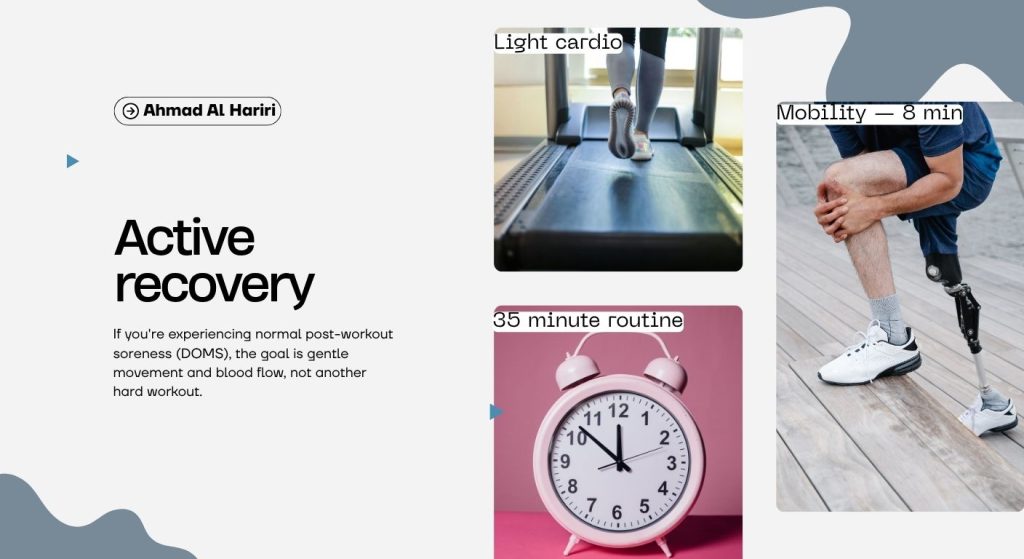
An active recovery day routine for sore muscles is not about pushing harder. It is about moving gently enough to boost blood flow, ease stiffness, and help your body repair itself without adding new damage. This guide explains what active recovery really means, how to build a simple routine, and which habits support faster muscle relief.
Sore muscles after hard training are normal, but the way you treat them on your rest day changes how quickly you bounce back. Below you will find a practical, time-friendly plan you can follow at home or in the gym.
What Is an Active Recovery Day?
An active recovery day is a low-intensity movement session done on a day when you are not training hard. The goal is not to build fitness. The goal is to help your body recover.
Instead of sitting still all day, you do light activity that keeps blood moving through tired muscles. This can reduce stiffness and help you feel better the next day.
Active recovery sits between full rest and hard training. You are moving, but you are never pushing into strain.
- Low intensity, easy breathing, no burning muscles
- Short duration, often 20 to 45 minutes
- Focus on circulation, mobility, and relaxation
- No personal records, no heavy loads, no sprinting
- Should leave you feeling better, not more tired
Recovery is not a break from progress. It is part of the process.
Why Sore Muscles Need Gentle Movement
Soreness after training usually comes from tiny stress on muscle fibers. Gentle movement increases blood flow, which brings oxygen and nutrients to those tissues.
Movement also helps flush out waste products and reduces the feeling of tightness. It can calm the nervous system, which matters because stress slows recovery.
Research in sports science consistently supports light activity over complete inactivity for reducing soreness. You do not need fancy tools. Walking, easy cycling, and simple stretching often do the job.
Signs You Need an Active Recovery Day
- Muscles feel tight, heavy, or tender to touch
- You feel sluggish but not sick
- Range of motion is slightly reduced
- Your last workout was harder than usual
- You slept poorly or feel stressed
Signs You Need Full Rest Instead
- Sharp or localized joint pain
- Fever, chills, or feeling unwell
- Dizziness or unusual fatigue
- Pain that gets worse with movement
- Swelling or bruising after an injury
How to Build an Active Recovery Day Routine for Sore Muscles
A good routine is simple and repeatable. You want something you can do even when you feel stiff and low on energy.
Start with light movement, add mobility work, then finish with relaxation. Keep the whole session under an hour.
Step 1: Easy Warm-Up (5 to 10 Minutes)
- Walk at a comfortable pace
- Do slow arm circles and shoulder rolls
- March in place with relaxed knees
- Add gentle hip circles and ankle rolls
Step 2: Low-Intensity Cardio (15 to 25 Minutes)
- Brisk walking outdoors or on a treadmill
- Easy cycling on a flat route
- Swimming or water walking
- Using an elliptical at very low resistance
- Rowing with slow, steady strokes
Step 3: Mobility and Stretching (10 to 15 Minutes)
- Hold each stretch for 20 to 30 seconds
- Breathe slowly and avoid bouncing
- Focus on the muscles that feel sore
- Include hips, hamstrings, calves, chest, and back
Step 4: Cool Down and Relaxation (5 to 10 Minutes)
- Slow breathing with long exhales
- Gentle foam rolling on tender areas
- Legs-up-the-wall position for circulation
- Light stretching while seated
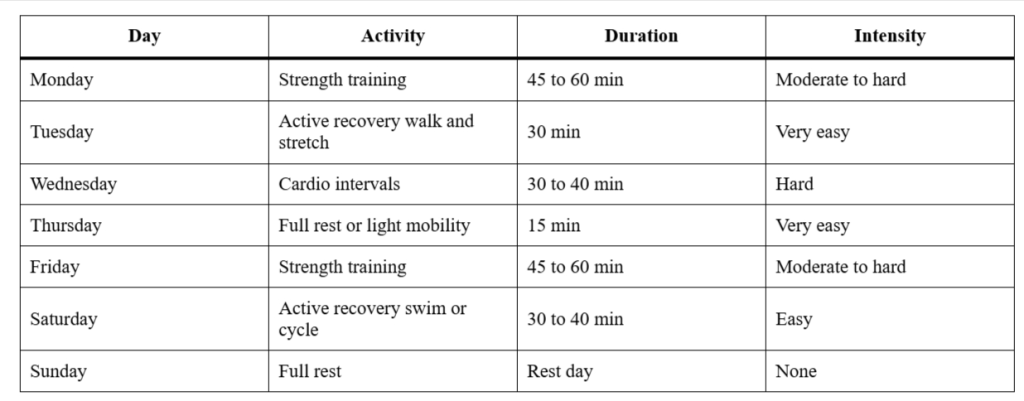
Sample Weekly Active Recovery Plan
You do not need an active recovery day after every workout. One or two per week is usually enough for most people.
The table below shows a simple weekly structure you can adapt to your schedule.
Best Low-Impact Activities for Sore Muscles
Choose activities that keep impact low and effort easy. Your muscles should feel warm and loose, not challenged.
- Walking, indoors or outdoors
- Easy cycling or stationary bike
- Swimming and water aerobics
- Gentle yoga or tai chi
- Light rowing or elliptical work
- Foam rolling and mobility drills
If you feel worse after the session, you did too much. Scale back next time and keep the effort truly easy.
Common Mistakes That Slow Recovery
Many people turn a recovery day into another hard workout without realizing it. That can delay healing and keep soreness around longer.
- Going too fast or too heavy
- Skipping the warm-up
- Stretching into sharp pain
- Ignoring sleep and nutrition
- Doing intense recovery every single day
- Comparing your pace to training days
Move often, but move gently. Recovery rewards patience, not effort.
Support Habits That Make Recovery Work
Movement is only one part of the picture. Sleep, food, and hydration all affect how fast your muscles recover.
These habits are simple, but they make a real difference when combined with an active recovery day routine for sore muscles.

Sleep and Rest
- Aim for consistent sleep and wake times
- Keep the room cool and dark
- Avoid heavy meals and screens before bed

Nutrition and Hydration
- Eat enough protein to support repair
- Include fruits and vegetables for antioxidants
- Drink water throughout the day
- Add electrolytes after heavy sweating

Stress and Mindset
- Take short breaks during the workday
- Try slow breathing for a few minutes
- Remember that rest days build progress too
How to Know Your Routine Is Working
You should notice small improvements within a day or two. Soreness may not disappear, but it should feel more manageable.
- Muscles feel less tight after moving
- Range of motion improves slightly
- You sleep better that night
- Energy returns for your next workout
- Soreness fades faster than before
If soreness lingers for many days or gets worse, reduce training load and consider speaking with a health professional.
Adapting Recovery for Different Training Styles
Your recovery routine should match the type of training you do. A runner and a lifter may need slightly different approaches.
After Heavy Lifting
- Focus on walking and easy cycling
- Add mobility for hips, shoulders, and back
- Keep sessions short and relaxed
After Long Runs or Cardio
- Use easy walking or swimming
- Stretch calves, hamstrings, and hip flexors
- Elevate legs to support circulation
After Team Sports or Sprints
- Choose gentle cycling or water walking
- Prioritize sleep and hydration
- Avoid extra high-impact activity
Conclusion
An active recovery day routine for sore muscles works best when it stays easy, short, and consistent. Gentle movement improves circulation, reduces stiffness, and helps you return to training feeling fresh.
Pick one or two low-impact activities, keep the effort light, and support your body with sleep, food, and water. Done right, recovery days become one of your most valuable training habits.
Frequently Asked Questions
How long should an active recovery day last?
Most people do well with 20 to 45 minutes of easy movement. You can split it into a short walk in the morning and light stretching in the evening.
The key is keeping the effort low. If you feel drained afterward, shorten the session next time.
Is walking good for sore muscles?
Yes, walking is one of the best options. It is low impact, easy to control, and increases blood flow without stressing tired muscles.
Start with a relaxed pace and increase slightly only if you feel comfortable.
Should I stretch sore muscles?
Gentle stretching can help reduce tightness and improve range of motion. Avoid pushing into pain or bouncing during the stretch.
Hold each position for 20 to 30 seconds and breathe slowly.
Can I do active recovery every day?
Light movement like walking is fine daily for most people. But structured recovery sessions are usually best one or two times per week.
Your body still needs full rest days to repair and rebuild.
What should I eat on a recovery day?
Focus on balanced meals with protein, complex carbohydrates, and vegetables. Protein supports muscle repair, while carbs help restore energy.
Drink water regularly and add electrolytes if you sweated heavily the day before.
Does foam rolling help sore muscles?
Foam rolling can reduce tightness and improve how muscles feel. Use slow, controlled rolls and avoid pressing directly on painful spots.
Keep each area brief, around 30 to 60 seconds.
Is it better to rest completely or move gently?
For typical soreness, gentle movement usually feels better than complete rest. It supports circulation and reduces stiffness.
Complete rest is better when you have sharp pain, injury, or signs of illness.
How do I know if I am doing too much?
If soreness worsens, fatigue increases, or you feel worse after the session, you pushed too hard.
Lower the intensity, shorten the session, and add more full rest days.
Can active recovery help me perform better?
Yes, when done correctly. It can reduce stiffness, improve circulation, and help you feel ready for the next hard session.
It works best as part of a balanced plan with proper sleep and nutrition.
What if soreness lasts for several days?
Mild soreness can last a few days after a new or hard workout. If it lasts much longer or gets worse, reduce your training load.
If pain is sharp, persistent, or linked to an injury, seek advice from a health professional.