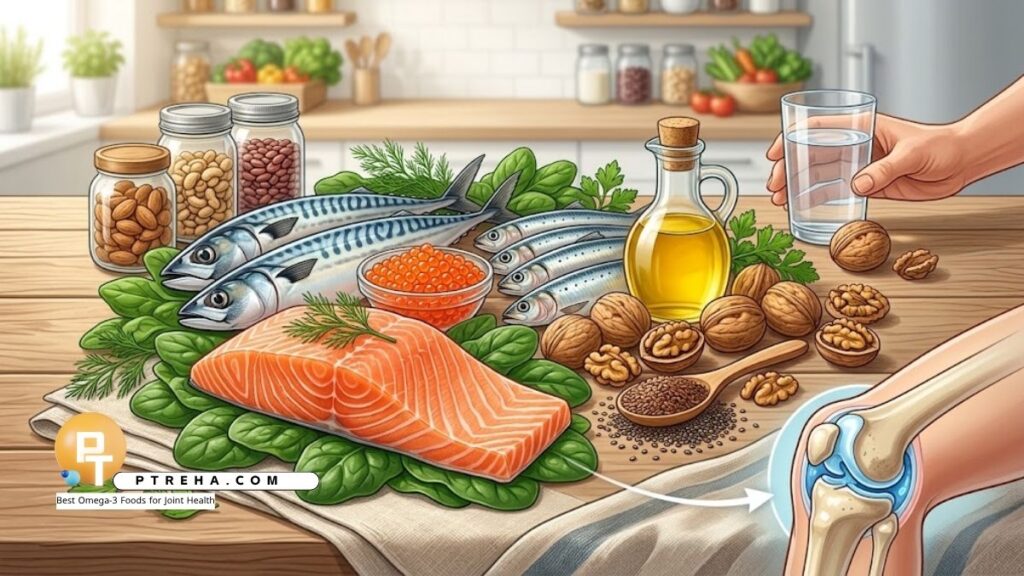
Omega-3 foods can be a useful part of a balanced diet for joint health, particularly because EPA and DHA participate in pathways involved in inflammation and cellular signaling.
Fatty fish provide EPA and DHA directly, while foods such as flaxseed, chia seeds, and walnuts provide ALA, making both marine and plant sources useful depending on dietary preferences and needs.
What Are Omega-3 Fatty Acids?
Omega-3 fatty acids are polyunsaturated fats found naturally in certain fish, seafood, seeds, nuts, and plant oils.
The three major omega-3 fatty acids are alpha-linolenic acid (ALA), eicosapentaenoic acid (EPA), and docosahexaenoic acid (DHA).
ALA is mainly found in plant foods, whereas EPA and DHA are concentrated in fish and seafood.
The body can convert ALA into EPA and DHA, but this conversion is limited.
Therefore, eating foods that directly provide EPA and DHA is the most practical way to increase intake of these long-chain omega-3 fatty acids.
The NIH Office of Dietary Supplements omega-3 fact sheet provides a useful overview of omega-3 types, dietary sources, and their nutritional role.
For joint health, this distinction matters because many foods marketed as “omega-3 foods” provide ALA rather than EPA or DHA.
EPA, DHA, and ALA Compared
| Omega-3 | Main food sources | What it provides |
|---|---|---|
| EPA | Salmon, sardines, herring, mackerel | Marine omega-3 fatty acid |
| DHA | Salmon, sardines, herring, mackerel | Marine omega-3 fatty acid |
| ALA | Flaxseed, chia, walnuts, canola oil | Plant-based essential omega-3 |
A varied diet can include all three forms.
Best Omega-3 Foods for Joint Health
When choosing foods specifically for omega-3 intake, fatty fish are particularly useful because they provide EPA and DHA directly.
Plant foods remain valuable, especially for people following vegetarian or vegan diets.
Some of the best options include:
- Salmon
- Sardines
- Atlantic mackerel
- Herring
- Trout
- Canned salmon
- Flaxseed
- Chia seeds
- Walnuts
- Canola oil
The amount of omega-3 varies substantially between foods and even between different species or preparations of the same food.
Salmon
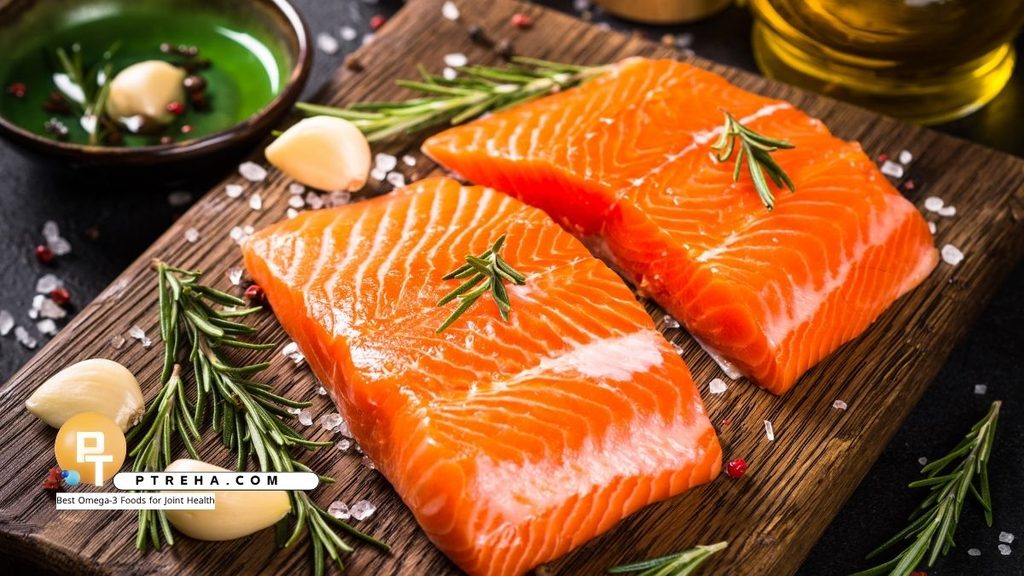
Salmon is one of the most convenient dietary sources of EPA and DHA.
According to the NIH, 3 ounces of cooked Atlantic farmed salmon provides approximately 0.59 g of EPA and 1.24 g of DHA, although the amount varies depending on the fish and other factors.
Practical ways to eat salmon include:
- Baked salmon with vegetables
- Salmon with potatoes
- Salmon grain bowls
- Salmon salad
- Salmon with whole-grain rice
- Homemade salmon sandwiches
Sardines
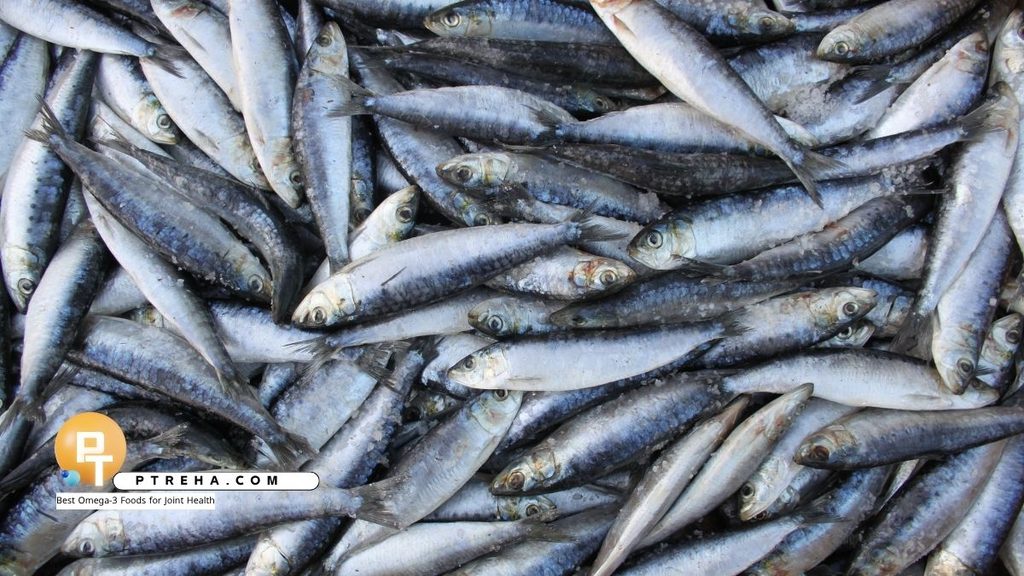
Sardines are small oily fish that provide both EPA and DHA.
Canned sardines can be especially practical because they require little preparation and can be incorporated into salads, sandwiches, pasta, or whole-grain meals.
They can also provide protein and several micronutrients, making them more than simply an omega-3 source.
Mackerel
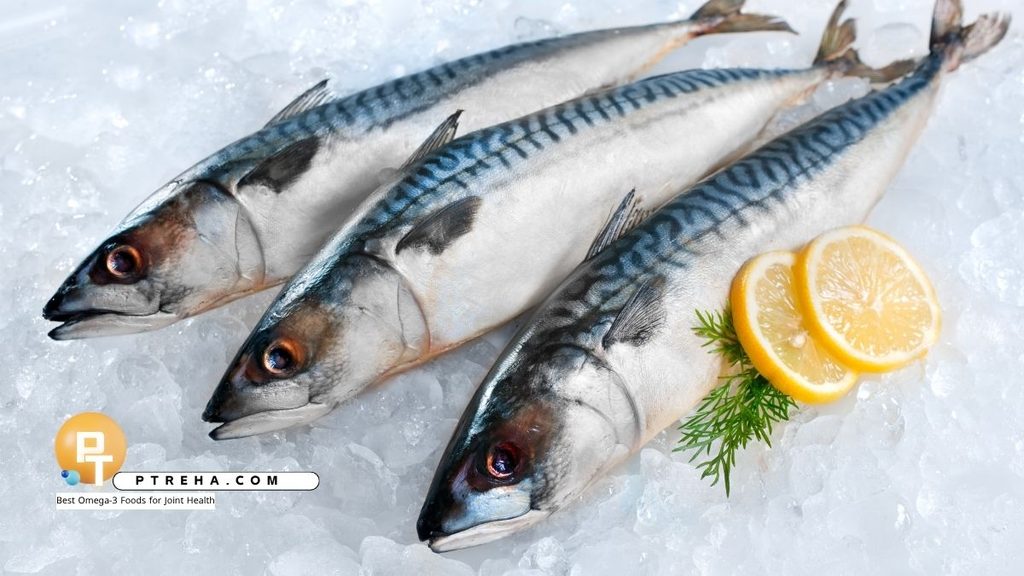
Atlantic mackerel is another concentrated source of EPA and DHA.
A 3-ounce cooked serving contains approximately 0.43 g EPA and 0.59 g DHA according to the NIH food-composition data.
Species matters, however, because mercury concentrations can differ substantially between different types of mackerel.
Herring
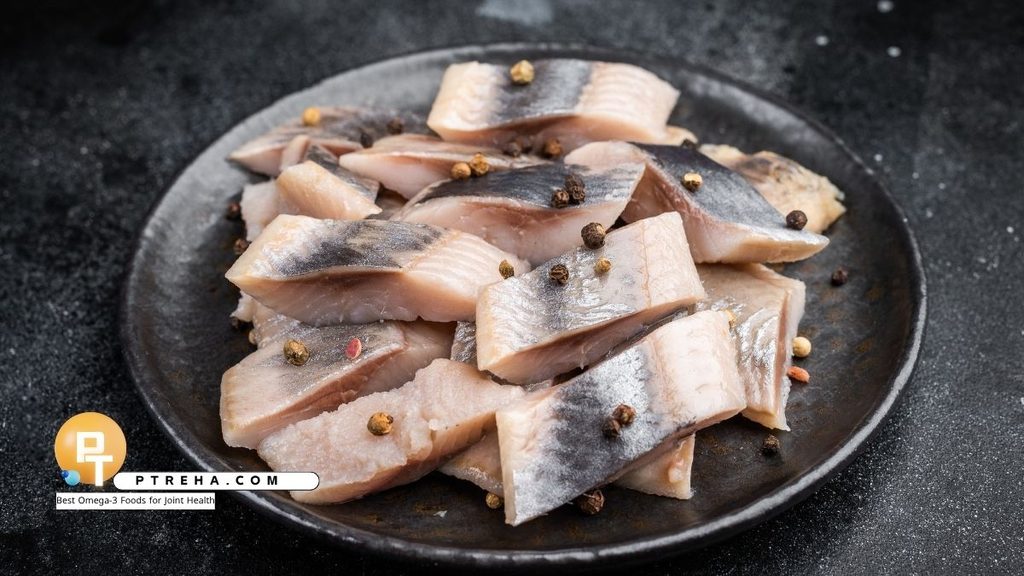
Herring provides substantial amounts of both EPA and DHA.
It can be incorporated into meals with potatoes, vegetables, whole grains, or salads.
As with other fish, variety is useful rather than relying on one species repeatedly.
Trout

Rainbow trout provides EPA and DHA and can be a useful alternative when salmon or other oily fish are not preferred.
A 3-ounce serving of wild rainbow trout contains approximately 0.40 g EPA and 0.44 g DHA in the NIH’s listed food data.
Plant-Based Omega-3 Foods
Plant foods provide ALA rather than large amounts of EPA and DHA.
They remain important sources of omega-3 for people who eat little or no seafood.
Flaxseed
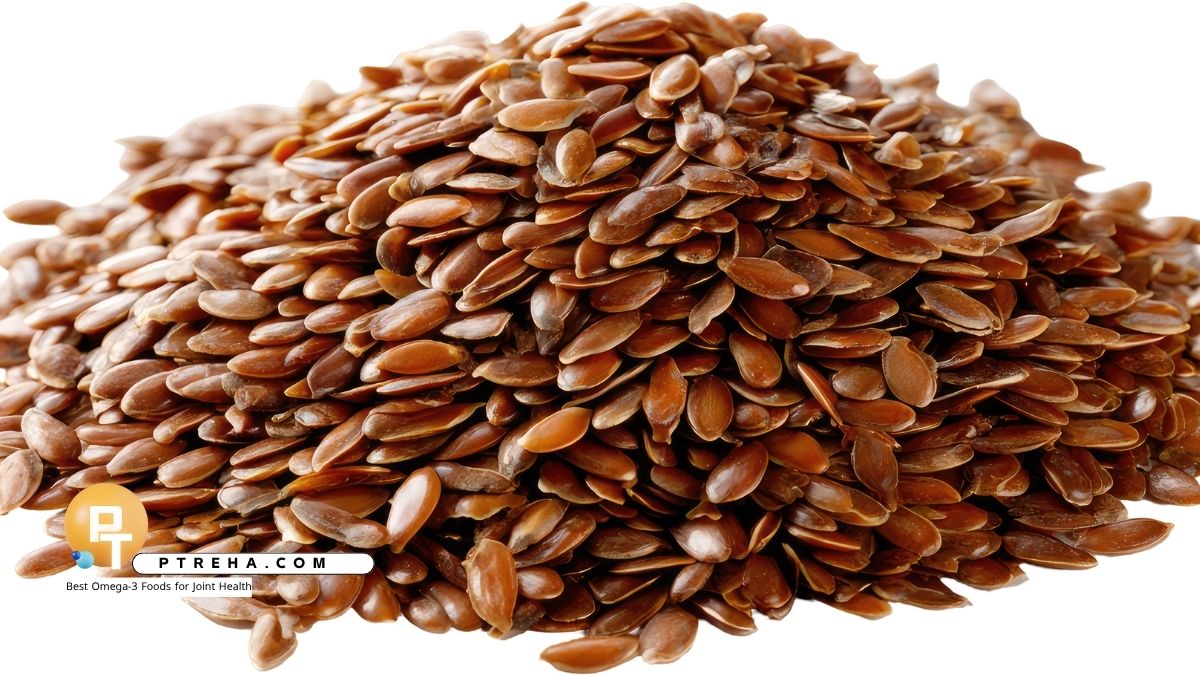
Flaxseed is one of the richest common dietary sources of ALA.
The NIH lists approximately 2.35 g of ALA in one tablespoon of whole flaxseed and about 7.26 g in one tablespoon of flaxseed oil.
Ground flaxseed can easily be added to:
- Oatmeal
- Yogurt
- Smoothies
- Whole-grain cereal
- Porridge
- Homemade energy bites
- Salads
Chia Seeds
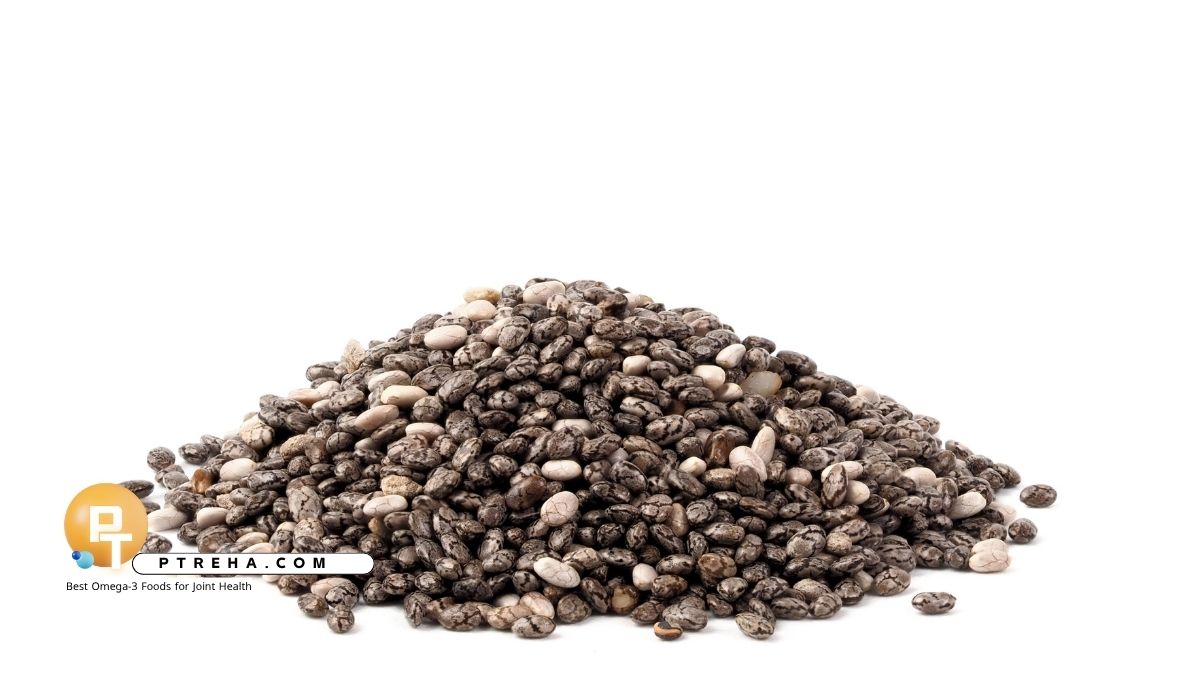
Chia seeds provide approximately 5.06 g of ALA per ounce according to NIH food-composition data.
They can be used in:
- Overnight oats
- Chia pudding
- Yogurt
- Smoothies
- Homemade granola
- Porridge
- Whole-grain breakfast bowls
Walnuts

Walnuts provide ALA along with protein, fiber, minerals, and other nutrients.
An ounce of English walnuts contains approximately 2.57 g of ALA according to the NIH.
A small serving can be added to breakfast, salads, yogurt, or snacks.
Canola Oil

Canola oil provides ALA and can be incorporated into normal cooking or salad dressings.
It can be useful when someone wants to increase plant-based omega-3 intake without adding seeds or nuts to every meal.
How Omega-3 Foods May Support Joint Health
Omega-3 fatty acids participate in several biological processes involved in inflammation and cell signaling.
EPA and DHA can influence the production of lipid mediators involved in inflammatory responses, which is one reason researchers have investigated their potential role in inflammatory joint conditions.
However, the evidence should be interpreted carefully.
Research has investigated omega-3 intake particularly in conditions such as rheumatoid arthritis.
Some clinical trials and systematic reviews have reported improvements in certain symptoms or medication-related outcomes, while other studies have produced less convincing results.
This does not mean that eating salmon or taking an omega-3 supplement treats arthritis.
Instead, omega-3-rich foods can be considered one nutritional component of an overall approach to health.
For people with persistent joint pain, swelling, stiffness, or functional limitations, appropriate clinical assessment remains important.
Omega-3 Foods for Different Dietary Preferences
There is no single food pattern that everyone needs to follow.
Someone who eats fish can obtain EPA and DHA directly from seafood, while a vegetarian or vegan diet can provide substantial ALA through seeds, nuts, and plant oils.
Useful options include:
- Omnivorous diet: salmon, sardines, trout, mackerel, flaxseed, chia, and walnuts
- Pescatarian diet: fatty fish plus seeds and nuts
- Vegetarian diet: flaxseed, chia, walnuts, and canola oil
- Vegan diet: flaxseed, chia, walnuts, canola oil, and omega-3-fortified foods
- Limited-fish diet: occasional fatty fish combined with regular plant omega-3 sources
People who avoid seafood completely may also encounter foods fortified with DHA or other omega-3 fatty acids.
The nutritional composition should be checked on the product label because fortified foods differ considerably.
How to Include More Omega-3 Foods in Your Meals
Increasing omega-3 intake does not require complicated recipes.
Small additions to familiar meals can make a consistent dietary pattern easier to maintain.
Try these practical combinations:
- Add ground flaxseed to morning oatmeal.
- Mix chia seeds into yogurt.
- Add walnuts to a salad.
- Use canola oil for a homemade dressing.
- Prepare salmon with roasted vegetables.
- Add sardines to whole-grain toast.
- Serve trout with potatoes and vegetables.
- Add chia seeds to a smoothie.
- Sprinkle ground flaxseed over cereal.
- Add walnuts to overnight oats.
A useful approach is to combine omega-3 foods with other nutrient-dense foods rather than focusing on omega-3 in isolation.
For example, salmon with vegetables and whole grains provides a broader nutritional profile than relying on an omega-3 supplement alone.
Choosing Fish Safely
Fish can be an excellent source of EPA and DHA, but fish selection should also consider mercury exposure.
Mercury levels vary considerably between species.
Larger predatory fish that live longer can accumulate more methylmercury than smaller fish.
The FDA and EPA fish-consumption guidance provides current recommendations for choosing fish according to mercury exposure, particularly for people who are pregnant, may become pregnant, breastfeeding, and children.
Practical principles include:
- Choose a variety of fish.
- Prefer lower-mercury options when eating fish regularly.
- Check local advisories for recreationally caught fish.
- Follow specific pregnancy-related guidance.
- Avoid assuming all fish have the same mercury content.
- Consider canned fish as a convenient option.
- Choose different species rather than eating only one type.
- Remember that cooking does not remove mercury.
- Check the species when buying mackerel or tuna.
- Consider the advice applicable to your country when selecting seafood.
The goal is not to avoid fish unnecessarily but to choose appropriate varieties and maintain dietary variety.
Omega-3 Foods vs Omega-3 Supplements
Food is usually a practical starting point for improving dietary omega-3 intake.
Fatty fish provide EPA and DHA together with protein and other nutrients, while seeds and nuts provide ALA, fiber, minerals, and other components of whole foods.
Supplements are more concentrated and can provide substantially larger amounts of EPA and DHA than typical food portions.
This distinction is important because research involving omega-3 supplements for inflammatory conditions may use doses that cannot be directly compared with the amount obtained from an ordinary serving of fish.
High-dose supplementation is not automatically better.
People taking anticoagulant or antiplatelet medication, preparing for surgery, or managing a medical condition should discuss high-dose omega-3 supplementation with an appropriate healthcare professional.
For general nutrition, practical food choices include:
- Fatty fish
- Flaxseed
- Chia seeds
- Walnuts
- Canola oil
- Omega-3-fortified foods
Omega-3 Foods Are Part of a Bigger Joint-Health Strategy
Nutrition is only one component of musculoskeletal health.
Joint symptoms can be influenced by physical activity, muscle strength, sleep, body composition, previous injury, workload, recovery, and the underlying condition affecting the joint.
For this reason, eating omega-3-rich foods should complement rather than replace appropriate physical activity or rehabilitation.
A practical joint-health routine may include:
- Regular physical activity
- Progressive strengthening
- Appropriate aerobic exercise
- Adequate protein intake
- A varied diet
- Sufficient fruit and vegetable intake
- Healthy sources of dietary fat
- Adequate sleep
- Appropriate recovery
- Professional assessment when symptoms persist
From a physical therapy perspective, nutrition can support a broader rehabilitation strategy, but dietary changes should not be presented as a substitute for assessment or exercise-based care.
A Simple Omega-3 Meal Plan
A simple eating pattern can make omega-3 intake easier without turning nutrition into a complicated project.
Breakfast: Oatmeal with chia seeds, ground flaxseed, walnuts, and fruit.
Lunch: Whole-grain salad with vegetables, chickpeas, walnuts, and a canola-oil-based dressing.
Snack: Yogurt with chia seeds and fruit.
Dinner: Baked salmon with potatoes, leafy vegetables, and another vegetable.
On another day, salmon could be replaced with sardines, trout, or another appropriate fish.
For people who do not eat seafood, meals can instead emphasize flaxseed, chia, walnuts, canola oil, and appropriately fortified foods.
Conclusion
The best omega-3 foods for joint health include fatty fish such as salmon, sardines, Atlantic mackerel, herring, and trout because they provide EPA and DHA directly.
Plant foods such as flaxseed, chia seeds, walnuts, and canola oil provide ALA and can be particularly useful for people who eat little or no seafood.
Omega-3 foods should be viewed as part of a balanced nutritional pattern rather than as a treatment for joint pain.
Combining nutritious food choices with appropriate physical activity, strengthening, recovery, and professional care when necessary provides a more complete approach to joint health.
Frequently Asked Questions
What are the best omega-3 foods for joint health?
Fatty fish such as salmon, sardines, herring, mackerel, and trout are among the most useful dietary sources because they provide EPA and DHA directly.
Flaxseed, chia seeds, walnuts, and canola oil are useful plant-based sources of ALA.
Is salmon good for joint health?
Salmon is a nutrient-dense source of EPA and DHA and can fit well into a balanced diet.
Its omega-3 content makes it a practical food for increasing marine omega-3 intake, although eating salmon should not be considered a treatment for joint disease.
Are walnuts a good source of omega-3?
Yes.
Walnuts provide ALA, which is an essential omega-3 fatty acid.
They do not provide the same direct EPA and DHA content as fatty fish, so they are best considered a plant-based omega-3 source rather than an equivalent replacement for oily fish.
Are chia seeds good for joints?
Chia seeds provide a substantial amount of ALA and can be easily incorporated into everyday meals.
They can be added to oatmeal, yogurt, smoothies, or chia pudding as part of a varied diet.
Is flaxseed better than fish for omega-3?
Flaxseed and fish provide different forms of omega-3.
Flaxseed is particularly rich in ALA, while fatty fish provides EPA and DHA directly.
Because conversion of ALA to EPA and DHA is limited, they should not be considered nutritionally identical sources.
How often should I eat omega-3-rich foods?
There is no single joint-specific frequency that applies to everyone.
A practical approach is to include omega-3-rich foods regularly within a varied eating pattern, while following appropriate seafood guidance for your age, health status, pregnancy status, and local dietary recommendations.
Can omega-3 foods reduce joint pain?
Evidence suggests omega-3 intake may have some benefits in certain inflammatory joint conditions, but the effects are not universal.
Omega-3 foods should therefore be considered supportive nutrition rather than a guaranteed method for reducing joint pain.
Are omega-3 supplements better than eating fish?
Not necessarily.
Supplements provide concentrated amounts of EPA and DHA, whereas fish provides omega-3 together with protein and other nutrients.
The appropriate choice depends on dietary intake, health circumstances, and the reason for using omega-3.
What fish are good sources of omega-3 but lower in mercury?
Several commonly eaten fish can provide omega-3 while fitting lower-mercury dietary choices, including salmon, sardines, Atlantic mackerel, and trout.
The specific mercury category can depend on the species and local guidance, so people who eat fish frequently should consult the relevant official fish-consumption recommendations.
Can I get enough omega-3 without eating fish?
Yes, particularly with respect to ALA.
Flaxseed, chia seeds, walnuts, and canola oil can provide ALA.
However, people who completely avoid seafood should remember that ALA conversion to EPA and DHA is limited, so obtaining preformed EPA or DHA may require appropriately fortified foods or, when appropriate, an algal-oil supplement.